
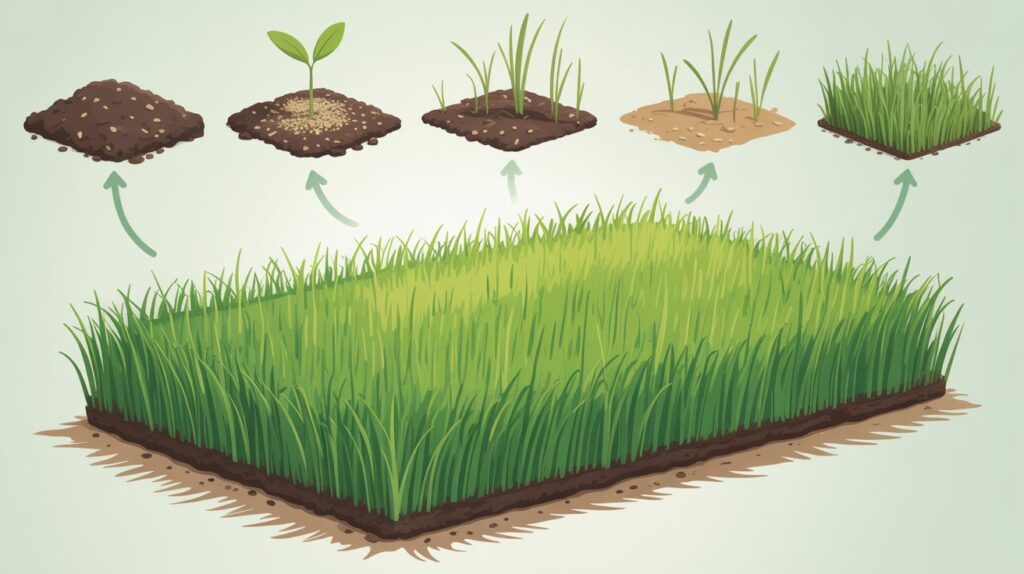
Growing a healthy lawn from seed takes patience and proper care. Many homeowners wonder how long does grass seed take to grow after planting. In most cases, the grass seed germination time ranges between 7 and 21 days depending on the seed variety, soil quality, and weather conditions.
During this early stage, the grass seed growth timeline begins underground as roots develop before the first green shoots appear. The time for grass seed to sprout can vary widely because different grass species grow at different speeds. For example, some fast growing grass seed varieties such as ryegrass sprout quickly, while others need more time to establish strong roots.
Understanding these early growth stages helps you plan watering, mowing, and lawn care properly. With the right conditions and consistent care, your lawn will gradually transform from bare soil into a thick, green carpet.
How long does grass seed take to grow (From Planting to Mowing)
A lawn begins with hidden activity under the soil. The first stage involves moisture absorption, which triggers the grass seed sprouting time. During the early grass seed growth timeline, tiny roots begin to develop before green shoots appear. This process defines the early grass growth after seeding.
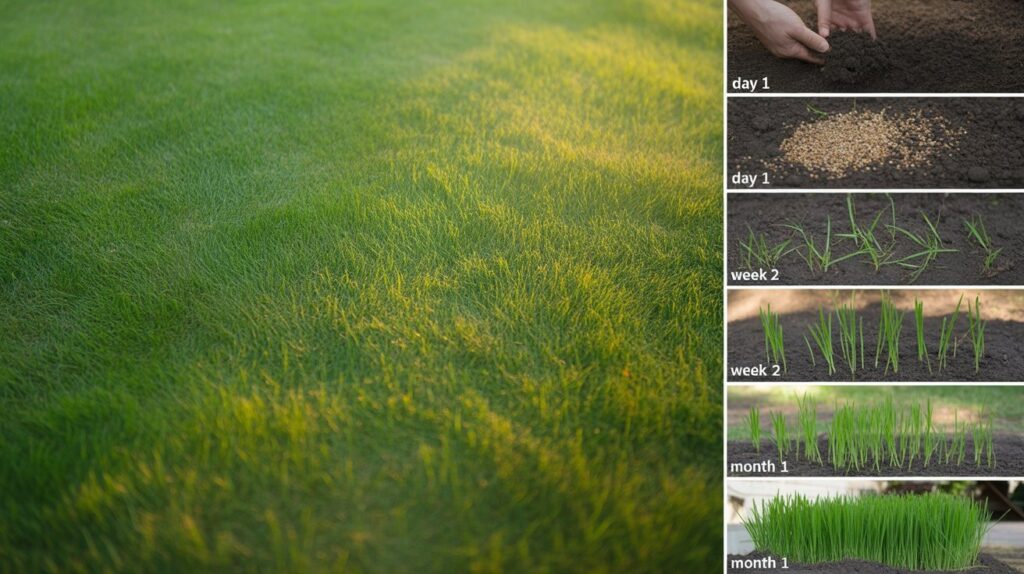
Most seeds require several days for grass seed to germinate. Under the right grass seed germination conditions, sprouts appear in 7–21 days. The complete grass seed establishment period may take four to six weeks before reaching proper grass seed mowing height time.
Day-by-Day Lawn Growth Stages After Seeding
Early lawn grass development stages follow a clear pattern. First, seeds absorb water. Then roots develop beneath the soil surface. Within days, green shoots break through the soil and begin early grass seed growth.
Gardeners often notice small blades after about one week for quick varieties. The time for grass seed to sprout depends on seed type and the surrounding environment. These early changes determine the future lawn grass growing time and overall lawn health.
Average Germination Time for Different Grass Types
Different species grow at different speeds. Some seeds belong to fast growing grass seed varieties while others grow slowly but produce dense turf. This difference explains why homeowners often compare how fast grass seed grows before choosing a seed mix.
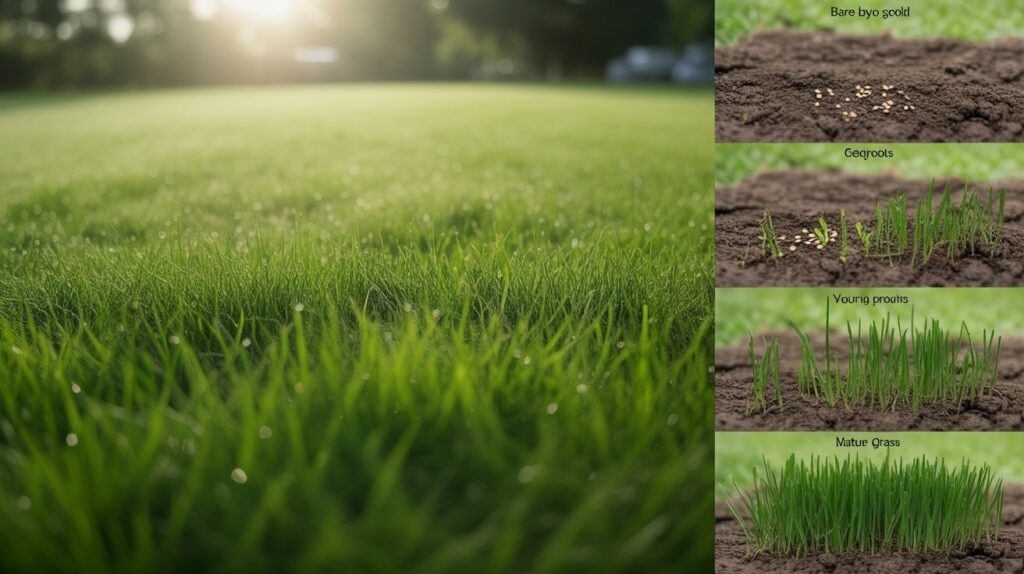
The table below shows the typical grass seed germination time for common lawn grasses.
| Grass Type | Germination Time | Growth Speed |
| perennial ryegrass | 5–10 days | Very fast |
| tall fescue grass | 7–12 days | Fast |
| Kentucky bluegrass | 14–21 days | Moderate |
| bermuda grass | 10–30 days | Fast in warm climates |
| zoysia grass | 14–28 days | Slow start |
| bahia grass | 14–28 days | Moderate |
| buffalograss | 14–21 days | Moderate |
These species differ because each responds to unique soil temperature for grass seed levels and moisture conditions.
Fast-Growing vs Slow-Growing Grass Seed Varieties
Quick lawns often rely on perennial ryegrass or tall fescue grass. These seeds produce visible growth rapidly and shorten the time for grass seed to sprout. Many seed blends include them to speed up lawn establishment from seed.
Slower grasses such as Kentucky bluegrass develop deeper roots. They extend the grass seed planting timeline but create a thicker lawn. Homeowners often combine several seeds in lawn seed mixtures to balance speed and durability.
Cool-Season vs Warm-Season Grasses and Their Growth Time
Grass species fall into two main categories. cool-season grasses grow best in northern regions. Meanwhile warm-season grasses thrive in southern climates. Each type follows a different grass growing season.
Northern lawns often use Kentucky bluegrass, perennial ryegrass, and tall fescue grass. Southern lawns rely on bermuda grass, zoysia grass, bahia grass, and buffalograss. These grasses respond differently to heat and rainfall patterns.
Which Grass Type Grows Faster in Different U.S. Regions?
Regional climate affects the lawn grass growing time dramatically. In cool humid climates, cool-season varieties germinate quickly during mild weather. In warm humid climates, warm-season grasses accelerate during hot summers.
Many homeowners in transition zone lawns mix both types. This strategy improves survival across changing temperatures within the U.S. grass climate zones.
Factors That Affect Grass Seed Growth Speed
Several environmental conditions influence how long grass takes to germinate. Temperature, moisture, soil quality, and sunlight all shape the grass seed growth timeline.
Healthy lawns require balanced grass seed germination conditions. Poor soil, heavy shade, or compacted ground slows the grass seed establishment period and delays early grass seed growth.
Key Conditions That Influence Germination and Early Lawn Development
Successful lawns depend on multiple growing factors. Adequate moist soil for grass seed encourages sprouting while stable warm soil conditions help roots develop. Balanced nutrients within the topsoil for grass seed also strengthen the young plants.
Environmental elements also matter. Areas with strong sunlight often grow faster than shaded spots. The difference between sunlight vs shade lawn areas can significantly affect the time for new lawn to grow.
Best Time of Year to Plant Grass Seed
Timing determines lawn success. Experts widely agree the best time to plant grass seed depends on grass type and climate.
Most cool-region lawns grow best during fall grass seeding. Warm regions often prefer spring lawn planting when temperatures begin rising.
Spring vs Fall Grass Seeding in the United States
Early fall provides warm soil and cooler air. These conditions promote strong roots before winter. Many homeowners choose late summer grass seeding or early autumn lawn planting to maximize results.
Planting schedules must also consider frost. Seeds need time for root establishment in grass before cold arrives. Successful planting usually occurs several weeks before planting before first frost.
Ideal Soil Temperature for Grass Seed Germination
Soil warmth controls germination speed. Every species requires a specific soil temperature for grass seed to begin growth.
Cool grasses germinate best when the ideal soil temperature for germination stays between 50°F and 65°F. Warm grasses prefer temperatures between 65°F and 75°F.
How Soil Temperature Determines Germination Success
Warm soil accelerates the lawn seed germination period. Cold soil delays sprouting and lengthens the days for grass seed to germinate.
Gardeners often use soil thermometers to monitor ground conditions. Consistent warmth improves the grass seed growth stages and speeds the overall lawn establishment from seed.
Weather Conditions That Impact Grass Seed Growth
Weather plays a powerful role in lawn success. Rainfall, sunlight, and temperature shifts affect the grass seed sprouting time and overall grass growth after seeding.
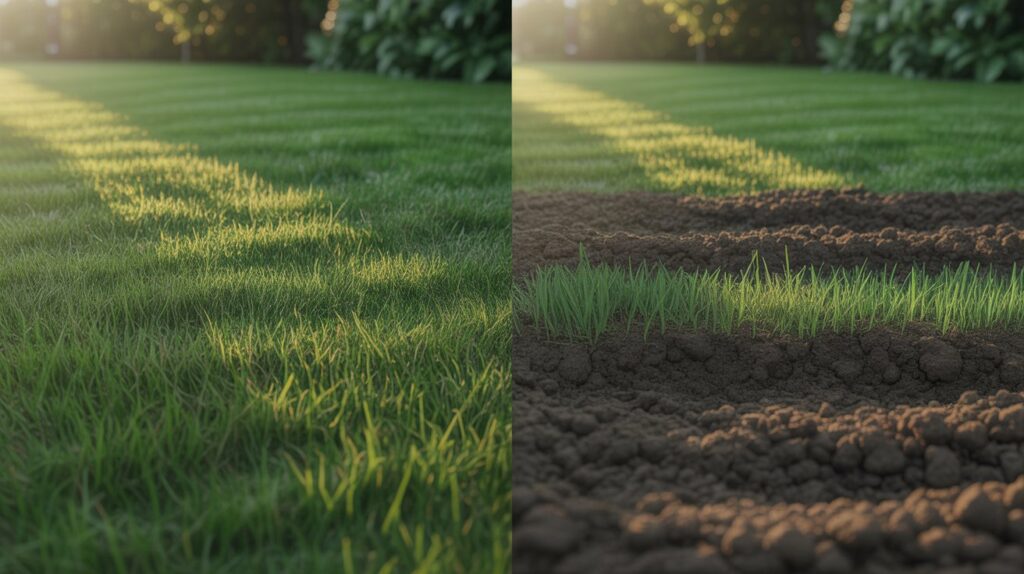
Strong storms may wash seeds away while drought dries young roots. Stable conditions support consistent lawn grass development stages.
Rainfall, Sunlight, and Climate Effects on Grass Seed Growth
Balanced moisture helps maintain moist soil for grass seed during germination. Moderate sunlight encourages photosynthesis while preventing soil from drying too quickly.
Regional climate differences within U.S. grass climate zones create different growth patterns. For example, lawns in warm humid climates often grow faster than those in cooler regions.
Soil Preparation for Successful Grass Seed Germination
Healthy lawns begin with proper lawn soil preparation. Soil must remain loose, fertile, and free of debris before planting.
Quality soil ensures proper drainage and oxygen flow. Good lawn drainage conditions allow roots to expand and support the early grass seed growth timeline.
Step-by-Step Lawn Soil Preparation Before Seeding
Preparing soil involves several steps. First remove weeds and stones. Then loosen the ground to create space for roots. Adding organic matter enriches the topsoil for grass seed.
This preparation stage strongly influences the grass seed establishment period. Well-prepared soil improves the time for grass seed to sprout and increases survival rates.
Watering and Early Care for Newly Planted Grass Seed
Young lawns require careful watering. Consistent watering new grass seed keeps the soil moist without drowning seedlings.
Proper hydration encourages steady grass growth after seeding and strengthens the delicate root establishment in grass.
Proper Watering Schedule for Faster Grass Seed Germination
Light watering several times daily supports the early lawn seed germination period. Once grass begins growing, watering frequency gradually decreases.
This routine protects fragile plants during the grass seed planting timeline. Healthy moisture levels also shorten the lawn grass growing time.
Tips to Make Grass Seed Grow Faster
Many gardeners want to reduce the waiting period. Choosing fast growing grass seed varieties significantly shortens the grass seed germination time.
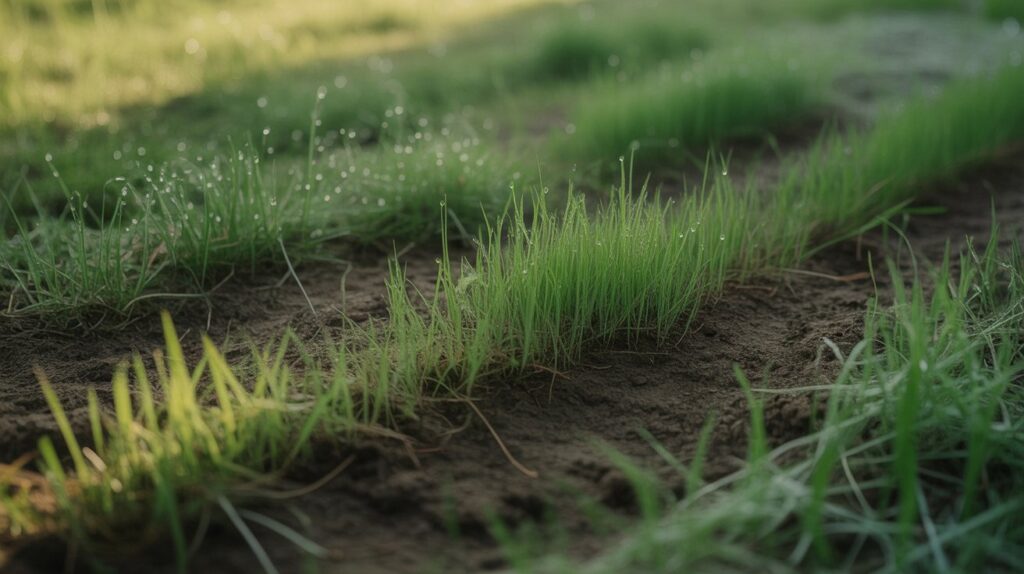
Good soil nutrition also accelerates the grass seed growth stages and strengthens roots.
Proven Lawn Care Techniques for Quick Grass Growth
Seed blends designed for specific climates improve success. Many experts recommend lawn seed mixtures that combine rapid and durable varieties.
Careful mowing also matters. Waiting until the lawn reaches proper mowable grass height prevents damage during the delicate early grass seed growth stage.
Common Mistakes That Slow Down Grass Seed Growth
Many lawns fail because of simple errors. Poor watering, compact soil, or planting at the wrong time can delay the grass seed growth timeline.
Ignoring grass seed germination conditions also slows development and increases seed loss.
Lawn Seeding Errors Homeowners Should Avoid
Overwatering can suffocate seedlings. Too little water causes drying during the grass seed sprouting time.
Another common issue involves heavy foot traffic. New lawns need time to build lawn traffic tolerance during the early lawn grass development stages.
Grass Seed vs Sod: Which Establishes Faster?
Homeowners often compare seed and sod. Sod delivers instant green coverage while seeded lawns require patience.
However seeded lawns cost less and allow custom lawn seed mixtures for specific conditions.
Comparing Cost, Growth Time, and Lawn Results
Sod provides immediate coverage but still requires weeks for root establishment in grass. Seeded lawns follow a longer grass seed establishment period yet adapt better to local soil.
Many gardeners prefer seeding because it supports stronger lawn establishment from seed.
When Your New Grass Will Be Ready for Mowing
A lawn reaches maturity once it achieves the correct grass seed mowing height time.
Most lawns become ready for trimming four to six weeks after planting depending on species and weather.
Signs Your Lawn Has Reached the Ideal Mowing Height
The best indicator involves blade height. When grass reaches about three inches it achieves safe mowable grass height.
Cutting too early may damage the fragile root establishment in grass and interrupt the grass seed growth timeline.
How to Maintain a Healthy Lawn After Grass Seed Germinates
A strong lawn requires ongoing care after germination. Regular mowing, balanced watering, and seasonal fertilization maintain thick turf.
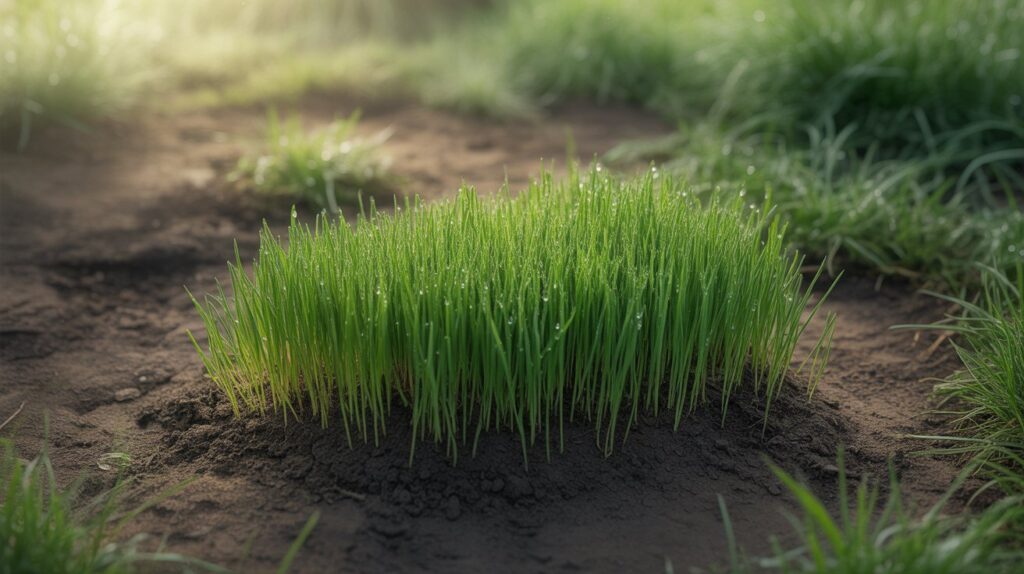
Proper lawn maintenance after seeding also protects the developing roots.
Long-Term Lawn Care Tips for Thick and Green Grass
Healthy lawns depend on continued attention. Balanced watering maintains steady grass growth after seeding while seasonal aeration improves soil health.
With consistent care, the early lawn grass growing time transforms into a dense and durable lawn that enhances any home landscape.
FAQ’s
Can I just throw grass seed down?
You can scatter grass seed on soil, but it works best when the soil is loosened and lightly covered. Proper soil preparation helps seeds make contact with the soil and improves germination.
How long until grass seeds sprout?
Most grass seeds sprout within 7 to 21 days, depending on the grass type, soil temperature, and moisture levels.
How do I speed up grass seed germination?
Keep the soil consistently moist, choose fast-growing grass varieties, and plant when soil temperatures are ideal. Good soil preparation also helps seeds germinate faster.
How often should you water new grass seed?
Water lightly 2–3 times a day to keep the top layer of soil moist. Avoid heavy watering that can wash seeds away.
What is the best month to put down grass seed?
For most lawns in the U.S., September to early October is ideal for cool-season grasses, while late spring to early summer works best for warm-season varieties.