
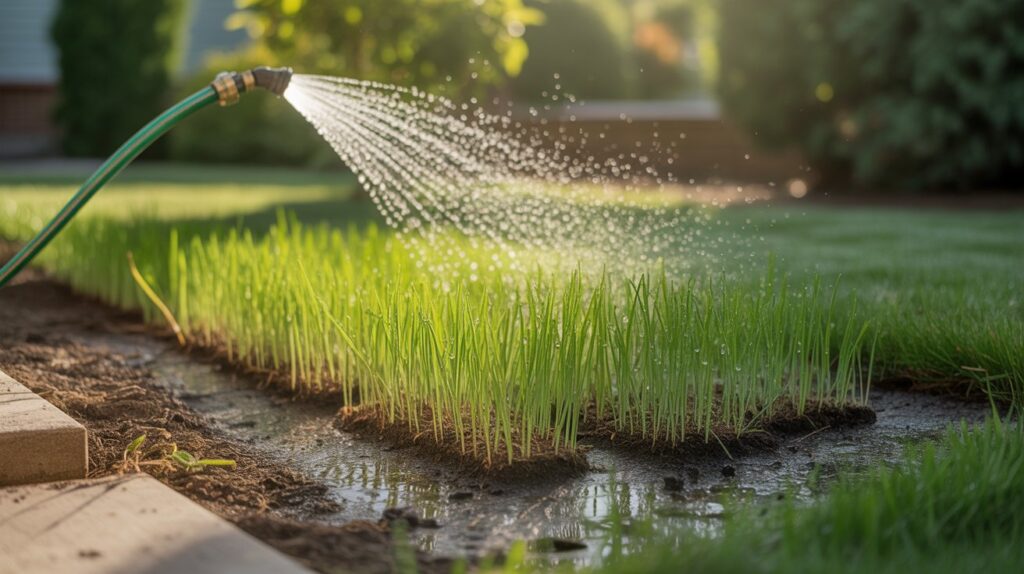
Learn how much to water new grass seed. Our guide covers watering schedules, techniques, and common mistakes for a lush, healthy lawn.
You’ve done the hard work of preparing the Soil and spreading the seed. Now comes the most critical part of establishing a new lawn: watering. Proper watering is the single most important factor that determines whether your new grass seed will grow into a lush, green carpet or simply dry out and fail to thrive. But how much water is enough? And how often should you be watering?
This guide will walk you through everything you need to know about watering new grass seed. We’ll explain the science behind seed germination and provide a detailed watering schedule for every stage of growth. You’ll learn the best watering techniques, how to troubleshoot common mistakes, and discover tips that will give your lawn the best possible start. By the end of this post, you’ll have the confidence to nurture your new seed into a healthy, beautiful lawn.
Understanding Grass Seed Germination
Before you turn on the sprinkler, it helps to understand what’s happening beneath the Soil. Grass seed germination is the process from which a seed sprouts and starts to grow into a new plant. For this to happen, two primary conditions must be met: adequate moisture and the right temperature.
Each grass seed contains an embryo and a food supply, all wrapped in a protective seed coat. When the seed absorbs water, it swells and activates enzymes that break down the stored food, providing the energy needed for the embryo to grow. A tiny root, called the radicle, emerges first, anchoring the seed and absorbing more water and nutrients from the Soil. Shortly after, the first shoot, or coleoptile, pushes its way upward toward the sunlight.
The key to successful germination is consistent moisture. From the moment the germination process begins, the seed is incredibly vulnerable. If the seed or its new, delicate sprout dries out at any point, it will die. There are no second chances. Your primary goal during this initial phase is to keep the top layer of Soil frequently moist, but not waterlogged. The germination time varies by grass type, ranging from 5 to 30 days, so this period of vigilance is crucial for success.
Your Watering Schedule for New Grass Seed
A successful watering routine for a newly seeded lawn isn’t a “set it and forget it” task. It requires adapting your approach as the grass develops. Here’s a stage-by-stage guide on how often and how long to water new grass.
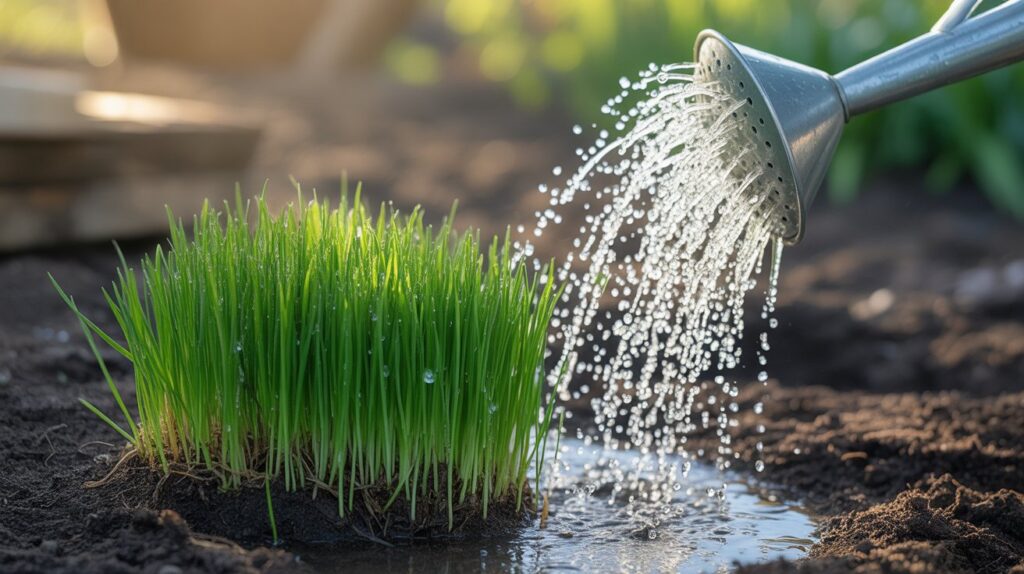
Stage 1: Pre-Germination (Seeding to First Sprouts)
This is the most delicate phase. The goal is to keep the top inch of Soil regularly moist to encourage the seeds to sprout.
- Frequency: Water 2-3 times per day. In very hot, dry, or windy conditions, you may need to water more frequently.
- Duration: Water lightly for 5-10 minutes per session. The aim is to moisten the Soil without creating puddles or runoff that could wash the seeds away.
- Timing: Water in the early morning to minimize evaporation. If a second or third watering is needed, schedule one for midday and another in the early afternoon. Avoid watering in the late evening, as this can encourage fungal growth overnight.
Stage 2: Germination (First Sprouts to 2-3 Inches Tall)
Once you see the first green shoots, you can start to adjust your watering schedule. The roots are beginning to grow deeper into the Soil, but they are still fragile.
- Frequency: Reduce watering to once per day.
- Duration: Increase the watering time to 15-20 minutes per session. In an effort to find water, this promotes the roots to grow deeper. This is crucial for establishing a robust, drought-resistant lawn.
- Timing: Continue to water in the early morning.
Stage 3: Establishment (3 Inches Tall and Beyond)
By now, your new grass is creating a solid root system. It’s time to transition to a more traditional watering schedule that gives deep root growth and overall lawn health.
- Frequency: Water 2-3 times per week, depending on your local climate and rainfall patterns.
- Duration: Water deeply for about 30-45 minutes each session, or until the top 4-6 inches of Soil is wet. A screwdriver inserted into the ground can be used to verify this; it should go in easily.
- Timing: Early morning remains the best time to water.
Effective Watering Techniques and Tools
Using the right technique is just as important as the schedule. A forceful spray can dislodge seeds and erode Soil, undoing all your hard work.
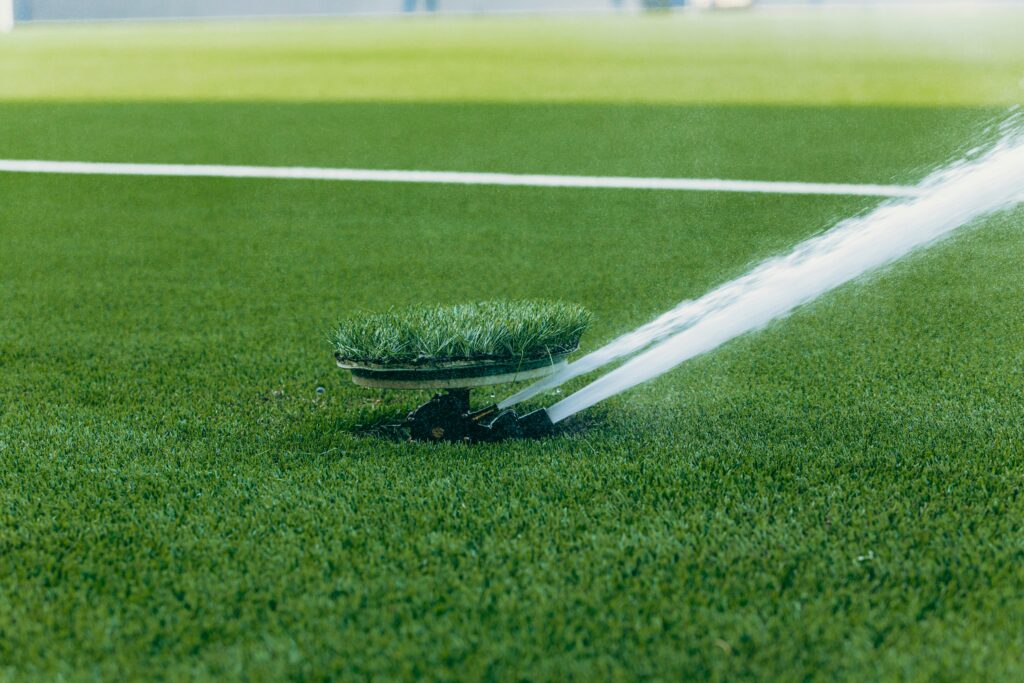
- Sprinklers: The best tool for watering a new lawn is a sprinkler that distributes water evenly and gently.
- Oscillating sprinklers are a great choice for large, rectangular areas. They spray water back and forth, allowing it to soak in gradually and preventing runoff.
- Impact or rotary sprinklers work well for irregularly shaped lawns, as they allow for adjustable spray patterns.
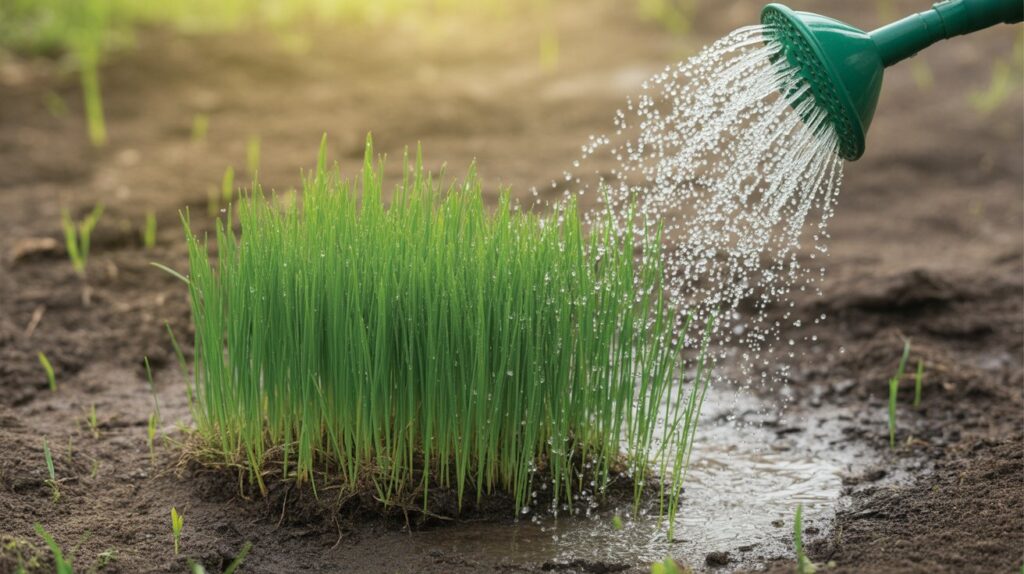
- Hose with a Gentle Spray Nozzle: For small patches or areas the sprinkler can’t reach, a hose with a mist or shower setting is ideal. This allows you to apply water gently without disturbing the seeds.
- Automatic Irrigation Systems: If you have an in-ground sprinkler system, set it to run for short, frequent cycles during the germination phase. As your lawn matures, you can adjust the timer for longer, less frequent watering sessions.
No matter the tool, the goal is uniform coverage. Overlapping the spray patterns of your sprinklers ensures that no spot is left dry.
Troubleshooting Common Watering Mistakes
Even with the best intentions, things can go wrong. Here’s how to identify and fix common issues when watering new grass.
Can You Overwater Grass Seed?
Yes, you absolutely can overwater new grass seed. This is one of the most common mistakes.
- Signs of Overwatering: Puddles of standing water, a constantly soggy or muddy feel to the Soil, slow germination, or the appearance of moss and algae. Overwatering can suffocate the seeds and lead to fungal diseases, such as damping-off, which causes seedlings to rot at the soil line.
- How to Fix It: Immediately reduce the frequency and duration of your watering. Between waterings, let the Soil’s surface dry out slightly. Ensure your lawn has proper drainage. If you see signs of fungus, you may need to apply a fungicide.
What Happens if You Underwater?
Underwatering is just as detrimental as overwatering.
- Signs of Underwatering: Dry, cracked Soil; poor or patchy germination; and seedlings that wilt or turn brown. If the germination process has started, drying out will kill the seed.
- How to Fix It: Increase your watering frequency. If you notice that the Soil is drying out rapidly between sessions, consider adding an additional short watering cycle during the day, especially in hot or windy weather.
Inconsistent Watering
Fluctuating between very wet and very dry conditions stresses the new grass. Consistency is your best friend. Stick to a regular schedule and monitor the soil moisture daily, adjusting as needed based on the weather.
Regional and Climate Considerations
A one-size-fits-all approach doesn’t work for lawn care. Your local climate and soil type play a huge role in how much and how often you need to water.
- Hot, Dry Climates (Arid Regions): In areas with intense sunlight and low humidity, water evaporates quickly. You may need to water more frequently (e.g., 3-4 short cycles per day) during germination. Using mulch is especially beneficial here.
- Humid Climates (Coastal Areas): Avoid watering in the evening. Alternatively, high humidity may lower evaporation; however, it may increase the risk of fungal infections. Water in the early hours of the morning to allow the grass blades to dry out during the summer. This isn’t necessary when it comes to overwatering, but it’s a good idea when it comes to air circulation.
- Cold Climates: If you grow seeds in the autumn, be wary of the first frost. It’s best to stop sprinkling on cold nights. The aim is to prevent the seedling roots from becoming frozen solid. As a result, it will benefit the soil’s moisture. The soil needs to be wet but not entirely waterlogged.
- Soil Type:
- Clay Soil: Although it maintains water well, it also drains well. It has a higher risk of becoming waterlogged. To avoid runoff and allow the water to soak in, water for a brief period.
- Sandy Soil: Drains very quickly and dries out fast. You’ll need to water more frequently but for shorter periods.
- Loam Soil: The ideal soil type, with a good balance of water retention and drainage. The general watering guidelines will likely work well.
Extra Tips for Success
Want to guarantee that lush, green lawn? Here are a few more professional tips.
- Mulch is Your Best Friend: After seeding, use a customized seed mulch or a thin covering of straw. This helps retain soil moisture, keeps seeds from being lost or consumed by birds, and moderates soil temperature.
- Test Your Soil: Before planting, conduct a soil test to determine the optimal conditions for your plants. This will inform you about the pH and nutrient levels of your Soil, enabling you to adjust it for optimal grass growth.
- Control Weeds Carefully: Weeds compete with new grass for water and nutrients. However, avoid using pre-emergent herbicides when seeding, as they can prevent grass seeds from germinating. Before using any weed control treatments, wait until your new lawn has been mowed three or four times.
A Greener Lawn is Within Reach
As one can see, watering new grass seed requires a nuanced approach in terms of frequency, duration, and methods. If one simultaneously considers the needs of the seeds at each growth stage and takes into account one’s climate, an individual may successfully grow a thick, lush lawn. Remember to keep the Soil moist during germination and then reduce watering frequency to a deep, infrequent schedule, encouraging the growth of a deep, well-rooted system. Additionally, the more patience and consistency one demonstrates, the faster one will see results and have a beautiful lawn.
Frequently Asked Questions (FAQs)
1. How long should you water new grass seed?
During the initial germination phase, water for 5-10 minutes, 2-3 times a day. As the grass grows, you’ll transition to longer, less frequent watering sessions of 30 minutes or more, two to three times per week, to encourage deep root growth.
2. Can you use a regular hose to water new grass seed?
Yes, but you must use a nozzle that provides a gentle spray, like a “shower” or “mist” setting. A high-pressure stream will wash away the seeds and erode the Soil.
3. When is the best time of day to water a new lawn?
The best time to water your new lawn is early in the morning, between 6 AM and 10 AM. This way, watering in the cooler morning temperatures minimizes evaporation due to the sun and strong winds. Additionally, grass blades dry during the day, decreasing the time and risk of fungal diseases.
4. What should I do if it rains after I seed?
Light, steady rain can be very beneficial for new grass seed. However, a heavy downpour can wash seeds away. If heavy rain is forecast, consider delaying seeding or ensuring your mulch layer is secure to prevent erosion. If it has already rained heavily, check for seed displacement and gently rake any clumps back into place.
5. How soon can I walk on my new grass?
Avoid walking on your newly seeded lawn area as much as you can. The germinating seedlings and moist Soil are both fragile, and compacting with the Soil should be avoided. You can wait until the grass is well-established and has been mowed at least three to four times before allowing regular foot traffic.