
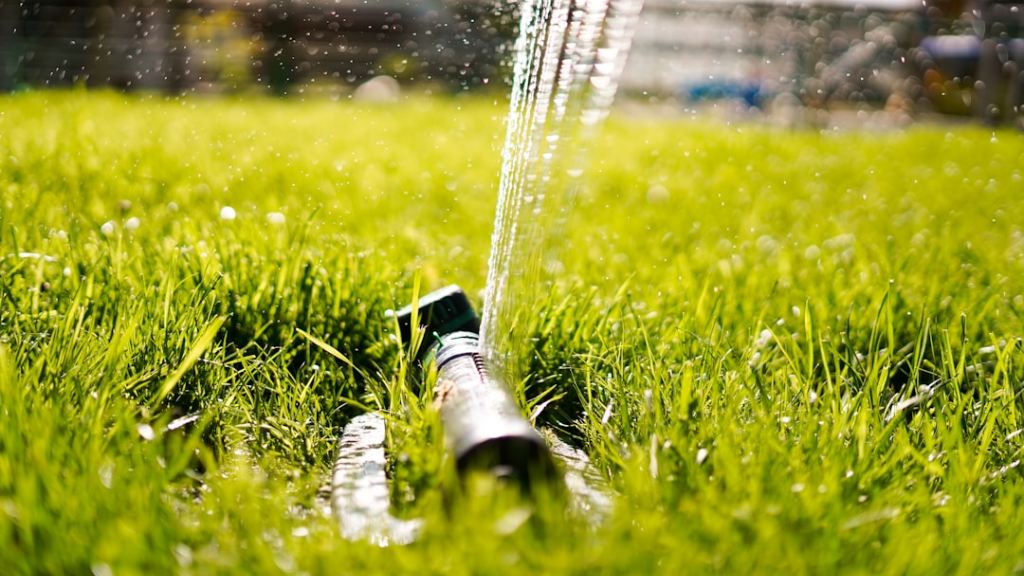
Do you dream of a lush green lawn? Proper lawn watering frequency can do wonders for a small seed. The most important thing is to know how often to water new grass seed for a deficient lawn. A small seed should not only wake up and go out, but also be able to build a strong root system and vegetation of good-quality green grass. Therefore, it is necessary to water the nutrients once, but correctly.
The lawn can be beautiful and well-groomed if water is sprinkled there before sowing the grass. This article will provide a step-by-step solution to the issue of proper watering of grass seeds. You will be able to familiarise yourself with each specific point, which must be presented, and also how best to water your sown seeds. You can familiarise yourself with the information and follow these recommendations; all this will help you grow a neat lawn that has been lacking lately.
Prepare the Soil Before Seeding
But before you even reach for the seeds, prepare the lawn surface. A big part of that is to make a proper seedbed that will boost the grass roots deep into the soil and make them effective at absorbing water.
First off, water the area thoroughly a few days prior to when you want to seed. You want your soil to soak in so that the moisture reaches down 6 to 8 inches. This initial drenching serves two purposes. First, it fills the lower portion of the root zone with water that future grass roots can tap.
Secondly, the water gets the starter fertiliser you’re going to apply over the field. To test whether the soil is moist enough, use the “screwdriver test.” Extend a long screwdriver into the soil. If it can slide easily down to the 6-to-8-inch level, your soil is moist. If not down to the roots, moisten it before you broadcast the seed. How you prepare the soil is a big part of the seed watering process.
Initial Watering Schedule: The Germination Period
Once your seeds are sown, the most critical phase begins: germination. During the first one to two weeks, your primary goal is to keep the top 1.5 to 2 inches of soil consistently moist, but not waterlogged. The seeds need constant moisture to sprout.
How Often and How Long to Water New Grass Seed
For the initial germination period (typically weeks 1-2), you should plan on watering new grass seed 2-4 times daily for short durations of 5-10 minutes. This frequent, light watering replenishes moisture lost to evaporation without washing the seeds away or creating soggy conditions that can lead to rot.
A sample daily schedule might look like this:
- 7:00 AM
- 11:00 AM
- 3:00 PM
- 6:00 PM
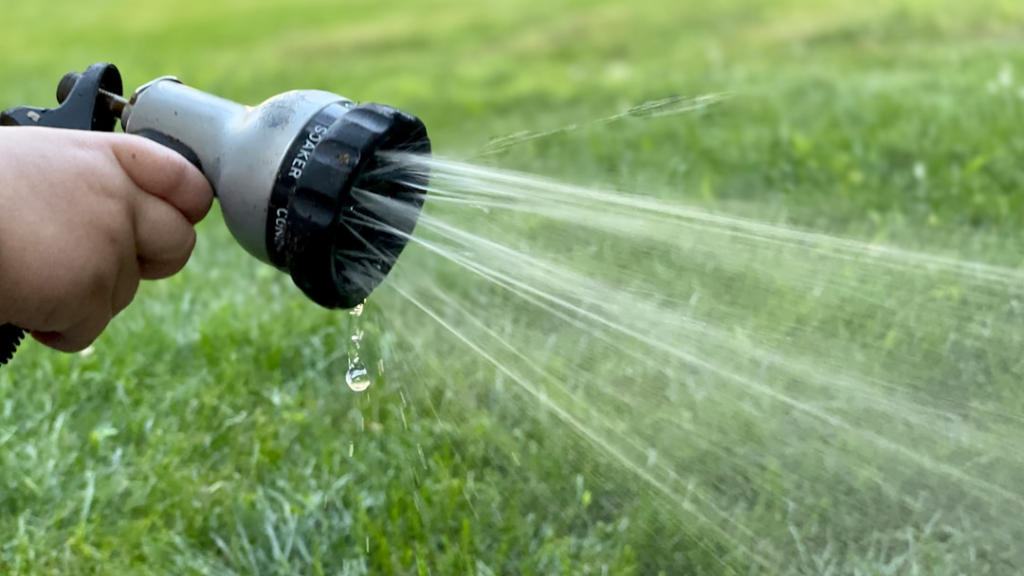
During this phase, your lawn needs about ⅛ to ¼ inch of water per day, totaling 3 to 4 inches per week. Remember to use a gentle spray. An oscillating sprinkler or a gentle spray nozzle on a hose is ideal for providing even coverage without dislodging the delicate seeds.
If you’ve missed a day of watering grass seed, don’t panic, but act quickly. Resume your frequent, light watering schedule immediately. A single dry day can stress the germinating seeds, but they can often recover if you get them moisture right away.
The Best Time of Day to Water New Grass Seed
It’s not just how much you water, but when. When is the Best Time to Water New Grass Seed? The best time is in the early morning, between 6:00 am and 10:00 am. It’s not just that sprinklers convert a lot of the water into mist, which evaporates long before it has time to soak into the ground; in the morning, evaporation is also at its lowest levels.
Another watering in the late afternoon or early evening can help soil moisture levels stay high, especially on hot, windy days. But not too late at night. Wet grass blades for extended periods overnight are an ideal breeding ground for fungal diseases, and the young seedlings from Safari Grass need every help to grow right! So, while watering grass during the day is crucial for turf health, the timing of those sessions has much to do with your success.
Maintain Soil Moisture: The Key to Germination
A satisfactory moisture constant is the most important element for normal germination. If a seed has begun to germinate and then dries out, it is likely to die. That’s why the schedule of frequent, light watering in the first few months is so important.
How can you tell if the soil is good and wet? The top layer should feel damp to the touch, like a wrung-out sponge. It should not be muddy or have puddles of standing water—soil Moisture Meter. For a more accurate reading, be it indoors or outside, a soil moisture meter is an extremely useful tool. These cheap-o tools are money savers as they never leave you guessing whether a spot needs more water, but instead tell you the exact reading of moisture at seed depth.
Factors that can affect your watering schedule include:
- Soil Type: Clay soil holds water longer, so you might only need to water twice a day. Sandy soil drains quickly and may require more frequent watering, especially in warm weather.
- Sun Exposure: Areas that receive direct, intense sunlight will dry out faster and need more water than shaded spots.
- Weather: On hot, dry, or windy days, you may need to add an extra watering session to combat evaporation. Conversely, if you get a light rain shower, you can likely skip the next scheduled watering.
Reduce Water Evaporation
However, as already mentioned above, all this requires the constant evaporation to be fought. A thin layer of mulch over the newly seeded area can be one of the most effective ways to keep moisture.
Approximately one bale of straw mulch for 1,000 square feet can do wonders. A protective blanket, a steady soil temperature and moisture content, and the ideal microclimate for seed germination are all produced by mulching from the sun and the drying action of the wind. You may drastically lower the frequency of watering your fresh grass seed by following this easy tip.
Transitioning to Less Frequent, Deeper Watering
You should start to see the new grass sprouting in about two weeks. Waterings After the seedlings have a stand and begin establishing their root systems, their watering needs will change. Time to stop frequent, shallow watering and start less frequent, deeper watering. This prompts the roots to grow downwards in search of water, which results in a deeper, more drought-resistant lawn.
Weeks 3-4: The Sprouted Lawn
When the majority of seeds have begun germination, water them once a day. You may need a second session for the hottest and driest days in your area. The seedlings’ roots are still shallow at this point and susceptible to drought, so be careful not to let the soil dry out entirely.
Weeks 6-8: Establishing Your Lawn
When the grass has grown about an inch to 1½ inches tall, as it approaches its first mowing height, you can gradually start watering consistently. Your goal is to thoroughly wet the soil to a depth of 6-8 inches at this point in the season. Which usually means 40-60 minutes times every two to three days. Your lawn needs ~1 to 1.5 inches of water per week (including rain).
Establish a Regular Watering Schedule for Long-Term Health
Once your lawn is fully established (around 8 weeks), a consistent and proper watering routine is vital for its long-term health. The principle of deep, infrequent watering continues to apply.
- Frequency: Water your lawn 1-2 times per week.
- Amount: Provide a total of 1-1.5 inches of water per week.
- Timing: Continue to water early in the morning to minimize evaporation and disease risk.
Conduct the screwdriver test or use a soil moisture meter to make sure the water is reaching the root zone. A well-established, thriving lawn with deep roots struggles with heat, drought, and other stressors. You will still need to know when to stop watering grass in the fall, even in the winter. It is typically safe to back off watering as winter approaches and the grass goes dormant, but don’t discontinue watering completely, particularly if you reside in an arid location. Depending on the climate, grass may still require watering in winter during dry periods to keep the roots moisturised.
Common Watering Mistakes to Avoid
Even with the best intentions, it’s easy to make mistakes when watering new grass. Here are some of the most common pitfalls and how to avoid them:
- Overwatering: Soggy soil leads to seed rot and fungal diseases. Ensure the ground is moist, not saturated.
- Underwatering: Allowing the soil to dry out will kill germinating seeds. Consistency is key.
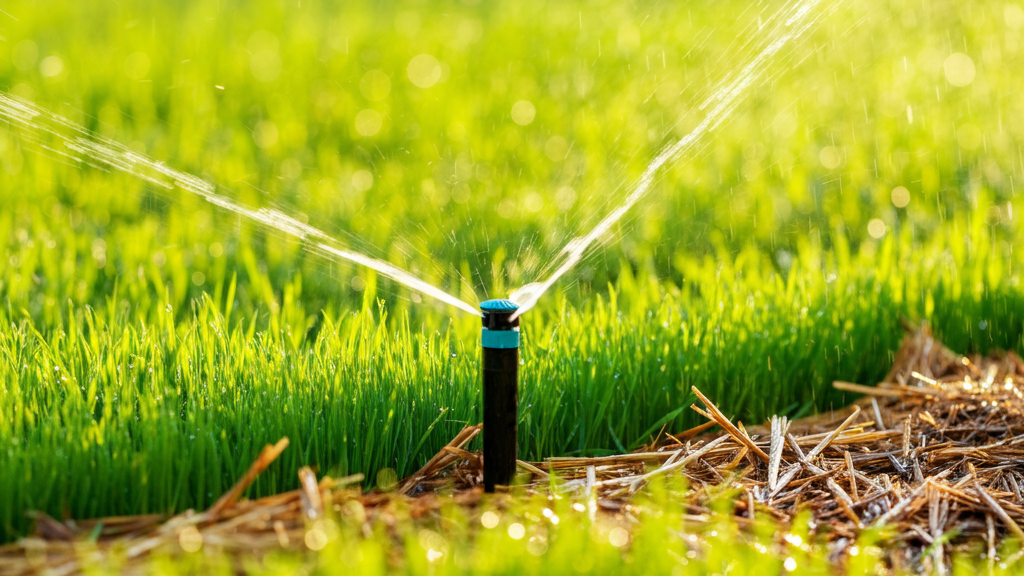
- Uneven Watering: This results in a patchy lawn. Use a quality sprinkler that provides even coverage and check for any dry spots.
- Watering at the Wrong Time: Midday watering leads to excessive evaporation, while late-night watering promotes disease. Stick to early mornings.
- Ignoring Soil Type: A one-size-fits-all approach doesn’t work. Adjust your frequency based on whether you have clay, loam, or sandy soil.
- Using Strong Water Streams: A forceful spray can wash away seeds. Use a gentle nozzle or sprinkler.
- Forgetting About the Weather: Adjust your schedule based on rain, heat, and wind to avoid over- or under-watering.
Your Path to a Perfect Lawn
You don’t need to be an expert to water young grass seed properly; it’s a delicate art and a precise science. You may position your lawn for years of lush green splendour by enriching your soil, adhering to a productive schedule, and making adjustments as your lawn grows. Additionally, keep in mind that your greatest allies in this situation are knowledge and patience.
And if you need assistance starting from scratch, or want to guarantee your new lawn gets the best possible start, reach out to a local lawn care professional. They have the knowledge and tools to take on seeding, irrigation, and more — allowing you peace of mind and a backyard oasis.