
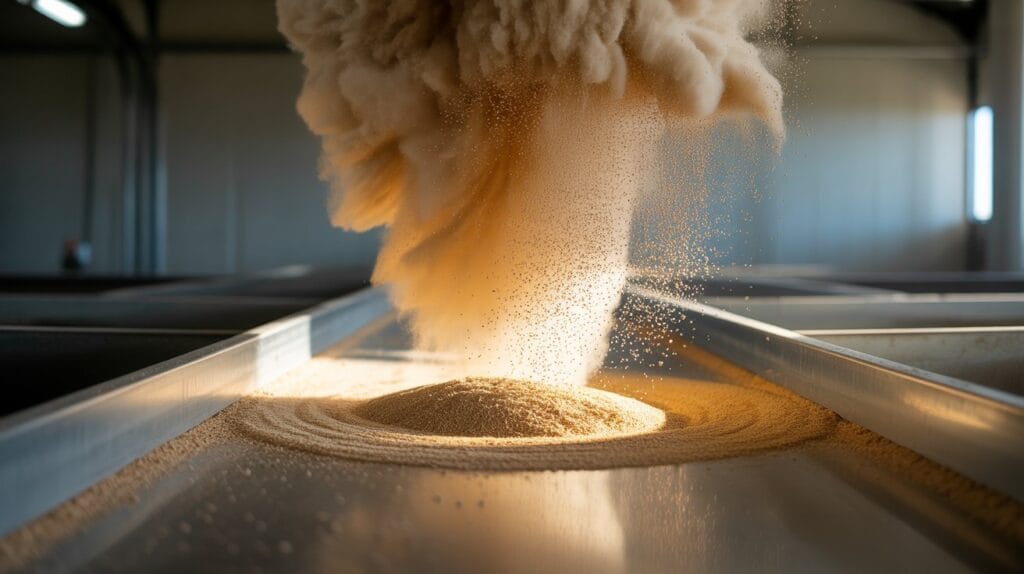
Dust control may not immediately come to mind while you’re chopping up sunflower harvests from your own backyard or conserving heritage tomato seeds. However, if you handle seeds regularly, especially if you have a home press or run a modest business, understanding how to managing dust disasters in seed handling will help you stay safe and healthy.
Fine dust can be generated from the handling of the seed and will accumulate. Although a little dust may seem harmless, it can ignite fires or cause respiratory problems. If given the right conditions and an ignition source, explosions have been known to occur in silos, for instance. The good news? With a little knowledge and some basic precautions, you can successfully mitigate these hazards and keep your seed handling operations safe.
This guide will cover five key dust control techniques that all seed handlers need to know, including the real risks and implementing workable solutions that can be scaled to any size operation.
Realizing the Secret Threats of Seed Dust
Seed dust poses several extremely serious risks that are largely unknown to most gardeners and small growers. Those fine particles that form while cleaning, processing, and storing can pose dangers you never even imagined.
Fire and Explosion Risks
Seed dust is surprisingly combustible. When tiny particles are suspended in the air and they reach certain densities, a situation ripe for ignition occurs: It can take just something as simple as static electricity, hot equipment, or even the smallest spark. The explosion at Didion Milling claimed multiple lives in 2017 and serves as a tragic reminder of how rapidly dust buildup becomes lethal on the farm.
Grain elevator explosions across the Midwest are a disturbing reminder that flammable dust concerns are all too real and exist wherever seeds are handled, even if there is currently no impetus for a nationwide standard. Even smaller facilities aren’t immune — seed processing plants have experienced dust-related flash fires, causing infrastructural and property damage totaling millions of dollars and endangering workers.
Health Impacts You Can’t Ignore: Managing dust disasters in seed handling
Frequent exposure to seed dust can cause significant respiratory issues. Tiny particles irritate lung tissue, which can lead to asthma, chronic cough, or other breathing problems. Workers in seed processing plants have suffered irreversible lung disease because of insufficient dust control.
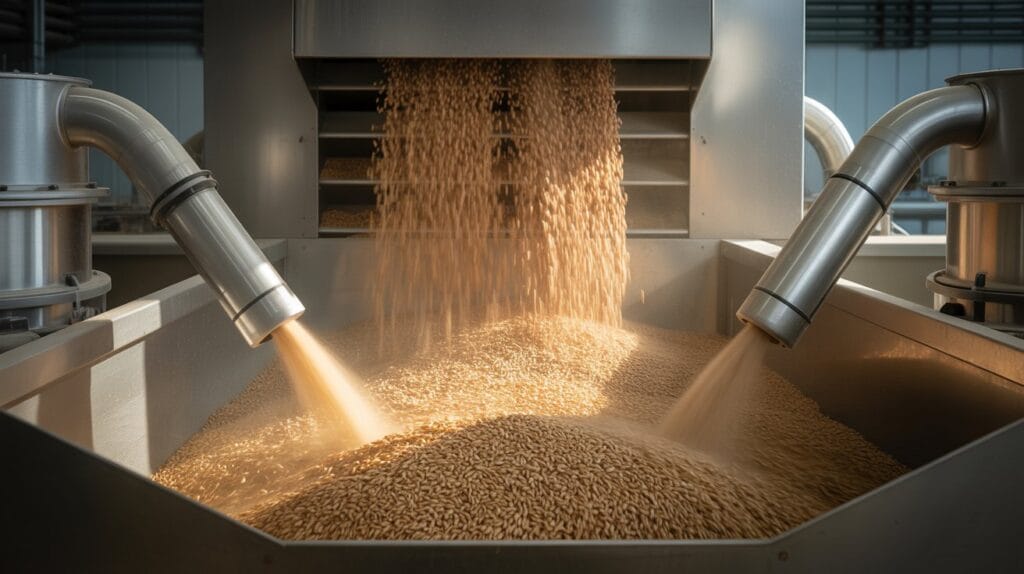
It is also riskier to handle treated seeds because dust can contain pesticide residues or chemical coatings that compound toxicity concerns.
Environmental Consequences
Fleeing dust does not rest in your confines either. It can contaminate soil and water resources around the field, degrade local air quality, and potentially prove harmful to beneficial insects such as bees, more so if the particulate matter contains seed-treatment chemicals.
Precautions That Every Seed Handler Should Take
Several important regulations address dust control in seed handling. Although these are often geared towards large-scale businesses, it’s good to know what they are, as best practices apply to any size business.
NFPA Standards for managing dust disasters in seed handling
Both NFPA 652 for general combustible dust management requirements and NFPA 61 for agricultural and grain facilities lay the groundwork. These standards specify minimum requirements for dust accumulation, housekeeping, and ignition source control.
OSHA Guidelines for managing dust disasters in seed handling
OSHA regulates levels of exposure to dust in the workplace, as well as ventilation and protection. Even if no formal OSHA oversight, these guidelines serve as a solid template for safe practice.
Knowing these frameworks enables you to identify industry standards, thereby preventing expensive fines and safety hazards associated with improper dust control.
Tips for Best Dust Control Practices
Effective management of seed dust will be a combination of engineering solutions and common-sense operations. The best strategies are:
Engineering Controls That Work for Managing Dust Disasters in seed Handling
Dust Collection Systems
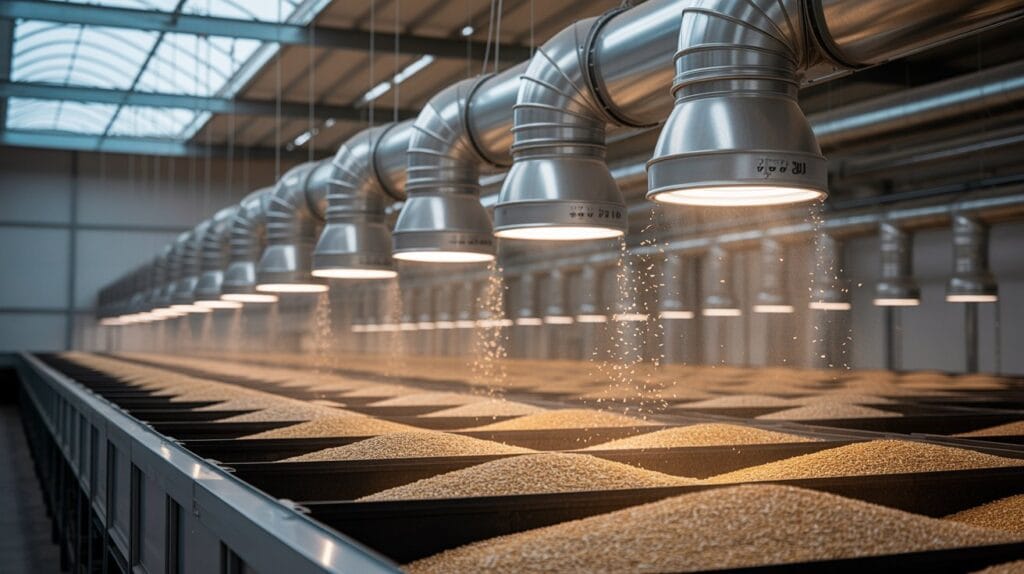
The first thing you should do is to get some decent dust collection equipment in place. Source-capture setups with baghouse or cartridge filters can significantly reduce airborne particles. These systems function by intercepting dust at the source—preventing it from circulating in your workspace.
Smaller setups can benefit from portability, and a portable dust collector that moves with your work. It’s keeping airflow open and the filters changed, to run equipment efficiently.
Ventilation and Containment
Carefully designed ventilation, together with reasonable housekeeping, can reduce the number of dust particles in work areas. This could be achieved by installing local ventilation fans near dust-generating areas or by creating enclosed transfer points to capture particles during seed transfer.
Since you mention it, I’ll also add that even a fully sealed conveyor and fully enclosed processing equipment can help keep the dust in its place. Even the simplest changes, such as adding container covers/drop chutes, can significantly limit dust.
Static and Heat Control
It will also take measures against static electricity and heat. Grounding equipment helps prevent static discharge, while lubrication and maintenance prevent heating bearings to the point where they could ignite fires.
An explosion-proof electrical device can provide additional security and may prevent accidental ignition in areas with dust.
Smart Operational Practices for Managing Dust Disasters in Seed Handling
Housekeeping That Prevents Disasters
Dust control is based on regular cleaning. But it doesn’t matter how you do it — blowing dust away with compressed air, for example, actually generates dangerous airborne concentrations. Instead, vacuum dust builds up regularly, paying special attention to higher areas where particles tend to settle.
Concentrate cleaning activities in the places that collect dust easily: surfaces of equipment, support beams, and closed-in areas that nobody realizes are growing thick with dust.
Training and Awareness
Anyone handling seeds should be aware of the risks of dust and how to operate safely. This entails knowing when dust levels might be hazardous, procedures for safe operation of equipment, and how to respond to an emergency.
Regular safety talks and training refreshers keep safety top of mind, preventing complacency that could lead to accidents.
Monitoring and Maintenance
Setting up regular inspection routines can enable you to find issues before they turn into hazards. This can involve looking at the performance of dust collection systems, checking equipment for wear that could spark, and monitoring the level of dust in workspaces.
Preventive maintenance programs can keep your dust control equipment performing at its best when you need it.
Emergency Planning and Response for Managing Dust Disasters in Seed Handling
Even with successful preventive measures, having an emergency plan in place is crucial as a backup safety measure. Visible escape routes, fire warning devices, and frequent drills are all components of effective emergency preparation.
Install explosion suppression systems or an isolation valve to prevent a secondary explosion from spreading throughout your plant. Although expensive, such programmes can avert devastating losses when primary prevention fails.
Frequently Asked Questions
What is the most appropriate dust collection system for small-scale seed treatment?
On the other hand, portable cartridge dust collectors are a great compromise between cost and effectiveness. Seek models with good airflow for your room size and convenient filter change-outs.
How often should I dust to prevent dust buildup?
A good baseline protection is daily cleaning of immediate work areas, with weekly deep cleaning of high surfaces. But frequency will be higher during peak processing or for the dustier seed types.
Can I use regular old shop vacuums for dust control?
Regular shop vacuums are not safe to use for fine combustible dust. Utilize single-phase explosion-proof vacuums designed for combustible dust pick up with the appropriate spark-resistant construction and grounding.
How can I determine if my dust control measures are insufficient?
Visible dust collecting on surfaces, irritating workers’ respiratory systems, or clouds of dust being released during a process indicate that control measures are not effective. Address these warning signs immediately.
Creating a safer future in Managing Dust Disasters in Seed Handling
A mixture of technical and regimen measures is necessary to control powder disasters in seed treatment. The cost of implementing effective dust control can be measured in saved lives, reduced illness, and fewer fires, as well as in the Legal Savings for institutions that are compliant.
First, evaluate your current dust control against the criteria of the guidelines presented here. Find and highlight the weak spots. List the changes that are most important to reduce your level of risk first. Keep in mind that even minor advances in dust control can drastically limit your risks.
Consider consulting with dust control experts who can assess your unique situation and advise you on what options will work best for you. Most vendors offer their own assessment services, which help determine the lowest-cost improvements for your operation.
The point is not to get it perfect — it’s to develop a systematic way of managing dust that grows with you and keeps safety as your top priority. By getting ahead of this now, you’re not only protecting the existing business but also ensuring a more durable enterprise over time.