Planting a mango seed is one of the most satisfying gardening projects you can try at home. When you learn how to plant a mango seed, you turn a simple fruit into a future tree. Inside every mango lies a large mango seed husk that protects the inner seed. Once you carefully remove mango husk, you can begin the germination process using simple tools.
Many gardeners prefer the moist paper towel method because it allows them to check for a viable mango seed before planting. With warmth, patience, and proper care, that single seed can grow into a healthy tropical plant.
Introduction to how to plant a mango seed
Learning how to grow mango from seed is simple when you follow the right steps. Mango seeds come from the large mango seed husk inside the fruit. Once you remove it, you begin the journey of fruit seed propagation. Many gardeners enjoy this form of kitchen propagation, similar to when they grow avocado from seed or sprout ginger root.
You should know the difference between a grafted mango tree vs seed grown tree. A grafted tree fruits faster. A seed-grown tree takes longer. The mango tree maturity time usually ranges from 5 to 8 years to fruit. Still, watching each stage brings joy. Many people ask, does mango seed produce fruit. Yes, it can. However, fruit quality may vary.
Understanding Mango Tree (Mangifera indica)
The mango tree, known as Mangifera indica, is a tropical plant and a classic warm climate fruit tree. In tropical regions it can grow over 60 feet tall. In containers, it stays smaller. Its leaves are shiny and deep green. The tree grows in clear mango tree growth stages, from sprout to mature canopy.
Some seeds are a monoembryonic seed, meaning one sprout grows. Others are a polyembryonic mango seed, meaning several sprouts appear. This affects fruit quality. Many gardeners ask about fruit bearing age. Seed-grown trees take longer. Grafted trees fruit earlier. That is the main difference.
Best Time & Climate to Grow Mango
If you live in Florida, Texas, Arizona, or Southern California, outdoor growing works best. Mango trees love warmth. The best temperature for mango tree growth is around ambient temperature 21-24°C. They also prefer humidity levels 50-60%. These conditions speed up the germination process and growth.
Gardeners in colder states can still succeed. You can grow mango indoors as an indoor tropical fruit plant. However, a mango tree in cold climate needs protection. The tree cannot survive frost. Proper sunlight requirements include at least 6 to 8 hours daily.
| Condition | Ideal Range |
| Temperature | 21–24°C |
| Humidity | 50–60% |
| Sunlight | 6–8 hours |
| Soil | Well-drained |
Selecting the Right Mango for Seed
Start with a fully ripe mango. A soft and fragrant fruit usually contains a viable mango seed. Avoid shriveled or damaged fruit. Fresh seeds sprout better. Many gardeners perform a simple seed viability test by checking firmness and color after opening.
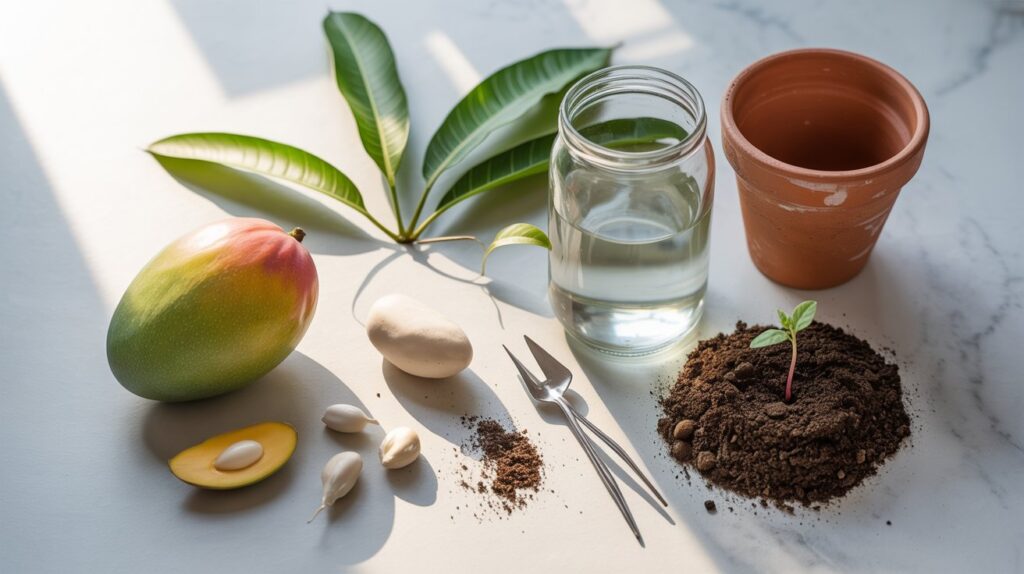
If you plan serious container gardening mango, choose mango varieties common in US grocery stores. Remember that each seed may produce slightly different fruit. That makes this method exciting and unpredictable.
Preparing the Mango Seed (Important Step)
First, carefully remove mango husk from the fruit. Inside lies the thick mango seed husk. Clean off pulp completely. Let it dry for one or two days. Drying helps you open it safely without damaging the seed.
When you cut the husk edges, the inner seed appears. If you notice mango seed splitting open, do not panic. This often happens naturally during the germination process. The inner seed should look firm and light in color.
Germination Method (Easy Sprouting Technique)
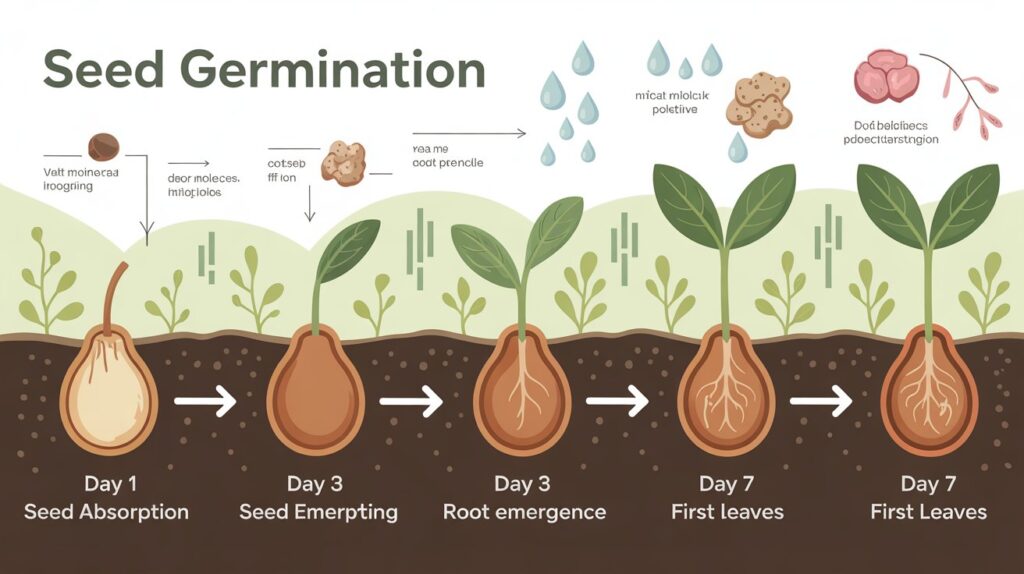
The most reliable way to grow mango from seed is the moist paper towel method. Wrap the seed in a damp towel. Place it inside a plastic bag. Keep it in a warm dark place. Check every few days. This method improves the mango seed germination time.
Many ask, how long does mango seed take to sprout. Usually two to four weeks. Warmth helps. Once you see roots and shoots, the sprouting mango seed is ready. Some seeds crack open naturally. That is normal during planting sprouted mango seed preparation.
Planting the Sprouted Mango Seed
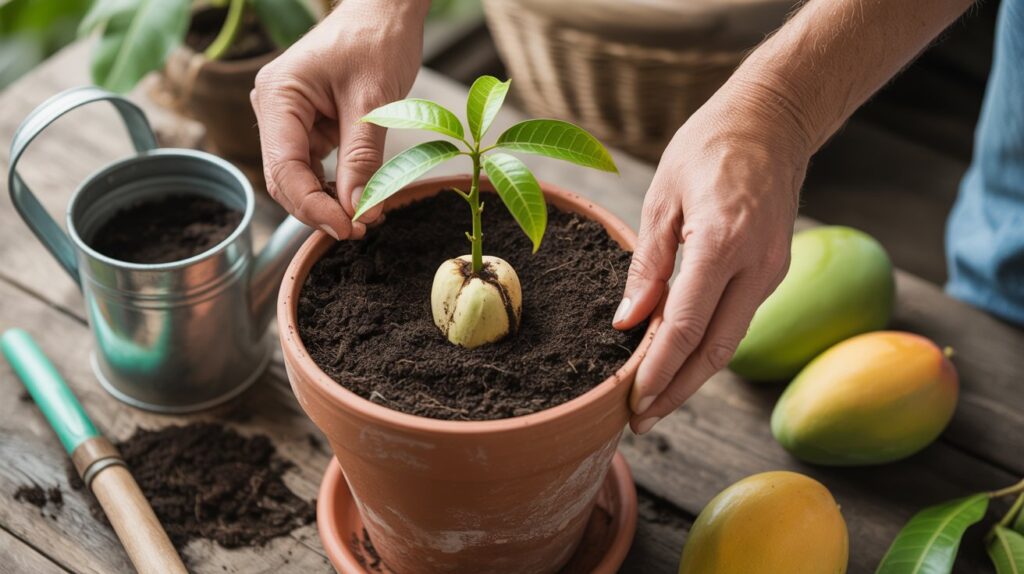
Choose a flower pot with drainage holes. Good drainage prevents root rot. Use quality potting mix for mango or rich indoor potting soil blended with sand for well-draining soil structure. Place the seed flat and cover lightly.
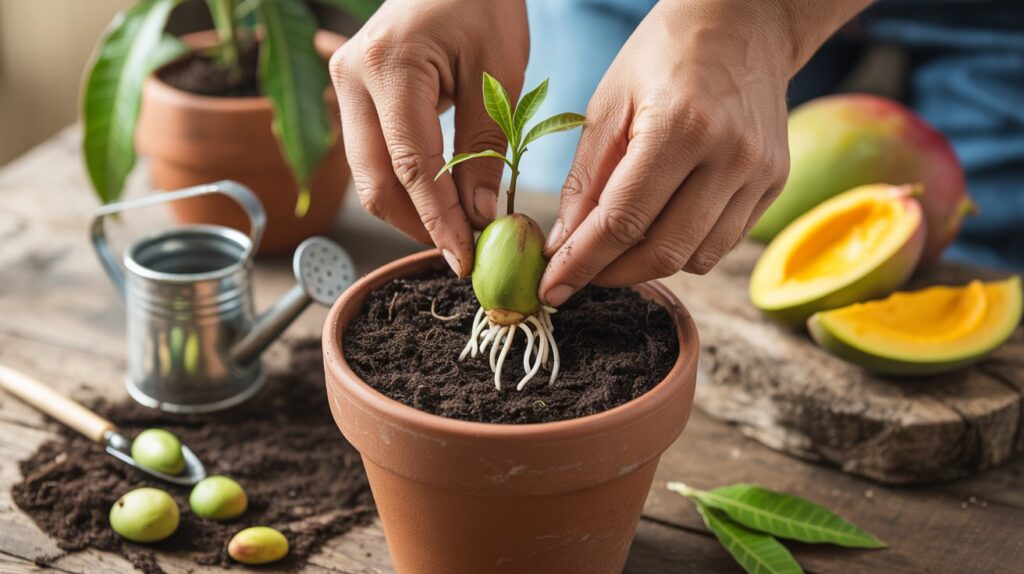
Water gently. Keep the soil moist but not soaked. This stage begins true growth. Many gardeners celebrate when the first leaves appear. That tiny plant marks success in how to grow mango from seed.
Mango Seedling Care Guide
Strong growth depends on consistent mango seedling care. Keep the plant in bright light. Follow proper indoor mango plant care routines. Provide warmth and moderate watering. Use balanced fertilizer every few months.
You may notice limp leaves. Many wonder, why mango leaves turn limp. Young leaves often droop before strengthening. At around two months, a healthy mango plant 9 weeks old stands upright. Follow simple mango plant care tips and growth continues steadily.
Transplanting & Outdoor Planting
As roots fill the pot, it is time to transplant mango seedling into a larger container. Choose fresh well-draining soil and ensure airflow around roots. This helps avoid disease.
If you move the plant outdoors, do so gradually. Sun shock damages leaves. Outdoor planting works best in USDA zones 9 to 11. In cooler states, continue to grow mango as houseplant inside.
Pruning, Training & Growth Management
Pruning controls height and shape. Remove weak branches early. This strengthens the trunk. A compact tree suits container gardening mango and indoor spaces.
Training improves fruit production later. Although seed-grown trees take longer, good shaping reduces the waiting time until fruit bearing age. Patience is key in how to grow mango from seed successfully.
Flowering, Fruiting & Harvesting
Eventually, flowering begins. However, seed-grown trees may need 5 to 8 years to fruit. Many ask again, does mango seed produce fruit. Yes, but timing varies. Warm climates speed up growth.
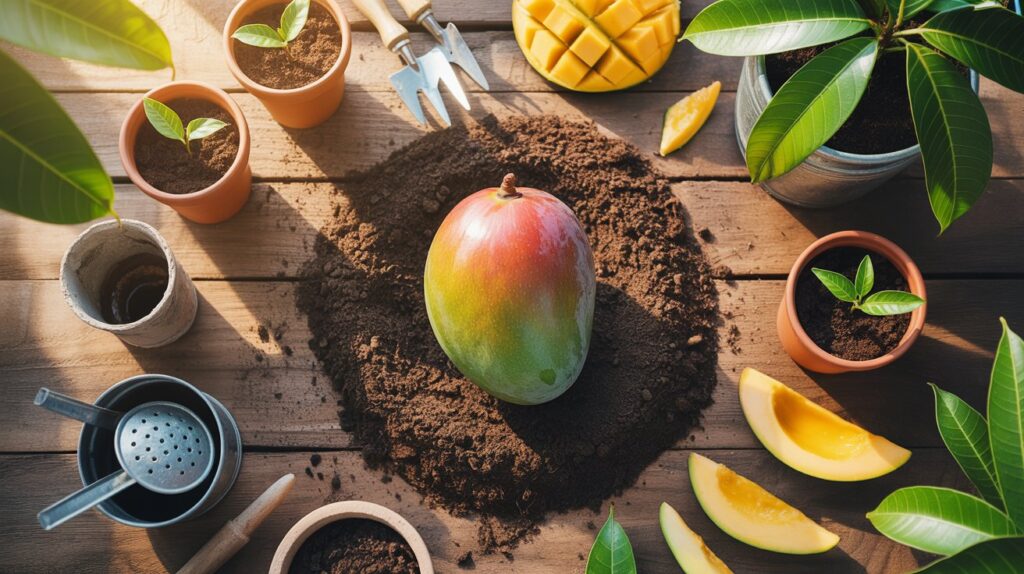
Harvest mangoes when skin changes color and fruit smells sweet. Compare results with grafted mango tree vs seed grown trees. Grafted trees fruit earlier. Seed trees surprise you with unique flavors.
Common Problems (Pests & Diseases)
Overwatering causes root rot. Poor airflow invites mildew. Maintain proper spacing and drainage. Healthy soil prevents most problems.
If leaves discolor, check watering and sunlight. Indoor plants may face spider mites. Regular inspection keeps your houseplant mango tree strong. Good care ensures long-term success.
Can You Grow Mango Indoors?
Yes, can mango grow indoors is a common question. The answer is yes with care. Keep the tree warm. Follow correct sunlight requirements. Maintain steady humidity. Indoor trees stay smaller yet beautiful.
A sunny window works best. During winter, keep away from cold drafts. With patience, you can grow mango indoors even in northern states. It becomes a rewarding indoor gardening project.
Growing mango from seed requires patience and warmth. Still, few gardening projects feel this satisfying. When you master how to grow mango from seed, you gain more than fruit. You gain skill, confidence, and a tropical tree thriving in your home.
FAQ’s
How to plant a mango seed in the ground?
Plant the cleaned seed in well-draining soil about one inch deep in a sunny, warm spot. Keep the soil moist but not soggy.
How to plant a mango seed in water?
Suspend the seed halfway in a glass of water using toothpicks and place it in a warm area. Change the water every two days to prevent bacteria.
How to plant a mango seed without it rotting?
Use well-draining soil, avoid overwatering, and ensure the seed is clean and slightly dried before planting. Good airflow helps prevent mold.
How to open a mango seed?
Let the husk dry for a day, then carefully cut along the edge with strong scissors and gently pry it open to remove the inner seed.
How to grow a mango seed in paper towel?
Wrap the seed in a moist paper towel, place it in a plastic bag, and store it in a warm, dark place. Check every few days for sprouting.