Efficient hay production is essential for any modern farming operation. Knowing how many hay bales you can get per acre can completely transform both your financial and operational planning. Success starts with planting the best alfalfa seeds and ends with timing your harvest perfectly.
Understanding the exact yield of 4×5 bales allows you to optimise storage and feed for your livestock. Farmers often wonder, How many 4×5 round bales per acre can be achieved under normal conditions? This metric is key to evaluating your annual hay farming profitability.
In this guide, we’ll explore the critical factors that impact your hay yield per acre, including bale dimensions, the effect of alfalfa seeds, field conditions, and best farming practices. Get ready to take your forage crop yield to the next level.
Understanding 4×5 Round Bales
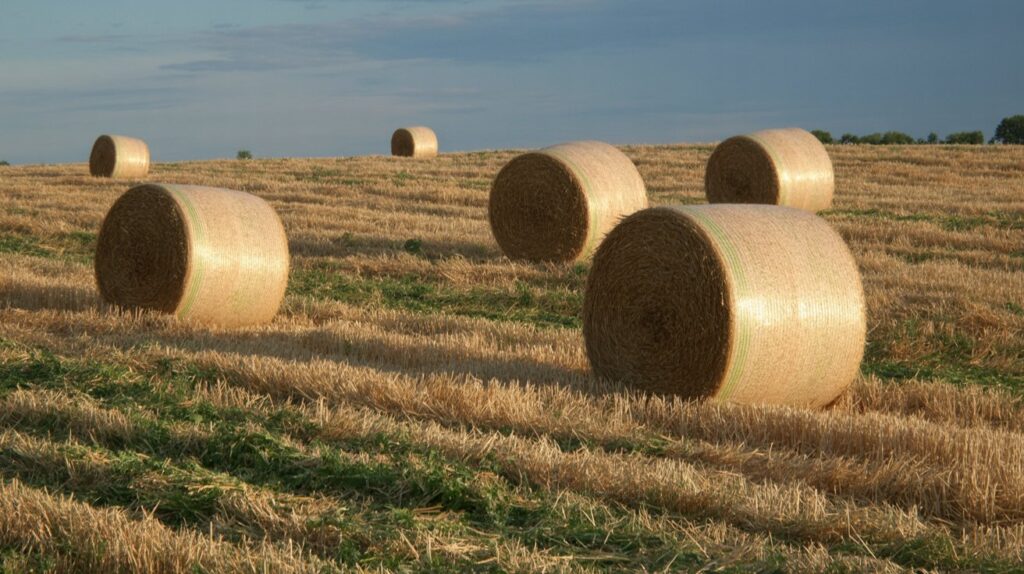
4×5-foot round hay bales are the gold standard for many modern producers. Their ideal size strikes a perfect balance between manageable weight and efficient round hay bale production. A typical bale of grass and alfalfa seed mix weighs between 700 and 900 pounds.
These dimensions make storage in barns easier and reduce feeding waste during winter months. When projecting your hay production per acre, these bales provide excellent consistency for transport. They’re ideal for feeding cattle and horses due to their nutrient retention.
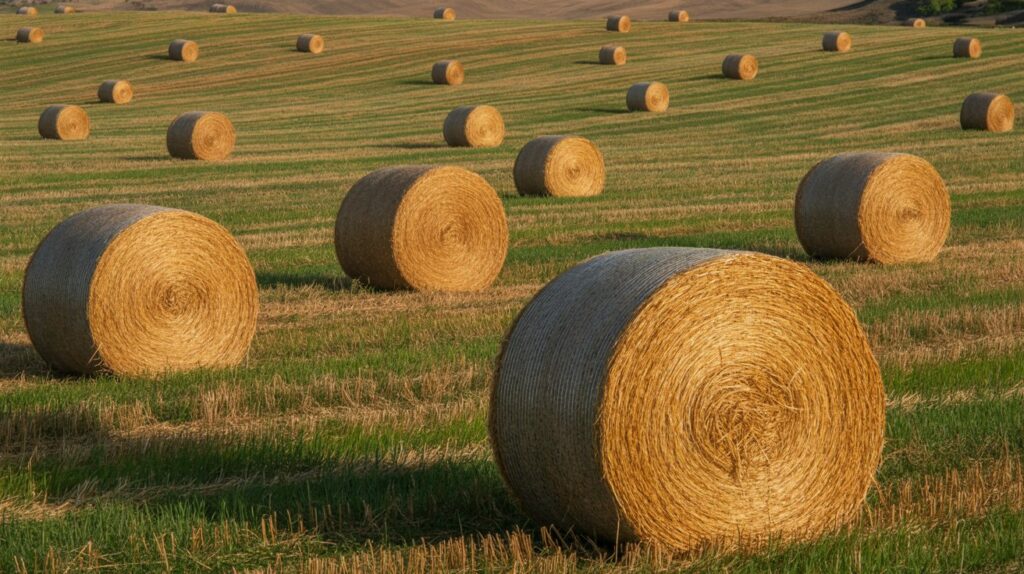
Another key advantage of round hay bales is their ability to shed water when stored outdoors. Their curved surface prevents excessive moisture absorption, helping to preserve the quality of the hay inside. This feature is particularly beneficial in regions with unpredictable weather, as it minimizes the risk of mold and spoilage.
Additionally, the process of baling hay into round bales is less labor-intensive and time-consuming compared to small square bales, making it a practical choice for larger farming operations. Ensuring proper storage, such as using tarps or under covered structures, further extends their longevity and retains their nutritional value.
Key Factors Affecting Bales Per Acre
Forage Type and Yield
The density of your crop depends heavily on the varieties you choose to plant. High-quality alfalfa seeds generally produce much heavier and denser bales compared to traditional mixed grasses. This directly impacts your average hay yield per acre in ideal conditions.
Field Conditions and Topography
The layout of your farm plays a crucial role in efficient forage collection. Steep slopes and natural obstacles can significantly reduce the number of hay bales per acre harvested. A level field will always maximise your final hay harvest estimation.
Baler Setup and Operator Skill
Your tractor operator’s experience determines the quality of each bale produced. Properly adjusting the baler’s tension ensures a higher hay bale weight per acre. Inexperienced operators often waste valuable material during small vs large hay bale production comparison.
Weather Conditions
The weather can make or break your hay harvest season. Packing hay at ideal moisture levels preserves the nutrients of your alfalfa seeds. Prolonged droughts or unexpected rains can ruin your hay crop productivity without warning.
Windrow Management
Uniform windrows are essential for continuous collection without mechanical jams. A well-structured windrow maximises the baler’s intake and boosts your hay yield calculation. This practice is crucial for optimising your total pasture hay output.
Maximising Your Crop Production
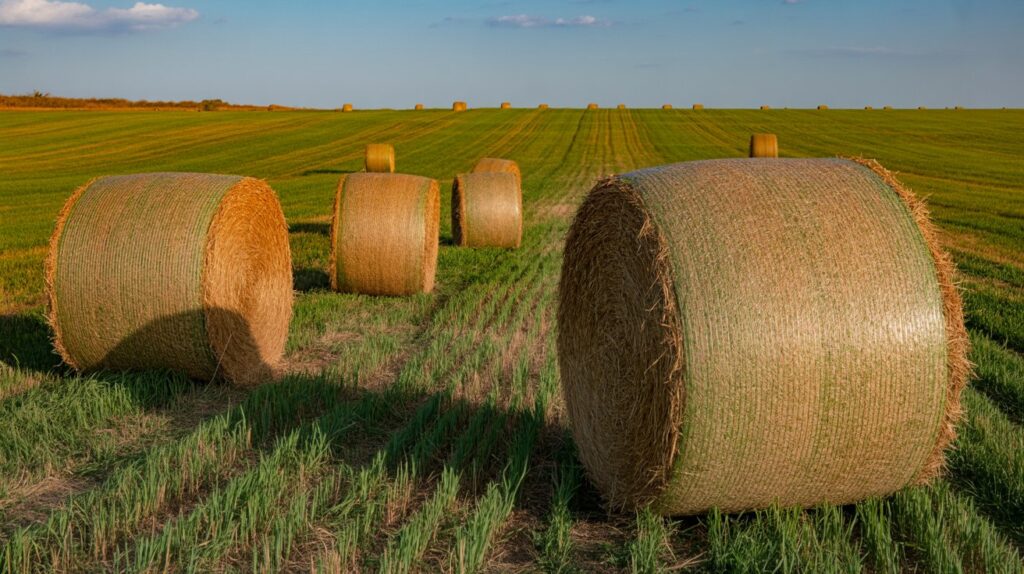
Using the right fertilisers can turn low-yield pastures into high-output fields. Knowing the fertiliser requirements for hay farming ensures your alfalfa seeds germinate strongly. This is essential when estimating the hay output from 100 acres of arable land.
The frequency of cutting also determines your final yearly harvest volume. Understanding the hay cutting stages and yield differences helps you balance quality and quantity. This is the foundation for consistently improving your hay acreage production season after season.
Proper irrigation is another critical factor in maximizing hay production from alfalfa seeds. Regular watering schedules tailored to your region’s climate and soil type can significantly enhance growth and ensure a healthy crop. Monitoring soil moisture and investing in efficient irrigation systems, such as drip or pivot irrigation, can help conserve water while maintaining optimal conditions for your alfalfa or grass hay.
Additionally, managing pests and weeds through integrated pest management techniques ensures that your hayfields remain productive and free from competition that could hinder growth.
Optimising Storage and Quality
Protecting your bales from the elements ensures superior nutrition for your animals. The balance between hay quality vs quantity comparison is set during the first months of storage. Using certified alfalfa seeds guarantees that your forage retains its protein value.
Planning your farm’s logistics will significantly reduce annual operating costs. If you’re wondering how to increase hay yield per acre, start by auditing your storage and transport processes. This can dramatically improve the results of your hay production from 50 acres.
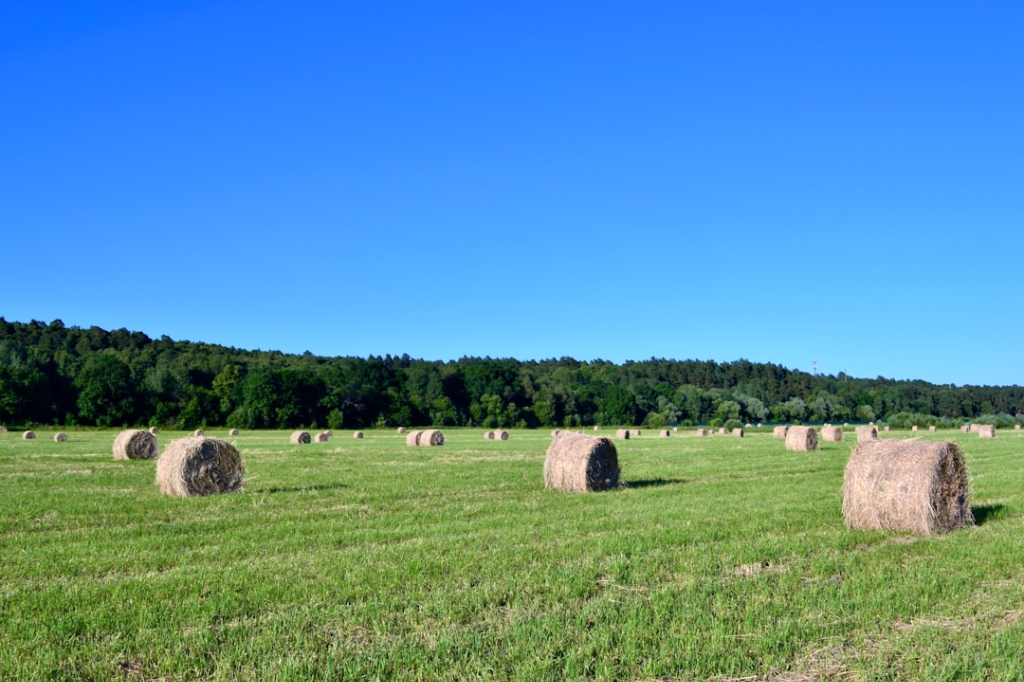
Additionally, rotating crops and maintaining soil health are crucial steps in ensuring long-term productivity. Implementing practices such as soil testing and fertilization tailored to your land’s specific needs can help maximize nutrient availability.
Furthermore, investing in modern equipment for cutting and baling hay can improve efficiency and reduce waste. By combining these strategies with proper irrigation methods, farmers can enhance both the quality and quantity of their harvest, ultimately boosting profitability and ensuring sustainable operations for years to come.
FAQ’s
- When to plant alfalfa?
Spring (March–May) or late summer (August–September) when soil moisture is good. - What are alfalfa seeds good for?
Used for high-protein forage, hay, livestock feed, and soil improvement (nitrogen fixing). - Why is alfalfa hard to grow?
It needs well-drained soil, proper pH, and is sensitive to weeds and poor establishment conditions. - How many pounds of alfalfa seeds per acre?
Typically 12–20 lbs per acre, depending on planting method and conditions. - What if no rain after planting?
Seeds may fail to germinate or die, leading to poor stand establishment. - Cost to alfalfa seeds 1 acre?
Usually $50–$150 per acre, depending on seed price and seeding method. - Can you broadcast alfalfa seeds?
Yes, but it requires good seed-to-soil contact and slightly higher seeding rates. - Most profitable crop per acre?
Varies by region, but high-value crops like vegetables, fruits, or specialty crops often give the best returns. - Do deer prefer alfalfa or clover?
Deer generally prefer alfalfa, but also like clover—both are highly attractive.