
Best Blueberry Seeds for Beginners
As an Amazon Associate I earn from qualifying purchases.
Last updated: November 27, 2026
The best blueberry seeds for beginners are half-high types: they stay compact, tolerate cold, suit containers, and fruit sooner than highbush plants grown from seed. Highbush types give the largest berries but need acidic soil and patience, while lowbush types suit cold ground cover. Start seed indoors after cold stratification.
Quick Picks
- Top pick: Half-high blueberry seeds — compact, cold-hardy plants that suit containers and small gardens.
- Runner-up: Highbush blueberry seeds — the largest berries, for gardeners with acidic soil and room to grow.
- Best for cold climates: Lowbush blueberry seeds — low, spreading plants for cold ground cover and borders.
Best Blueberry Seeds for Beginners: What to Look For
Blueberries are a long-term crop, and that is the first thing a beginner should know. The University of Minnesota Extension explains that blueberry plants give little fruit in their first two or three years, a bigger harvest after about five years, and reach full size in eight to ten years. Seed is the slowest way to start, but it is also the cheapest way to try several types, and it suits gardeners who are happy to wait for a plant that can fruit for decades.
Blueberries need full sun and acidic soil. They also do best with two or more varieties planted together, because cross-pollination gives larger berries and bigger crops. Before you sow, test your soil or plan to grow in containers with an acidic, peat-based mix, because most garden soil is too alkaline for blueberries. A packet should name the type — highbush, lowbush or half-high — and say whether the variety was bred for cold climates.
| Blueberry type | Plant size | Berry size | Best for |
|---|---|---|---|
| Highbush | 4–6 feet tall | Large | Big harvests in mild to cool climates |
| Half-high | 2–4 feet tall | Medium | Containers and cold climates |
| Lowbush | 6–18 inches tall | Small, sweet | Ground cover and cold borders |
Check the packet for seed count and for any note about stratification, because blueberry seed often needs a cold period before it will germinate. Tiny seed and slow seedlings mean you should sow more seed than you need and thin to the strongest plants. For a plain guide to trays, mix and light, see our best seed starting kits for beginners.
How to Start the Best Blueberry Seeds for Beginners
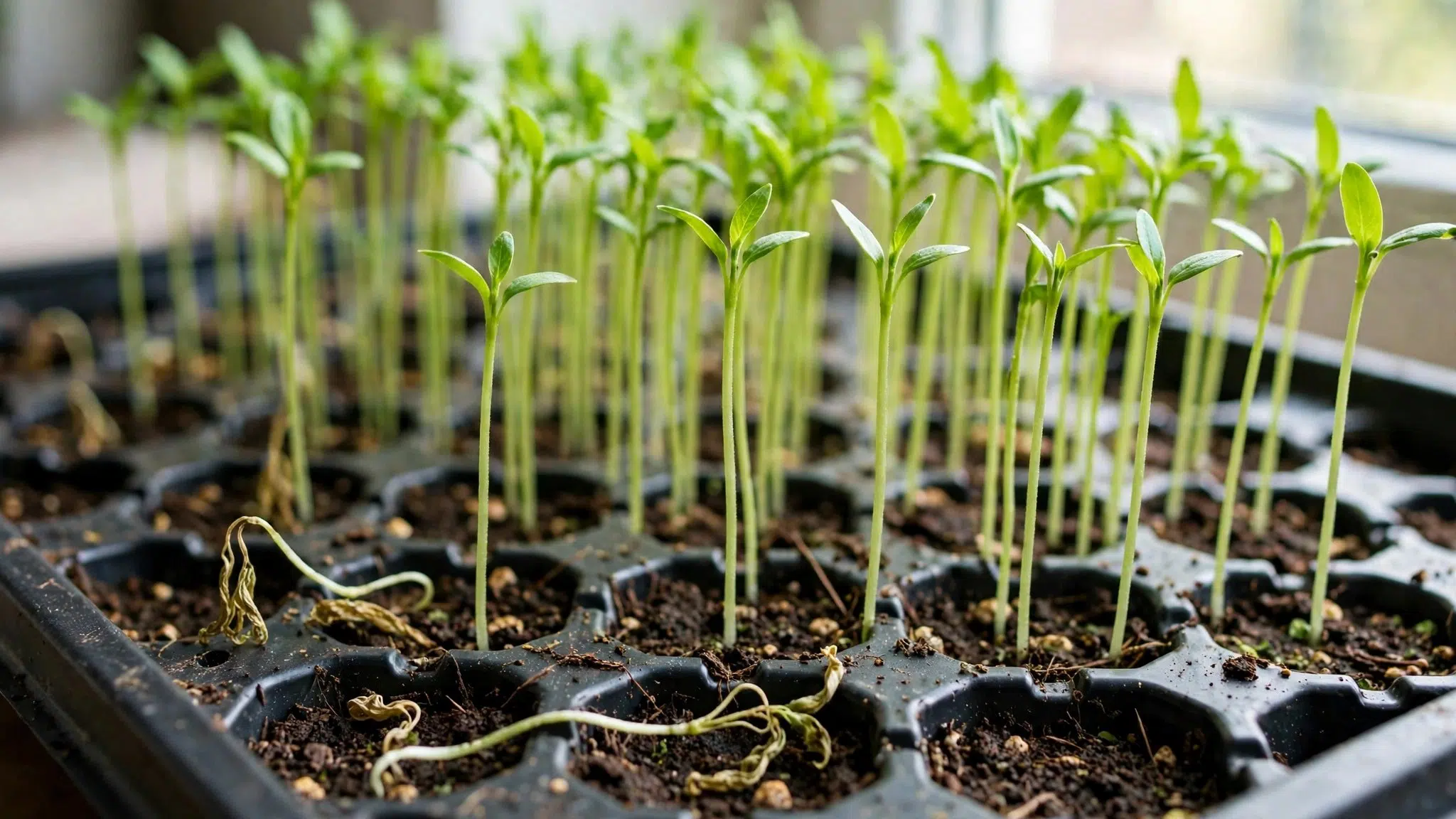
Blueberry seed germinates slowly and unevenly, so start early and be patient. Give the seed a cold, damp period first — mix it with damp peat moss in a sealed bag in the fridge for about 90 days, following the packet directions — then sow on the surface of a fine, acidic seed-starting mix. Press the seed in gently, leave it uncovered, and keep it damp and bright. Germination can take several weeks, and the seedlings stay tiny for a long time.
- Stratify seed cold and damp, as the packet directs, before sowing.
- Sow on the surface of acidic, fine seed-starting mix; do not bury the seed.
- Keep the mix damp with rainwater or soft water where possible.
- Give bright light once seedlings appear, and avoid strong fertiliser.
- Grow seedlings on in pots for a full season before planting out.
- Plant out in full sun, in acidic soil or in containers with ericaceous mix.
Do not expect fruit in the first year. Prune out old, weak or dead wood once plants are established, and keep the soil mulched and damp. If you want to understand how germination works in general before you start, read our guide to how to germinate seeds.
Best Blueberry Seeds for Beginners: Our Researched Picks
The picks below link to verified Amazon listings for the seed type described. Half-high seed is the exception: no half-high blueberry seed packet could be verified on Amazon — named half-high varieties such as North Country are usually sold as plants, so that pick is unlinked. Check the packet for the seed count and variety before you buy.
1. Half-high blueberry seeds — best for beginners
✓ Top Pick: Half-high types, including cold-hardy varieties bred in Minnesota such as North Country, are the best starting point for beginners. Plants stay compact at about two to four feet, tolerate cold winters, suit containers, and are easier to protect and prune than tall highbush plants. They are a good match for gardeners who want blueberries without giving over a large bed. Note: we could not verify a half-high seed packet on Amazon, so this pick has no buy link — look for named half-high varieties from a specialist seed supplier, or start with a bareroot plant.
| ✓ Pros | × Cons |
|---|---|
|
|
2. Highbush blueberry seeds — best for large berries
✓ Runner-up: Highbush types give the largest berries and the biggest harvests, and they are the standard choice for a dedicated blueberry bed. They grow four to six feet tall, need full sun and acidic soil, and do best with a second variety nearby for cross-pollination. Choose highbush seed if you have space, acidic soil or large containers, and you are willing to wait several years for a full crop. Our verified example is the Highbush Blueberry Seeds for Planting, a sweet-berry shrub seed packet.
| ✓ Pros | × Cons |
|---|---|
|
|
3. Lowbush blueberry seeds — best for cold climates
✓ Best for cold climates: Lowbush types are low, spreading plants, six to eighteen inches tall, with small, very sweet berries. They suit cold climates, poor acidic soil, borders and ground cover, and they need less pruning than tall types. They are a good choice if you want a tough, low-maintenance blueberry patch rather than a large dessert crop. Our verified example is the Lowbush Blueberry Seeds, Vaccinium angustifolium (300 seeds).
| ✓ Pros | × Cons |
|---|---|
|
|
How We Chose
We did not test these products ourselves. We researched them by comparing plant type, cold hardiness, berry size, soil needs and time to fruit against guidance from the University of Minnesota Extension and other university extension sources, and by checking packet details such as type, variety name and seed count. We favoured types that a beginner can keep alive — compact, cold-hardy plants for containers and small gardens — and we left out any pick whose Amazon product page we could not verify. Before you buy, check the packet and check how long your seed will stay viable using our seed viability chart.
Final Verdict
For most beginners, half-high blueberry seed is the best choice: compact, cold-hardy and suited to containers. If you have acidic soil, space and patience, highbush seed gives the largest berries and the biggest harvests. If you garden in a cold climate and want a tough, low patch, lowbush seed is the better fit. Whichever type you choose, plant two varieties together, keep the soil acidic and damp, and plan for a plant that rewards patience for years. If you cannot find half-high seed, highbush seed is the easiest verified option to buy online — check its price below.
Frequently Asked Questions
Do blueberry seeds need cold stratification?
Often, yes. Blueberry seed usually germinates better after a cold, damp period in the fridge, so follow the packet directions and allow several weeks for germination after sowing.
How long do blueberries grown from seed take to fruit?
Expect little fruit in the first two to three years, a bigger harvest after about five years, and full size in eight to ten years. Seed-grown plants are slower than bought plants, but they can fruit for decades.
Do I need two blueberry plants?
You do not strictly need two, but planting two or more varieties together gives larger berries and bigger crops through cross-pollination. It is worth the extra pot or bed space.
What soil do blueberries need?
Blueberries need full sun and acidic soil. In containers, use an ericaceous or peat-based mix, keep it damp, and avoid lime. Test your soil before planting in the ground.
Can I grow blueberries from seed in a container?
Yes. Half-high types are the best choice for containers, because they stay compact. Use a large pot, acidic mix, and water with rainwater or soft water where possible.