Dried seeded eucalyptus sounds simple until the seed pods start dropping. The good news is that you can preserve most of those attractive clusters with the right method. The key is gentle drying, steady airflow, low humidity, and careful handling.
This guide explains how to dry seeded eucalyptus without losing its seed pods from start to finish. You’ll learn how to select stems, prepare them, choose a drying location, prevent mold, protect the natural color, and store the finished dried eucalyptus stems for long-term décor.
Why Seeded Eucalyptus Loses Its Seed Pods During Drying
Seeded eucalyptus loses pods mainly when the stems become dry and brittle before the clusters have settled into their dried form. Rough handling can then knock the pods loose. Rapid moisture loss can make this problem worse, especially when the stems sit near strong heat.
The safest approach to eucalyptus preservation is gradual drying. Research on eucalyptus capsules shows that progressive drying and continuous airflow help moisture leave the plant material steadily. That principle also makes sense for decorative stems because sudden drying can create unnecessary brittleness.
What Makes Seeded Eucalyptus Different From Other Eucalyptus
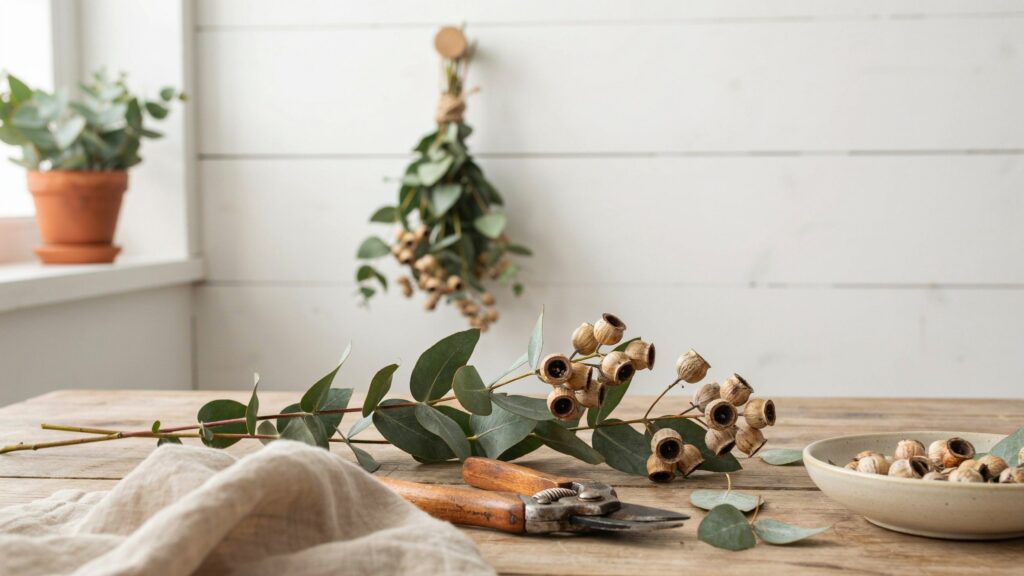
Seeded eucalyptus is valued for the small rounded clusters that grow along its stems. These clusters create more texture than many leafy eucalyptus varieties. They also give dried arrangements a distinctive shape that remains attractive after the foliage loses some of its fresh color.
Compared with Silver Dollar eucalyptus, seeded types have more visual detail around the stem. Gumdrop eucalyptus and other rounded-leaf varieties can create a softer leafy effect. Seeded stems instead provide both foliage and small decorative clusters.
Why Seed Pods Fall Off Before the Stems Fully Dry
Seed pods may loosen because the stem attachment points become dry and fragile. Some clusters are naturally weaker than others. Stems that have already been handled heavily before drying may also lose pods more easily.
Think of the drying process like slowly shrinking a sponge. As moisture leaves, the plant becomes less flexible. If you bend or shake it during this stage, fragile parts can break away.
When Is Seeded Eucalyptus Ready to Dry?
Fresh material usually gives you the best chance of preserving the clusters. Look for fresh eucalyptus stems with firm branches, healthy foliage, and seed clusters that stay attached when you gently move the stem.
Florists commonly select seeded eucalyptus for its firm stems and textured clusters. Fresh stems can also dry successfully in place, making them useful for long-lasting arrangements.
Signs of Fresh, Healthy Stems
Healthy stems should feel firm rather than limp or slimy. The eucalyptus leaves should look reasonably fresh without widespread yellowing, black spots, or severe wilting. The cut ends should also look clean.
Avoid material that already shows decay. Starting with damaged greenery is like building a house on a weak foundation. Drying won’t repair poor-quality plant material.
How to Choose Stems With Strong Seed Pods
Choose stems where the seed clusters feel firmly attached. Hold the lower stem and gently move it once. If several pods fall immediately, choose another stem.
Look for plump, well-formed clusters rather than shriveled ones. Strong clusters generally have a better chance of remaining attractive after drying.
How to Prepare Seeded Eucalyptus Before Drying
Preparation has a bigger effect than many people expect. Remove damaged foliage and inspect every stem before creating your drying bundles. This gives moisture a clearer path out of the plant.
Use clean gardening shears to make neat cuts. Avoid crushing woody stems unnecessarily. Clean preparation also makes the finished air-dried seeded eucalyptus look more professional.
Should You Remove the Leaves First?
You don’t need to remove every leaf. Keep healthy eucalyptus foliage that contributes to the final shape. Remove leaves that are damaged, discolored, crowded, or likely to trap moisture.
Too much dense foliage can slow drying. A lightly thinned stem usually dries more evenly while still retaining its natural appearance.
How to Trim and Bundle the Stems
Trim damaged ends with clean shears. Then create small bundles using string or twine. Keep the bundles loose enough for air to move between the stems.
Large, tight bundles are tempting because they look tidy. They can also behave like a damp sponge. A smaller bundle gives moisture more room to escape.
How to Air-Dry Seeded Eucalyptus at Home
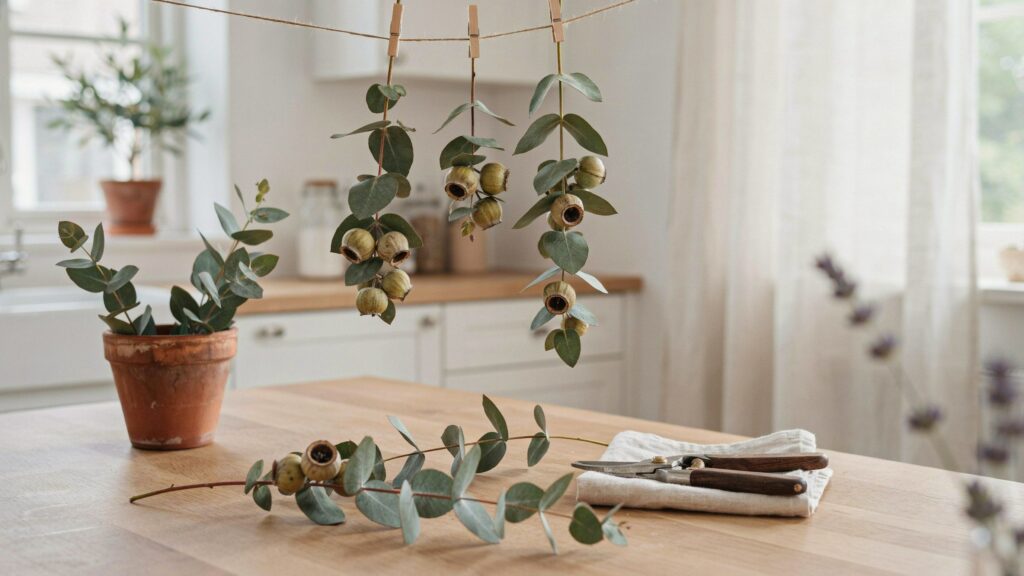
The easiest air-drying method needs very little equipment. Hang the stems upside down in a dry area where air can circulate freely. This method is slow, but that slower pace can help protect fragile seed clusters.
A florist supplier also recommends hanging eucalyptus upside down in a dry, dark area for air drying. For most home projects, patience is more useful than complicated equipment.
The Best Position for Hanging Eucalyptus
Hang each bundle upside down with the seed clusters facing away from walls and other objects. Leave enough space between bundles so they don’t rub together.
The stems should hang naturally rather than being compressed. This helps maintain their shape and reduces accidental contact with fragile pods.
Why Good Airflow Matters During Drying
Good air circulation removes moisture from the surface of the plant and replaces humid air with drier air. This creates better drying conditions and reduces the chance of moisture becoming trapped inside dense foliage.
FAO guidance specifically recommends well-ventilated conditions for drying eucalyptus capsules. It explains that continuous air movement helps create progressive drying.
Where to Hang Seeded Eucalyptus in a USA Home
The best location depends on your local climate. A dry Arizona room behaves very differently from a humid Florida home. Coastal areas and damp basements can slow drying considerably.
For drying eucalyptus at home, choose a place that stays dry and reasonably stable. Avoid sudden temperature changes and areas where steam or moisture regularly collects.
Best Indoor Locations for Drying
A spare room, dry closet, covered porch, or well-ventilated utility area can work. The location should have steady airflow without strong drafts that constantly knock the stems around.
A small fan can improve circulation if needed. Keep it from blowing directly and forcefully onto the bundles because excessive movement can cause fragile pods to shake loose.
Places You Should Avoid
Avoid bathrooms, damp basements, laundry rooms with high humidity, and spaces beside humidifiers. Don’t place drying stems directly above radiators or heating vents.
Also avoid areas exposed to strong direct sunlight. Heat and sunlight can speed moisture loss and cause unwanted color changes.
How Long Does Seeded Eucalyptus Take to Dry?
Most home air-drying projects need patience. Florist guidance commonly recommends around two to three weeks for air-dried seeded eucalyptus, although actual drying time depends strongly on the environment.
Eucalyptus capsules can behave differently from decorative foliage. FAO notes that eucalyptus capsules may dry and open within several days under suitable conditions. Decorative stems with leaves can take much longer to feel completely dry.
What Changes the Drying Time?
Humidity is one of the biggest factors. Bundle size, stem thickness, foliage density, temperature, airflow, and starting moisture also matter.
| Drying condition | Likely effect |
|---|---|
| Low humidity | Faster drying |
| High humidity | Slower drying |
| Small loose bundles | Better airflow |
| Large tight bundles | More trapped moisture |
| Good ventilation | More even drying |
| Strong heat | Faster but potentially harsher drying |
The table shows why there isn’t one perfect number of days for every home.
How to Tell When the Stems Are Completely Dry
A properly dried stem should feel firm and noticeably lighter. Leaves become drier and more fragile. The stem should no longer feel cool or damp when handled gently.
Don’t squeeze the seed clusters to test them. Instead, inspect one small stem first. If it still bends with a fresh, moist feel, give the entire bundle more time.
How to Keep Seed Pods Attached While Drying
The most important rule is simple: touch the stems as little as possible. Every unnecessary movement creates another opportunity for a dry cluster to break away.
Start with strong stems. Use small bundles. Give them space. Then leave them alone while they dry. These simple habits often matter more than special products.
The Best Way to Handle Fragile Seed Clusters
Hold the woody section of the stem rather than grabbing the pods. When moving a bundle, support it from underneath.
Never pull individual clusters to check whether they’re dry. The cluster can feel firm before the attachment point becomes strong enough to tolerate rough handling.
Why Moving the Stems Too Often Causes Pod Loss
Drying changes the flexibility of plant tissue. A stem that feels flexible on day one can become brittle later. Repeated checking can therefore create more damage as the drying process progresses.
Treat your drying bundle like a fragile paper craft. Check it when necessary, but don’t keep rearranging it every day.
Should You Dry Seeded Eucalyptus in Sunlight?
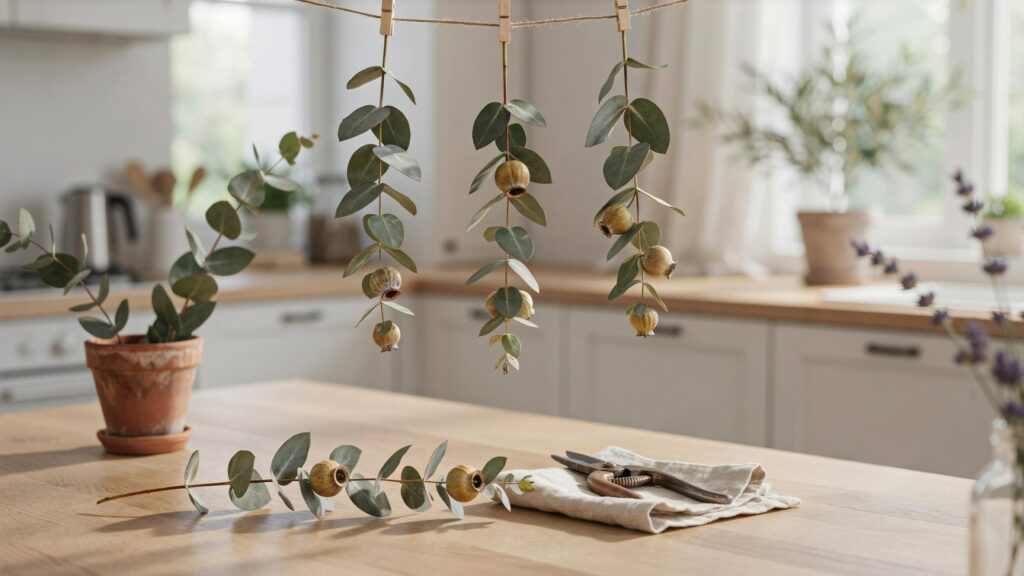
Sunlight can accelerate drying, but faster isn’t always better. FAO guidance notes that full sun can speed eucalyptus capsule opening while excessive temperatures can create problems for seed material.
For decorative eucalyptus branches, indirect light is usually a gentler choice. It gives you better control over the drying environment and can help reduce unnecessary fading.
When Indirect Light Is Better
Indirect light works well when you want to preserve the appearance of the foliage. A bright room with no harsh sunbeam can provide visibility without turning the drying area into a miniature greenhouse.
This is especially useful for delicate stems that already have fragile seed clusters.
Why Excessive Heat Can Damage Plant Material
High heat pulls moisture out quickly. That may sound helpful, but very rapid drying can make leaves and stems brittle before the material has dried evenly.
FAO guidance also stresses controlled drying and notes that excessive heat can be harmful to seed material.
How to Prevent Mold on Drying Eucalyptus
Mold becomes more likely when moisture remains trapped around dense leaves and stems. Humid homes need extra attention because the surrounding air may already contain significant moisture.
The answer isn’t simply “dry it hotter.” Better spacing and good air circulation are often safer first steps. Slow drying in a dry, ventilated area gives moisture somewhere to go.
Common Moisture Problems
Common problems include oversized bundles, wet leaves, condensation, high indoor humidity, and poor ventilation. A stem may look dry on the outside while retaining moisture deeper inside.
This hidden moisture is why patience matters. Don’t store or tightly pack the stems just because the outer leaves look crisp.
What to Do If You Notice Mold
Separate the affected material immediately. Inspect nearby stems carefully and discard heavily contaminated pieces rather than trying to save every stem.
If only a small area looks questionable, improve ventilation and separate the stems. Never place visibly moldy material into a sealed storage container.
Can You Use a Dehydrator to Dry Seeded Eucalyptus?
A dehydrator can provide controlled conditions, but it isn’t usually necessary for decorative dried seeded eucalyptus stems. Air drying is simpler and gives you more time to monitor the seed clusters.
If you are trying to preserve viable eucalyptus seed rather than simply create décor, the temperature requirements become more important. Seed extraction and decorative drying aren’t exactly the same goal.
When Controlled Heat May Be Useful
Controlled heat may help when humidity is making natural drying difficult. However, heat should be gentle and carefully monitored.
FAO documentation describes controlled drying systems for eucalyptus capsules, including forced-air systems. Those methods are designed for seed extraction rather than ordinary home décor.
Safe Drying Practices for Small Batches
For decorative stems, avoid treating a kitchen oven like a flower dryer. Excessive heat can make foliage brittle and may damage delicate plant material.
If controlled drying is necessary, use low, carefully monitored conditions and plenty of airflow. Stop if the stems begin browning rapidly or becoming unusually brittle.
Common Mistakes That Make Seed Pods Fall Off
Most pod-loss problems come from simple handling mistakes. People often rush the process because they want the finished dried seeded eucalyptus décor immediately.
The better strategy is boring but effective: choose good stems, create loose bundles, provide airflow, avoid excessive heat, and let the stems dry without constant interference.
Hanging Stems Too Close Together
Crowded stems rub against each other. Their leaves also block airflow. This can create damp pockets inside the bundle.
Keep bundles small enough that air can pass through them. If the stems look compressed, separate them.
Drying Eucalyptus Too Quickly
Fast drying can increase brittleness. A very hot room or strong heat source may dry the outside before the inside has adjusted.
Natural drying takes longer, but it gives you more control. For decorative preservation, slow and steady usually wins.
How to Preserve the Natural Color of Dried Seeded Eucalyptus
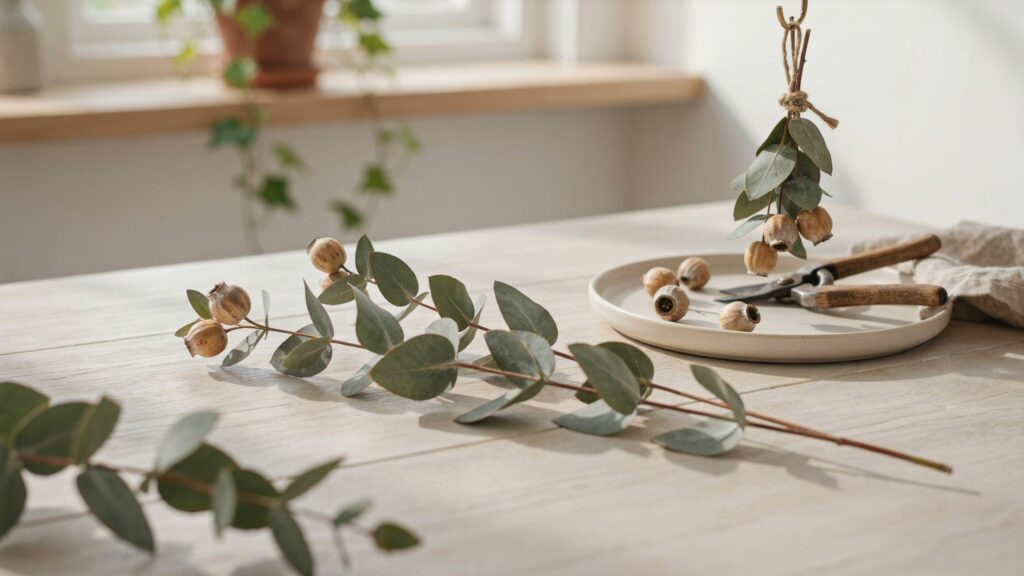
Fresh eucalyptus rarely keeps exactly the same color after drying. Green foliage may become muted, gray-green, olive, tan, or slightly brown.
The goal of eucalyptus preservation is therefore not to freeze the fresh appearance forever. Instead, you want to maintain a clean, attractive shape and natural tone.
Why Green Eucalyptus Turns Duller as It Dries
Water loss changes how light interacts with the leaves. Pigments and plant structure also change as the material ages.
Some eucalyptus varieties naturally develop attractive muted tones. This softer color is one reason air-dried eucalyptus works well in rustic and minimalist interiors.
Can Glycerin Help Preserve Eucalyptus?
Yes. Vegetable glycerin can be used in preservation methods that aim to keep foliage softer and more flexible. This differs from traditional air drying.
Glycerin preservation generally involves absorbing a glycerin-and-water solution through the stems. The result can be more pliable than ordinary dried foliage. It is useful when flexibility matters more than a crisp, naturally dried texture.
How to Store Dried Seeded Eucalyptus Without Losing Pods
Once the stems are dry, storage becomes the next challenge. Fragile pods can survive for a long time if you keep the material dry and avoid crushing it.
Place the finished stems somewhere protected from moisture and frequent handling. Think of storage as the second half of the drying process.
Best Containers and Storage Conditions
For short-term storage, use a dry container that doesn’t crush the stems. Don’t force long branches into a small box.
For longer storage, protect the stems from dust and moisture while leaving enough space to prevent pressure on the clusters. A cool, dry environment is usually preferable.
How to Protect Dried Stems From Humidity
Humidity can cause dried plant material to absorb moisture again. This can lead to softness, discoloration, or mold.
Keep stored stems away from bathrooms, steam, wet kitchens, and damp garages. If your home has high humidity, check stored greenery occasionally rather than assuming it will remain dry forever.
How to Use Dried Seeded Eucalyptus in Home Decor
Once properly dried, seeded eucalyptus becomes a versatile decorating material. The stems work beautifully in simple arrangements because the seed clusters provide texture without overwhelming the design.
You can combine eucalyptus home décor with dried grasses, neutral flowers, branches, and other natural materials. Its muted color also works well with farmhouse, rustic, minimalist, and modern interiors.
Dried Seeded Eucalyptus for Vases and Bouquets
Place a few dried stems in a simple vase for an understated display. You can also combine them with dried seeded eucalyptus flowers and other dried botanicals.
A dried seeded eucalyptus bouquet doesn’t need many ingredients. A handful of strong stems can create height, movement, and texture without looking crowded.
Using Seeded Stems for Wreaths and Crafts
Dried seeded stems work well in wreaths, wall pieces, table arrangements, and seasonal crafts. Their small clusters create visual texture around larger dried flowers.
When making crafts, cut the stems gradually. Avoid bending the seed clusters sharply because dried plant material can snap without warning.
How to Fix Seeded Eucalyptus That Has Already Lost Its Pods
You can’t always restore a stem once its pods have fallen. However, loose clusters aren’t necessarily useless. They can sometimes become separate decorative pieces.
Place loose clusters aside instead of throwing them away immediately. They may work in small craft projects, tabletop arrangements, or as texture around other dried botanicals.
Can Loose Seed Pods Be Reattached?
Yes, loose decorative clusters can sometimes be attached with discreet floral wire or suitable craft adhesive. The best method depends on the final project.
This won’t recreate the original living stem. It simply gives you a practical way to reuse attractive pieces that have detached.
When to Replace Damaged Stems
Replace stems that show extensive mold, severe breakage, strong discoloration, or major pod loss. A damaged stem can make an entire arrangement look unfinished.
Good dried material should still have useful structure. If most of the decorative value has disappeared, starting with fresh material is usually easier.
Frequently Asked Questions About Drying Seeded Eucalyptus
Drying seeded eucalyptus raises several common questions. The answers often depend on whether you’re preserving the greenery for decoration, saving seed, or creating long-lasting floral arrangements.
The most important distinction is purpose. Decorative drying focuses on appearance and structure. Seed drying focuses on proper maturity, moisture control, and seed viability.
Does Seeded Eucalyptus Dry Better in Water or Without Water?
For traditional air drying, hang the stems without water. This allows the remaining moisture inside the plant to leave gradually.
Keeping stems in water is useful when you want to maintain them as fresh greenery. It isn’t necessary for the standard hanging-dry method.
Can You Dry Seeded Eucalyptus Without Hanging It?
Yes. You can place individual stems on a clean, dry surface with plenty of space around them.
A wire mesh surface can provide useful airflow underneath. Avoid stacking stems because the trapped layers can retain moisture.
How Long Can Dried Seeded Eucalyptus Last?
Properly dried seeded eucalyptus can remain attractive for months or longer. Some arrangements can last for years when kept dry and handled carefully.
Color and fragrance gradually change with age. The physical structure can remain useful even after the original fresh appearance fades.
Is Dried Seeded Eucalyptus Safe to Keep Indoors?
Dried seeded eucalyptus is commonly used as indoor decorative greenery. However, keep it away from pets and children who may chew or ingest it.
Some florist sources specifically warn that eucalyptus can be toxic to pets if ingested.
Best Way to Dry Seeded Eucalyptus in the USA
The best method for most homes is gradual air drying. Choose healthy stems, remove damaged foliage, make loose bundles, and hang them upside down in a dry area with steady airflow.
Your local climate matters. A dry western home may need less drying time than a humid coastal home. Watch the stems instead of following an exact calendar.
A Simple Step-by-Step Drying Routine
| Stage | What to do |
|---|---|
| Selection | Choose fresh stems with firm seed clusters |
| Preparation | Remove damaged or crowded foliage |
| Trimming | Make clean cuts with gardening shears |
| Bundling | Use loose bundles with string or twine |
| Hanging | Hang stems upside down |
| Location | Choose a dry, ventilated room |
| Light | Use indirect light rather than harsh sun |
| Handling | Touch stems as little as possible |
| Checking | Inspect gently after adequate drying time |
| Storage | Keep completely dry stems protected from humidity |
This routine keeps the process simple. The main goal is controlled moisture loss without unnecessary physical stress.
Final Checklist for Keeping Seed Pods Intact
Before drying, make sure the seed clusters are firm and the fresh eucalyptus stems are healthy. During drying, use small bundles and maintain good air circulation.
Keep the stems away from moisture, strong heat, and direct sunlight. Most importantly, don’t keep moving them. Once completely dry, store them in a dry location and handle the clusters gently.
What Is Seeded Eucalyptus?
Seeded eucalyptus is eucalyptus greenery that carries small rounded seed clusters along its stems. These clusters create the textured appearance that makes it popular in bouquets, wreaths, wedding designs, and dried arrangements.
The greenery is different from foliage-only varieties because the stems offer both leaves and decorative seed structures. That combination gives dried arrangements extra depth.
How Long Does Seeded Eucalyptus Last in a Vase?
Fresh seeded eucalyptus can last roughly 10 to 21 days under good care according to current florist guidance. Actual vase life varies with freshness, hydration, temperature, and handling.
Keeping fresh stems cool and away from heat can help them remain attractive longer. Once removed from water and properly dried, the stems can become a much longer-lasting decorative material.
What Is Dried Seeded Eucalyptus Good For?
Dried seeded eucalyptus décor is useful for vases, wreaths, bouquets, garlands, centerpieces, wall arrangements, wedding décor, and seasonal crafts.
It is especially useful when you want greenery without the maintenance required by living plants. The muted foliage also pairs naturally with dried flowers and neutral-colored decorative materials.
How Long Will Dried Seeded Eucalyptus Last?
Properly dried seeded eucalyptus can last for many months and may remain useful for years when protected from moisture and excessive handling. The exact lifespan depends heavily on storage conditions.
The foliage may become more muted over time. That’s normal. Good preservation is about maintaining useful structure and texture rather than keeping the plant permanently frozen in its fresh state.
Does Dried Seeded Eucalyptus Mold?
Dried seeded eucalyptus can mold if it wasn’t fully dried or if it later absorbs moisture. High humidity, dense bundles, and poor ventilation increase this risk.
This is why drying location matters so much. A genuinely dry environment with good air circulation is much safer than a damp room where moisture remains trapped around the leaves.
Does Dried Seeded Eucalyptus Still Smell?
Yes, dried seeded eucalyptus can retain some of its characteristic herbal scent. However, the fragrance usually becomes weaker as the material ages.
Fresh stems generally have a stronger aroma because their natural oils are more active. Properly dried stems may still release a noticeable scent when handled or moved.
A Practical Case Study: A Humid Florida Home
Imagine someone in coastal Florida receives a fresh bundle of seeded eucalyptus in summer. The homeowner hangs a large tight bunch inside a bathroom because it seems convenient.
After several days, the outside leaves look dry. The inner stems remain damp. The homeowner then stores the bundle in a sealed box. Moisture becomes trapped and mold appears.
The better approach would be a smaller bundle in a dry room with continuous airflow. This example shows why drying eucalyptus at home depends more on environmental conditions than on a fixed number of days.
A Practical Case Study: A Dry Arizona Home
Now consider a home in a dry Arizona climate. The air naturally removes moisture much faster. A large bundle placed near a hot window may become brittle quickly.
Moving the stems to bright indirect light with moderate airflow gives the homeowner better control. The stems may dry faster than expected, so frequent handling still isn’t necessary.
The lesson is simple: your climate changes the drying process. Watch the plant rather than blindly copying another person’s drying time.
The Key to Successful Seeded Eucalyptus Preservation
The secret isn’t a complicated chemical treatment. It is controlled drying. Start with healthy stems, protect the clusters, create loose bundles, and allow moisture to leave gradually.
For most home projects, the classic hanging method remains the easiest choice. With patience and gentle handling, air-dried eucalyptus can retain its natural structure and provide beautiful long-lasting greenery for your home.
FAQs
What is seeded eucalyptus?
Seeded eucalyptus is eucalyptus greenery recognized by its small rounded seed clusters along the stems. These clusters give the greenery its distinctive texture and make it popular for bouquets, wreaths, and dried arrangements.
How long does seeded eucalyptus last in a vase?
Fresh seeded eucalyptus can commonly last around 10–21 days with proper care, although vase life varies by variety, freshness, and handling.
What is dried seeded eucalyptus good for?
Dried seeded eucalyptus works well for vases, wreaths, bouquets, garlands, centerpieces, wall décor, crafts, and long-lasting floral arrangements.
How long will dried seeded eucalyptus last?
Dried seeded eucalyptus can remain decorative for months or longer when kept away from humidity, direct sunlight, excessive handling, and crushing.
Does dried seeded eucalyptus mold?
It can mold if moisture remains trapped in dense bundles or humid environments. Good airflow, adequate spacing, and thoroughly dry stems greatly reduce the risk.
Does dried seeded eucalyptus still smell?
Yes, dried seeded eucalyptus can retain some of its characteristic herbal or menthol-like scent. However, the fragrance usually becomes weaker as the material ages.