
Storing millet seed the right way helps protect it from mold, insects, moisture, and heat. Poor seed storage can reduce seed viability and make seeds less useful for planting. Even healthy seeds can lose quality when they stay in warm or damp places. The good news is that proper storage is simple when you follow a few basic steps.
Clean the seeds first, dry them well, and use a suitable container with a tight lid. Then keep the container in a cool dry place away from sunlight and water. Good seed drying and stable storage conditions can help extend seed life. This guide explains how to store millet seed safely in the USA and prevent common problems before the next planting season.
Why Proper Millet Seed Storage Matters
Good seed storage protects the living embryo inside each seed. Cool, dry conditions slow natural aging and help preserve seed viability. Proper storage also reduces exposure to insects, fungi, heat, and moisture swings that can weaken seeds over time. (Organic Seed Alliance)
For gardeners saving millet for another season, careful seed saving can reduce waste and preserve a useful supply. The goal is simple: keep seeds dry, cool, stable, and dark. These conditions help maintain seed quality while reducing unnecessary losses during storage.
What Happens When Millet Seeds Are Stored Incorrectly
Poor storage often begins quietly. Seeds may absorb moisture from humid air while sitting in a warm cupboard. Over time, this can encourage fungal growth, unpleasant odors, insect activity, and declining germination. Heat also speeds the natural aging process inside stored seeds.
The damage may remain invisible until planting time. A container can look perfectly normal while its seeds gradually lose vigor. Therefore, good seed storage conditions matter throughout the entire storage period, not only during the first few days.
How Mold and Insects Damage Stored Millet Seeds
Mold thrives when moisture and warmth combine. Insects create another problem because some pests can enter storage already hidden among the seeds. Their feeding leaves damaged kernels and waste that can further reduce seed quality.
Keeping millet dry greatly reduces these risks. University of Florida IFAS notes that sufficiently dried seeds are less vulnerable to mold and insects, while relative humidity below 35% can help prevent insect, bacterial, and fungal growth. (Ask IFAS – Powered by EDIS)
How to Prepare Millet Seeds Before Storage
Before putting millet seeds into any container, inspect the entire batch carefully. Remove debris and questionable seeds first. This simple preparation step prevents a small problem from spreading through an otherwise healthy collection.
Clean preparation also improves seed longevity because unwanted plant material can retain moisture. Once the seeds look clean and healthy, focus on drying them properly before choosing an airtight storage container.
Remove Broken, Damaged, and Infested Seeds
Damaged seeds deserve special attention because cracks and insect holes can provide entry points for moisture and microorganisms. Separate shriveled, discolored, broken, or visibly infested seeds from healthy material before storage.
A small batch can be inspected by hand under bright light. For larger quantities, spread the seeds across a clean tray. This makes unusual marks, insect fragments, and damaged seed coats much easier to notice.
Clean Dust, Plant Debris, and Other Contaminants
Remove husks, stems, soil, dried plant pieces, and other debris before seed drying. These materials can hold moisture and may interfere with airflow around the seeds.
Use a clean sieve or gentle winnowing method when practical. Avoid washing dry millet seeds unless there is a specific reason. Added water creates another drying challenge and can increase the risk of poor storage.
Check Millet Seeds for Moisture Before Storage
Moisture deserves more attention than almost any other storage factor. Seeds that feel cool or slightly damp may still contain enough internal moisture to cause trouble inside a sealed container.
For larger seeds, simple physical tests can offer clues about dryness. University of Florida IFAS also describes using a hygrometer with drying beads inside a sealed jar to monitor the surrounding relative humidity. (Ask IFAS – Powered by EDIS)
What Moisture Level Is Safe for Millet Seeds?
For general garden seed storage, University of Florida IFAS gives a target seed moisture level of roughly 5%–10% for the best possible storage conditions. Exact requirements can vary by crop and storage system, so this range should serve as a practical target rather than a universal millet-specific specification.
The important point is consistency. Extremely damp seeds create storage problems, while excessive drying can also damage some seed types. When possible, use a reliable moisture-testing method instead of guessing by touch alone.
Why Moisture Causes Mold in Stored Millet Seeds
Moisture gives microorganisms the environment they need to grow. When damp seeds sit in a warm container, fungal growth can develop rapidly. Mold can spread through nearby material and may also produce an unpleasant musty smell.
Humidity creates another hidden problem. Seeds can absorb water from surrounding air even when they initially seem dry. This is why controlling relative humidity matters especially in humid areas of the United States.
How to Dry Millet Seeds Safely at Home
Spread clean millet seeds in a thin layer on a dry, clean surface. Allow air to circulate around them while keeping them away from direct sunlight and household moisture sources. Stirring the seeds occasionally can help them dry more evenly.
For larger seeds, a home dehydrator may help when used carefully. University of Florida IFAS recommends keeping dehydrator temperatures below 100°F (37.8°C) to avoid damaging seeds.
What Temperature Is Best for Storing Millet Seeds?
Temperature affects how quickly seeds age. In general, cooler storage slows deterioration when the seeds remain sufficiently dry. A refrigerator can provide useful conditions for many garden seeds, particularly when temperature remains stable.
The storage location should also avoid repeated warming and cooling. A stable cool dry place often works well for short- or medium-term home storage.
Why Cool Storage Helps Protect Seed Quality
Cool conditions slow the biological processes that gradually reduce seed viability. Seeds remain alive during storage, so they naturally age even when they aren’t growing.
Think of cool storage as slowing the clock rather than stopping it. Combined with low moisture and darkness, cooler temperatures can significantly extend useful seed longevity.
How Heat and Humidity Affect Millet Seeds
Heat becomes particularly troublesome when humidity rises at the same time. Warm, moist conditions encourage microbial activity and can accelerate seed deterioration.
Temperature swings create another concern. Seeds stored near a stove, sunny window, attic, or warm garage may experience repeated changes. Stable conditions are generally preferable for maintaining seed storage conditions.
Which Containers Are Best for Storing Millet Seeds?
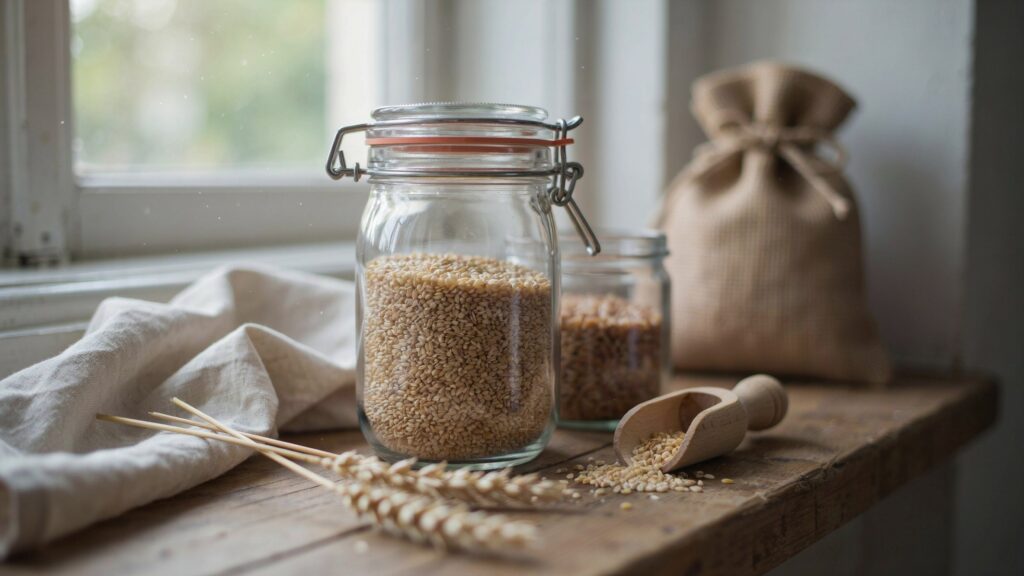
The right container must match the dryness of the seeds and the storage environment. Paper packets allow moisture movement, while sealed containers provide stronger protection against outside humidity and pests.
For thoroughly dried stored seeds, glass and sturdy plastic containers can work well. The container should be clean, dry, odor-free, and properly sealed before filling it.
Airtight Glass Jars for Small Quantities
A glass jar works well for small home collections because it provides a strong barrier against insects and outside humidity. Choose a clean jar with an intact sealing surface.
A jar with a rubber-lined gasket lid provides a tighter seal than a loose-fitting cap. However, only use airtight storage after the millet seeds have dried properly.
Food-Grade Plastic Containers for Larger Quantities
A sturdy plastic container can hold larger amounts while protecting seeds from pests and moisture. Select food-grade containers with secure lids and avoid containers that previously held chemicals or strong-smelling materials.
Before filling the container, make sure both the container and lid are completely dry. Even a small amount of trapped water can create problems inside sealed storage.
Resealable Bags for Short-Term Millet Seeds Storage
Resealable bags can work for short-term storage when seeds are thoroughly dry. They are convenient and inexpensive, especially for small quantities that you expect to plant soon.
However, thin bags provide less physical protection than rigid containers. For longer long-term seed storage, a sturdy sealed container offers better protection against insects, crushing, and moisture exposure.
How to Prevent Insects From Getting Into Millet Seeds
The simplest insect strategy starts before storage. Inspect the seeds carefully and remove anything showing insect damage. Then use a clean, sealed container that prevents new pests from entering.
Dry conditions also help prevent mold and insects. Some storage pests thrive when moisture rises. A dry, sealed environment makes the container less attractive and less suitable for insect growth.
Common Insects That Attack Stored Millet
Stored grains and seeds can attract small beetles, weevils, moths, mites, and other pests. Some may arrive with the original seed lot, while others can enter poorly sealed containers.
Watch for tiny holes, webbing, powdery residue, insects, larvae, or unusual movement. Any sudden change deserves investigation before the entire batch gets returned to storage.
How to Inspect Millet Seeds for Insect Activity
Inspect seeds under bright light before sealing them. Look for holes, tunnels, insect bodies, shed skins, webbing, or unusual powder around the seed surface.
Repeat the inspection periodically during storage. Early detection matters because one contaminated container can become a larger problem when stored beside other seed lots.
How to Keep Storage Containers Insect-Free
Wash and completely dry reusable containers before filling them. Keep storage shelves clean and avoid placing seed containers beside open grains, flour, pet food, or other pest-prone materials.
A strong seal provides another barrier. Thick glass, plastic, or metal containers offer better insect protection than paper alone, according to seed-storage guidance from the Organic Seed Alliance. (Organic Seed Alliance)
How to Prevent Mold in Stored Millet Seeds
Mold prevention starts with proper drying. Never assume a seed feels dry simply because its outer surface looks dry. Internal seed moisture can remain high even when the outside appears normal.
Use low humidity, stable temperatures, and clean containers. If your home stays humid, a dehumidifier can help lower ambient moisture before seeds enter sealed storage.
Signs That Millet Seeds Are Developing Mold
Mold may appear as fuzzy growth, unusual discoloration, clumping, or a musty odor. Moisture inside the container can also cause seeds to stick together.
Don’t ignore condensation. Droplets on the inside of a container indicate that moisture has entered or remained trapped. Separate the affected batch and investigate the cause before storing healthy seeds again.
What to Do If You Find Moldy Millet Seeds
If millet seeds develop visible mold, separate them from healthy seeds immediately. Don’t simply remove the visibly affected pieces and assume the remainder is safe for planting.
For valuable seed lots, consider obtaining a fresh supply rather than risking poor germination. Mold indicates that storage conditions failed somewhere, usually through excessive moisture, heat, contamination, or inadequate drying.
Where Should You Store Millet Seeds in a US Home?
The ideal location is a cool stable dark place with little temperature fluctuation. A dry interior closet can work well because it avoids sunlight, outdoor humidity, and temperature extremes.
Avoid areas where water, heat, or condensation commonly occur. University of Florida IFAS specifically suggests places such as closets or areas under a bed for suitable household storage.
Best Storage Locations in the Kitchen
A dry interior cabinet can work if it stays away from the stove, dishwasher, sink, and direct sunlight. Kitchens often experience short bursts of heat and steam, however.
For longer storage, another interior room may provide more stable conditions. The best location isn’t necessarily the closest one. Stability matters more than convenience.
Why Garages and Sheds Can Be Risky
Garages and sheds often experience large temperature swings throughout the year. Summer heat can become intense, while winter temperatures may fall sharply.
These spaces may also have higher humidity and pest exposure. Unless the area has reliable climate control, an indoor storage location usually provides more stable seed storage conditions.
How to Protect Seeds From Sunlight and Humidity
Light and humidity should stay low during storage. Keep containers inside a cupboard, closet, or other shaded location rather than on an exposed shelf.
A hygrometer can help you monitor room humidity. In damp climates, lowering household humidity with a dehumidifier can make seed storage more manageable.
Should You Refrigerate Millet Seeds?

Refrigeration can provide cool, stable temperatures for thoroughly dried seeds. University of Minnesota Extension recommends tightly sealed containers and notes that 32°F–41°F can work well for many garden seeds. (University of Minnesota Extension)
However, refrigeration isn’t automatically better for every situation. The container must prevent moisture exchange, and frequent removal can create temperature fluctuations and condensation.
When Refrigeration Can Help
Refrigeration can be useful when your home stays warm or humid. A sealed container protects dry seeds from refrigerator moisture while the cool temperature slows deterioration.
Keep the container toward the back of the refrigerator where conditions tend to remain more stable. Avoid placing seed containers in the door because that area experiences frequent temperature changes.
How to Prevent Condensation After Refrigeration
Never open a cold seed container immediately after removing it from the refrigerator. Let the sealed container reach room temperature first.
This simple step prevents warm, humid room air from forming condensation around cold seeds. The Organic Seed Alliance also recommends allowing refrigerated seeds to warm before opening their airtight container. (Organic Seed Alliance)
Can You Freeze Millet Seeds for Long-Term Storage?
Freezing can provide useful long-term seed storage when seeds are extremely dry and sealed correctly. A freezer also protects against many storage pests.
The major danger is moisture. Wet or inadequately dried seeds can suffer damage when frozen. Therefore, freezing should follow careful drying rather than replace it.
How to Prepare Seeds Before Freezing
Dry seeds before storage and verify that they are sufficiently dry before freezing. Place them inside a strong airtight container that prevents humid air from reaching them.
A small drying system using silica beads can help remove moisture from properly prepared seeds. University of Florida IFAS also discusses clay zeolite or silica beads for controlled seed drying.
How to Safely Remove Frozen Seeds for Planting
Move the sealed container from the freezer and let it reach room temperature before opening. This prevents humid air from condensing on cold seeds.
Once the container has warmed completely, open it and remove the quantity needed for planting. Avoid repeatedly opening and refreezing the same seed lot.
How Long Do Millet Seeds Last in Storage?
There isn’t one universal shelf-life number for every millet seeds lot. Variety, initial quality, moisture, temperature, packaging, and storage history all influence seed longevity.
University of Florida IFAS notes that average garden seeds can last about two to ten years under good conditions, although individual crops vary. Older seeds generally lose viability over time.
Factors That Reduce Millet Seeds Shelf Life
Heat, moisture, insects, poor containers, sunlight, and repeated temperature changes can all shorten storage life. Seeds that entered storage with low vigor may deteriorate faster.
The age of the seed also matters. Even under excellent conditions, seed viability gradually declines. Good storage slows this process rather than stopping it completely.
How to Check Stored Millet Seeds Before Planting
A germination test provides a more useful answer than appearance alone. Place a known number of seeds in a suitable moist growing medium and observe how many germinate.
For example, testing 20 seeds gives a simple percentage. If 16 germinate, the observed germination rate is 80%. This helps you decide whether to increase your planting rate.
How to Store Millet Seeds for Planting Next Season
Start with healthy, mature seeds and dry them thoroughly. Then place them in a clean sealed container and store them in a cool, dark, stable location.
Good seed saving also requires organization. Keep each variety identifiable and record when it entered storage. This prevents old packets from becoming forgotten in the back of a cabinet.
Labeling Millet Seeds With Variety and Date
Write the millet seeds variety, collection date, and storage date on every packet or container. You can also record the source and any germination-test results.
Clear labels prevent mix-ups and make rotation easier. University of Minnesota Extension similarly recommends labeling saved seeds with their name, variety, and collection date.
Keeping Different Millet Seeds Varieties Separate
Store different millet varieties in separate labeled packets or containers. Mixing them can create confusion when planting or evaluating later crops.
For organized storage, place individual packets inside a larger sealed container. This approach combines easy identification with stronger protection from humidity and insects.
How to Store Millet Seeds in Humid US States
Humid states require extra attention because ambient moisture can make seed moisture rise. Areas of the Southeast and Gulf Coast may present more storage challenges than dry regions.
Use sealed containers only after the seeds are properly dried. University of Florida IFAS notes that achieving low moisture can be difficult in humid southeastern conditions.
Extra Storage Precautions for Humid Areas
A sealed jar, stable indoor room, and humidity monitoring can make a major difference. Drying beads may also help reduce residual moisture before final storage.
A hygrometer provides useful information when humidity is difficult to judge. University of Florida IFAS suggests below 35% relative humidity as an ideal target for limiting insect, bacterial, and fungal growth around drying seeds. (Ask IFAS – Powered by EDIS)
Managing Moisture During Hot and Humid Summers
Summer storage requires extra care because warm air can hold substantial moisture. Keep seeds away from kitchens, bathrooms, garages, and other humid spaces.
If indoor humidity remains high, a dehumidifier can help create a better drying environment. Once seeds are properly dry, seal them and limit unnecessary opening.
Common Millet Seeds Storage Mistakes to Avoid
Most storage failures come from a few basic errors. People often focus on the container while overlooking the seed’s moisture level.
A perfect jar cannot rescue damp seeds. Good seed storage begins with healthy material, thorough drying, suitable packaging, and a stable environment.
Storing Seeds Before They Are Fully Dry
Sealing damp seeds traps moisture inside the container. That creates an environment where mold can develop and seed quality can decline.
Don’t rush this stage. Proper seed drying takes time, and larger seed quantities may need longer drying than thin layers spread across a tray.
Using Dirty or Poorly Sealed Containers
Dirty containers can introduce contamination into otherwise clean seed lots. Loose lids also allow humid air and insects to enter.
Before storage, clean and dry every container thoroughly. For longer storage, use an airtight storage container with a dependable seal.
Keeping Seeds Near Heat or Water
Avoid storing millet beside sinks, stoves, heaters, windows, or water pipes. These locations create unnecessary heat or moisture exposure.
A quiet interior closet often works better. Remember the four principles: dry, cool, stable, and dark. These simple conditions form the foundation of reliable seed storage.
Simple Millet Seeds Storage Method for Beginners

A beginner-friendly method doesn’t require complicated equipment. Clean the seeds, remove damaged material, dry them properly, package them securely, label them, and place them somewhere cool and dark.
For small quantities, a glass jar with a tight lid works well. For larger amounts, a sturdy plastic container can provide practical protection when properly sealed.
Step-by-Step Storage Routine
Begin by inspecting and cleaning the seeds. Next, dry them until they reach an appropriate moisture content for storage. Then place them in a clean airtight container with a clear label.
Finally, store the container in a cool, stable, dark location. Check it periodically for condensation, insects, unusual smells, or visible mold.
Monthly Checks for Mold, Moisture, and Insects
A quick monthly inspection can catch storage problems early. Look for condensation, clumping, insects, webbing, damaged seeds, or unusual odors.
If everything remains dry and clean, minimize unnecessary opening. Every opening allows outside air to enter, which can gradually change the container’s internal humidity.
Frequently Asked Questions About Millet
Why don’t we eat more millet?
Millet is nutritious and widely eaten in many regions, but food traditions, availability, processing, and consumer familiarity influence how often Americans eat it. It remains more common in some global cuisines than in the typical US diet.
What is millet in the Philippines?
In the Philippines, millet refers to several small-seeded cereal grains, although rice remains the dominant staple grain. The exact local name can vary by millet type and language.
What is millet grain called in Tagalog?
The English term millet is commonly used in Filipino contexts, while specific local names may differ by species and region. “Millet grain” can therefore require clarification when discussing a particular millet species.
Is millet healthier than rice?
Neither grain is universally healthier for everyone. Millet provides fiber, minerals, and plant protein, while rice varieties differ considerably in nutrition, especially between white and brown rice.
Who should not eat millet?
People with a known millet allergy should avoid it. Anyone with a medical condition requiring specific dietary restrictions should follow advice from a qualified healthcare professional.
Which is better, quinoa or millet?
Both offer useful nutrients, but they differ in protein, texture, minerals, cooking properties, and culinary uses. The better choice depends on your dietary needs and how you plan to use the grain.
Does millet spike blood sugar?
Millet can raise blood glucose because it contains carbohydrates, but the response varies with the millet type, preparation, portion size, and individual metabolism. People managing diabetes should consider their overall meal and follow professional dietary guidance.
Final Thoughts on Storing Millet Seeds
Successful seed storage is mostly about controlling moisture, heat, light, pests, and temperature changes. Start with clean, healthy seeds and dry seeds before storage. Then use a suitable sealed container and choose a cool, stable, dark location.
For humid US homes, moisture deserves special attention. A sealed airtight container, humidity monitoring, and careful drying can greatly reduce storage problems. With consistent care, your stored millet seeds can remain useful for the next growing season while preserving their seed quality and planting potential.