Keeping seeded eucalyptus stems fresh can be easy when you know the right care steps. These beautiful stems are popular for home décor, weddings, bouquets, and simple vase displays. Their soft leaves and small seed pods give them a natural and elegant look. However, fresh stems can droop, turn brown, or lose leaves when they do not get proper care. Good seeded eucalyptus care starts with choosing fresh stems and preparing them correctly. Clean water, a clean vase, proper trimming, and the right room location can help improve their vase life. This guide explains how to care for fresh seeded eucalyptus from the day you buy it until you decide to dry it for long-lasting decoration in your home.
Good seeded eucalyptus care starts before the stems reach a vase. Freshness, cutting technique, water quality, room temperature, and vase hygiene all matter. With the right routine, fresh stems can stay attractive for much longer and can later be dried for long-lasting décor.
What Are Seeded Eucalyptus Stems and Why Do They Droop?
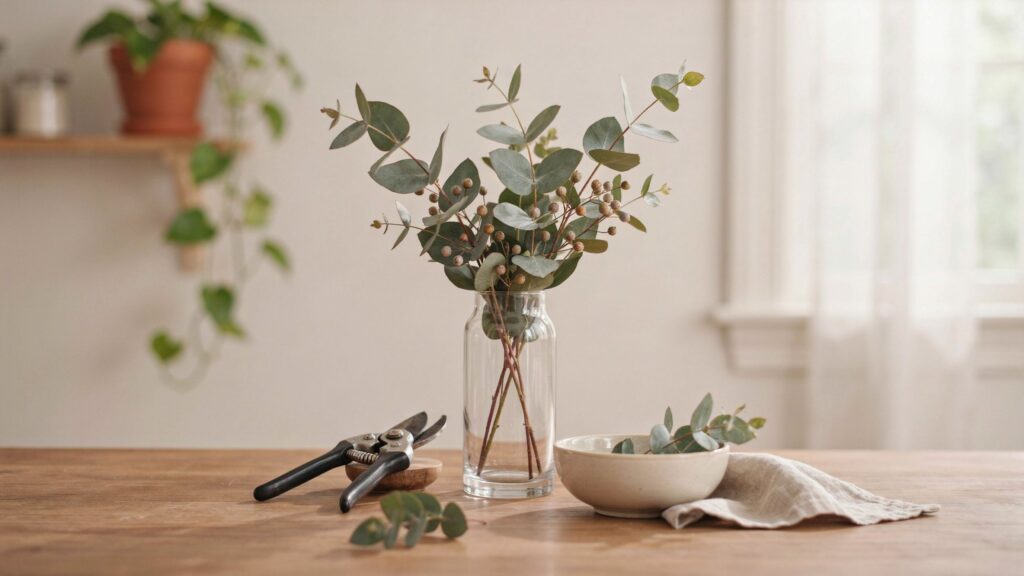
Seeded eucalyptus is a type of eucalyptus greenery known for its rounded leaves and small seed pods along the branches. These pods create the plant’s signature look. The eucalyptus seed clusters can range from green to soft silver tones as the stems mature.
Drooping usually means the stems are losing water faster than they can absorb it. Heat, transportation stress, blocked stem ends, dirty eucalyptus vase water, or poor cutting can cause this problem. Fresh stems may also droop naturally after being moved before they recover.
How to Choose Fresh Seeded Eucalyptus Stems
Choosing good material is the first step in successful eucalyptus stem care. Look for stems that feel firm and flexible. The foliage should look fresh rather than extremely dry. The seed pods should remain attached and should not fall away when handled gently.
When buying fresh seeded eucalyptus, check the cut ends carefully. They should not feel slimy or rotten. Avoid stems with a strong sour smell. A few imperfect leaves are normal. However, widespread browning usually means the greenery has already lost freshness.
Signs of Healthy and Fresh Stems
Healthy stems usually have firm branches and fresh-looking leaves. The foliage should have an even silver-green or blue-green appearance. The leaves should not feel extremely brittle. Fresh silver-green seed clusters should also remain firmly attached to the branches.
The stems should have enough flexibility to bend slightly without snapping. Freshness is especially important when buying fresh eucalyptus stems online. Stems that have already suffered severe dehydration may look acceptable at first but can droop soon after being placed in water.
Seed Pods, Leaves, and Stem Quality to Check
The seed pods are one of the main visual features of seeded eucalyptus. Look for full clusters that remain attached to strong branches. Small variations in pod size are normal because stems develop naturally at different stages.
Healthy eucalyptus foliage should have good color and structure. Check the lower part of the stem too. Avoid very soft areas, damaged bark, or heavily crushed branches. Strong woody stems generally handle arranging and hydration better than badly damaged stems.
How to Prepare Seeded Eucalyptus Stems Before Putting Them in Water
Proper preparation helps fresh stems absorb water more effectively. Start with a clean vase and fresh water. Remove packaging carefully. Inspect every stem and remove leaves that would sit below the waterline. This reduces organic material that can contaminate the water.
Next, use clean and sharp shears to recut the stems. Make a fresh diagonal stem cut near the bottom. This removes dried tissue from transportation and exposes a better surface for hydration. Place prepared stems into water soon after cutting.
How Much of the Stem Should You Cut?
A small amount is usually enough when the stems are already fresh. Cutting roughly half an inch to an inch from the bottom can remove the damaged end. Older or dehydrated stems may benefit from a slightly larger fresh cut.
Do not crush the bottom while cutting. Crushed tissue can interfere with water movement. For thicker woody stems, sharp floral shears are better than dull household scissors. A clean cut gives the stem a better chance to recover after transportation.
Why a 45-Degree Cut Helps Hydration
A 45-degree cut creates a fresh angled surface at the stem base. It also helps prevent the bottom from sitting completely flat against the vase. This can support better contact between the cut tissue and fresh water.
The angle itself is not a magic solution. Clean equipment and fresh tissue matter just as much. Good eucalyptus flower conditioning combines proper cutting with clean water, suitable temperature, and removal of submerged foliage.
What Is the Best Water for Seeded Eucalyptus Stems?
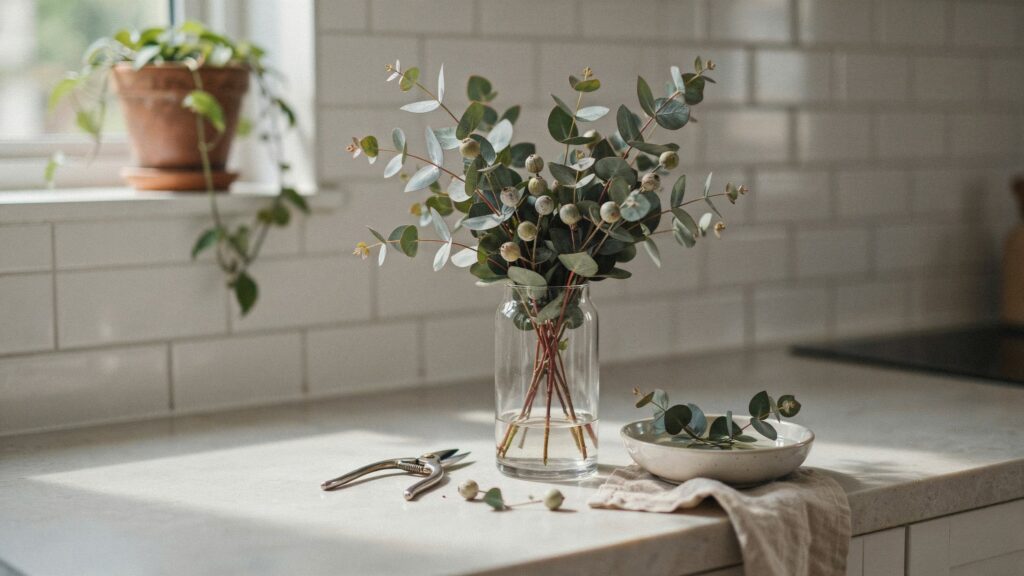
Clean tap water is normally suitable for most homes. The most important factor is cleanliness rather than using an expensive type of water. Fill the vase with cool or room-temperature water and avoid water that is extremely hot.
Change the eucalyptus vase water regularly because plant material can gradually contaminate it. Cloudy water is a warning sign. A strong odor is another sign that the water needs attention. Fresh stems perform better when their water remains clean.
How Much Water Do Seeded Eucalyptus Stems Need?
The vase should contain enough water to cover the lower part of the stems. The exact amount depends on the vase size and stem length. Tall arrangements generally need enough depth to keep the lower stems consistently hydrated.
Keep leaves and seed pods above the water whenever possible. Submerged foliage breaks down faster and can increase organic material in the vase. A moderate water level is usually better than completely filling a vase with greenery underwater.
How Often Should You Change the Water?
Fresh eucalyptus benefits from regular water changes. A practical routine is to inspect the water every day and replace it every few days. Hot indoor conditions may require more frequent changes because bacteria and plant debris can build up faster.
Do not wait until the water smells bad before replacing it. Clean water supports better vase life and helps reduce stress on the stems. If the water becomes cloudy, replace it immediately even if the normal change date has not arrived.
The Best Water-Change Schedule for Fresh Stems
For most indoor arrangements, changing water every two to three days is a useful starting point. Some homes may need more frequent changes. Watch the actual condition of the water rather than following a rigid schedule.
When changing water, inspect the stems and remove damaged leaves. If the cut ends look dry or blocked, recut the stems slightly. This simple combination of fresh water and regular trimming can improve overall seeded eucalyptus vase life.
How to Clean the Vase Before Refilling It
Empty the old water completely and rinse away plant debris. Wash the vase thoroughly so slippery residue does not remain on the inside. Rinse it well before adding fresh water and returning the eucalyptus.
A dirty container can quickly contaminate new water. This is especially important when bacteria in vase water have already caused cloudiness or unpleasant odors. A clean vase gives freshly trimmed stems a much better environment for continued hydration.
Where Should You Place Seeded Eucalyptus Stems Indoors?
Choose a cool location with indirect light. Keep the arrangement away from windows receiving strong direct sunlight. Avoid fireplaces, radiators, heating vents, and other heat sources because they can increase water loss.
Strong drafts can also dry foliage faster. Air conditioning vents may create a similar problem. A stable room environment is usually better than a location with repeated temperature changes. Good placement is one of the easiest parts of seeded eucalyptus care.
How Temperature and Humidity Affect Seeded Eucalyptus Freshness
Temperature strongly affects how quickly cut greenery loses moisture. Warm rooms can speed up water loss from leaves. Very dry air can also cause foliage to become crisp and brittle sooner than expected.
Humidity is only one part of the equation. Clean water and good stem preparation still matter. A humid room cannot compensate for dirty vase water or damaged stems. The goal is a stable environment that limits unnecessary moisture loss.
Ideal Room Conditions for Fresh Eucalyptus
A cool and stable indoor room is generally suitable for fresh seeded eucalyptus. Avoid placing arrangements directly beside heating equipment or in areas that become very warm during the day.
Stable conditions are more useful than constantly moving the vase. Sudden changes can stress delicate foliage. Keep the arrangement in one suitable location and monitor its leaves, water level, and overall appearance.
How to Protect Stems From Dry Indoor Air
Indoor heating can make winter air particularly dry. This may cause eucalyptus leaves to lose moisture faster. Keep the vase away from heating vents and radiators whenever possible.
Light misting may provide temporary surface moisture, but it should not replace proper hydration. The stems still need eucalyptus stem care, clean water, and a suitable location. Avoid soaking the foliage repeatedly because constantly wet surfaces can encourage problems.
Why Are My Seeded Eucalyptus Stems Drooping?
Drooping can happen for several reasons. The most common cause is dehydration. A stem may also struggle when its cut end becomes blocked or damaged. Dirty water, high temperatures, and transportation stress can make the problem worse.
First check the water level and condition. Then inspect the stem ends. If the water smells bad or looks cloudy, clean the vase and replace the water. If the stems are dry, give them fresh water after making a new cut.
How to Revive Drooping Eucalyptus Stems
Start by removing the stems from the vase. Prepare a clean vase with fresh water. Trim the lower ends again using clean shears. Remove leaves below the waterline and return the stems to the water.
Move the arrangement to a cooler location away from direct sunlight and heat sources. Give the stems several hours to respond. Mild dehydration may improve after proper conditioning. Severely damaged stems may not return to their original upright shape.
When Drooping Stems Cannot Be Saved
Some stems become too damaged to recover. Severe browning, mushy tissue, rotten ends, and strong odors are serious warning signs. Leaves may also become extremely brittle and fall away with gentle handling.
If only a few branches are damaged, remove them and keep the healthier eucalyptus side stems. This can preserve the attractive parts of an arrangement. There is no need to discard an entire bunch because several individual stems have failed.
Why Are Seeded Eucalyptus Leaves Turning Yellow or Brown?
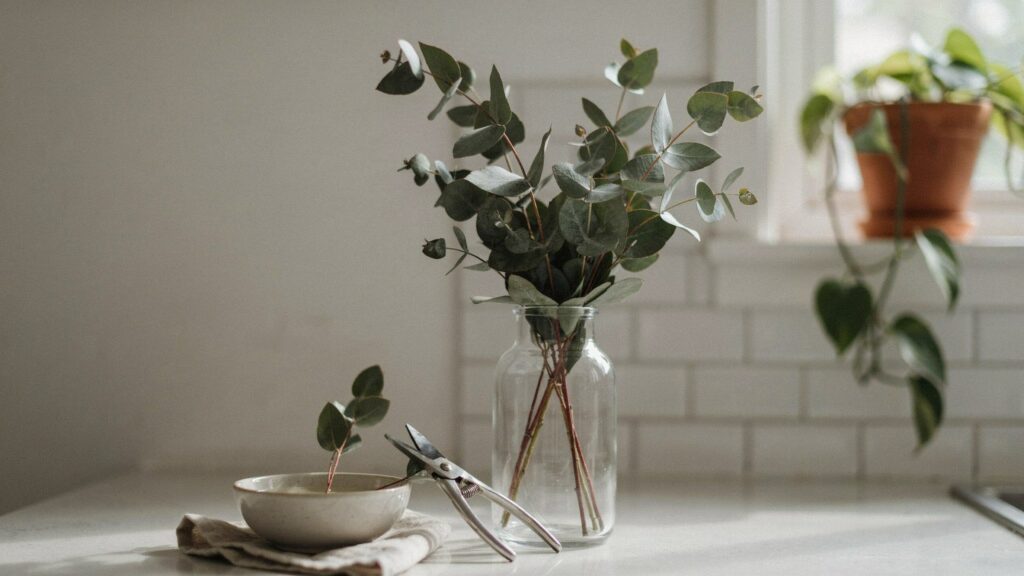
Yellow leaves may appear because of natural aging, dehydration, poor water quality, or excessive heat. A few older leaves changing color is not always a serious problem. Widespread yellowing usually deserves closer inspection.
Brown leaves often indicate moisture stress or aging. Check the vase water first. Then look at the room temperature and stem ends. Removing damaged foliage can improve the appearance while proper fresh eucalyptus stems care addresses the underlying issue.
Why Are Seeded Eucalyptus Stems Losing Leaves and Seed Pods?
Leaf and pod loss can occur after transportation or dehydration. Rough handling can also knock mature pods from their branches. Older stems naturally become more fragile as they lose moisture.
If pods are dropping quickly, inspect the stems for dryness. Avoid repeatedly moving the arrangement. Keep the stems hydrated and handle them gently. Some natural shedding is expected, especially as eucalyptus seed clusters mature and the greenery begins drying.
How to Prevent Bacteria and Bad Smells in Eucalyptus Vase Water
Bacteria grow more easily when water contains plant debris, damaged leaves, or organic residue. This is why bacteria in vase water can become a major cause of poor freshness. Cloudy water should never be ignored.
Keep the vase clean and remove submerged foliage before it starts breaking down. Replace dirty water promptly. Wash the container before refilling it. These simple habits can reduce unpleasant smells and support longer seeded eucalyptus vase life.
Can You Use Flower Food With Seeded Eucalyptus Stems?
Flower food may be used with some cut greenery, but it is not always necessary for eucalyptus. Clean water and proper hygiene are often more important. If a commercial product is used, follow its label instructions carefully.
Avoid adding random household ingredients to the vase. Homemade mixtures can create unpredictable water conditions. Good eucalyptus flower conditioning focuses first on clean containers, fresh cuts, correct water levels, and suitable room conditions.
How Long Do Fresh Seeded Eucalyptus Stems Last in a Vase?
The seeded eucalyptus vase life can vary significantly. Stem freshness, storage conditions, hydration, temperature, water quality, and handling all influence the result. Well-conditioned stems can remain attractive for roughly one to three weeks under suitable indoor conditions.
Some stems may decline sooner. Others can stay decorative longer, especially when they are later allowed to dry naturally. The important point is that vase life is not a fixed number. Proper seeded eucalyptus care can make a noticeable difference.
| Care Factor | Effect on Freshness |
|---|---|
| Fresh stems | Usually improves vase performance |
| Clean vase | Reduces contamination |
| Fresh water | Supports hydration |
| Regular trimming | Helps maintain water uptake |
| Cool location | Slows moisture loss |
| Direct sunlight | Can shorten freshness |
| Heat sources | Increase dehydration |
| Submerged leaves | Can increase water contamination |
How to Keep Seeded Eucalyptus Stems Fresh Longer in the USA
Homes across the USA have very different indoor conditions. A dry Arizona room can affect greenery differently from a humid Florida home. Winter heating in Minnesota can also create very dry indoor air. Care should therefore be adjusted to the room rather than the state alone.
The basic routine remains simple. Start with quality fresh seeded eucalyptus stems. Use a clean vase and fresh water. Make a clean cut. Remove submerged leaves. Keep the arrangement away from heat and strong sunlight. Check the stems regularly and respond early to changes.
Seasonal Care Differences Across U.S. Climates
Summer can bring high indoor temperatures in many parts of the country. Air conditioning may create dry drafts in some homes. Winter heating can have a similar drying effect even when outdoor temperatures are very low.
In humid regions, stagnant water can still become contaminated. Humidity does not remove the need for vase hygiene. Across all U.S. climates, the best approach is to watch the actual condition of the stems and adjust care accordingly.
Extra Care During Hot and Dry Weather
Hot and dry conditions can increase moisture loss from leaves. Check the vase water more often during heat waves. Keep the arrangement away from sunny windows and warm appliances.
Do not allow the vase to become nearly empty. Refill or replace water before the lower stems become exposed. If the room becomes unusually hot, moving the arrangement to a cooler interior area can help protect its vase life.
When Should You Dry Seeded Eucalyptus Stems Instead of Keeping Them Fresh?
Drying is a good option when the stems still look attractive but are beginning to lose their fresh appearance. Seeded eucalyptus Stems is especially useful for this purpose because its leaves and pods can retain interesting shape and texture after drying.
You can also choose drying when long-term decoration is more important than maintaining fresh greenery. Instead of throwing away aging stems, allow them to transition naturally into dried décor. This can give the same eucalyptus foliage a second use.
How to Dry Seeded Eucalyptus Stems Without Losing Their Shape
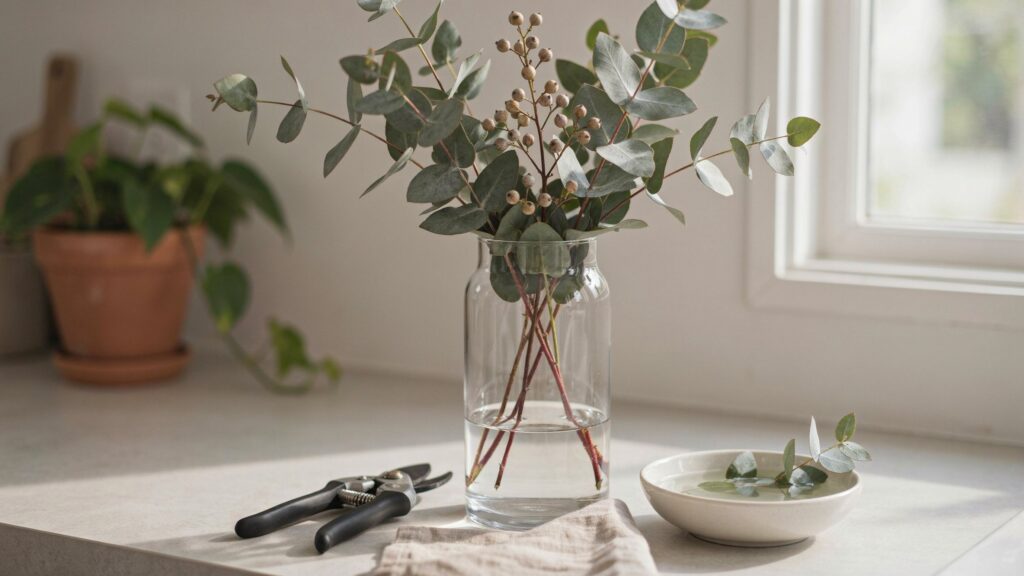
Begin with healthy stems that are not moldy or severely damaged. Remove unnecessary leaves and arrange the branches into small bundles. Secure the stems gently so they do not become crushed.
Hang the bundles upside down in a dry, dark, well-ventilated location. Slow drying can help the branches maintain their natural structure. Avoid damp rooms because moisture can encourage mold. Once fully dry, handle the eucalyptus seed clusters carefully because they may become more fragile.
Fresh vs. Dried Seeded Eucalyptus Stems: Which Is Better for Home Decor?
Fresh and dried eucalyptus serve different decorating needs. Fresh greenery has a softer appearance and works well in a eucalyptus bouquet. Dried eucalyptus requires little maintenance and can remain decorative for a much longer period.
The better choice depends on the purpose. Fresh stems are ideal when you want a living, hydrated appearance. Dried stems are better for permanent arrangements, wreaths, wall décor, and rustic displays.
| Feature | Fresh Seeded Eucalyptus Stems | Dried Seeded Eucalyptus Stems |
|---|---|---|
| Appearance | Soft and fresh | Rustic and textured |
| Water | Required | Not required |
| Maintenance | Regular | Very low |
| Typical Use | Bouquets and arrangements | Long-term décor |
| Seed Pods | Fresh and flexible | Dry and textured |
| Longevity | Weeks | Months or longer |
| Best Location | Vase | Dry decorative display |
Common Seeded Eucalyptus Stems Care Mistakes to Avoid
Many freshness problems come from simple mistakes rather than the eucalyptus itself. A dirty vase can contaminate water quickly. Leaving leaves underwater can add organic material. Skipping fresh cuts can also reduce hydration after transportation.
Other problems happen because stems are placed beside heaters or sunny windows. Overhandling can damage leaves and pods. Poor water habits are another common issue. Consistent eucalyptus stem care is usually more effective than trying complicated treatments after the stems have already declined.
Can You Keep Seeded Eucalyptus Stems in a Vase Without Water?
Fresh stems generally perform better when kept in water. Removing water while the stems are still fresh can speed up dehydration. If the goal is a dry arrangement, it is better to intentionally dry the stems under suitable conditions.
Once eucalyptus is completely dried, water is no longer needed. In fact, adding water to dried greenery can create unnecessary moisture. Keep dried stems in a dry environment where they can remain stable and attractive.
How to Use Healthy Seeded Eucalyptus Stems in Home Decor
Healthy eucalyptus stems work well in many parts of the home. They can be placed in tall floor vases, dining arrangements, bedroom décor, entryway displays, and seasonal centerpieces. Their seed pods add texture without requiring large flowers.
Seeded eucalyptus stems also pairs well with flowers and other greenery. The branches can create height and movement in an arrangement. Smaller eucalyptus side stems can fill open spaces around larger flowers. The natural silver-green color also works with both modern and rustic décor.
A simple eucalyptus bouquet can be made with several healthy stems in a narrow vase. A larger arrangement can combine seeded eucalyptus stems with flowers in complementary colors. For a minimal look, a few long stems may be enough to create an attractive display.
The most important thing is to start with healthy material. Good preparation and consistent seeded eucalyptus care help the stems stay attractive while fresh. When freshness eventually declines, the stems can often transition into dried décor rather than being discarded.
Seeded Eucalyptus Care FAQs
What is seeded eucalyptus?
Seeded eucalyptus is decorative eucalyptus greenery with rounded leaves and small seed pods along its stems. The pods create the distinctive texture that makes this eucalyptus popular in bouquets and home décor.
How long does seeded eucalyptus stems last in a vase?
Fresh seeded eucalyptus stems commonly lasts around one to three weeks in a vase when properly conditioned. Actual vase life depends on stem freshness, temperature, water quality, and care.
What is dried eucalyptus good for?
Dried eucalyptus is useful for wreaths, wall arrangements, dried bouquets, centerpieces, and long-term home décor. Its preserved leaves and pods provide texture without needing regular water.
How long will dried eucalyptus last?
Properly dried eucalyptus can remain attractive for many months and sometimes much longer. Its lifespan depends on humidity, sunlight, handling, and storage conditions.
Does dried eucalyptus mold?
Dried eucalyptus can develop mold if it is exposed to moisture or stored in a damp environment. Properly dried stems should be kept somewhere dry with good airflow.
Does dried eucalyptus still smell?
Dried eucalyptus can retain some of its natural scent, but the fragrance usually becomes weaker over time. Heat, airflow, age, and storage conditions can affect how much scent remains.
Final Thoughts on Seeded Eucalyptus Care
Keeping seeded eucalyptus stems fresh does not require a complicated routine. The biggest improvements usually come from simple habits. Start with quality stems. Make a fresh cut. Use a clean vase and fresh water. Keep leaves above the waterline.
Location also matters. Avoid direct sun, strong drafts, and heat. Check the water regularly and respond quickly when stems begin to droop. With careful seeded eucalyptus care, fresh greenery can provide attractive decoration before naturally transitioning into beautiful dried eucalyptus.