

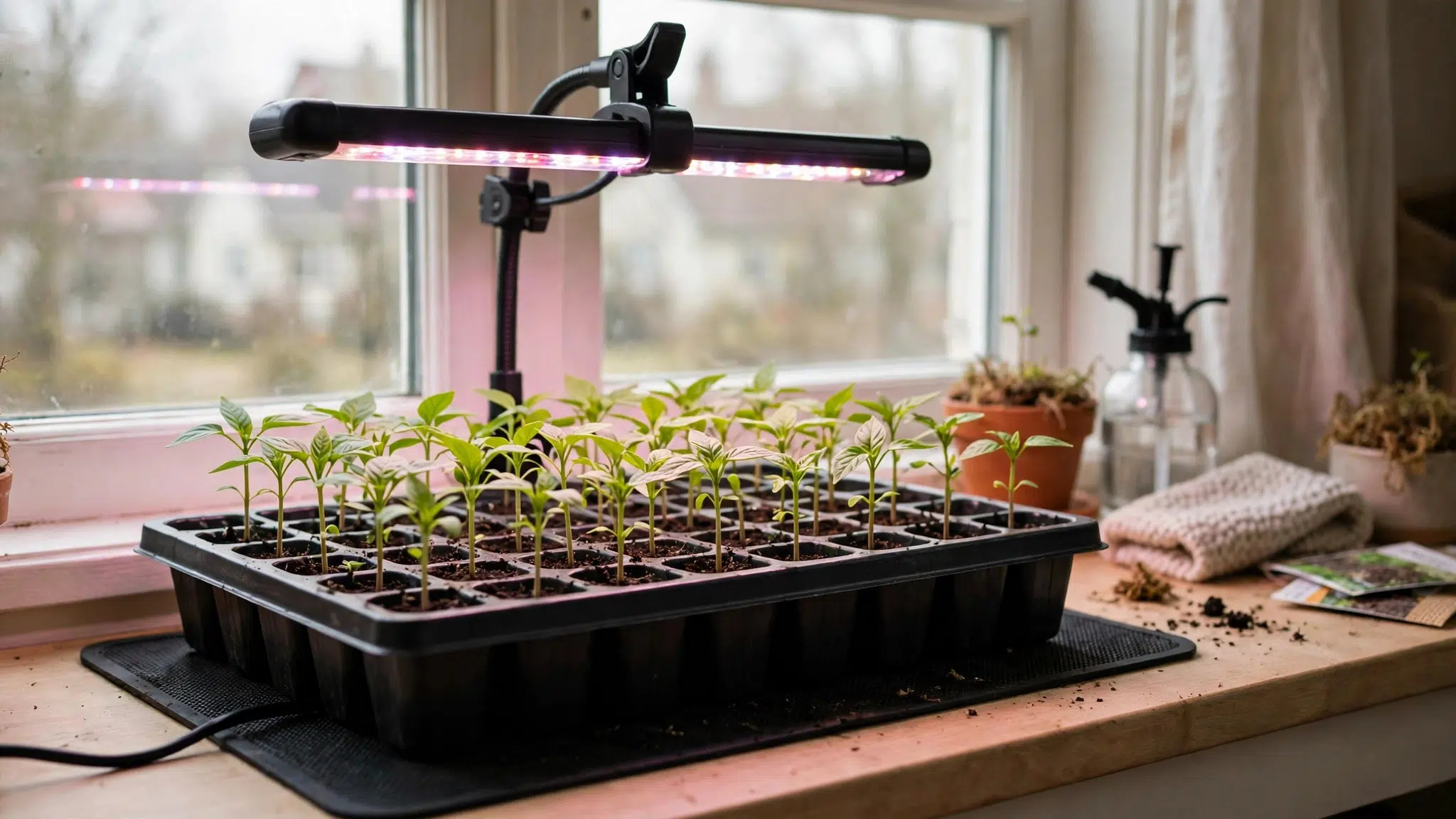
When to start pepper seeds indoors? Start pepper seeds 8–10 weeks before your average last frost date. Peppers are the slowest common vegetable to germinate and size up, so they need the longest head start — longer than tomatoes, which need only 6–8 weeks. Sow into warm soil at 75–85°F, and transplant outdoors only after frost danger has passed and the soil is at least 60°F.
Your last frost date is the anchor — not the calendar
“When to start pepper seeds indoors” has no fixed calendar date. Every sowing date counts back from your local average last frost date — the date when there is a 50% probability of no further frost, based on long-term NOAA data. Find yours from the USDA Plant Hardiness Zone Map, your state cooperative extension service, or the Old Farmer’s Almanac frost date calculator (enter your ZIP code). Microclimates matter: elevation, nearby water and urban heat can shift your real date by up to 10 days, so treat the published date as a guide and watch your local forecast. Our guide to how to germinate seeds covers the sowing itself in detail.
Zone-by-zone sowing and transplant dates
Count back 8–10 weeks from your last frost for sowing, and transplant only when nights stay above 50°F and soil is 60°F or warmer.
| USDA Zone | Average last frost | Sow indoors | Transplant outdoors |
|---|---|---|---|
| Zone 4 | Late May | Mid–late March (10–12 weeks before) | Late May–early June |
| Zone 5 | Mid May | Early–mid March | Mid–late May |
| Zone 6 | Late April–early May | Late Feb–early March | Early–mid May |
| Zone 7 | Late March–mid April | Early–mid February | Mid April–early May |
| Zone 8 | Mid–late March | Mid Jan–early Feb | Early–mid April |
| Zone 9–10 | Rare / no frost | Jan–Feb, or direct-sow outdoors | When soil reaches 65°F |
Slow varieties need more time: habaneros and other Capsicum chinense types can take 21–35 days just to sprout, so start them 1–2 weeks earlier than sweet peppers. Fast, compact types such as jalapeño and cayenne can go 8 weeks before frost. If your seed is more than a couple of years old, run the 10-seed viability test before you sow, so you know whether the packet is still worth planting.
How to start pepper seeds indoors (step by step)
- Find your last frost date and count back 8–10 weeks. Write the sowing date on your calendar.
- Use a fine seed-starting mix, not garden soil. A light, sterile mix prevents damping off — see our DIY seed starting mix recipe.
- Sow ¼ inch deep, 2 seeds per cell, and mist the surface. Pepper seeds need warmth more than light to germinate.
- Keep soil at 75–85°F with a heat mat. At 65°F peppers germinate slowly or not at all — cold soil is the number one reason pepper seeds fail. Check the germination temperature chart for exact ranges.
- Give 14–16 hours of bright light a day once seedlings emerge, with the light 2–4 inches above the tops. A sunny windowsill is rarely enough — leggy seedlings are almost always a light problem.
- Thin to one seedling per cell after the first true leaves appear, and feed only lightly after true leaves show.
- Harden off for 7–10 days before transplanting: an hour of outdoor shade first, adding time, sun and breeze daily, with nights out only at the end when it stays above 50°F.
- Transplant on a cloudy afternoon after frost danger has passed and soil is 60°F or warmer.
Started too early or too late? How to tell
| Problem | Cause | Fix |
|---|---|---|
| Leggy, pale, floppy seedlings | Too little light, or started too early | Move lights to 2–4 inches above tops; 14–16 hours a day |
| Seeds never sprout | Soil too cold (below 70°F) | Heat mat at 75–85°F; be patient — peppers take 7–21 days |
| Seedlings stall after sprouting | Cold nights, or overwatering | Warmth above 60°F; water only when the surface dries |
| Root-bound, flowering in the pot | Started far too early | Transplant as soon as conditions allow; pinch early flowers |
| No fruit after transplanting | Transplanted before the last frost, or into cold soil | Wait for soil at 60°F+ and nights above 50°F |
Starting too early is the more common mistake. A pepper started 12 weeks before frost in a small pot will be stressed, root-bound and slow to fruit — an 8-week seedling transplanted into warm soil will overtake it.
Peppers vs tomatoes — why the timing is different
Peppers and tomatoes are often started together, but peppers need 2 extra weeks indoors. Peppers germinate slower (7–21 days vs 5–10 for tomatoes), grow slower as seedlings, and are more sensitive to cold at every stage. If you start both on the same day, your peppers will be behind when transplant time comes. Start peppers first, then tomatoes 2 weeks later. See starting seeds indoors for the full indoor setup, and why tomato seeds fail to germinate if your tomatoes are struggling too.
Frequently Asked Questions
When should I start pepper seeds indoors?
Start pepper seeds indoors 8–10 weeks before your average last frost date — for example, early to mid February in Zone 7, or early March in Zone 5. Slow varieties such as habaneros need 1–2 weeks more.
How long do pepper seeds take to germinate?
7–21 days in soil at 75–85°F. Below 70°F germination slows sharply or fails. A heat mat is the single most useful tool for pepper seed starting.
Can I start pepper seeds too early?
Yes. Seedlings started more than 10–12 weeks before transplanting become leggy, root-bound and slow to fruit. An 8-week seedling moved into warm soil will usually overtake an overgrown early start.
What temperature do pepper seeds need to germinate?
Soil at 75–85°F (24–29°C). Night temperatures after transplanting should stay above 50°F, and soil should be at least 60°F before you plant out.
Do peppers need light to germinate?
No — warmth matters more than light for germination. Once seedlings emerge, give 14–16 hours of bright light a day with the light 2–4 inches above the tops.


