
How to Grow Lettuce from Seed Indoors (Fast, Fresh Leaves All Year)
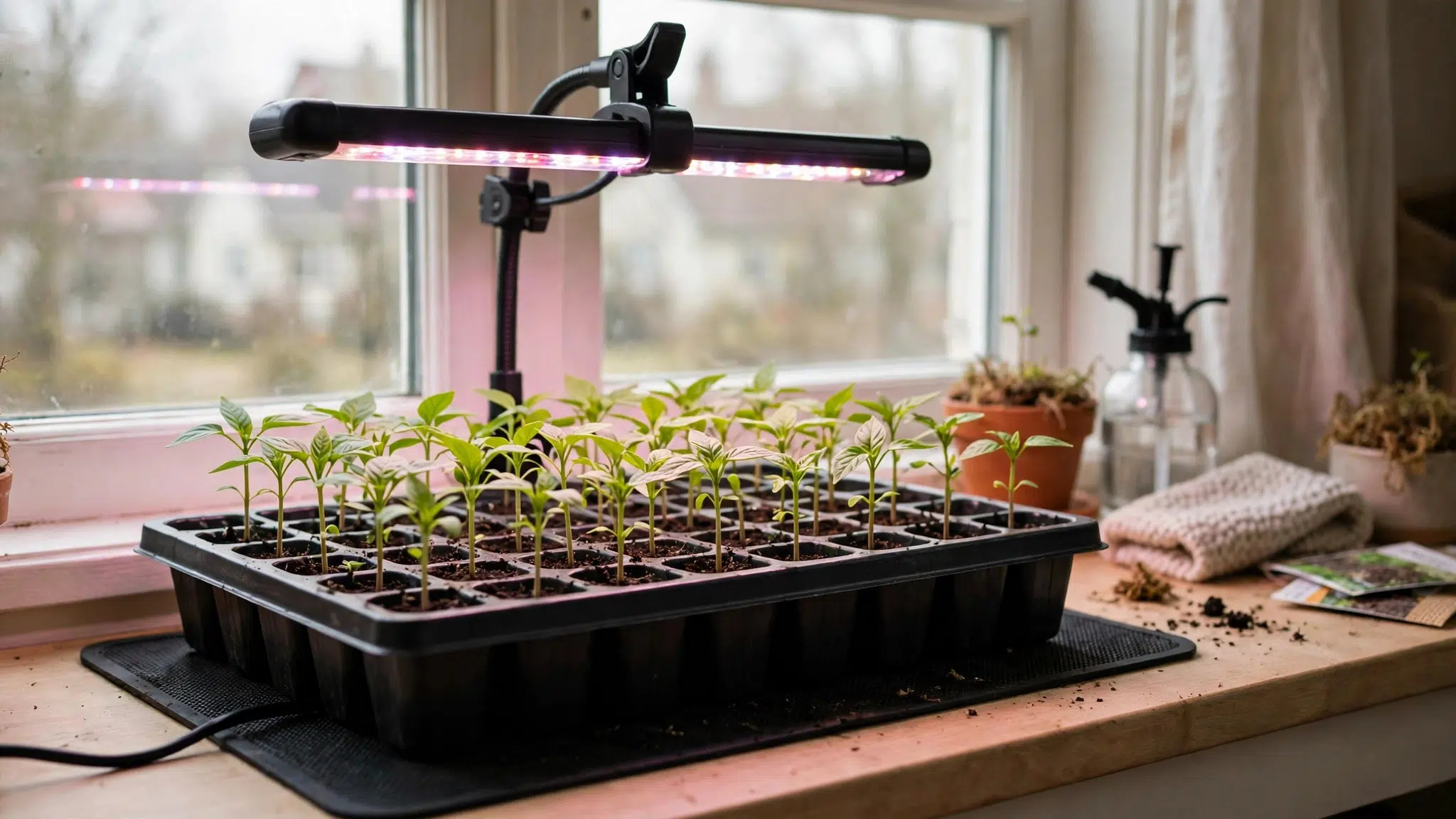
How to grow lettuce from seed indoors is simple: sow seeds shallowly (they need light to germinate), keep the soil at 60–65°F, give seedlings 12–14 hours of bright light a day, and harvest outer leaves in about 30 days. Lettuce is one of the fastest, most forgiving vegetables to grow inside, and a single tray can supply fresh salad leaves for weeks.
Why Lettuce Is Perfect for Indoor Growing
Lettuce is a cool-season crop that dislikes heat, which makes it ideal for a windowsill or a shelf under grow lights. Unlike tomatoes or peppers, it never needs transplanting outdoors, never needs pollinators, and never takes months to produce. Leaf lettuce varieties — the looseleaf types — are the easiest of all, because you harvest a few outer leaves at a time and the plant keeps growing.
The University of Minnesota Extension lists lettuce among the easiest vegetables to start from seed indoors, and notes that it germinates best in cool soil of 60–65°F. Above 75°F germination drops sharply, which is why lettuce struggles in a hot room but thrives on a cool windowsill or in a basement under lights.
Best Lettuce Varieties for Indoors
| Type | Days to harvest | Why it works indoors |
|---|---|---|
| Looseleaf (e.g. Salad Bowl, Black Seeded Simpson) | 28–45 days | Cut-and-come-again; harvest outer leaves for weeks |
| Butterhead (e.g. Buttercrunch, Tom Thumb) | 45–60 days | Small heads fit in pots; tender, mild flavour |
| Romaine, baby (e.g. Little Gem, Parris Island Cos) | 45–55 days | Compact upright heads; harvest whole or leaf by leaf |
| Mesclun / salad mix | 25–30 days | Mixed baby leaves; sow thickly, cut at 4 inches |
Start with a looseleaf variety or a mesclun mix for your first tray. Head lettuces need more space and more patience, and they are harder to keep happy in a small pot.
Step by Step: Sowing Lettuce Seeds Indoors
- Fill containers with seed-starting mix. Use a fine, sterile mix in cell trays, small pots or a shallow tray at least 3 inches deep. Moisten the mix before sowing.
- Sow on the surface. Lettuce seeds need light to germinate, so press them gently onto the surface and cover with only a dusting of mix — no more than 1/8 inch deep. Seeds buried deeper often never sprout.
- Keep the soil cool and moist. Mist the surface, then cover the tray with a clear lid or plastic wrap until sprouts appear. Aim for 60–65°F; a cool room is better than a warm one.
- Give strong light as soon as they sprout. Move the tray to your brightest window or under grow lights 2–4 inches above the leaves, 12–14 hours a day. Weak light is the main cause of leggy lettuce seedlings.
- Thin to one plant per cell. When seedlings have two true leaves, snip the extras at soil level, leaving the strongest plant. Crowded lettuce stays small and is more prone to disease.
For the full indoor setup — containers, lights and timing — our guide to starting seeds indoors covers everything alongside soil.
Light, Water and Temperature
| Need | What lettuce wants indoors |
|---|---|
| Light | 12–14 hours of bright light; grow lights 2–4 inches above leaves |
| Temperature | 60–70°F while growing; above 75°F it bolts (goes to seed) |
| Water | Soil evenly moist, never soggy; water from below when the surface dries |
| Air | Gentle airflow (a small fan on low) keeps stems sturdy and prevents damping off |
| Feeding | Light feeding only — half-strength liquid feed every 2 weeks after true leaves appear |
Lettuce seeds need light to germinate, but they also need darkness at night: a normal day–night cycle is best, so do not leave grow lights on around the clock. If you are unsure which seeds need light and which do not, our guide on do seeds need light to germinate explains the rule for common vegetables.
Watering is the detail most beginners get wrong: lettuce roots are shallow, so the surface dries fast, but standing water invites damping off. Water little and often, and let the surface dry slightly between waterings. Our guide on how often to water seedlings covers the finger test and bottom watering in detail.
Harvesting: Cut-and-Come-Again
Start harvesting looseleaf lettuce when the outer leaves are 4–6 inches long, usually about 30 days after sowing. Pick the outer leaves first, leaving the centre growing point untouched, and the plant will keep producing new leaves for several weeks. A tray sown every 2–3 weeks gives a continuous supply — this is called succession sowing, and it is the simplest way to never run out.
Butterhead and romaine can be harvested leaf by leaf the same way, or cut whole when the head feels firm. Harvest in the morning, when leaves are crisp and full of water, and rinse and dry them before storing in the fridge.
Common Problems
- Seeds never sprout. Usually sown too deep, or the soil was too warm (above 75°F). Sow on the surface and keep the tray cool.
- Leggy, pale seedlings. Not enough light. Move lights closer or to a brighter window.
- Bitter leaves. Heat stress or an old plant. Keep temperatures below 75°F and harvest young leaves.
- Seedlings falling over at the soil line. Damping off — see our damping off seedlings guide for prevention.
- Bolting (tall stalk, bitter taste). The plant has decided to flower, usually from heat or long days. Harvest what you can and sow a fresh tray.
Frequently Asked Questions
How long does lettuce take to grow from seed indoors?
Baby leaves are ready in about 25–30 days and full-size looseleaf plants in 40–45 days, when grown at 60–70°F with 12–14 hours of bright light.
Do lettuce seeds need light to germinate?
Yes. Lettuce seeds need light, so sow them on the soil surface and cover with no more than 1/8 inch of mix. Seeds buried deeper often fail to sprout.
Can I grow lettuce indoors all year?
Yes. Lettuce is one of the best year-round indoor vegetables because it is a cool-season crop that thrives at normal room temperatures and does not need pollinators.
How many lettuce plants do I need per person?
For regular salads, sow 4–6 looseleaf plants per person and re-sow a small tray every 2–3 weeks for a continuous harvest.
Why is my indoor lettuce bitter?
Bitterness usually comes from heat (above 75°F), too little water, or leaves left too long on an old plant. Keep it cool, watered and harvested young.
How to Grow Lettuce from Seed Indoors All Year Round
If you want to know how to grow lettuce from seed indoors all year, think in rotations, not single sowings. Sow a small tray every two weeks and keep three trays going at different stages: one just sown, one growing on, and one ready to harvest. Leaf lettuce and butterhead are the best choices for this rotation because you can pick outer leaves for weeks without pulling the plant. Sow into a fine, damp mix — our guide to the best soil for starting seeds indoors explains which mix suits tiny lettuce seed — and keep the trays where the air stays cool, ideally 60–65°F.
Learning how to grow lettuce from seed indoors all year comes down to temperature and timing, not new equipment. In summer, move trays to the coolest spot in the house or a basement, because germination drops sharply above 75°F. In winter, add a grow light to keep the 12–14 hours of bright light lettuce needs. University extension guides on indoor vegetables agree that lettuce is one of the easiest crops to start from seed indoors — see the University of Minnesota Extension for its cool-soil guidance. Keep sowing, harvest the outer leaves first, and the rotation rarely runs out.