
Best Grow Lights for Starting Seeds Indoors (and How High to Hang Them)
As an Amazon Associate I earn from qualifying purchases.
Last updated: November 2026
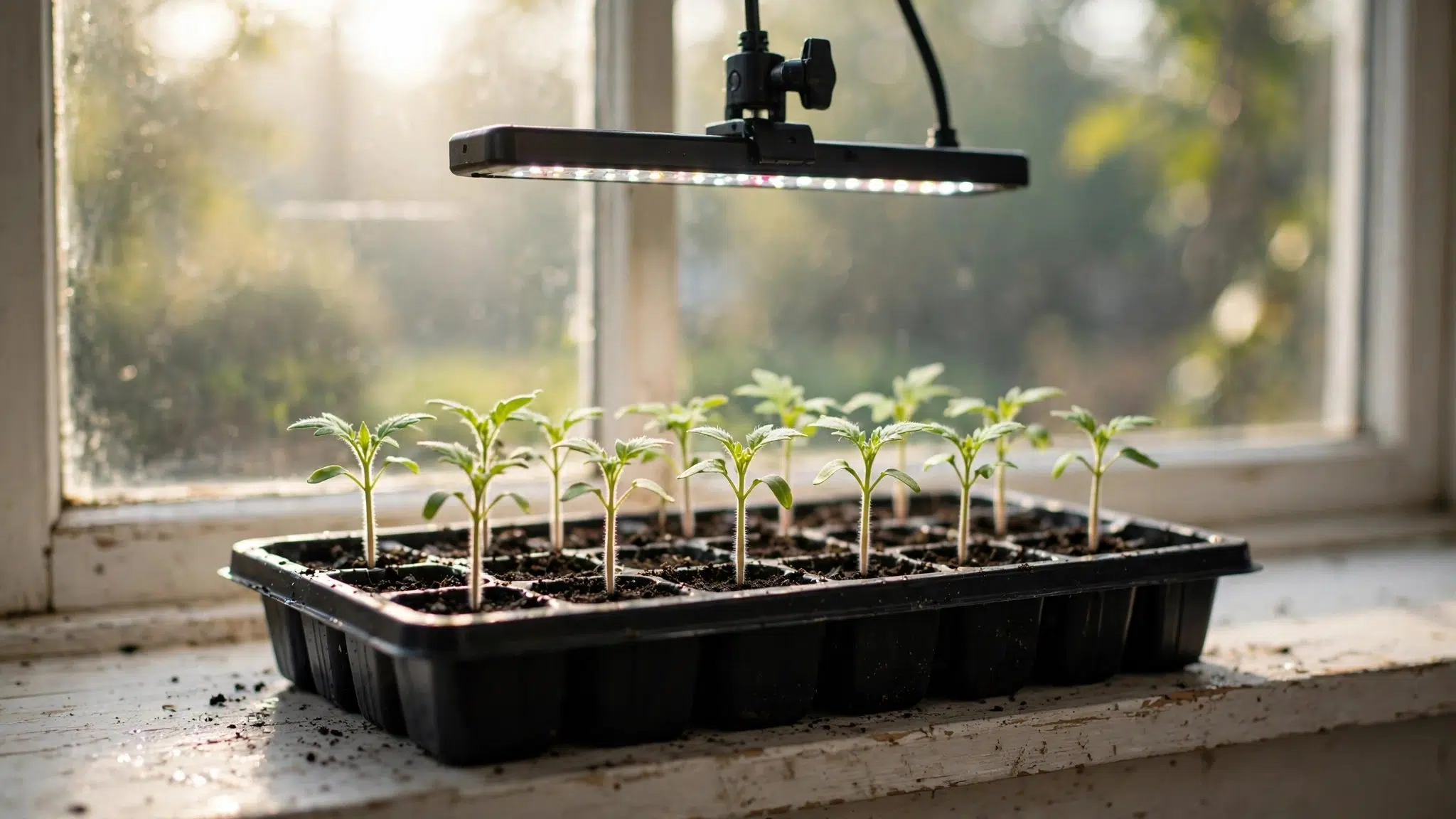
Best grow lights for starting seeds indoors are full-spectrum LED shop lights or LED grow bars hung 2 to 4 inches above seedlings for 14 to 16 hours a day. They beat a sunny windowsill because they give steady, even light, and they beat old fluorescent tubes because they run cooler, use less electricity and last longer.
Quick Picks
- Top pick: Barrina T5 Grow Light, 2 ft, 8-Pack — best for lighting several shelves or trays at once.
- Runner-up: Spider Farmer SF1000 LED Grow Light — best for a small grow tent that will also serve later growth stages.
- Budget pick: FECiDA High Output Flat Panel Grow Light, 6-Pack — best for a simple set-and-forget setup with a built-in timer.
Why seedlings need a grow light
A windowsill rarely gives seedlings enough light. Window glass cuts out some of the light, winter days are short, and the light comes from one side only, so seedlings stretch toward the glass and grow tall, pale and weak. This stretching is called etiolation, and it is the main reason indoor seedlings flop over or never recover after transplanting.
A grow light fixes the problem by giving seedlings strong light from directly above, for a long, steady day. The University of Minnesota Extension recommends 14 to 16 hours of light a day for indoor seedlings, with the light kept close to the plants and raised as they grow. Purdue Extension adds that most vegetables need bright light right from germination, and that a light that is too far away is almost as bad as no light at all.
Choosing the best grow lights for starting seeds indoors: LED vs fluorescent
Both types can grow good seedlings, but LEDs have become the better buy for most gardeners. Fluorescent shop lights were the standard for decades and still work well, especially the cool-white T8 tubes many gardeners already own. LEDs cost more up front but use less electricity, produce less heat and last far longer, and full-spectrum models give seedlings the blue light they need for compact growth and the red light that supports later flowering.
| Light type | Up-front cost | Heat | Lifespan | Best for |
|---|---|---|---|---|
| Full-spectrum LED | Medium | Low | 25,000 to 50,000 hours | Most seed starters |
| LED shop light | Low to medium | Low | 25,000 hours or more | Budget setups, 1 to 2 trays |
| Fluorescent T8 | Low | Moderate | 10,000 to 20,000 hours | Using tubes you already own |
| Incandescent | Low | Very high | About 1,000 hours | Not recommended |
How many watts do you need?
Seedlings need far less power than a full indoor garden. A good rule is 20 to 40 watts of LED light per standard seed tray, which is roughly 1 to 2 watts per square foot of growing area. More important than raw watts is coverage: the light should span the whole tray so the seedlings at the edges get as much light as the ones in the middle. Two shorter lights side by side often cover a wide shelf better than one long light.
| Setup | LED watts | Coverage |
|---|---|---|
| 1 standard tray | 20 to 40 watts | About 10 by 20 inches |
| 2 trays side by side | 40 to 80 watts | About 20 by 20 inches |
| A 2-foot shelf | 40 to 60 watts | One 2-foot light, or two 1-foot bars |
| A 4-foot shelf | 80 to 120 watts | One 4-foot light, or two 2-foot bars |
How high to hang the best grow lights for starting seeds indoors
Height matters more than most beginners expect. Light loses strength quickly with distance, so a lamp hung a foot above seedlings gives only a fraction of the light it gives at 3 inches. Hang the light close, then raise it as the plants grow so the gap stays constant. A timer takes the guesswork out of the day length.
| Light type | Height above seedlings | Hours per day |
|---|---|---|
| LED grow light | 2 to 4 inches | 14 to 16 hours |
| LED shop light | 2 to 4 inches | 14 to 16 hours |
| Fluorescent T8 | 2 to 4 inches | 14 to 16 hours |
| Strong LED panel | 6 to 12 inches | 12 to 14 hours |
Setting up your lights without the usual mistakes
Mount the light on an adjustable chain or a shelf bracket so you can raise it in seconds. Put the light on a timer set to 14 to 16 hours, and give seedlings a dark night: plants need darkness to rest, and a 24-hour light schedule stresses them. Keep the room at a comfortable 65 to 75 degrees, water from below, and run a small fan for a few hours a day to strengthen stems. Cornell Cooperative Extension notes that light, temperature and air movement work together — a warm, still room with weak light produces the leggiest seedlings of all.
The most common mistakes are easy to avoid. Do not hang the light a foot above the tray and hope for the best. Do not leave it on all night. Do not use a single bulb for four trays, and do not trust a windowsill as a backup on cloudy weeks. Check the gap every few days: seedlings grow fast, and a light that was 3 inches above the leaves on Monday can be touching them by Friday.
For the rest of the indoor setup, see our guide to starting seeds indoors, and remember that seeds need light to germinate in different ways — some need light to sprout, others need darkness, so check each crop. Leafy crops such as lettuce do especially well under lights; see how to grow lettuce from seed indoors for a crop that thrives under a 14-hour day.
Researched Picks: Grow Lights for Starting Seeds
These are the lights that come up most often in seed-starting guides and grower discussions, matched to the tray sizes and hanging heights covered above. The notes below are based on the manufacturers’ listed specifications, not on hands-on testing.
Barrina T5 Grow Light, 2 ft, 8-Pack
Eight 2 ft full-spectrum bars (5000K daylight white) totalling 80 W (8 x 10 W). The bars link together, up to 16 in a chain, and each bar has its own on/off switch; mounting clips, tape and zip ties are included.
| ✓ Pros | ✗ Cons |
|---|---|
|
|
Suits: growers with a shelf rack who want to light several trays at once.
Check Price on AmazonSpider Farmer SF1000 LED Grow Light
A 100 W dimmable full-spectrum panel designed for a 2 x 2 ft or 3 x 3 ft grow tent. It is fanless and comes with a 5-year warranty from the manufacturer.
| ✓ Pros | ✗ Cons |
|---|---|
|
|
Suits: growers starting seeds in a small tent who want a light that will also carry plants on further.
Check Price on AmazonFECiDA High Output Flat Panel Grow Light, 6-Pack
Six flat full-spectrum panels, each with 192 LEDs, that link together and mount under shelves. A 5-mode timer offers 4, 8, 12, 16 or 20 hours of light per day.
| ✓ Pros | ✗ Cons |
|---|---|
|
|
Suits: shelf growers with several trays who want a set-and-forget timer.
Check Price on AmazonHow We Chose
We compared these lights on the criteria that matter most for starting seeds indoors: full-spectrum output, coverage per tray or shelf, the height they need to hang above seedlings, timer and dimmer control, heat output and running costs. The notes in this guide are based on the manufacturers’ listed specifications and on university extension guidance, including the University of Minnesota Extension’s advice on light height and 14 to 16 hours of light a day. We did not carry out hands-on testing, so check the current specifications on the product page before you buy.
Frequently Asked Questions
Can I use regular LED bulbs to start seeds?
Yes, if they are bright, daylight or full-spectrum bulbs hung 2 to 4 inches above the seedlings. A single dim bulb in a desk lamp is not enough; you need enough light to cover the whole tray evenly.
How many hours a day should grow lights be on?
Run grow lights for 14 to 16 hours a day for most vegetable seedlings, then switch them off for 8 to 10 hours of darkness. A timer makes this easy and keeps the schedule consistent.
How close should grow lights be to seedlings?
Hang LED and fluorescent lights 2 to 4 inches above the seedlings and raise them as the plants grow. Strong LED panels are the exception: hang them 6 to 12 inches above the plants to avoid scorching the leaves.
Are LED grow lights better than fluorescent?
For most gardeners, yes. LEDs use less electricity, run cooler, last longer and give full-spectrum light. Fluorescent tubes still work well, especially if you already own them, but they cost more to run and need replacing sooner.
Can grow lights burn seedlings?
Yes, if a strong light hangs too close or the room gets too hot. Keep the recommended gap, check leaves daily for bleaching or curling, and raise the light or shorten the day if you see damage.
Before you buy: what to look for in the best grow lights for starting seeds indoors
Start with the space you have, not the brightest panel in the shop. Measure the shelf or tray, then choose among the best grow lights for starting seeds indoors one that covers that area evenly at 2 to 4 inches above the seedlings. A 2-foot bar suits one standard tray, while a 4-foot bar or two shorter bars cover a wider shelf without leaving the corners dim.
Next, check the spectrum and the timer. Look for full-spectrum or daylight light, which covers the blue and red wavelengths seedlings use most, and put the light on a timer for 14 to 16 hours a day so the plants also get a dark night. That is why the best grow lights for starting seeds indoors usually come with adjustable chains or brackets, so you can raise them as the plants grow.
Finally, compare running costs before you buy, not just the price on the box. LEDs cost more up front than fluorescent tubes but use less electricity and last for tens of thousands of hours, so they usually work out cheaper over several seasons. Read our guide to starting seeds indoors first, then match the best grow lights for starting seeds indoors to the trays, soil and timing you already have planned.
Final Verdict
If you are lighting shelves of trays, start with the Barrina T5 8-pack: it covers several trays at once and is the most flexible of the three picks. If you grow in a small tent and want one light that will also serve later growth stages, the Spider Farmer SF1000 is the better fit. And if you want the simplest setup, with a timer doing the work for you, the FECiDA 6-pack is the budget-friendly choice.
