

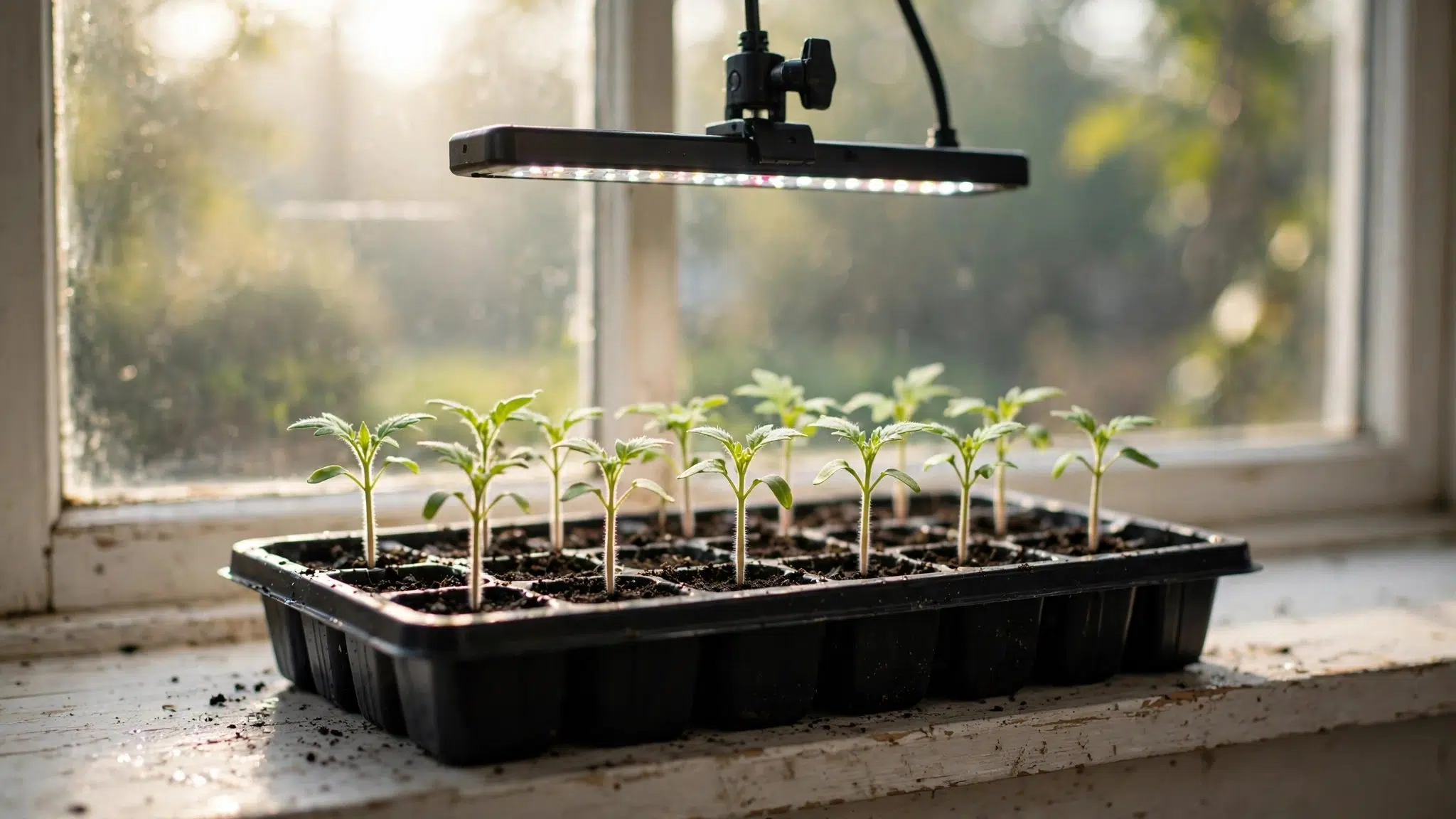
The best containers for starting seeds indoors are 3-inch plastic pots and 72-cell trays with drainage holes, filled with fine seed-starting mix. They hold moisture evenly, warm quickly, and let you move seedlings without disturbing roots. Soil blocks and peat pots work too, but plastic cells are the most reliable and reusable choice for most gardeners.
What Makes a Good Seed-Starting Container
A good container does three jobs: it holds moist mix around the seed, drains excess water away, and gives roots room to grow until transplanting. Drainage is non-negotiable, since seed sitting in water rots instead of sprouting. Depth matters more than width: most seedlings need 2 to 3 inches of mix below them for roots to develop, and Cornell Cooperative Extension recommends containers at least 2 to 3 inches deep for most vegetable seedlings. Material matters too. Rigid plastic is sturdy, reusable, and easy to clean, while peat and coir pots break down in the soil but dry out fast. Finally, size your container to the seed: small seeds do fine in cells, while large seeds like squash and beans need a bigger pot from the start.
Container Types Compared
Every container type has trade-offs. This table compares the options most gardeners actually use, so you can match the container to the crop and your budget.
| Container | Best for | Pros | Watch out for |
|---|---|---|---|
| 72-cell trays | Small seeds, lettuce, herbs | Cheap, compact, easy to move | Dry out fast; pot up early |
| 3-inch plastic pots | Tomatoes, peppers, squash | Roomy roots, reusable for years | Take up more space |
| Soil blocks | Most vegetables | No transplant shock, no plastic | Need a blocker; dry fast |
| Peat or coir pots | Cucumbers, squash, beans | Plant the whole pot; no root disturbance | Dry out fast; cost more |
| DIY cups and tubs | Any seedling | Free; good size | Must add drainage holes |
What Size Container Do Seeds Need?
Match the container to the seed and to how long the seedling will stay in it. Tiny seeds like lettuce, celery, and herbs do well in 72-cell trays, since they transplant out young. Medium seeds like tomatoes and peppers are happier in 3-inch pots, where they can grow for 6 to 8 weeks without getting rootbound. Large, fast-growing seeds like squash, cucumbers, and beans should go straight into 3- to 4-inch pots, because they resent transplanting and grow too fast for small cells. If seedlings outgrow their container before the weather is ready, pot them up into the next size rather than holding them back. Our guide to starting seeds indoors covers the full setup, and our seed germination temperature chart lists the soil warmth each crop needs to sprout. When the weather is ready, see when to transplant seedlings outdoors for the timing and hardening-off steps.
Drainage and Watering
Every container needs drainage holes. Without them, water pools at the bottom, roots suffocate, and damping off sets in. If you reuse food containers, punch or drill several holes in the base before filling them. Set trays in a solid bottom tray and water from below: pour water into the tray, let the mix soak it up for 10 to 15 minutes, then tip out what is left. Bottom watering keeps leaves dry and encourages roots to grow down. A clear humidity dome or plastic wrap over the tray keeps the mix moist until seeds sprout, but remove it as soon as seedlings appear, since still, damp air invites mold. Good air movement from a small fan also helps stems grow stocky.
Reusing and Cleaning Containers
Plastic cells and pots can last for years if you clean them between uses. Wash off the old mix with soap and water, then soak for 10 minutes in a solution of 1 part household bleach to 9 parts water, rinse well, and let them dry in the sun. The University of Minnesota Extension recommends disinfecting reused containers because the fungi that cause damping off survive in old mix and on dirty plastic. Never reuse a container that held a diseased plant without disinfecting it first, and store clean, dry containers stacked out of the sun so the plastic does not turn brittle.
Common Mistakes to Avoid
The most common mistake is using a container with no drainage, which drowns seeds before they sprout. The second is starting large seeds in tiny cells and leaving them there too long, so they get rootbound and stunted. The third is reusing dirty containers, which spreads damping off to the next batch. The fourth is using clear containers, where light encourages algae on the mix. And the fifth is leaving the humidity dome on after sprouting, which traps damp air and invites mold. A container is a small thing, but the wrong one can cost you a whole tray of seedlings.
Frequently Asked Questions
Can I use egg cartons to start seeds?
You can, but they are one of the weakest options. The cups are shallow, so roots run out of room fast, and cardboard dries out quickly and can grow mold. They work for a fast sprouter like lettuce or herbs if you transplant within two weeks, but plastic cells or small pots are a safer bet for most crops.
Do I need a humidity dome?
A dome helps seeds germinate by holding moisture in the mix, and it is worth using for slow or fussy seeds. But it is not required: a sheet of plastic wrap does the same job. Whatever you use, take it off as soon as seedlings appear, since trapped damp air invites mold and weak, leggy growth.
Can I start seeds in plastic cups?
Yes, as long as you add drainage holes. Punch several holes in the bottom of a yogurt cup, solo cup, or food tub, fill with seed-starting mix, and use a tray underneath to catch water. Clear cups work, but wrap them in paper or set them inside an opaque cup, since light on the roots encourages algae.
Are peat pots better than plastic pots?
Peat pots are convenient because you plant the whole pot and the roots are never disturbed, which suits cucumbers and squash. But they dry out fast, cost more, and sometimes fail to break down in the soil. Plastic pots are cheaper, reusable, and hold moisture better. If you use peat pots, tear off the rim and bury the pot fully so it does not wick water away.


