Best Heat Mats and Soil Thermometers for Starting Okra Seeds

As an Amazon Associate I earn from qualifying purchases.
Last updated: November 2026
When to start okra seeds indoors? Sow them 4 to 5 weeks before your last spring frost, then move seedlings outside once the soil reaches at least 65°F and all frost danger has passed. Okra is a heat lover, so soil temperature matters more than the calendar: warm soil is what turns a slow, sulky seedling into a fast-growing plant. The best soil thermometer tells you exactly when the soil is warm enough — no guessing by the calendar.
Quick Picks
- Top pick: VIVOSUN seedling heat mat with thermostat — best for warming soil into the 70–95°F range okra seed needs to germinate.
- Runner-up: Long-probe soil thermometer — best for checking the soil is truly at least 65°F at 4 inches deep before you sow.
Why okra timing is different from other vegetables
Okra is a warm-season annual that sulks in cool weather. Unlike kale, which tolerates a chill and can be started early, okra seeds rot or sit dormant in cold soil, and young plants stall when nights stay cool. That is why the indoor start is worth doing in short-season gardens — but only if you respect the plant’s other quirk: okra grows a strong taproot and resents being transplanted. Start it too early, in a pot that is too small, and you get a root-bound seedling that never catches up. The trick is a short, warm indoor stay in a roomy pot, followed by a move outside into genuinely warm soil.
When to start okra seeds indoors by zone
Use your last spring frost date as the anchor, then count back four to five weeks. The table below gives a starting point for each zone band — always confirm your own frost date and check the soil before transplanting. If you are unsure of your zone, look it up on the USDA Plant Hardiness Zone Map.
| USDA zone | Last spring frost (approx.) | Start okra seeds indoors | Move seedlings outdoors |
|---|---|---|---|
| Zones 3–4 | Late May to early June | Early to mid-May | Mid to late June, once soil is 65°F or warmer |
| Zones 5–6 | Mid-April to mid-May | Mid-March to mid-April | Mid-May to early June |
| Zone 7 | Late March to mid-April | Late February to mid-March | Late April to mid-May |
| Zone 8 | Mid to late March | Mid-February to early March | Early to mid-April |
| Zones 9–10 | Late January to mid-February, or frost-free | Usually not needed — direct sow | March to April |
| Zones 11–13 | Frost-free | Not needed — direct sow any time | Any time the soil is warm |
The soil temperature rule for okra
For okra, the best soil thermometer matters more than the calendar. Clemson Cooperative Extension (HGIC 1313) puts okra’s germination range at 70 to 95°F, with an absolute minimum of 65°F, while air temperatures and frost dates only tell part of the story. In practice, that means the soil can lag well behind a warm spell, and a thermometer lets you see the real number instead of guessing.
Measure the soil yourself: push a soil thermometer 4 inches deep in the morning, in the spot where the plants will grow, and repeat for several days. If readings hold at 65°F or above, you are safe to transplant; if they hover in the high 50s, wait. A seedling heat mat under the tray indoors keeps germination in that 70 to 95°F sweet spot, and a sunny windowsill or grow light takes over once the seedlings are up. Before you sow, it is also worth checking that your seed is still alive — our seed viability chart shows how long okra and other vegetable seeds stay viable in storage.

How to start okra seeds indoors, step by step
- Soak the seeds. Okra seeds have a tough coat. Soak them in warm water for 12 to 24 hours before sowing; Clemson Extension notes that soaking may improve germination. Discard any seeds that float after soaking.
- Use roomy, individual pots. Sow two seeds per 3- to 4-inch biodegradable pot filled with moist seed-starting mix. Okra’s taproot hates disturbance, so avoid tiny cells and plan to transplant the whole pot, or the intact root ball, into the garden.
- Sow at the right depth. Plant seeds 3/4 inch deep, cover lightly, and water gently so the mix is damp but not soggy.
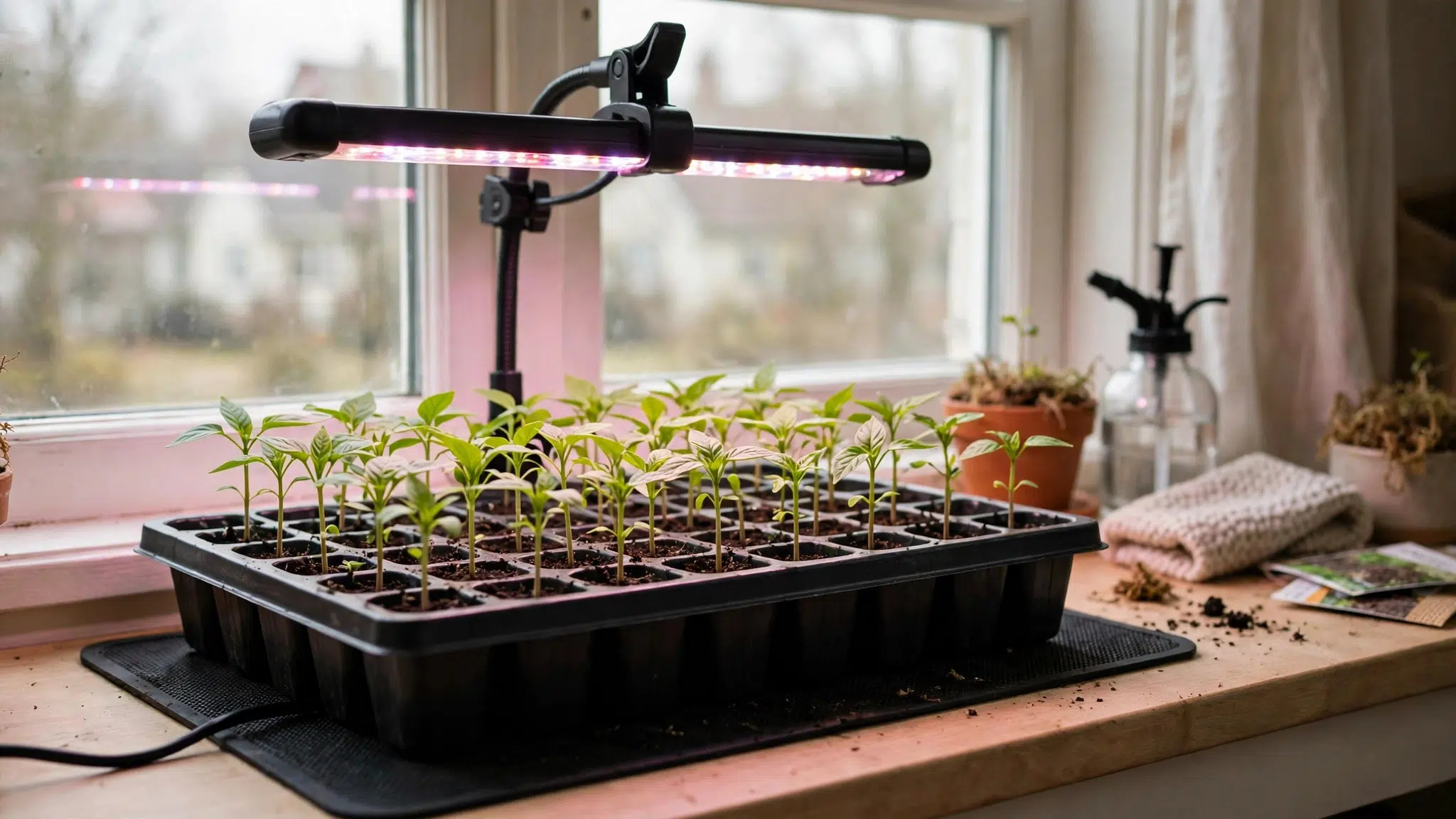
- Keep them warm. Hold the pots at 70 to 95°F until germination, which usually takes 7 to 14 days. A heat mat makes this easy; a warm spot above a refrigerator works too.
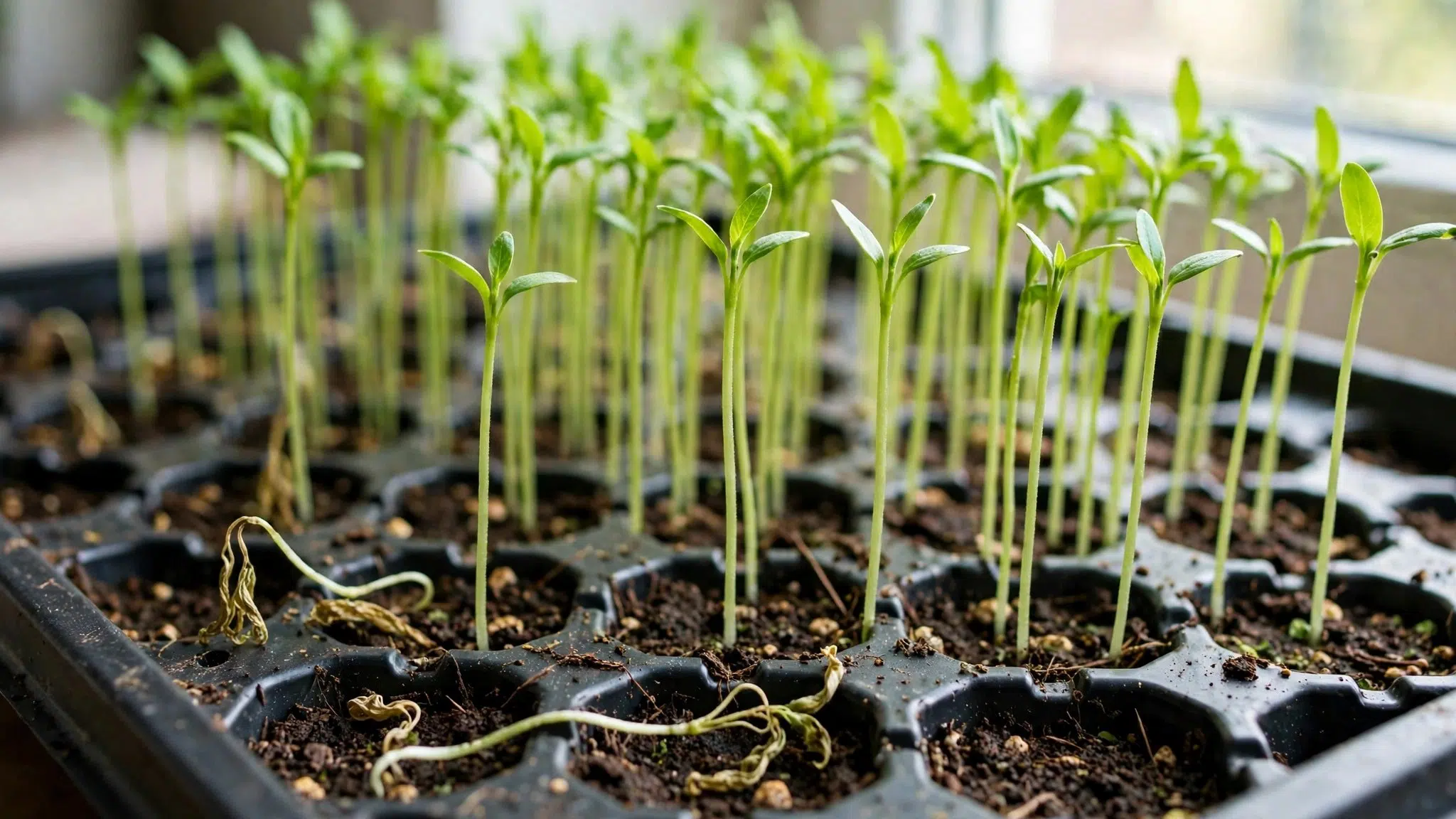
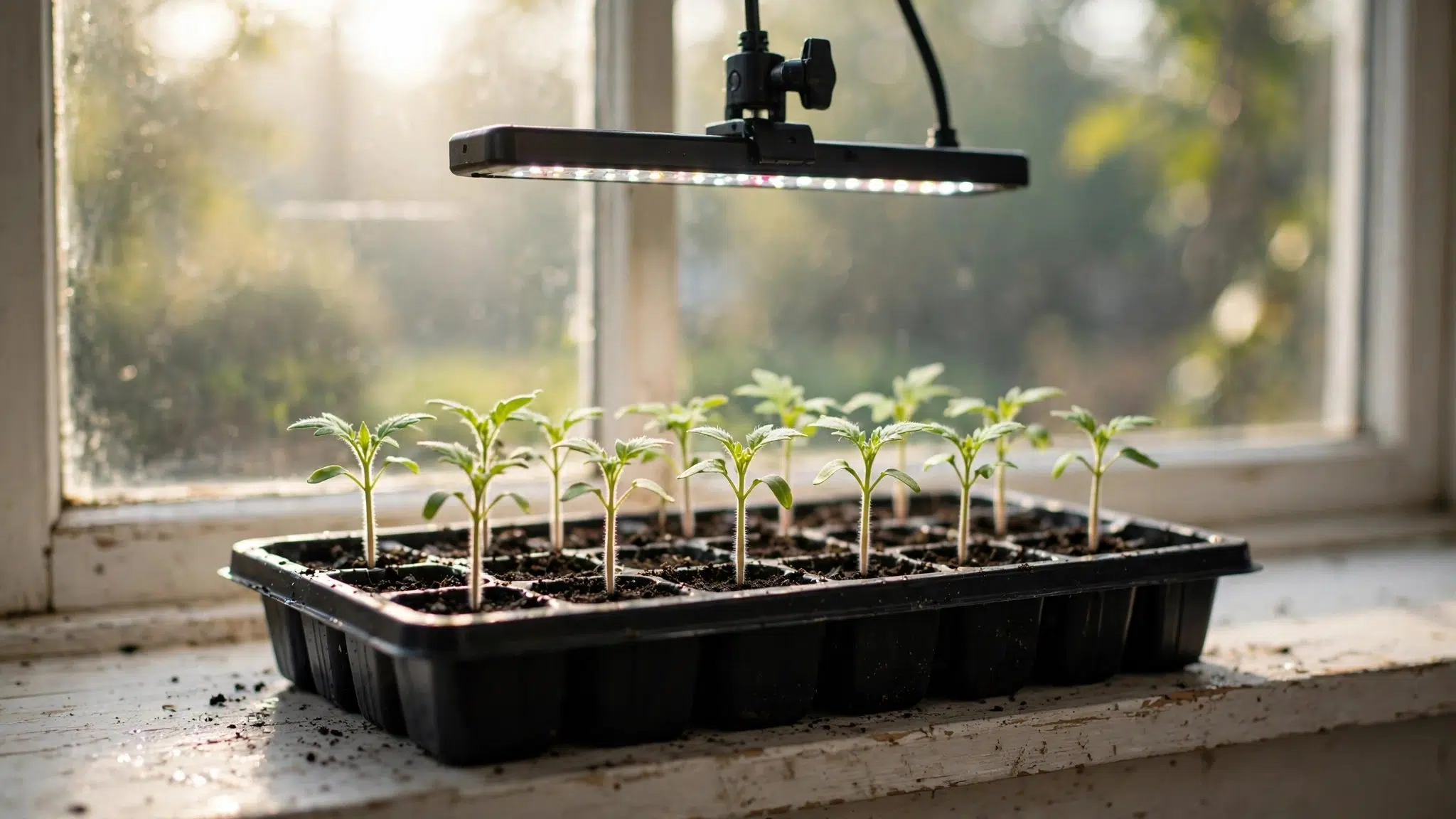
- Give them strong light. As soon as seedlings emerge, move them under a grow light or to your brightest window, with the light 2 to 6 inches above the leaves for 14 to 16 hours a day, so they grow stocky instead of leggy.
- Thin to one seedling per pot. Once the first true leaves appear, snip the weaker seedling at the soil line rather than pulling it, which would disturb the survivor’s roots.
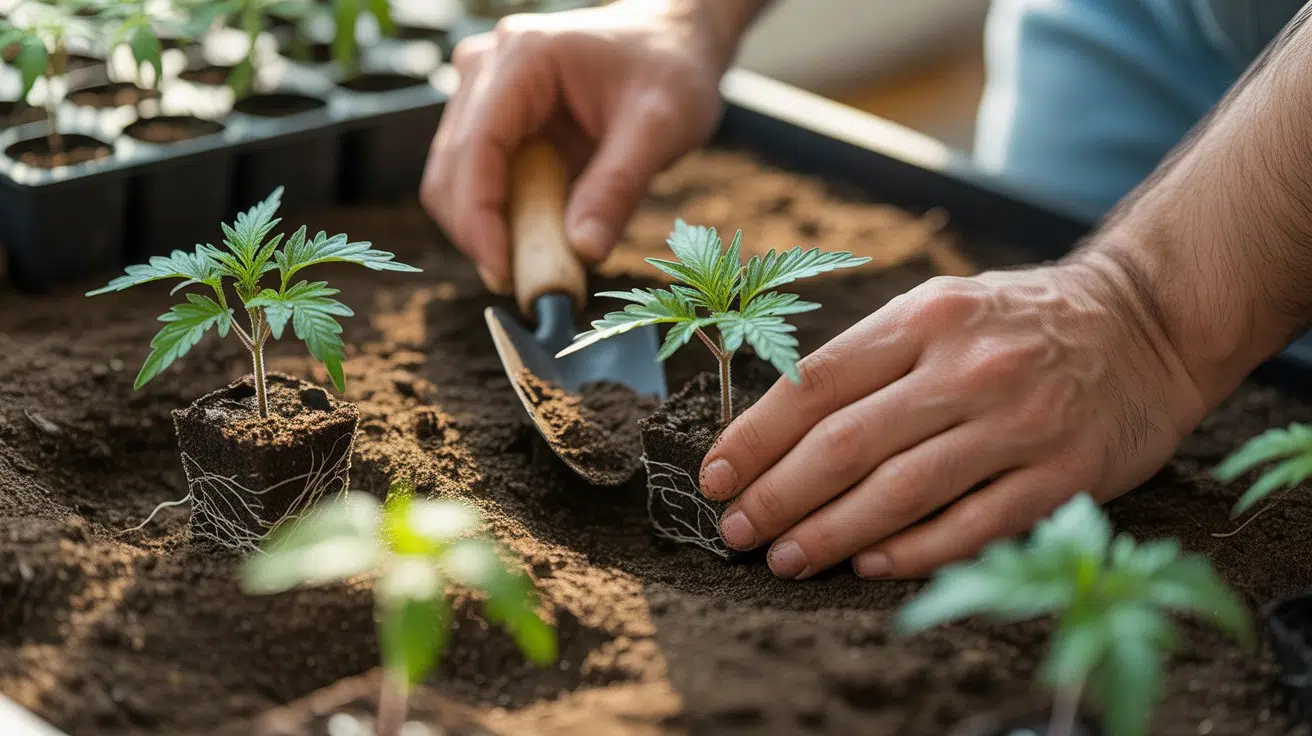
- Harden off, then transplant. Spend 7 to 10 days moving the pots outdoors for a few hours a day, increasing sun and wind exposure. Set plants out only after the last frost, when the soil is 65°F or warmer, spacing them 9 to 12 inches apart in rows 3 to 6 feet apart.
Direct sowing vs. starting indoors
Honest answer: for okra, direct sowing often wins. Because the taproot dislikes being moved, a seed sown directly into warm garden soil usually catches up to a transplant within a few weeks — and it never suffers transplant shock. Direct sow once the soil is reliably 65°F or warmer, planting seeds 3/4 inch deep and thinning to 9 to 12 inches apart. In zones 8 and warmer, that is the simplest path to a good crop. If you are still weighing when to start okra seeds indoors against direct sowing, let the soil thermometer decide — it is the most reliable guide.
Frequently Asked Questions
How many weeks before the last frost should I start okra seeds indoors?
Start okra seeds indoors 4 to 5 weeks before your last spring frost. That gives seedlings time to develop a few true leaves without outgrowing their pots. Starting earlier usually backfires, because okra grows fast and its taproot quickly fills a small pot.
What soil temperature do okra seeds need to germinate?
Okra germinates best when the soil is 70 to 95°F, and it needs at least 65°F at a 4-inch depth to germinate reliably, according to Clemson Cooperative Extension. Below that, germination is slow and patchy, and seeds may rot in cold, wet soil.
Can I direct sow okra seeds instead of starting them indoors?
Yes — and in warm climates it is often the better option. Sow seeds 3/4 inch deep once the soil is 65°F or warmer, thin to 9 to 12 inches apart, and keep the bed moist until seedlings emerge. Direct-sown plants avoid transplant shock and usually catch up to transplants within weeks.
Do okra seeds need light to germinate?
No. Okra seeds germinate in the dark under the soil — that is why they are sown 3/4 inch deep. Light becomes important the moment the seedlings emerge: give them 14 to 16 hours of bright light a day so they grow stocky rather than tall and pale.
How long does okra take to produce pods after planting?
Okra usually starts producing pods 60 to 70 days after planting. Pick pods when they are 2 to 3 inches long, while they are still tender, and harvest every two days — pods grow fast, and oversized pods turn tough and fibrous.
Sources
- Clemson Cooperative Extension, “How to Grow Okra in South Carolina” (HGIC 1313) — hgic.clemson.edu
- University of Georgia Extension, “Home Garden Okra” (Circular 941) — fieldreport.caes.uga.edu
- USDA Agricultural Research Service, “2023 USDA Plant Hardiness Zone Map” — planthardiness.ars.usda.gov
Researched Picks: Keeping Okra Warm
Okra is a heat lover, and this article keeps coming back to the same point: the soil thermometer matters more than the calendar. Two tools do the heavy lifting — a heat mat to supply the warmth, and a soil thermometer to check it. The picks below are researched types, not tested products.
1. A heat mat with a thermostat for warm-season seedlings
🏆 Top Pick
Specs: seedling heat mat with a thermostat and a soil probe; holds pots in the 70–95°F range okra needs to germinate.
A heat mat with a digital thermostat and a soil probe holds pots in the 70 to 95 degrees Fahrenheit range okra needs to germinate, instead of drifting with the room. Set the thermostat, place the probe in the mix, and let the mat do the work until seedlings emerge.
| ✓ Pros | ✗ Cons |
|---|---|
|
|
Best for: anyone starting okra, peppers, or aubergines indoors in a cool house.
Check Price on Amazon2. A probe soil thermometer
🥈 Runner-Up
Specs: long-probe soil thermometer; reads the temperature at the depth the seed sits, so you know the soil is truly warm enough.
A long-probe soil thermometer lets you check the soil four inches down in the morning, exactly as this guide recommends, before you sow or move seedlings outdoors. A clear, easy-to-read dial or digital display is worth having, since you will check it daily in spring.
| ✓ Pros | ✗ Cons |
|---|---|
|
|
Best for: every okra grower — if you buy only one tool for this crop, make it this one.
Check Price on AmazonMeasure the soil before you sow when you start okra seeds indoors, and keep the mat on only until seedlings emerge: warm soil gets okra going, but seedlings grow best once the mat is off and the light is strong.
How We Chose
We compared the tools that decide whether okra seed germinates: whether a heat mat holds soil in the 70–95°F germination range without overheating it, whether the temperature can be checked at the depth the seed sits, and whether the tool is simple enough to use for a 4–5-week indoor start. We used growing guidance from university extensions and the product details listed by the sellers; we did not test the products ourselves.
Final Verdict
If you buy one thing for starting okra indoors, make it the heat mat with a thermostat: warm soil is what turns a slow, sulky seedling into a fast-growing plant. Add the probe thermometer so you can prove the soil is warm enough before you sow.
Check Price on Amazon