Peat Pots vs Soil Blocks: Which Is Best for Starting Seeds?
As an Amazon Associate I earn from qualifying purchases.
Last updated: November 2026
Peat pots vs soil blocks comes down to this: peat pots are cheap, plantable containers that roots must push through, while soil blocks are compressed cubes of mix with no container, so roots air-prune and transplant with almost no shock. Soil blocks grow stronger roots and less waste; peat pots are easier to buy and simpler for a tray.
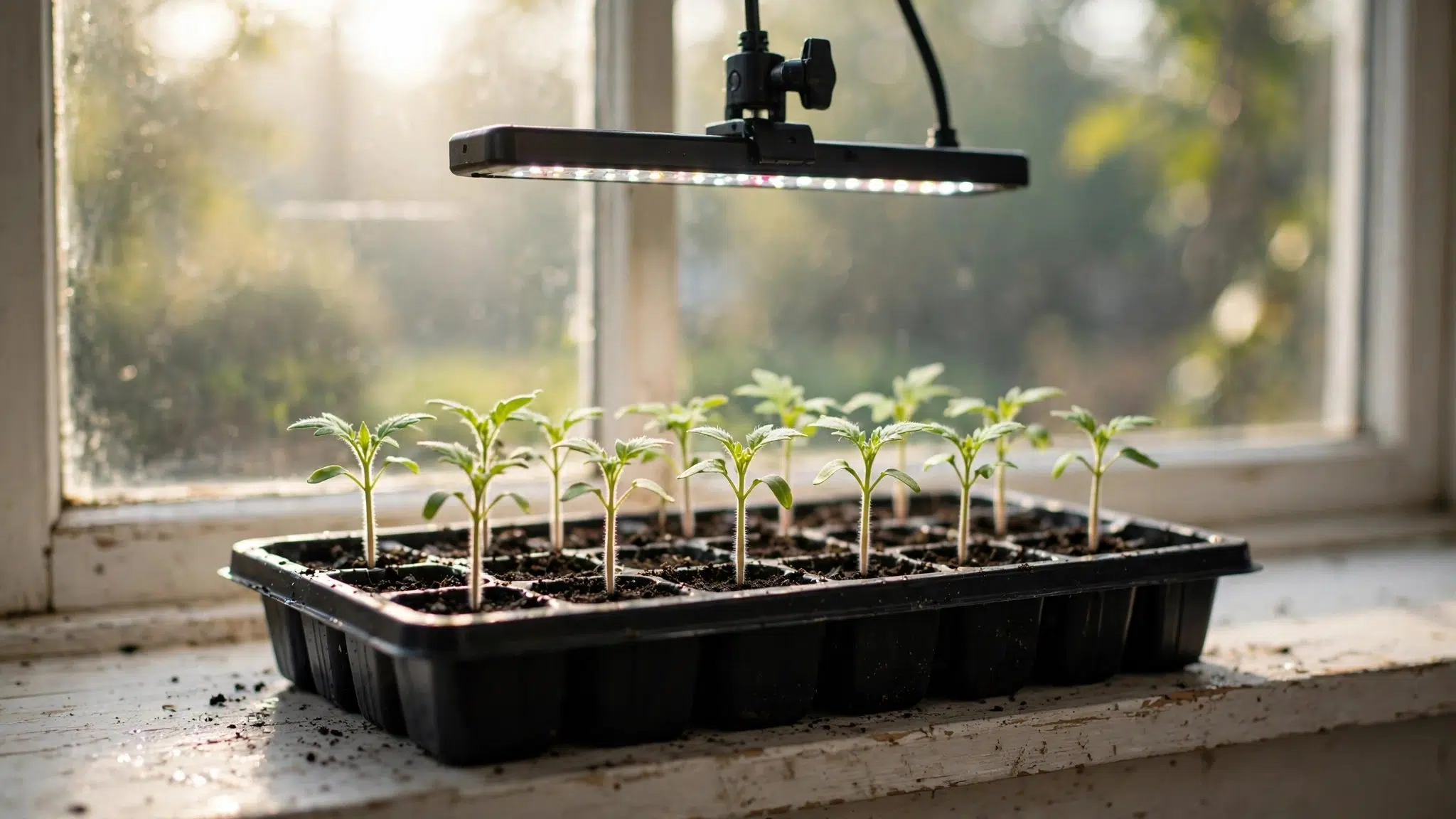
Both methods exist to solve the same problem: starting seeds indoors without disturbing the roots at transplant time. A seedling yanked from a cell spends its first week outdoors recovering instead of growing. In peat pots vs soil blocks, the two methods take different routes to the same goal, and the right choice depends on how many plants you start, how often you water, and how much you care about waste.
Quick Picks
- Top pick: JNYONG Peat Pots, 120-Pack, 3.15 Inch — best for the simplest start: sow, then plant the whole pot with no transplant shock.
- Runner-up: Authentic Ladbrooke Mini 4 Soil Blocker — best for a reusable, plastic-free setup with air-pruned roots, once you have the mix right.
What Each One Is
A peat pot is a small pot made of compressed peat fiber. You fill it with seed-starting mix, sow into it, and plant the whole pot in the ground. Iowa State Extension notes that roots grow through the pot, and that the pots should be kept moist; if they dry out, they can wick water away from the roots.
A soil block is the opposite idea. Using a hand press called a soil blocker, you compress damp potting mix into a firm cube, with a small dimple on top for the seed. There is no container at all, so the roots grow to the edge of the cube, meet the air, and stop, which Iowa State calls air pruning.
Peat Pots vs Soil Blocks: The Comparison
The table below sets peat pots vs soil blocks side by side on the points that matter at the potting bench.
| Factor | Peat pots | Soil blocks |
|---|---|---|
| Cost to start | Low; a few cents each | Higher; a blocker costs $25–$40 |
| Cost per plant | A few cents, every time | Almost nothing after the blocker |
| Roots | Must push through the pot wall | Air-pruned, dense, and fibrous |
| Transplant shock | Low if the pot is buried and wet | Very low; no container to remove |
| Moisture | Dries out fast at the rim | Dries out fast on all sides |
| Waste | Pot breaks down, but peat is mined | Almost none; no plastic, no pot |
| Learning curve | None | Moderate; the mix must be right |
Peat Pots: The Honest Pros and Cons
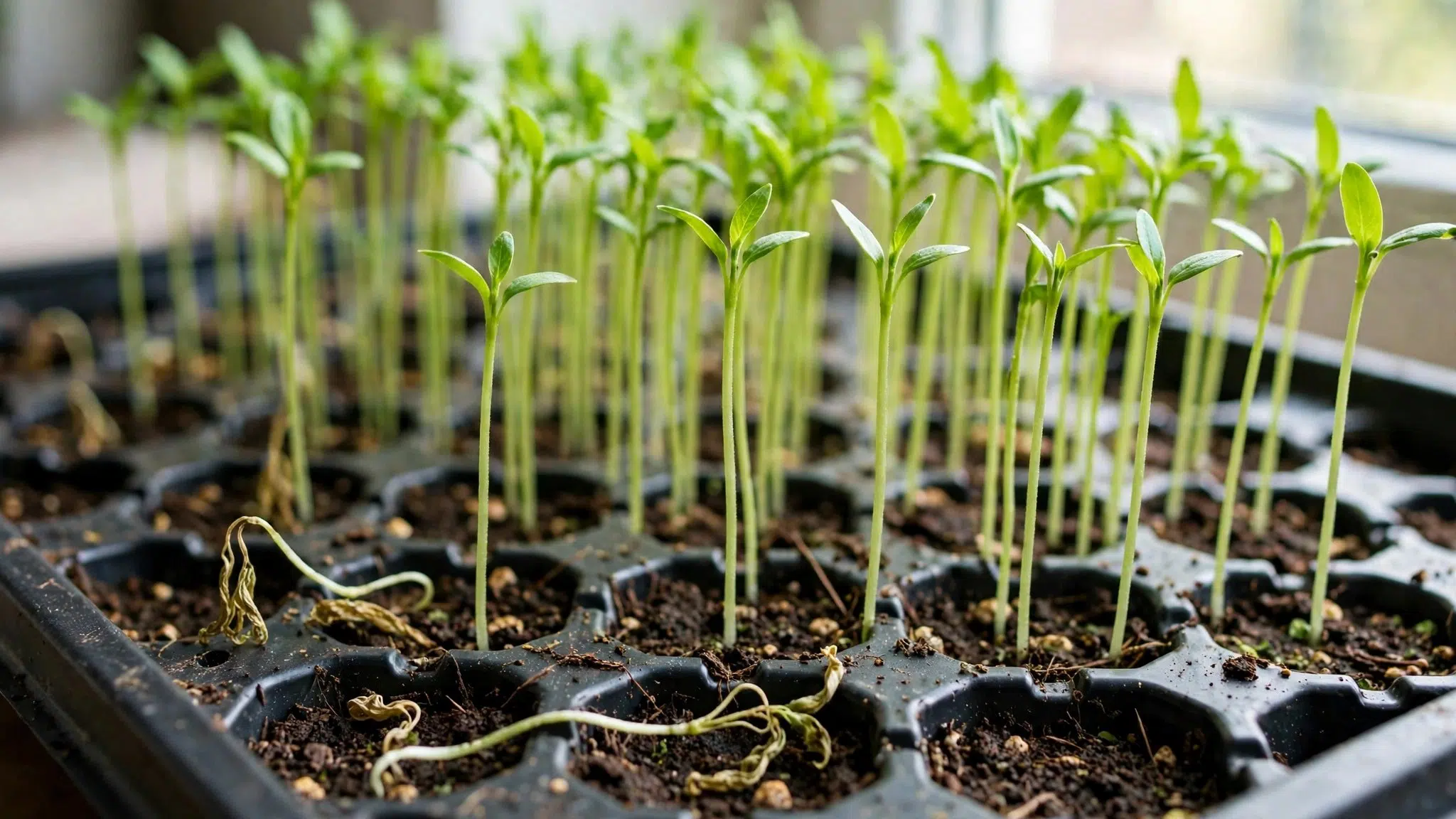
In the peat pots vs soil blocks debate, peat pots are the familiar choice, and familiarity counts. You can buy them anywhere, they fit standard trays, and there is nothing to learn: fill, sow, water, plant. They suit a first tray of tomatoes or a school project. The downsides are real, though. The rim dries out and can wick moisture from the mix, so pots in a sunny window need checking daily. Roots can be slow to push through a dry pot wall, and a pot left with its rim above the soil keeps wicking after planting. Iowa State’s advice is to tear off the bottom of the pot at planting time and bury the rim below the soil surface.
Soil Blocks: The Honest Pros and Cons
The other side of peat pots vs soil blocks is the soil block, and its case is built on roots. Because there is no wall, roots air-prune instead of circling, so a blocked seedling has a dense, fibrous root ball that takes off the moment it is planted. There is no plastic to wash and no pot to buy each year, which is why Iowa State calls soil blocking an efficient, low-waste way to start seeds.
The trade-offs are the blocker itself, which costs money up front, and the mix: it must hold together when pressed, so ordinary garden soil will not do. Blocks also dry quickly, because every face is exposed to air, so they need a tray and regular watering, and the seed is not visible once sown. That root advantage is the core of the peat pots vs soil blocks argument for blocks.
Who Should Pick Which
Choosing between peat pots vs soil blocks depends on the gardener, not the plant. Pick peat pots if you are starting one or two trays for the first time, if you want to buy everything in one trip, or if you only start a handful of plants each spring. Pick soil blocks if you start dozens of plants every year, if you want to cut plastic and peat waste, or if you grow root-sensitive crops such as squash, cucumbers, and melons, which resent any root disturbance. For the full indoor routine, see our guide to starting seeds indoors.
Making Either One Work
Whichever side of peat pots vs soil blocks you choose, two habits matter more than the container. First, keep the mix evenly damp, not wet: water from below so the surface does not crust, and let the tray drain so the roots are not sitting in water.
Second, transplant on time. A peat pot left too long in a tray turns hard and the roots circle inside it; a soil block left too long dries into a brick. Plant peat pots with the rim buried, tear the bottom first, and water the hole before you set the plant in. Plant soil blocks at the same depth they sat in the tray, firm the soil around them, and water well. And if you start more seed than you need, save the rest properly; our guide to how to store seeds covers that.
What to Buy
If you would rather start with the items mentioned above than improvise, these are two straightforward options sold on Amazon. The notes below are based on the manufacturers’ listed specifications, not on hands-on testing.
JNYONG Peat Pots, 120-Pack, 3.15 Inch
120 biodegradable peat pots, each 3.15 inches wide and 3.15 inches tall, made from recycled pulp and plant fibre, with drainage holes in the base. The pack includes 100 plant labels.
| ✓ Pros | ✗ Cons |
|---|---|
|
|
Suits: sowing a large batch of seedlings at once, especially quick crops you will move out promptly.
Check Price on AmazonAuthentic Ladbrooke Mini 4 Soil Blocker
A soil blocker that presses four 2-inch blocks at a time from damp potting mix, made from EP-coated steel in England. It includes six 3/8-inch seed pins for forming a seed hole in each block, and the blocks nest with the maker’s smaller and larger sizes.
| ✓ Pros | ✗ Cons |
|---|---|
|
|
Suits: gardeners who start most vegetables, herbs and flowers and want a reusable, plastic-free way to do it.
Check Price on AmazonHow We Chose
We compared these two options on the criteria that matter most for starting seeds: how much the roots are disturbed at transplant time, how the mix holds moisture, waste and plastic use, cost per plant and up-front cost, and how much technique each one demands. The notes in this guide are based on the manufacturers’ listed specifications and on university extension guidance, including Iowa State University Extension and the University of Minnesota Extension. We did not carry out hands-on testing, so check the current specifications on the product page before you buy.
Frequently Asked Questions
Peat pots vs soil blocks: which is better for tomatoes?
Both work for tomatoes, but in the peat pots vs soil blocks comparison, soil blocks usually win on roots: the air-pruned root ball establishes fast after transplanting. Peat pots are simpler if you are only starting a few plants.
Do roots really grow through peat pots?
Yes, if the pot stays moist. Roots grow through a damp pot wall, but a dry wall is slow to break down and can strangle the plant.
What mix do soil blocks need?
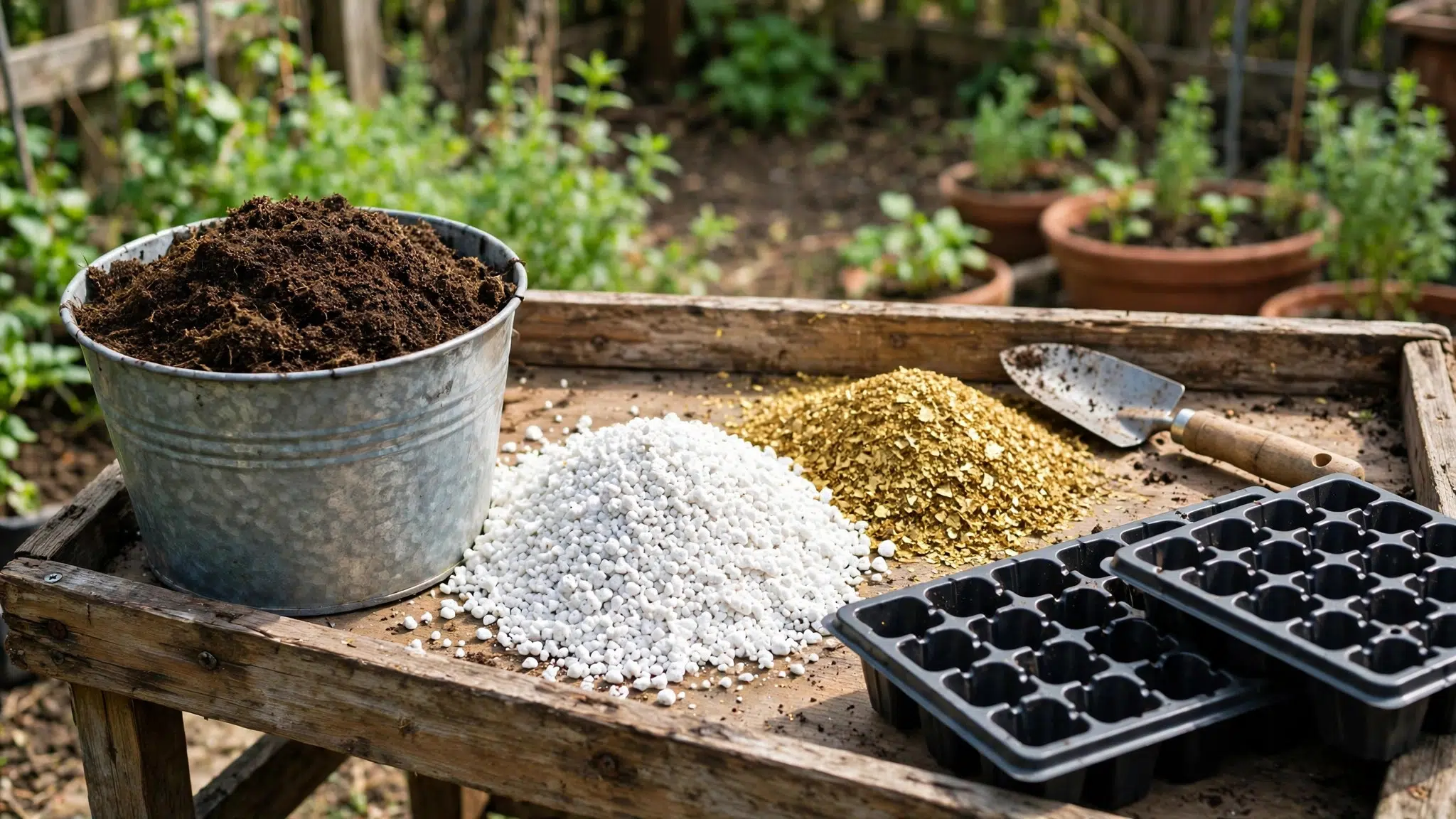
Soil blocks need a mix that holds together when pressed and stays open enough for roots. A common recipe is peat or coir, sifted compost, and perlite or coarse sand, mixed damp. Garden soil is too heavy and will not hold a block.
Do soil blocks dry out too fast?
They can. Every face of a block is exposed to air, so blocks need a solid tray and regular watering, ideally from below. A humidity dome helps until germination, and a capillary mat under the tray keeps moisture even. See how to germinate seeds for moisture basics.
Are peat pots bad for the environment?
Peat pots break down in the soil, but the peat in them is mined from bogs, which are slow to regrow. Soil blocks use less peat per plant if the mix is mostly compost, and no pot at all. If peat use worries you, look for coir-based pots or blocks made with a coir mix.
Sources
Iowa State University Extension and Outreach, Containers for Starting Seeds; Iowa State University Extension and Outreach, Starting Seeds in Soil Blocks; University of Minnesota Extension, Starting seeds indoors.
Final Verdict
If you want the simplest start, choose the JNYONG peat pots: sow, water, and plant the whole pot without disturbing the roots. If you would rather avoid single-use pots and are happy to learn the mix, the Ladbrooke Mini 4 Soil Blocker is the better long-term buy, with air-pruned roots and almost no waste.