When to Start Cucumber Seeds Indoors: Zone-by-Zone Timing Guide
As an Amazon Associate I earn from qualifying purchases.
Last updated: November 2026
Most warm-season crops reward an early start. Cucumbers do the opposite: sow them too early and you get a stressed, root-bound plant that sulks after transplanting. The rule in this guide is just 2–3 weeks before your last frost, in warm soil, in a pot you can plant whole.
Quick Picks
Top pick — VIVOSUN Heat Mat with Thermostat: best for holding soil at 75–85°F for germination in 3–5 days. Check price on Amazon
Runner-up — JNYONG Peat Pots: best for sowing cucumbers in a biodegradable pot that transplants whole, roots undisturbed. Check price on Amazon
Budget pick — Barrina T5 Grow Lights: best for strong light 2–4 in above the pots for 14–16 hours a day. Check price on Amazon
When to start cucumber seeds indoors? Just 2–3 weeks before your area’s average last spring frost date — much later than tomatoes or peppers. Cucumbers grow extremely fast and hate root disturbance, so sow them in individual biodegradable pots and transplant the whole pot outdoors once nights stay above 50°F.
Why Cucumbers Are Different From Tomatoes and Peppers
Most warm-season crops reward an early start. Cucumbers do the opposite. A tomato seedling happily grows indoors for 6–8 weeks, but a cucumber seedling outgrows its pot in about three weeks, becomes root-bound, and then sulks for days after transplanting. A stunted transplant is often overtaken by a seed sown directly in warm garden soil.
University extension services are consistent on this point. The University of Minnesota Extension, for example, advises starting cucumbers indoors only about 3–4 weeks before transplanting at most, and many gardeners in Zones 7 and warmer skip indoor starting entirely and direct-sow with excellent results. Indoor starting is worth it mainly in short-season areas (Zones 3–5), where every extra week of growing season matters, or when you want a slightly earlier first harvest.
If you are planning your whole indoor schedule, our complete guide to starting seeds indoors shows where cucumbers fit alongside slower crops like peppers and celery.
Zone-by-Zone Timing Table
Find your USDA hardiness zone, check your average last frost date, then count back 2–3 weeks. The dates below use typical last frost dates for each zone — your microclimate can shift them by a week or two, so confirm your exact date with your local extension office or the USDA Plant Hardiness Zone Map.
| USDA Zone | Typical last frost | Sow indoors | Transplant outdoors |
|---|---|---|---|
| Zone 3 | Late May – early June | Early to mid-May | Early to mid-June |
| Zone 4 | Mid to late May | Late April – early May | Late May – early June |
| Zone 5 | Late April – mid-May | Mid to late April | Mid to late May |
| Zone 6 | Mid to late April | Late March – early April | Late April – early May |
| Zone 7 | Early to mid-April | Mid to late March | Mid to late April |
| Zone 8 | Mid to late March | Late February – early March | Late March – early April |
| Zone 9 | Late February – mid-March | Early to mid-February | Mid to late March |
| Zone 10 | Rarely frosts | January – February | February – March |
Two warnings apply to every zone. First, the last frost date is an average — roughly half of years see a frost after it, so keep row cover handy for the first week outdoors. Second, soil temperature matters as much as the calendar. Cucumbers germinate best in soil at 70–95°F and grow poorly below 60°F, so check the ranges in our seed germination temperature chart before you rush transplants outside.
How to Sow Cucumber Seeds Indoors, Step by Step
- Choose the right pot. Use 3–4 inch biodegradable peat or coir pots for sowing when you start cucumber seeds indoors. Because you plant the whole pot, the fragile roots are never disturbed.
- Fill with seed-starting mix. Use a fine, sterile mix, pre-moistened until it feels like a wrung-out sponge.
- Sow 1/2 inch deep. Plant 2 seeds per pot and pinch off the weaker seedling after they sprout — do not pull it, which can tear the roots of the keeper.
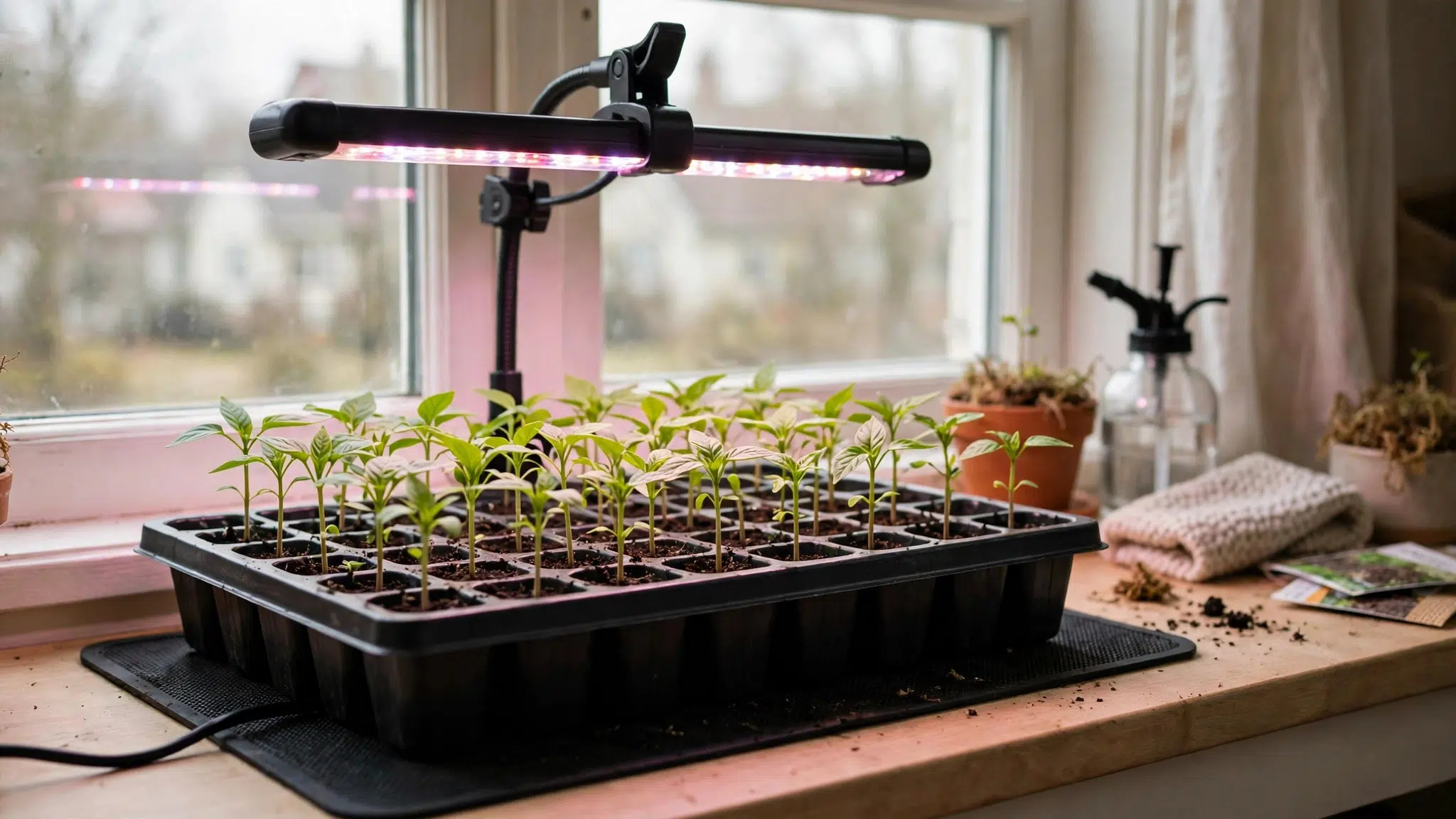
- Keep them warm. A heat mat set to 75–85°F gives germination in as little as 3–5 days. Remove the mat as soon as seedlings emerge.
- Give strong light immediately. Place pots 2–4 inches under an LED or fluorescent light for 14–16 hours a day. Cucumbers stretch toward weak light faster than almost any other seedling.
- Water from below. Keep the mix evenly moist but never soggy, and run a small fan nearby for a few hours a day to build sturdy stems.
Our step-by-step guide on how to germinate seeds covers warmth, moisture and troubleshooting in more detail if a batch fails to sprout.
Growing On and Transplanting
Cucumber seedlings should spend no more than about three weeks indoors. Feed them once with a half-strength balanced liquid fertilizer after the first true leaves appear. In the final 4–5 days, harden them off: start with 2 hours in sheltered shade, add sun gradually, and bring them in if nights drop below 50°F.
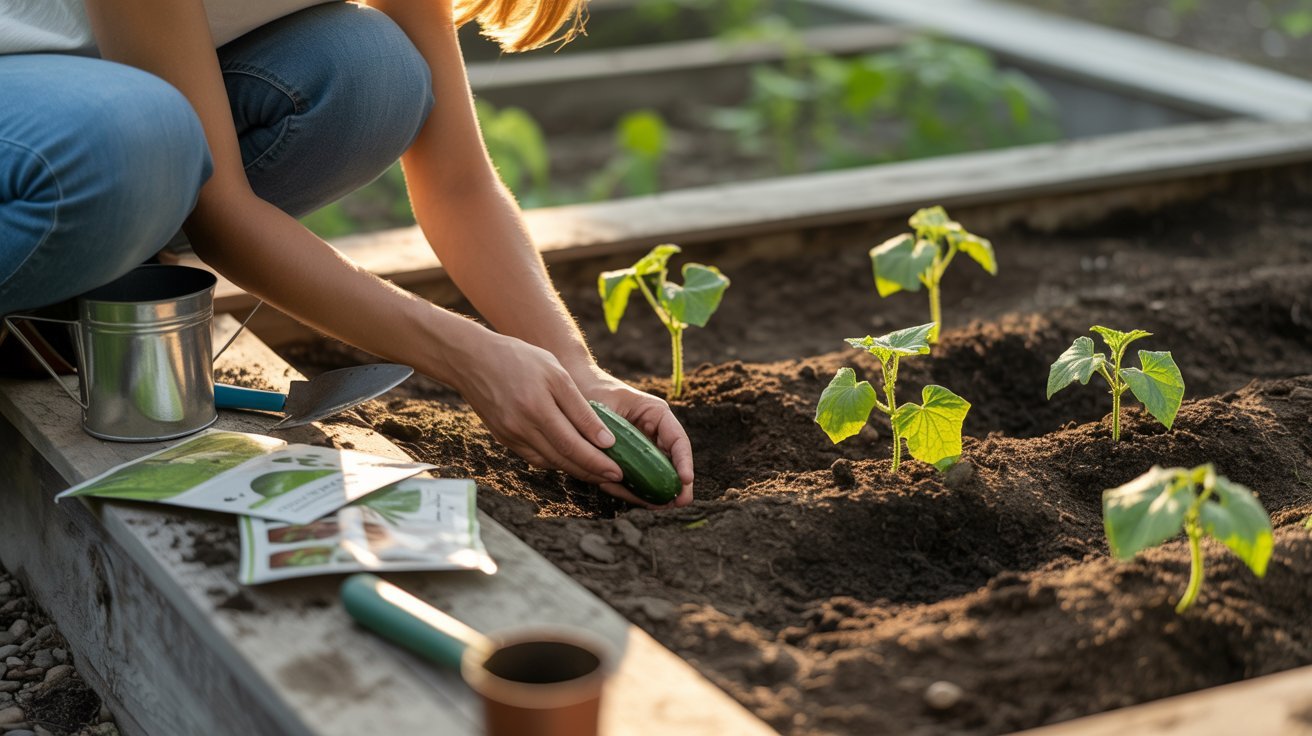
Transplant on a cloudy afternoon or in the evening to reduce shock. Tear the rim off biodegradable pots so no dry peat edge wicks water away from the roots, set the pot level with the soil, and water deeply. Space plants 12 inches apart in rows, or 2–3 plants per hill, and install a trellis at planting time — training vines upward saves space and keeps fruit clean and straight.
Indoor Start or Direct Sow? How to Decide
| Situation | Better choice |
|---|---|
| Zone 3–5, short season | Start indoors, 2–3 weeks ahead |
| Zone 6–7 | Either works; indoor start gives a 1–2 week earlier harvest |
| Zone 8–10, long warm season | Direct sow — simpler and plants establish faster |
| Soil still below 60°F | Wait, or start indoors while soil warms |
| Growing in containers | Direct sow into the final pot |
Direct sowing is not a lesser option. In warm soil, a direct-sown cucumber emerges in 3–5 days and, with no transplant check, frequently matches an indoor-started plant within two weeks.
Common Mistakes to Avoid
- Starting too early. This is the number one error. A five-week-old cucumber in a small pot is a stressed plant, not a head start.
- Using small cell trays. Tiny cells dry out fast and cramp roots. Cucumbers need room from day one.
- Transplanting into cold soil. Cold, wet soil invites rot and stalled growth. Wait for a few warm nights in a row.
- Skipping hardening off. Soft indoor leaves sunburn within hours outdoors. Five days of gradual exposure prevents it.
Frequently Asked Questions
Can I start cucumber seeds indoors in February?
Only in Zones 9–10, where transplanting happens in late February or March. In most of the US, February is far too early — seedlings would be root-bound and leggy weeks before the weather allows them outside.
How long do cucumber seeds take to germinate indoors?
At 75–85°F soil temperature, expect sprouts in 3–5 days; at 65°F it can take 7–10 days. Fresh seed and steady warmth are the two biggest factors in fast, even germination.
Why did my cucumber seedlings die after transplanting?
The usual causes are cold soil, disturbed roots, or no hardening off. Cucumbers resent all three. Plant biodegradable pots whole, wait for nights above 50°F, and harden seedlings off for at least 4–5 days.
Should I start cucumber seeds indoors or outdoors in Zone 6?
Both work well. Starting indoors gives you harvests about 1–2 weeks earlier; direct sowing in mid-May is simpler and produces equally strong plants by midsummer. Many Zone 6 gardeners do both for a staggered harvest.
Can I grow cucumber seedlings on a windowsill?
It is risky. Cucumbers grow so fast that even a bright south-facing windowsill often produces stretched, weak seedlings within days. A simple LED light hung a few inches above the pots gives far more reliable results.
When to Start Cucumber Seeds Indoors by Variety
When to start cucumber seeds indoors depends partly on the variety you are growing. Long slicing cucumbers, the mild types you eat fresh, follow the standard 2–3 week rule because they grow fast and sulk if they sit too long in a small pot. Pickling varieties are usually a little more compact and forgiving, but they still hate transplant shock, so when to start cucumber seeds indoors is the same short window for both types — sow two seeds per pot and pinch off the weaker seedling.
Bush and compact varieties, such as ‘Spacemaster’ and ‘Bush Champion’, suit containers and small gardens because their short vines need little support and they often fruit a few days sooner. For these types, when to start cucumber seeds indoors is exactly the same 2–3 weeks before your last frost — a smaller plant does not need a longer head start, and an earlier sow only makes a root-bound seedling. The University of Minnesota Extension gives the same advice, recommending cucumbers be started indoors no more than 3–4 weeks before transplanting.
Whatever variety you choose, when to start cucumber seeds indoors is only half the decision; the other half is how you move the plant outside. Harden seedlings off for several days, then set the whole biodegradable pot into warm soil so the roots are never disturbed — our guide to when to transplant seedlings outdoors walks through that timing step by step. A calm, warm, well-hardened plant will outgrow a pampered one that was started too early, every time.
One last tip: mark your sowing date on the calendar the moment you decide when to start cucumber seeds indoors, because the gap between ‘just right’ and ‘root-bound’ is only about a week. If a seedling outgrows its pot before the weather turns, pot it up once into a larger biodegradable pot rather than setting it out early into cold soil.

Researched Picks: What to Buy for Starting Cucumber Seeds Indoors
Cucumbers need a short, warm indoor start in a pot that can be planted whole. These supplies match that job: steady warmth for germination in 3–5 days, biodegradable pots for undisturbed roots, and bright light for 14–16 hours a day.
1. VIVOSUN Heat Mat with Thermostat — Best Overall
A flat mat that sits under a standard seed tray and warms the mix from below, with a thermostat probe that sits in the soil and switches the mat off once the set temperature is reached. That control is what gives the 3–5 day germination in this guide: cucumbers sprout fast at 75–85°F, and slowly at 65°F, so holding the warmer temperature matters more than it does for slower crops.
Key specs: 10 × 20.75 in mat, sized for a standard 1020 tray; digital thermostat with a soil probe; designed to sit under seed trays during germination.
| ✓ Pros | ✗ Cons |
|---|---|
|
|
Best for: cool sowing rooms and anyone sowing cucumbers early in the season. Who should skip: anyone sowing in a room that already stays steadily above 75°F.
2. JNYONG Peat Pots — Best for Undisturbed Roots
Biodegradable peat pots for sowing cucumbers, made to be planted whole at transplanting so the roots are never disturbed. That is the whole point of the sowing method in this guide: cucumbers resent root disturbance, and a pot that goes straight into the ground removes the riskiest step.
Key specs: Biodegradable peat pots for sowing; plant the whole pot at transplanting; tear the rim off before planting, as this guide advises.
| ✓ Pros | ✗ Cons |
|---|---|
|
|
Best for: cucumbers and other crops that resent transplanting. Who should skip: anyone sowing slow crops that need weeks indoors — use a larger, reusable pot instead.
3. Barrina T5 Grow Lights — Best for Strong, Stocky Seedlings
Linkable full-spectrum LED tubes that hang 2–4 in above the pots and give seedlings 14–16 hours of bright light a day. Cucumbers grow fast, and even a bright windowsill often produces stretched seedlings in the short indoor period — tubes hung close are the simplest fix.
Key specs: T5 LED tubes, full spectrum; linkable design, so several tubes can run from one outlet; made to hang above seed trays on a shelf or rack.
| ✓ Pros | ✗ Cons |
|---|---|
|
|
Best for: windowsill growers and anyone whose cucumber seedlings have stretched before. Who should skip: growers with a bright greenhouse or a sunny, unshaded growing area.
How We Chose
We chose supplies that match the three things this guide says cucumbers need most: soil at 75–85°F, a pot that can be planted whole, and bright light close to the leaves. We compared manufacturer specifications, tray and mat sizes, thermostat control, and how each product fits a normal indoor sowing setup, and we left out anything that depended on a price, a star rating, or a claim we could not check. We did not test these products ourselves; the picks are based on published specifications and on how well each one fits the job described in this post.
Final Verdict
If you buy one thing, make it the VIVOSUN Heat Mat with Thermostat. Cucumbers germinate in 3–5 days at 75–85°F and slowly at 65°F, and the thermostat is the simplest way to hold that window in a cool house. Sow in the JNYONG peat pots so the roots are never disturbed, and add the Barrina lights if your seedlings have ever stretched on a windowsill.