When to Start Carrot Seeds Indoors (and When to Direct Sow Instead)

When to start carrot seeds indoors depends on your goal: most gardeners should not start carrots indoors at all, because carrots hate transplanting and their roots fork or stunt when moved. Direct sow 2–3 weeks before your last spring frost instead. Only start them indoors if you want the earliest possible harvest in a short-season climate, and even then use soil blocks or biodegradable pots so the root is never disturbed.
Why Carrots Are Different From Other Vegetables
Tomatoes and peppers are started indoors because they need a long warm season and they transplant easily. Carrots are the opposite on both counts. They are a cool-season crop that germinates in soil as cool as 40°F, and they grow a taproot — the carrot itself — that is damaged by almost any handling. A transplanted carrot often grows forked, stubby or split, which is why nearly every university extension guide recommends direct sowing.
The University of Minnesota Extension states plainly that carrots should be direct-seeded in the garden because transplanting disturbs the root. The University of California Agriculture and Natural Resources program gives the same advice, noting that carrots sown directly produce straighter, better-shaped roots. Indoor starting is an exception for gardeners who want to beat a very short season, not the standard method.
If you are planning a full indoor schedule, our guide to starting seeds indoors shows which crops genuinely benefit from it — and which, like carrots, do not.
Carrot Timing by Zone
Carrots can be sown as soon as the soil can be worked in spring, and they keep producing through fall. The table below gives direct-sowing dates by USDA zone, plus the narrow window for indoor starts where they make sense.
| USDA Zone | Direct sow (spring) | Indoor start (only if needed) | Fall sowing |
|---|---|---|---|
| Zone 3 | Mid-May – early June | Early May, soil blocks only | Mid-July |
| Zone 4 | Late April – May | Mid-April, soil blocks only | Late July |
| Zone 5 | Mid-April – May | Early April, soil blocks only | Late July – early Aug |
| Zone 6 | Late March – April | Mid-March, soil blocks only | Early August |
| Zone 7 | Early – mid-March | Late Feb, soil blocks only | Mid-August |
| Zone 8 | February – March | January, soil blocks only | September |
| Zone 9 | January – February | December, soil blocks only | October |
| Zone 10 | November – February | Rarely needed | November |
For a fall crop, count back from your first expected fall frost: most varieties need 70–80 days to mature, so sow 10–12 weeks before that date. Fall carrots are often the sweetest of the year because cool nights convert starches to sugars.
Soil temperature matters more than the calendar. Carrots germinate best at 60–70°F and take 14–21 days to emerge; in cold soil below 50°F they can take a full three weeks. Check the ranges in our seed germination temperature chart before sowing.
How to Start Carrot Seeds Indoors (the Right Way)
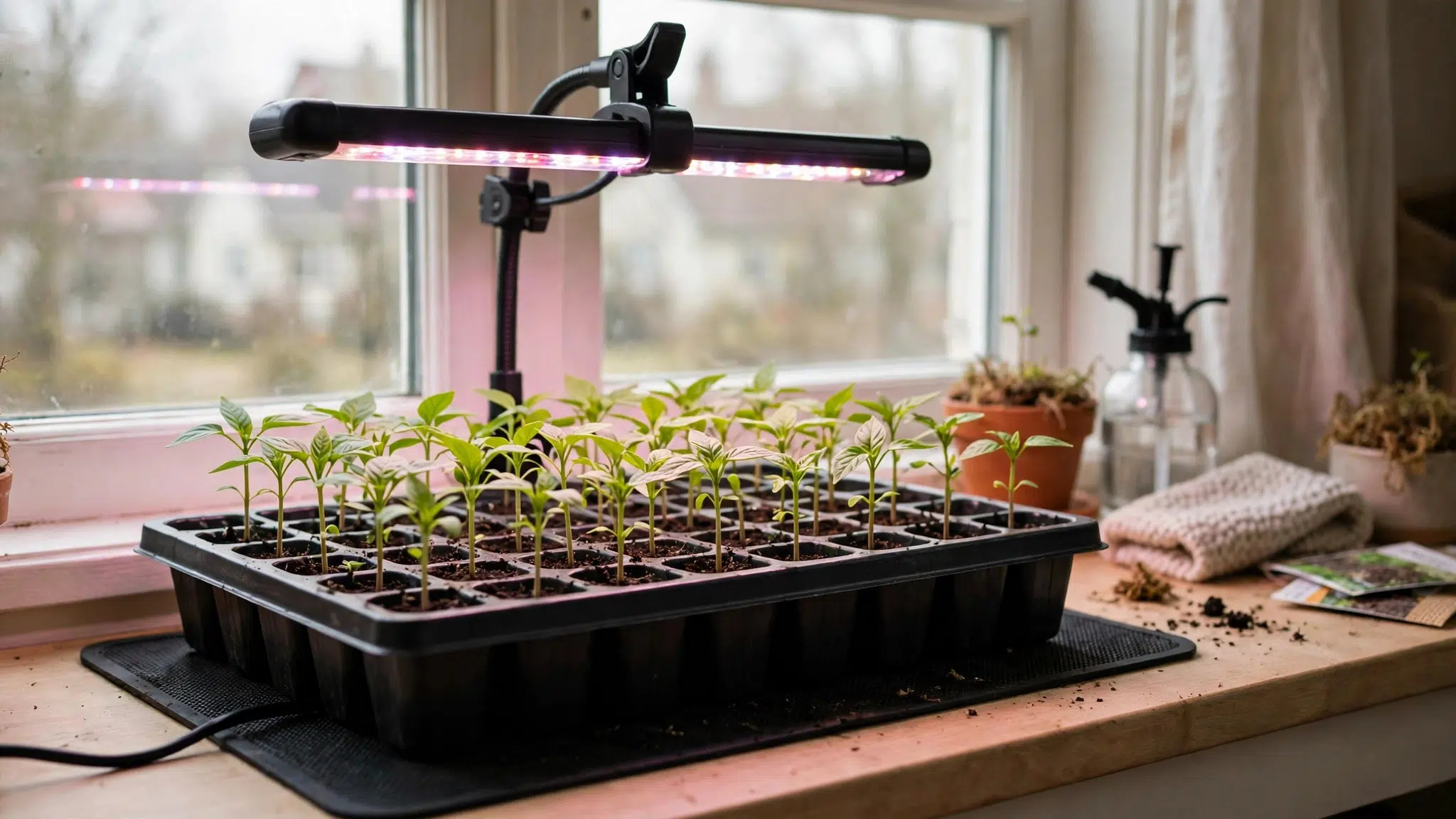
If you do start carrots indoors, the method matters more than the timing. Standard cell trays almost guarantee forked roots.
- Use soil blocks or biodegradable pots. A 2-inch soil block or peat pot lets you plant the whole unit without touching the root. Never use bare-root transplants.
- Sow 2–3 seeds per block, 1/4 inch deep. Thin to the strongest seedling by snipping the others at soil level — never pull, which disturbs the keeper’s root.
- Keep soil at 60–70°F. A heat mat is unnecessary and can push temperatures too high; room temperature is fine.
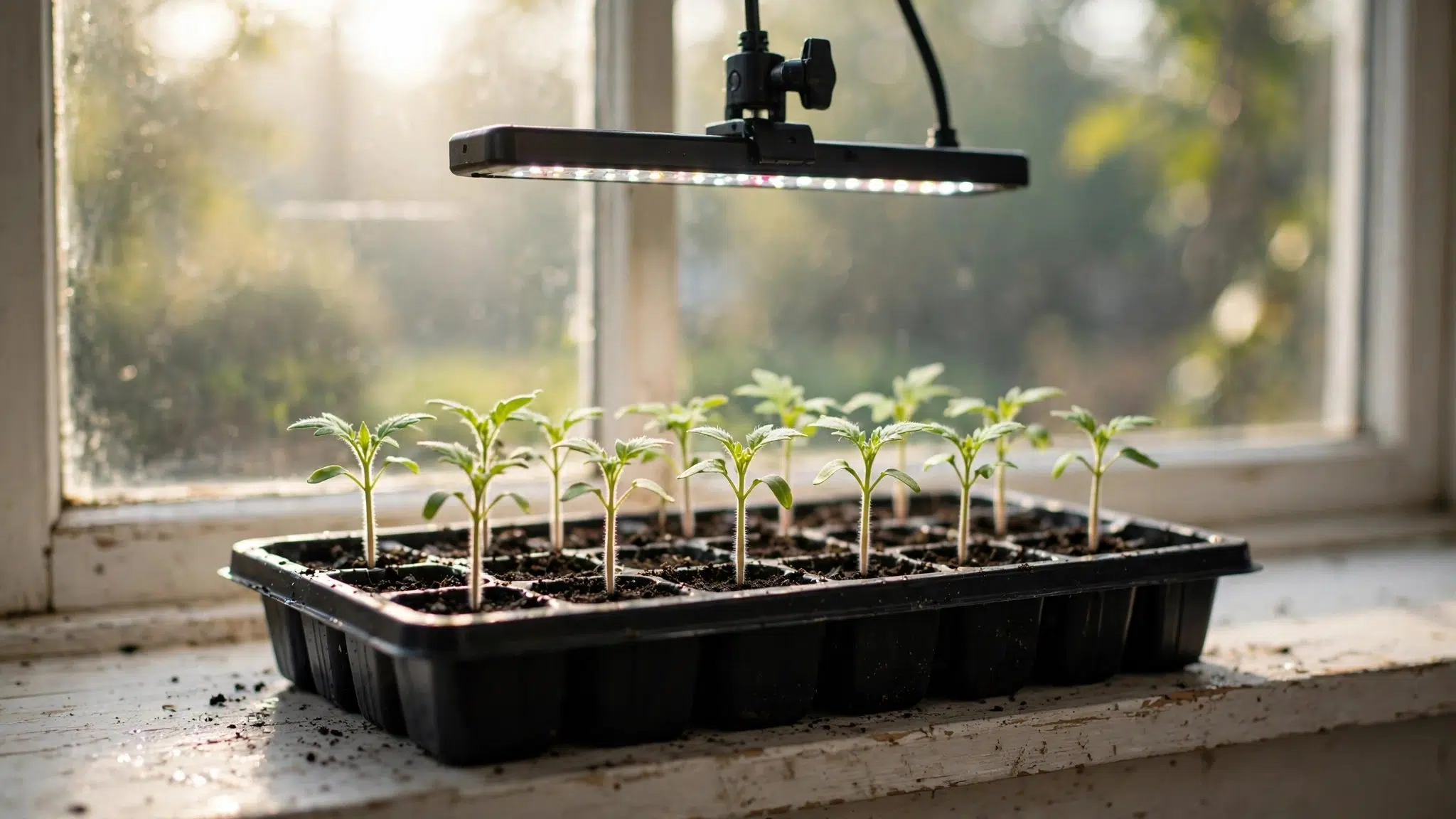
- Give strong light from day one. Carrot seedlings stretch quickly in weak light. Keep lights 2–4 inches above the tops for 14–16 hours a day.
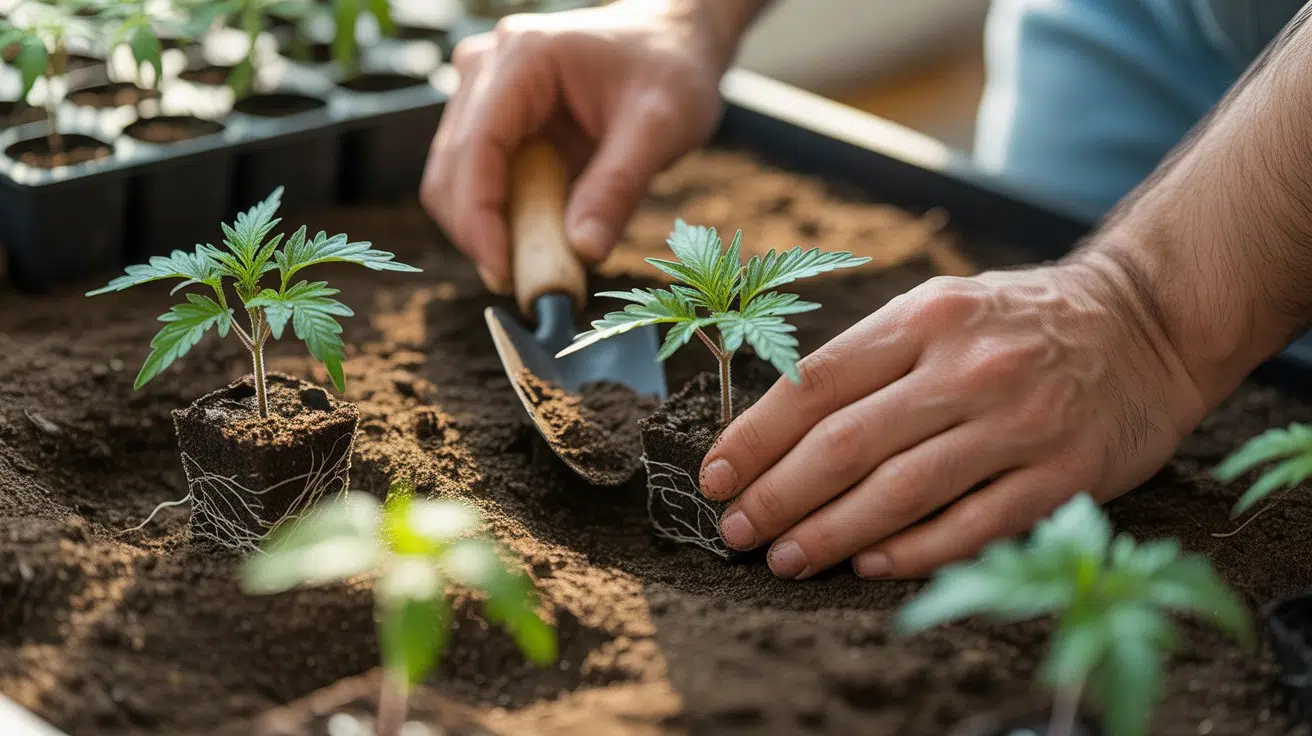
- Transplant at 3–4 weeks, root and all. Move the entire block or pot into prepared soil before the taproot reaches the bottom. Water the hole first, set the block level, and firm soil gently around it.
- Harden off for 3–4 days first. Carrots are cold-hardy, but indoor-grown seedlings still need gradual sun and wind exposure.
Even with perfect technique, expect some forked roots. That is the trade-off for a 2–3 week earlier harvest in Zones 3–5.
Direct Sowing: The Method That Works Best
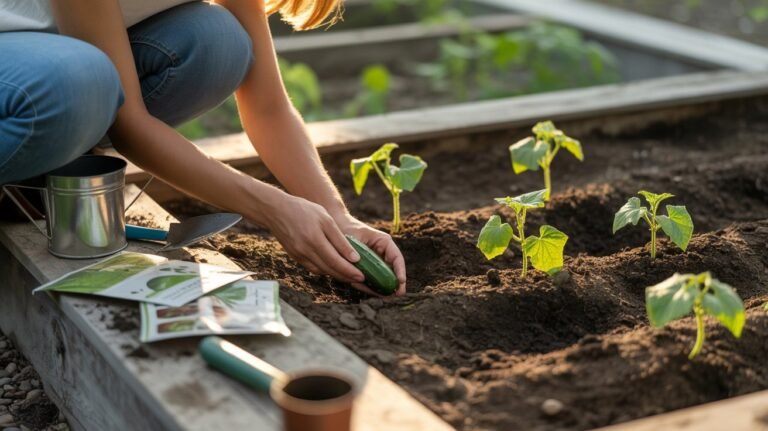
For most gardeners, direct sowing gives straighter roots and less work. Here is how to do it well:
- Prepare loose, stone-free soil. Dig or fork at least 12 inches deep and remove stones and clods — anything the taproot hits causes forking. Sandy loam is ideal.
- Sow shallow, 1/4 inch deep. Carrot seeds are tiny; deeper sowing means many never emerge.
- Mix seeds with sand. It spreads them evenly and prevents the thick clumps that need heavy thinning.
- Keep the surface moist for 2–3 weeks. This is the hard part — carrot seed beds dry out fast. Cover the row with a board or burlap for the first week, checking daily, and remove it at the first sign of sprouts.
- Thin to 2 inches apart. Do it when seedlings are 2 inches tall, snipping extras rather than pulling them.
- Mulch lightly once plants are established. It keeps soil cool and moist, which carrots love.
Our step-by-step guide on how to germinate seeds covers moisture and temperature control in more detail if a sowing fails to emerge.
Carrot Varieties and Days to Maturity
| Type | Examples | Days to maturity | Best for |
|---|---|---|---|
| Early / Nantes | Nantes, Scarlet Nantes | 65–70 | Sweet, crisp, good in most soils |
| Danvers | Danvers Half Long | 70–75 | Heavier soils, storage |
| Imperator | Imperator 58 | 70–75 | Long, straight roots, deep loose soil |
| Chantenay | Red Cored Chantenay | 65–70 | Short roots, clay soils |
| Round / Parisian | Paris Market, Thumbelina | 50–60 | Containers, shallow or rocky soil |
Short varieties such as Paris Market are the best choice for containers and heavy clay, where long types fork. Choose the variety for your soil, not just for the picture on the packet.
Frequently Asked Questions
Can you start carrot seeds indoors?
Yes, but only in soil blocks or biodegradable pots, transplanted at 3–4 weeks before the taproot outgrows the block. Standard cell trays and bare-root transplanting almost always produce forked, stunted carrots.
When should I direct sow carrots in Zone 6?
Sow 2–3 weeks before your average last frost — typically late March to April in Zone 6 — as soon as the soil can be worked. You can succession-sow every 3 weeks through midsummer for a continuous harvest.
Why are my carrots forked and stubby?
The usual causes are transplanting, stones or compacted soil, or heavy clay. Carrots need deep, loose, stone-free soil and should be direct-sown whenever possible.
How long do carrot seeds take to germinate?
At 60–70°F soil temperature, 14–21 days. In colder soil it can take three weeks or more. Keeping the seed bed evenly moist the whole time is essential — if it dries out, germination stops.
Can I grow carrots in containers?
Yes. Use a container at least 12 inches deep, loose potting mix, and a short variety such as Paris Market or Thumbelina. Water consistently — containers dry out faster than garden beds.
When to start carrot seeds indoors for containers
When to start carrot seeds indoors for containers is two to three weeks before your last spring frost, rather than at the direct-sow date. Sow two to three seeds in a soil block or biodegradable pot, keep the soil at 60 to 70 degrees, and transplant the whole block into the container at three to four weeks, before the taproot reaches the bottom.
Choose a container at least 12 inches deep, with drainage holes and loose, stone-free potting mix. Short varieties such as Paris Market and Thumbelina are the best choice here, because long roots such as Imperator need deeper soil than most pots can give. That is why when to start carrot seeds indoors for containers is best done in soil blocks, not in cell trays, and why the root must never be disturbed.
Keep the container soil moist for the first two to three weeks, and thin to two inches apart once seedlings are two inches tall. If you are still unsure, when to start carrot seeds indoors in containers is a question to answer with your frost date, not with a calendar month, because a late frost can still damage seedlings left out overnight. That timing is also why when to start carrot seeds indoors early only helps in containers: in open ground, direct sowing is usually better.
For a second opinion, the University of Minnesota Extension, cited above for direct sowing, gives the same advice on transplanting: disturb the taproot as little as possible. When you are learning when to start carrot seeds indoors, let that be your guide: soil blocks, a deep container, and a short variety will give you straighter roots than a standard tray ever will.
If you try containers this year, keep a note of when to start carrot seeds indoors for your zone, and whether the roots stayed straight. That note will tell you next spring whether to start indoors again, or to direct sow and let the roots grow undisturbed.