

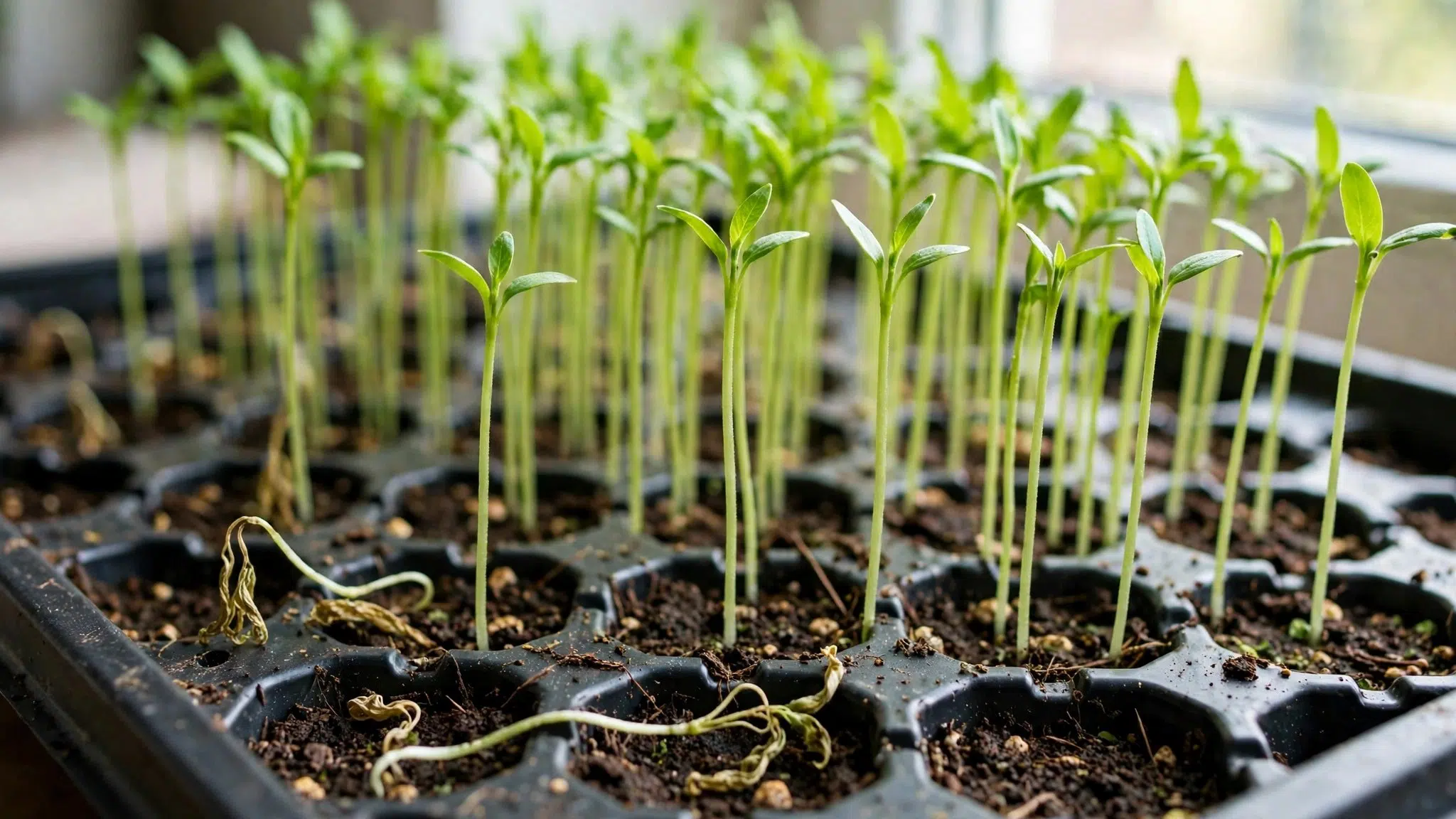
How long do seeds take to germinate? Most common vegetable seeds sprout in 5–14 days when soil temperature, moisture and seed age are right. Fast crops such as radishes and cucumbers can emerge in 3–5 days, while slow ones such as parsley and carrots take 14–28 days. If nothing has appeared after the expected time, the usual causes are cold soil, dried-out mix, or old seed.
The 4 Factors That Decide Germination Speed
Germination is not a fixed timer — it is a response to conditions. The same packet of tomato seed can sprout in 5 days on a heat mat or 14 days in a cold windowsill.
- Soil temperature. This is the biggest factor by far. Every crop has an optimum range, and germination slows sharply outside it. A tomato seed at 80°F sprouts in about 6 days; at 60°F it can take 14 days or more.
- Moisture. Seeds must absorb water to trigger germination, and the seed coat must stay moist until the root emerges. A mix that dries out even once can stop germination permanently for that seed.
- Seed age and storage. Fresh seed germinates faster and more evenly. Seed stored cool and dry keeps its vigor; seed stored warm and humid loses it, and old seed sprouts slowly even when it does sprout.
- Seed depth and light. Most seeds need darkness and a shallow covering of soil. A few — lettuce, celery, dill — need light to germinate and should be sown on the surface. Sowing too deep is a common reason for slow or failed emergence.
For the full temperature ranges behind these timings, see our seed germination temperature chart, which lists optimum soil temperatures for 30 vegetables.
Germination Time Chart — 30 Common Vegetables
Times below assume soil at each crop’s optimum temperature and steady moisture. Cooler soil adds days; cold soil can double them.
| Crop | Days to germinate | Optimum soil temp |
|---|---|---|
| Radish | 3–5 | 65–85°F |
| Lettuce | 3–7 | 60–70°F |
| Cucumber | 3–5 | 75–90°F |
| Squash / zucchini | 4–6 | 75–90°F |
| Beans | 5–8 | 70–85°F |
| Peas | 6–10 | 60–70°F |
| Corn | 5–8 | 65–85°F |
| Tomato | 5–10 | 75–85°F |
| Pepper | 7–14 | 75–85°F |
| Eggplant | 7–14 | 75–90°F |
| Onion | 7–10 | 65–75°F |
| Spinach | 7–14 | 60–70°F |
| Cabbage | 4–8 | 65–80°F |
| Broccoli | 5–10 | 65–80°F |
| Cauliflower | 5–10 | 65–80°F |
| Kale | 4–8 | 65–80°F |
| Carrot | 14–21 | 60–70°F |
| Beet | 7–14 | 65–80°F |
| Celery | 14–21 | 65–75°F |
| Parsley | 14–28 | 65–75°F |
| Dill | 10–14 | 60–70°F |
| Basil | 5–10 | 70–80°F |
| Cilantro | 7–10 | 60–70°F |
| Chives | 10–14 | 60–70°F |
| Leek | 7–14 | 65–75°F |
| Turnip | 4–7 | 65–80°F |
| Swiss chard | 7–14 | 65–80°F |
| Melon | 4–7 | 75–90°F |
| Okra | 7–14 | 80–90°F |
| Asparagus | 10–21 | 70–80°F |
These figures match the germination tables published by university extension services, including the University of California Agriculture and Natural Resources program and the University of Minnesota Extension, which publish crop-by-crop germination data for home gardeners.
Why Your Seeds Are Taking Longer Than the Chart Says
If the chart says 7 days and you are on day 14 with nothing showing, work through these causes in order:
| Symptom | Likely cause | Fix |
|---|---|---|
| Nothing emerged, soil dry on top | Mix dried out | Water from below; cover tray with a dome or plastic until sprouting |
| Nothing emerged, soil cold to touch | Soil below optimum | Add a heat mat or move tray to a warmer spot |
| A few sprouted, most did not | Old or uneven seed | Test the batch with a 10-seed viability test before resowing |
| Sprouts emerged then died | Damping off | Improve airflow, water less, use sterile mix |
| Seeds rotted in the soil | Soggy mix, no drainage | Let the mix dry between waterings; check drainage holes |
| Seeds sprouted under the soil but never broke through | Sown too deep | Sow at the depth on the packet — usually 2× the seed’s width |
Our troubleshooting guide, why are my seeds not germinating, walks through each of these causes in more detail.
How to Speed Up Germination (Safely)
- Use a heat mat for warm-season crops. Tomatoes, peppers, eggplants and cucumbers germinate dramatically faster at 75–85°F. Remove the mat as soon as seedlings emerge.
- Pre-soak large seeds. Beans, peas, squash and nasturtiums benefit from 8–12 hours of soaking; it softens the seed coat and can cut a day or two off emergence.
- Use the paper towel method to check old seed. Fold seeds in a damp paper towel inside a plastic bag and check daily — you will see exactly which seeds are alive before committing them to soil.
- Keep the mix evenly moist, not wet. A spray bottle or bottom watering keeps the surface damp without waterlogging.
- Do not sow too deep. The rule is about twice the seed’s width. Lettuce and celery need light — press them onto the surface instead of covering them.
For the full step-by-step process, our guide on how to germinate seeds covers moisture, warmth, light and timing from sowing to first true leaves.
Frequently Asked Questions
How long does it take for tomato seeds to germinate?
At 75–85°F soil temperature, tomato seeds usually sprout in 5–10 days. In cooler soil around 60°F, expect 14 days or more, and germination may be uneven.
How long do pepper seeds take to germinate?
Peppers are slower than tomatoes — typically 7–14 days at 75–85°F. Below 70°F they can take three weeks or fail entirely, which is why a heat mat makes such a difference for peppers.
Why are my seeds not germinating after 2 weeks?
The most common reasons are soil that is too cold, a seed bed that dried out, seed sown too deep, or old seed with low viability. Check soil temperature first, then test the remaining seed with a damp paper towel to see if it is still alive.
Do seeds germinate faster in the dark?
Most vegetable seeds germinate best in darkness, covered with a thin layer of soil. A few exceptions — lettuce, celery and dill — need light and should be sown on the surface.
Can I plant seeds that take 21 days to germinate?
Yes, if you start them on time. Slow crops such as parsley, celery and carrots simply need sowing 2–3 weeks earlier than fast crops. Use the chart above to plan your sowing dates backwards from transplanting or last frost.


