

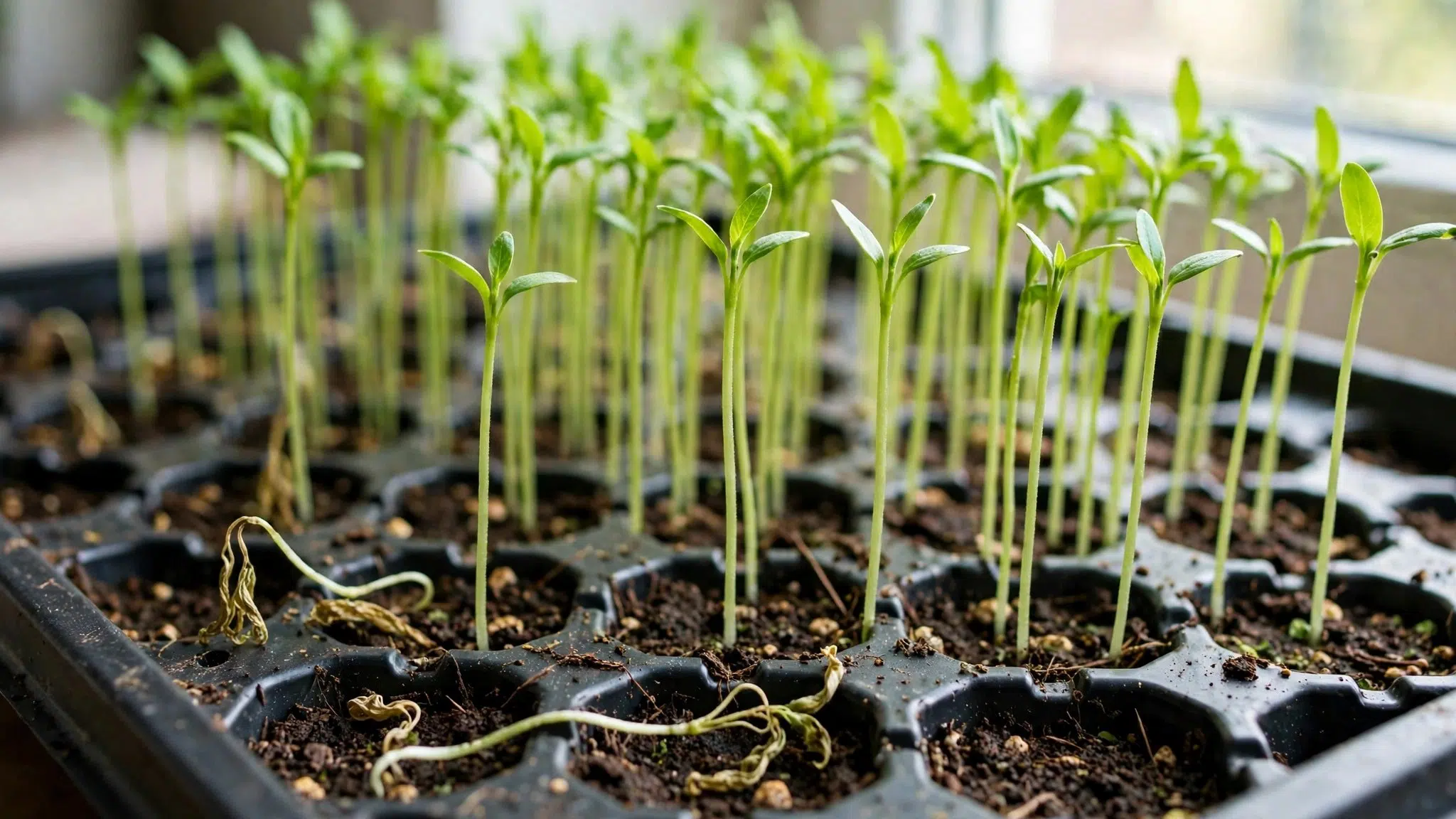
When to start seeds indoors by zone depends on one date: your average last spring frost. Count backwards from that date by the number of weeks each crop needs indoors, and you have your sowing date. In Zone 5, for example, tomatoes sown 6–8 weeks before a mid-May last frost go in the ground in late March — while in Zone 9 the same tomatoes are sown in January. If you are new to indoor sowing, our guide to starting seeds indoors covers containers, lights and timing.
The One Rule: Count Back From Your Last Frost
Every seed-starting date is built the same way: last frost date minus weeks indoors. The USDA Plant Hardiness Zone Map tells you your zone, and your local extension service publishes average last-frost dates for your area. Zones are only a rough guide — two gardens in the same zone can have last-frost dates two weeks apart — so always check your local date rather than trusting the zone alone.
The University of Illinois Extension recommends starting seeds indoors 6–8 weeks before the last frost for tomatoes and peppers, and 4–6 weeks for faster crops such as cucumbers and squash. Starting too early is the most common mistake: oversized, root-bound seedlings transplant worse than younger ones.
Last Frost Dates by Zone
| USDA Zone | Average last spring frost | Example areas |
|---|---|---|
| Zone 3 | Mid-May to early June | Northern Minnesota, North Dakota |
| Zone 4 | Early to mid-May | Minneapolis, northern New England |
| Zone 5 | Mid-April to mid-May | Chicago, Boston, Denver |
| Zone 6 | Early to mid-April | Philadelphia, St. Louis, Portland OR |
| Zone 7 | Late March to mid-April | Washington DC, Oklahoma City |
| Zone 8 | Mid to late March | Dallas, Atlanta, Seattle |
| Zone 9 | Late February to early March | Houston, Phoenix, central Florida |
| Zone 10 | January to early February | Miami, southern California, Hawaii lowlands |
These are averages, not guarantees. A late frost can still arrive after the average date, so keep frost protection ready for transplants and watch the 10-day forecast before moving seedlings outside.
Weeks Before Last Frost: The Crop Chart
| Crop | Weeks indoors before last frost | Direct sow or transplant |
|---|---|---|
| Onions (from seed) | 10–12 weeks | Transplant |
| Peppers | 8–10 weeks | Transplant |
| Tomatoes | 6–8 weeks | Transplant |
| Eggplant | 8–10 weeks | Transplant |
| Lettuce | 4–6 weeks | Either (transplants well) |
| Broccoli, cabbage, cauliflower | 6–8 weeks | Transplant |
| Cucumbers | 3–4 weeks | Transplant young, or direct sow |
| Squash, zucchini | 3–4 weeks | Transplant young, or direct sow |
| Melons | 3–4 weeks | Transplant young, or direct sow |
| Basil | 6–8 weeks | Transplant |
| Carrots | — | Direct sow only |
| Beans, peas | — | Direct sow only |
Crops with a dash are not started indoors at all: carrots fork when transplanted, and beans and peas germinate so fast outdoors that indoor starting gains nothing.
Worked Examples
Zone 5, last frost May 15: tomatoes 6–8 weeks back → sow March 20–April 3. Peppers 8–10 weeks back → sow March 6–20. Cucumbers 3–4 weeks back → sow April 17–24.
Zone 7, last frost April 10: tomatoes → sow February 13–27. Peppers → sow January 30–February 13. Lettuce → sow February 27–March 13.
Zone 9, last frost March 1: tomatoes → sow January 4–18. Peppers → sow December 21–January 4. In warm zones, fall sowing matters too: start a second round of tomatoes indoors in midsummer for a fall harvest.
To work out exact sowing dates for a single crop, see our zone-by-zone guides such as when to start tomato seeds indoors and when to start pepper seeds indoors.
What Changes the Dates
- Soil temperature matters more than air temperature. A seed’s germination speed depends on soil warmth, not the calendar. Our seed germination temperature chart shows the best soil temperature for each vegetable.
- Light is limited in late winter. Seedlings sown in January in northern zones need grow lights — a windowsill alone is usually too dim, and weak light produces leggy seedlings.
- Hardening off takes a week. Budget 7–10 days of gradual outdoor exposure before transplanting. Our guide on how to harden off seedlings gives the day-by-day schedule.
- Germination time varies. A pepper seed can take 14–21 days to sprout while a cucumber takes 3–4. Our chart of how long seeds take to germinate helps you plan for slowpokes.
Common Mistakes
- Sowing everything on the same day. Each crop has its own window. A single sowing day means some seedlings are too old and some too young at transplant time.
- Starting too early. Big seedlings in small pots become root-bound and stunted. Younger transplants catch up within two weeks outdoors.
- Trusting the zone instead of the local frost date. Microclimates shift dates by weeks. Check your county extension’s last-frost date.
- Moving seedlings out on the average frost date. That date is a 50% probability, not a guarantee. Wait for the forecast, and keep row cover handy.
Frequently Asked Questions
What zone am I in?
Enter your ZIP code on the USDA Plant Hardiness Zone Map (planthardiness.ars.usda.gov) to find your zone, then check your local extension service for your average last spring frost date.
Can I start seeds indoors too early?
Yes, and it is the most common beginner mistake. Seedlings started too early become leggy and root-bound, and they transplant worse than younger plants. Count back from your last frost date rather than sowing by the calendar month.
Do I need grow lights to start seeds indoors?
In late winter and early spring, usually yes — especially in zones 3–6. A sunny windowsill rarely gives the 14–16 hours of strong light seedlings need, and weak light causes leggy growth.
When should I transplant seedlings outdoors?
After your last frost date, once seedlings have been hardened off for 7–10 days and night temperatures stay above 50°F for warm-season crops such as tomatoes and peppers.
What if I miss my sowing window?
Sow anyway, but expect a later harvest — or buy transplants for that crop this year and direct-sow fast crops such as beans, squash and lettuce instead.


