Do Seeds Need Light to Germinate? The Simple Rule (With a Chart)
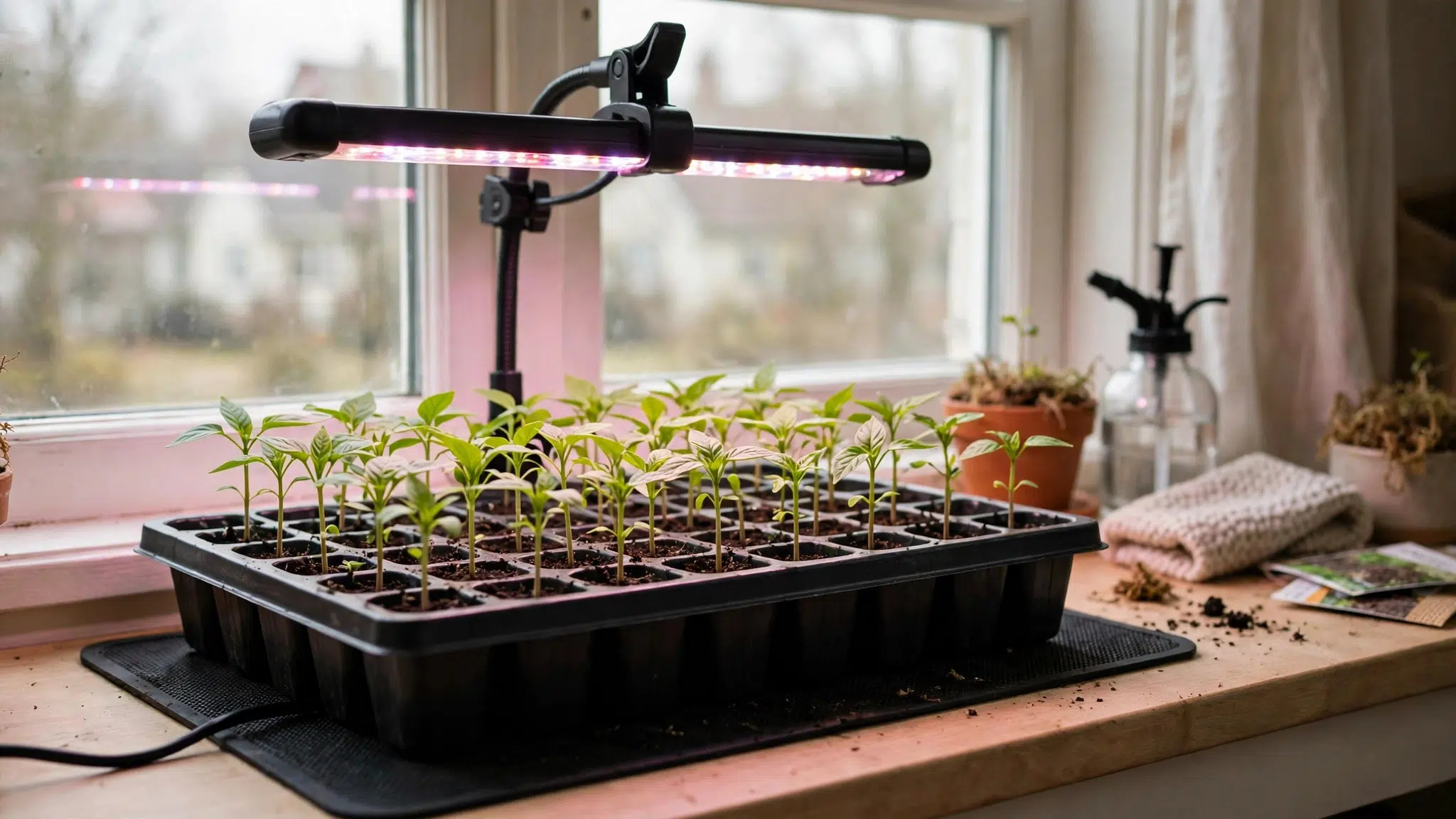
Do seeds need light to germinate? Some do, some do not, and most do not care — it depends on the species. Small seeds such as lettuce, celery and dill need light and must be sown on the soil surface, while large seeds such as nasturtium, calendula and sweet peas germinate better in darkness and must be covered. For most common vegetables, light makes no difference and temperature and moisture decide instead.
The Simple Rule: Seed Size Tells You
There is a reliable rule of thumb, confirmed by university extension guidance: the smaller the seed, the more likely it needs light. Tiny seeds carry almost no stored food, so they must start photosynthesizing the moment they sprout — germinating underground would kill them before they reach the surface. Large seeds carry a big food reserve and can push up through soil in the dark.
The practical version of the rule: sow a seed no deeper than twice its width. For a dust-like lettuce seed, that means the surface. For a fat bean, that means an inch deep.
The University of Minnesota Extension explains that light-requiring seeds should be pressed onto the soil surface and left uncovered, while darkness-requiring seeds should be covered with soil to the depth on the packet. The University of Illinois Extension gives the same advice and warns that burying light-requiring seeds is one of the most common reasons seeds fail to sprout at all.
Seeds That Need Light to Germinate
| Seed | Sowing depth | Notes |
|---|---|---|
| Lettuce | Surface, press in | Germination drops sharply if buried or in hot soil |
| Celery / celeriac | Surface, press in | Very slow — 14–21 days; keep moist |
| Dill | Surface or 1/8 inch | Also self-sows freely outdoors |
| Petunia | Surface, press in | Needs light + warmth (70–75°F) |
| Snapdragon | Surface, press in | Keep moist; germinates in 10–14 days |
| Coleus | Surface, press in | Tiny seed; needs light and warmth |
| Impatiens | Surface, press in | Needs light; keep humidity high |
| Foxglove | Surface, press in | Biennial; sow on surface outdoors too |
| Begonia | Surface, press in | Dust-like seed; never cover |
For light-requiring seeds, “surface sowing” means pressing the seed gently onto moist mix so it has contact, then misting — not leaving it loose on dry soil. A clear lid or plastic wrap keeps the surface moist until sprouting.
Seeds That Need Darkness to Germinate
| Seed | Sowing depth | Notes |
|---|---|---|
| Nasturtium | 1/2–1 inch deep | Large seed; darkness improves germination |
| Calendula | 1/4–1/2 inch deep | Cover well; light reduces germination |
| Sweet pea | 1 inch deep | Soak overnight first; cover fully |
| Onion (sets aside) | 1/4 inch deep | Seed germinates better covered |
| Phlox (annual) | 1/8 inch deep | Needs darkness + cool soil |
| Larkspur | 1/4 inch deep | Needs darkness and a cold period |
| Verbena | 1/8 inch deep | Cover lightly; slow to germinate |
Cover these seeds with mix to the depth shown and keep them out of direct light until they sprout — a tray with an opaque lid works well.
Seeds That Do Not Care
Most common vegetables germinate equally well in light or darkness, as long as temperature and moisture are right:
- Tomatoes, peppers, eggplant — sow 1/4 inch deep; warmth matters far more than light.
- Cucumbers, squash, melons, beans, peas, corn — sow at packet depth; large seeds with big food reserves.
- Broccoli, cabbage, cauliflower, kale — sow 1/4–1/2 inch deep.
- Carrots, beets, radishes — direct sow at packet depth; light is irrelevant.
- Basil, parsley, cilantro — sow shallowly, but light is not required.
For these, the real germination factors are soil temperature and moisture. Our seed germination temperature chart shows the ideal soil temperature for each vegetable, and our how to germinate seeds guide covers the full process step by step.
How to Handle Light Once Seeds Sprout
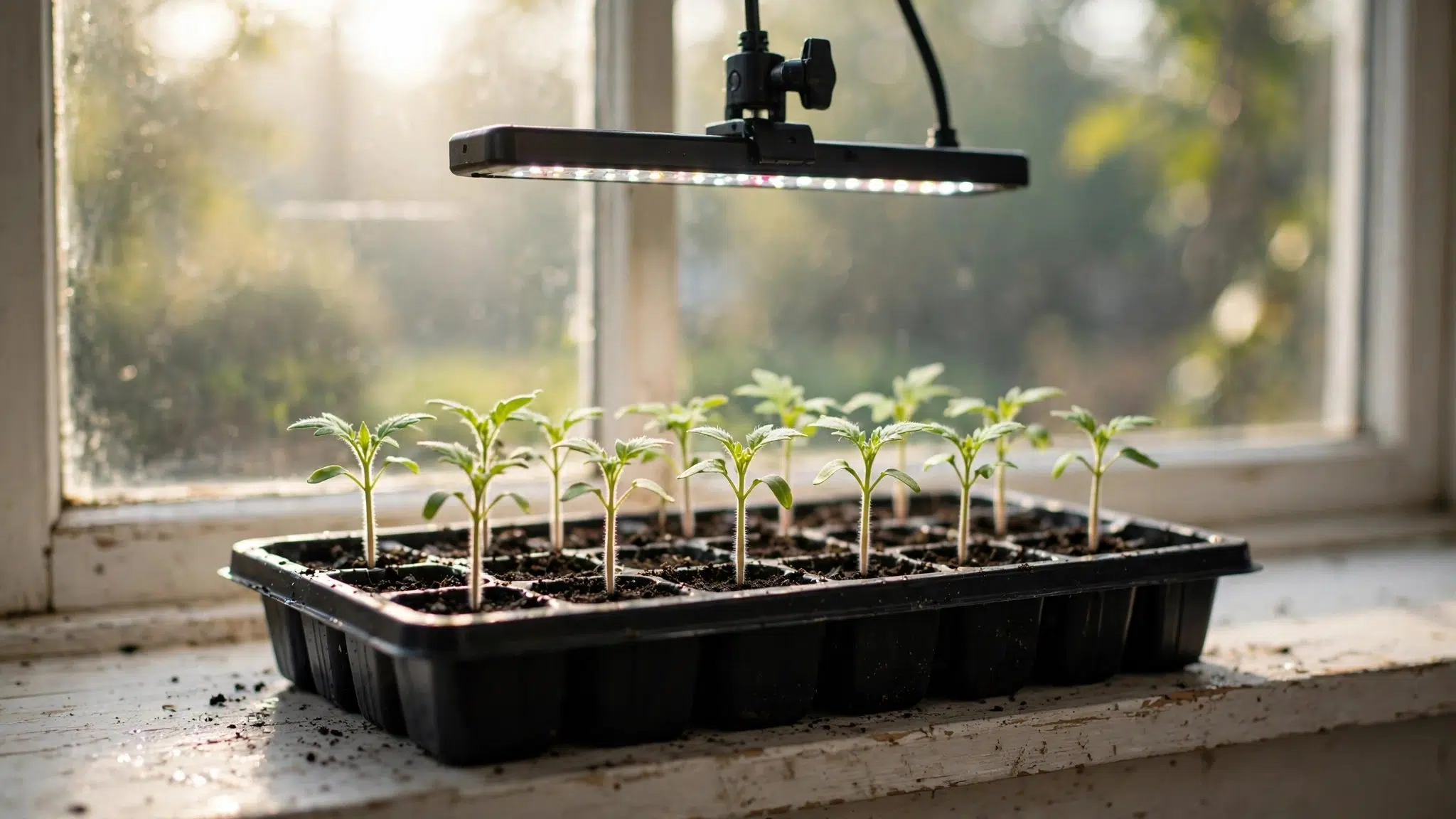
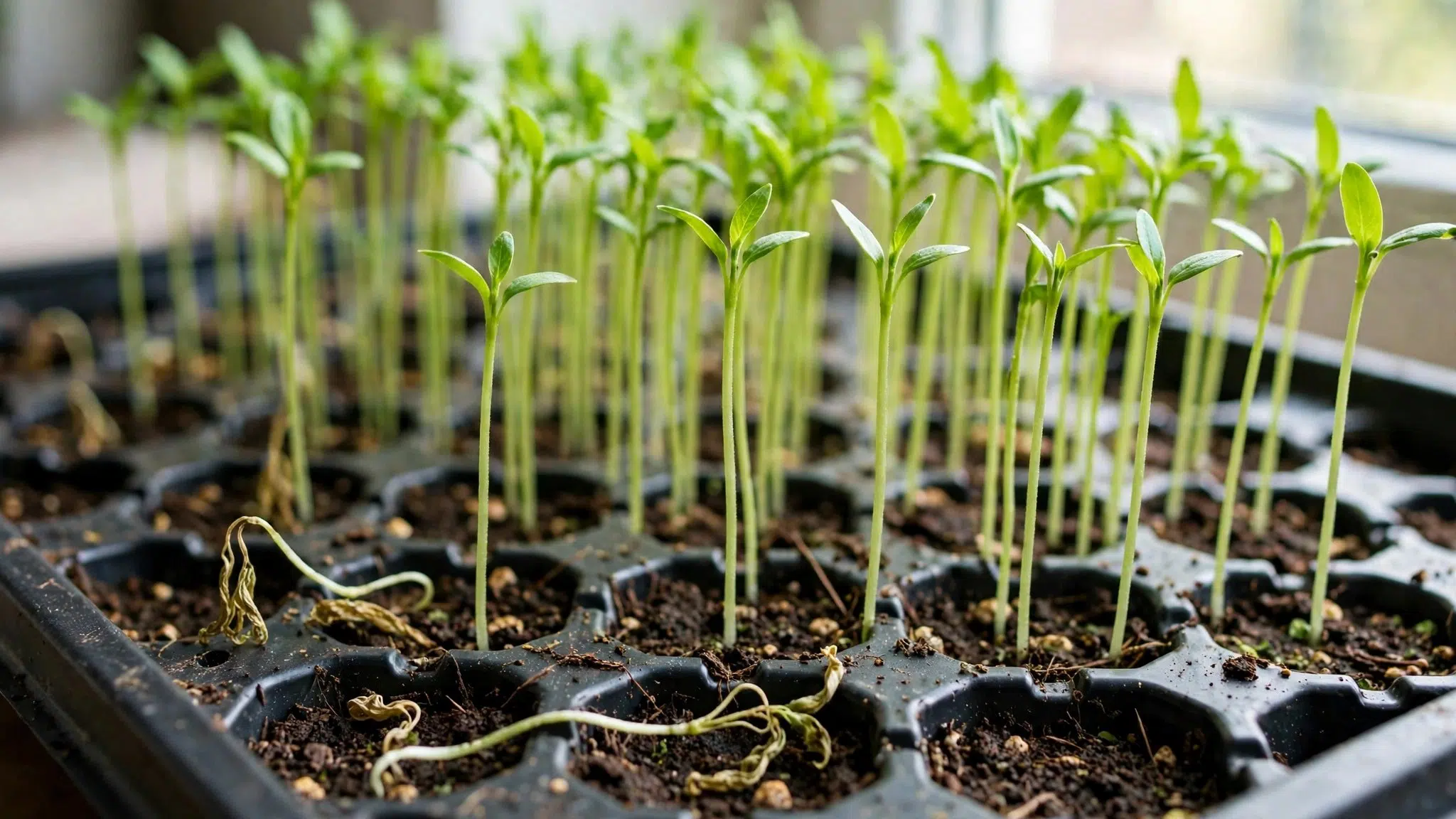
Light needs change the moment a seedling emerges: every seedling needs strong light immediately after sprouting, whatever its seed needed to germinate. A seedling left in the dark after sprouting stretches tall, pale and weak within a day or two — the classic leggy seedling problem.
- Move trays to your brightest window or under grow lights as soon as you see green.
- Keep lights 2–4 inches above the leaves, 14–16 hours a day.
- Give seedlings a normal night: do not leave lights on 24 hours.
- If seedlings are already leggy, see our guide on why seedlings are leggy for fixes.
Common Mistakes
- Burying lettuce or celery seed. The most common germination failure — light-requiring seeds buried even 1/2 inch deep often never sprout.
- Leaving nasturtium or calendula on the surface. Darkness-requiring seeds left in the light germinate slowly or not at all.
- Confusing “needs light to germinate” with “needs light to grow”. Every seedling needs light after sprouting, even if its seed germinated in darkness.
- Sowing at packet depth without checking. Packet depths assume average conditions; tiny seeds always go shallower than the packet’s generic advice suggests.
- Drying out surface-sown seed. Seeds on the surface dry out fast. Mist daily and use a clear lid until they sprout.
Frequently Asked Questions
Do all seeds need light to germinate?
No. Only some species need light (lettuce, celery, petunia), some need darkness (nasturtium, calendula, sweet pea), and most common vegetables germinate in either, as long as temperature and moisture are right.
What happens if I bury a seed that needs light?
It usually fails to germinate, or germinates very weakly. The seed senses darkness and stays dormant. Re-sow on the surface and keep the soil moist.
Can I germinate seeds in complete darkness?
Yes for most seeds — a dark cupboard or covered tray works fine for tomatoes, peppers, beans and most vegetables. Just move them into strong light the moment they sprout.
Do seeds need sunlight or just light?
Any bright light works for germination — sunlight, a windowsill or a grow light. Direct sun is not needed and can overheat a covered tray.
Why did my lettuce seeds not germinate?
The two usual causes are sowing too deep and soil that is too warm (above 75°F). Sow lettuce on the surface and keep the tray at 60–65°F. Our lettuce guide — how to grow lettuce from seed indoors — covers the full setup.
Test It Yourself: Do Seeds Need Light to Germinate for Your Variety?

Packets do not always answer the question do seeds need light to germinate, and the size rule is a rule of thumb, not a guarantee. When you are unsure, run a quick test before you sow a whole tray. Put ten seeds on a damp paper towel in a sealed bag on a sunny windowsill, and ten more in an identical bag inside a dark drawer. Check both after a week and count the sprouts: if the sunny bag germinates far better, that variety needs light; if the dark bag wins, it needs darkness; if they tie, light does not matter. You only need one test per variety, and the same test tells you whether old seed is still alive.
This test also answers the most common version of the question — do seeds need light to germinate for the variety you actually bought, not for seeds in general. If your test shows light matters, sow that variety on the surface and mist it daily so it never dries out. If darkness wins, cover the seed and keep the tray out of direct light until it sprouts. The University of Minnesota Extension gives the same advice for light-needing seeds, pressed onto the surface rather than buried, and the paper towel test is also the core of our guide on how to germinate seeds from a packet you have never grown before.