

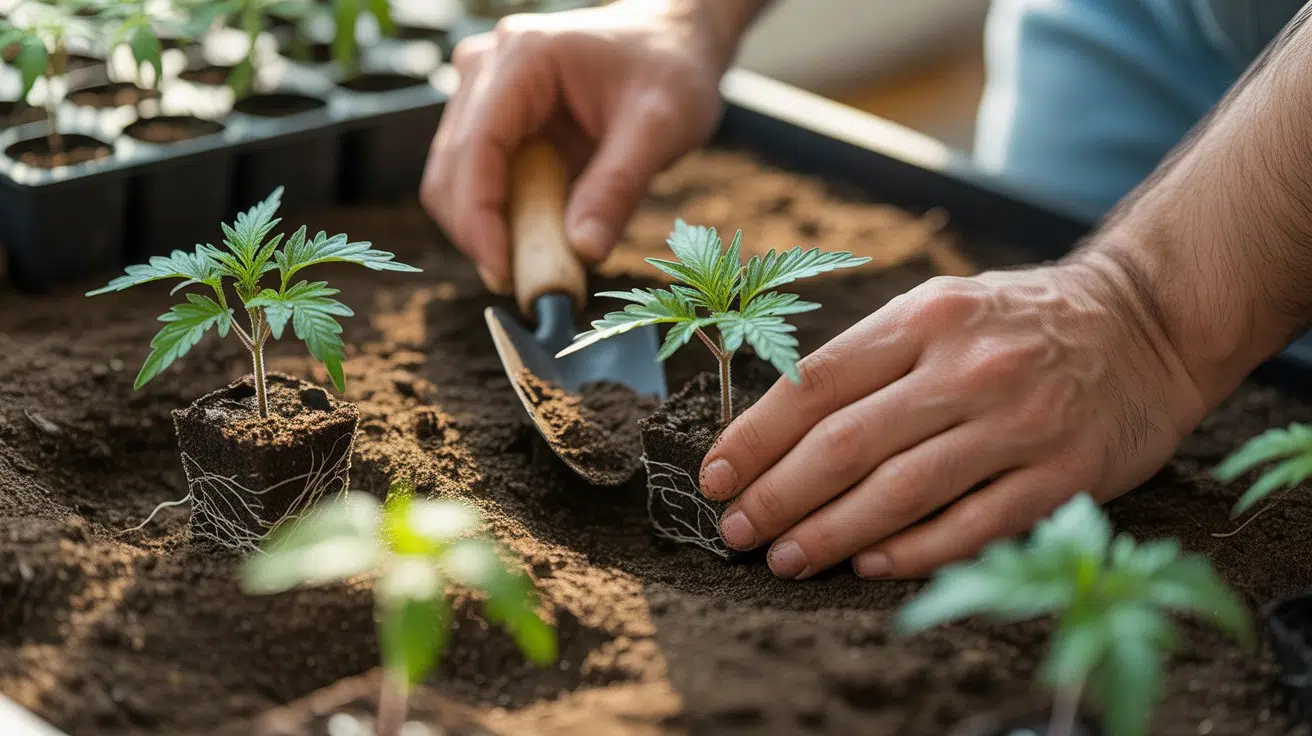
When to transplant seedlings outdoors is after your last spring frost, once nights stay above 50 degrees and the soil has warmed to 50 to 60 degrees. Harden seedlings off for 7 to 10 days first, then move them out on a cloudy day or in the evening.
The Three Signs Seedlings Are Ready
A seedling is ready to move outside when it has two or three sets of true leaves, a sturdy stem that stands up on its own, and roots that fill the pot without circling into a tight mat. Seedlings that are still showing only their first seed leaves are too young, and leggy seedlings with pale, stretched stems need more light before they face the outdoors. As a rough guide, tomatoes and peppers are ready at 6 to 8 inches tall, while lettuce, broccoli, and cabbage can go out smaller, at 3 to 4 inches. A seedling that checks all three boxes will establish in days instead of sulking for weeks.
When to Transplant by Crop Type
Crops fall into two camps: cold-hardy seedlings that tolerate light frost, and warm-season seedlings that do not. The table below gives the usual window for each group, measured from your last spring frost. For the full calendar, see our zone-by-zone calendar for starting seeds indoors.
| Crop group | Examples | Transplant window | Minimum soil temp |
|---|---|---|---|
| Cold-hardy | Broccoli, cabbage, lettuce, spinach, peas | 2-4 weeks before last frost | 40-50 F |
| Cool-season | Onions, leeks, Swiss chard | 1-2 weeks before last frost | 45-55 F |
| Warm-season | Tomatoes, peppers, eggplant | 1-2 weeks after last frost | 60 F |
| Tender | Cucumbers, squash, beans, basil | After last frost, no frost in forecast | 65-70 F |
Soil and Night Temperatures That Matter
Air temperature gets the attention, but soil temperature decides whether a transplant grows or sits still. Cold soil slows root growth, so a tomato planted in 50-degree soil will barely grow until the ground warms, and a cucumber in cold, wet soil can rot at the stem. Check the soil with a thermometer pushed 4 inches deep in the morning, and wait until it reads at least 60 degrees for tomatoes and peppers and 65 to 70 degrees for cucumbers, squash, and beans. Night air temperature matters too: most warm-season seedlings stall when nights drop below 50 degrees, and a single frost will kill them outright. Cornell Cooperative Extension and the University of Minnesota Extension both advise waiting until the soil has warmed and the forecast shows no frost for at least a week, rather than rushing out on the first warm day.
How to Harden Off Seedlings
Hardening off is the step that makes the difference between seedlings that thrive and seedlings that wilt on day one. Indoor-grown plants have thin leaves and soft stems, and full sun, wind, and cold nights can shock them. Start 7 to 10 days before transplanting: set trays outside in shade for a few hours, then bring them back in. Each day, add an hour or two and a little more sun and wind, until the plants spend a full day outside and, if nights stay above 50 degrees, a night outside too. Water before they go out, since small pots dry fast in sun and wind, and skip hardening off on very windy days. Our guide on how to harden off seedlings walks through the day-by-day schedule in more detail.
| Day | Time outside | Conditions |
|---|---|---|
| Days 1-2 | 2-3 hours | Shade, sheltered |
| Days 3-4 | 4-6 hours | Morning sun |
| Days 5-6 | Full day | Full sun, bring in at night |
| Days 7-10 | Day and night | Outside overnight if above 50 F |
Transplanting Day: Step by Step
Water seedlings well an hour before transplanting so the root ball holds together. Dig each hole a little wider than the pot, and set the plant at the same depth it grew indoors, except tomatoes, which can be planted deep up to their first true leaves because they root along the buried stem. Handle seedlings by the root ball or a leaf, never by the stem, which bruises easily. Firm the soil gently, water deeply to settle the roots, and mulch around the plants to hold moisture. If a cold snap is forecast in the first week, cover plants with row cover or an overturned bucket at night. Do not fertilize for the first week while roots establish. If you are just getting started, our guide to starting seeds indoors covers the whole journey from sowing to this moment.
Common Mistakes to Avoid
The most common mistake is transplanting too early, which stalls warm-season crops for weeks and can kill them outright in a frost. The second is skipping hardening off, which leaves tender leaves scorched by sun and wind. The third is planting into cold, wet soil, which invites damping off and root rot. The fourth is handling seedlings by the stem or letting the root ball fall apart. And the fifth is forgetting to water them in: a transplant with dry roots on a sunny day wilts fast, so water deeply on day one and keep the soil moist for the first week.
Frequently Asked Questions
What happens if I transplant too early?
Seedlings planted too early stall: growth stops, leaves turn purple or yellow in the cold, and a single frost can kill warm-season crops outright. Cold-hardy crops may survive, but they sit still until the soil warms.
Can I transplant seedlings on a sunny day?
You can, but a cloudy day or evening is kinder. Bright sun and wind dry out small root balls fast, and tender leaves can scorch. If you must plant on a sunny day, water deeply, shade plants with a board or row cover for a day or two, and transplant in the late afternoon when the sun is lower.
How big should seedlings be before transplanting?
Most seedlings are ready at 4 to 6 inches tall with two or three sets of true leaves. Tomatoes and peppers are usually 6 to 8 inches, while lettuce and broccoli can go out at 3 to 4 inches. Bigger is not always better: an overgrown, rootbound seedling in a small pot often transplants worse than a younger, stockier one.
Do store-bought seedlings need hardening off too?
Yes. Greenhouse-grown seedlings have lived in warm, sheltered conditions, just like indoor-sown ones. Give them the same 7 to 10 days of gradual outdoor time before planting. The only exception is plants already displayed outside at the garden center, which have had some exposure, though a day or two of shelter still helps.


