Best Sprouting Jars for Germinating Seeds in Water

As an Amazon Associate I earn from qualifying purchases.
Last updated: November 2026
Quick Picks
- Top pick: Wide-mouth glass sprouting jar with a mesh lid — best for soaking beans, peas, corn and squash before sowing.
- Runner-up: Seed sprouting kit, 2 wide-mouth mason jars with sprout lids — best for growers who soak both large and small seeds through the season.
How to germinate seeds in water is simple: put the seeds in a jar of room-temperature water, soak large seeds for several hours or overnight and small seeds for up to an hour, then sow them as soon as they swell or sink. Soaking, called imbibition, lets the seed absorb the water it needs to start growing.
What Happens When You Soak Seeds in Water
A dry seed is a seed in storage, and it cannot grow until it takes up water. The University of Florida IFAS Extension calls this process imbibition: the seed must become hydrated for germination to begin. Soaking does that job before the seed ever touches soil, so the seed starts growing sooner and more evenly than seed sown dry.
As the seed absorbs water it swells, its coat softens, and the root tip begins to push out. That is the sign the seed is alive and ready. A seed that stays hard and unchanged after a night in water is probably old or dead, and it is better to find that out in a jar than in a tray of mix.
Use room-temperature water, and keep the jar somewhere warm. Cold water slows the seed down, and hot water can kill it. For the temperatures each crop likes once it is sown, see the seed germination temperature chart.
Which Seeds Benefit From Soaking in Water
Not every seed needs a soak. Large seeds with thick coats gain the most, while tiny seeds gain nothing and are harder to handle wet.
| Seed type | How long to soak | Examples |
|---|---|---|
| Large seeds | Several hours or overnight | Beans, peas, corn, squash, pumpkin |
| Small seeds | Up to an hour | Tomato, pepper, lettuce, cucumber |
| Very small seeds | Do not soak | Carrot, celery, petunia |
| Hard-coated seeds | Soak overnight, then nick the coat | Seeds with a tough outer shell |
The University of Florida IFAS Extension gives the same rule of thumb: soak for up to an hour for small seeds, and several hours or even overnight for larger seeds. Legumes such as garbanzo and black beans are among the seeds that benefit most. Very small seeds clump together when wet and are nearly impossible to sow evenly, so sow them dry. Hard-coated seeds may also need scarification, nicking or softening the coat, before they will sprout.
How to Germinate Seeds in Water, Step by Step
All you need is a jar, water, and a clock. Follow these six steps.
- Pick the right seeds. Choose large or medium seeds that benefit from soaking. Skip very small seeds, and skip seed you know is old unless you are testing it.
- Put them in a jar of room-temperature water. Use a clean glass or jar, cover the seeds with a few inches of water, and set the jar somewhere warm, out of direct sun.
- Soak for the right time. Small seeds need up to an hour; large seeds need several hours or overnight. Do not leave seeds in water for days.
- Watch for swelling. As seeds absorb water they swell and most sink. A seed that stays small and hard after a night in water is probably not going to grow.
- Sow at once. Drain the water, sow the seeds in damp seed-starting mix at the depth on the packet, and cover lightly. Do not let soaked seed dry out before sowing.
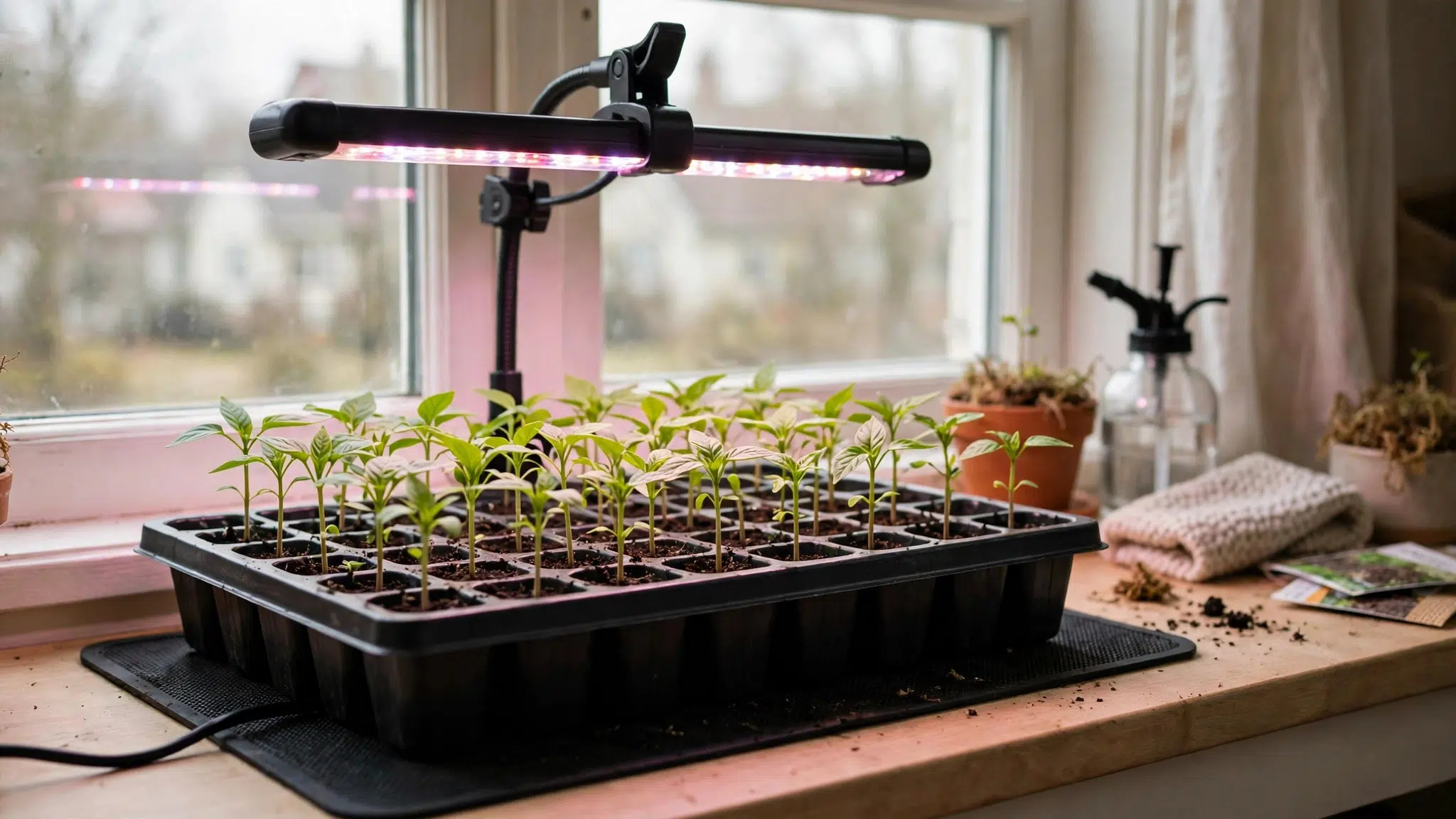
- Keep the mix warm and moist. Put the tray on a heat mat if the crop likes warmth, and keep the mix damp until the seedlings appear. For the full routine, see how to germinate seeds.
Soaking in Water or the Paper Towel Method?
Soaking and the paper towel method both start seeds without soil, but they suit different jobs.
| Method | Best for | Time |
|---|---|---|
| Soaking in water | Large seeds you plan to sow right away | 1 hour to overnight |
| Paper towel method | Testing old seed or pre-sprouting small seed | Several days |
Use soaking when you want to speed up seed you are about to plant, and use the paper towel germination method when you want to check whether old seed is still alive before you sow a whole tray. The paper towel method also lets you see the root before you sow, so you can plant only the seeds that sprouted.
Water Germination Mistakes to Avoid
Soaking is gentle, but it can still go wrong.
| Mistake | What happens | Fix |
|---|---|---|
| Soaking for days | Seeds run out of air and rot | Soak overnight at most, then sow |
| Soaking tiny seeds | Seeds clump and cannot be sown evenly | Sow tiny seeds dry |
| Using hot water | Heat kills the seed inside | Use room-temperature water |
| Letting soaked seed dry out | The sprouting seed dies | Sow as soon as you drain them |
| Soaking in a sealed jar | Stale water, no air for the seed | Leave the jar open or loosely covered |
Hot water has one real use: the University of Florida IFAS Extension notes that hot water between 170 and 210 degrees Fahrenheit can soften the coat of some hard-coated seeds. That is scarification, a treatment for specific seeds such as camellias and redbuds, not a way to soak ordinary vegetable seed.
Frequently Asked Questions
How long should I soak seeds in water?
Soak small seeds for up to an hour, and large seeds for several hours or overnight. Do not soak any seed for days: seeds left in water too long run out of air and rot.
Can I germinate seeds in water alone, without soil?
Only briefly. Water starts germination, but a seedling needs soil, light, and food to keep growing. Sow soaked seeds in damp seed-starting mix as soon as they swell, and give them light once they sprout.
Which seeds should not be soaked in water?
Very small seeds such as carrot and celery should not be soaked: they clump together wet and are nearly impossible to sow evenly. Seeds that form a gel coat, such as basil and chia, should also be sown dry.
Do seeds need light to germinate in water?
No. Most seeds germinate in the dark, and light only matters after they sprout. Keep the soaking jar out of direct sun, and give seedlings a grow light once they are up.
Can I reuse the water I soaked seeds in?
No. The soaking water can carry bacteria and fungi from the seed coats, so pour it away and use fresh water for the next batch. Always start with a clean jar.
Sources
- University of Florida IFAS Extension, Advanced Seed Starting
- University of Minnesota Extension, Starting seeds indoors

Researched Picks: Best Sprouting Jar for Germinating Seeds in Water
All you need for this method is a jar, water, and a clock, but the best sprouting jar makes the job easier: a wide mouth for getting seeds in and out, and a mesh lid so you can drain and rinse without losing seed down the sink. The picks below are researched types, not tested products.
1. A wide-mouth glass sprouting jar with a mesh lid
🏆 Top Pick
Specs: wide-mouth glass jar with a mesh lid; at least a litre so large seeds stay under water, and the mouth is wide enough to rinse without losing seed.
A wide-mouth glass jar with a stainless steel mesh lid is the simplest upgrade from a plain jar: it soaks, drains, and rinses through the same lid, and the glass lets you see when seeds have swollen or sunk. Choose a jar that holds at least a litre, so large seeds have room to swell.
| ✓ Pros | ✗ Cons |
|---|---|
|
|
Best for: soaking beans, peas, corn, and squash before sowing.
Check Price on Amazon2. A pair of jars with fine and coarse mesh lids
🥈 Runner-Up
Specs: a pair of sprouting jars with two mesh lids, one fine and one coarse; run one batch at a time, or start a second while the first
Small seeds slip through a coarse mesh, and large seeds block a fine one, so a pair of jars with different mesh sizes covers both. Use the fine mesh for tomato, pepper, and lettuce seed, and the coarse mesh for beans and peas.
| ✓ Pros | ✗ Cons |
|---|---|
|
|
Best for: growers who soak both large and small seeds through the season.
Check Price on AmazonWhichever jar you choose, keep it clean, leave the lid loose or the mesh open so air can reach the seeds, and sow as soon as you drain: soaked seed dries out fast, and a sprouting seed should never be left waiting.
How We Chose
We compared sprouting jars on the qualities that decide whether a soak works: a mouth wide enough to rinse without losing seed, a mesh that drains fast but holds the seed, glass that does not hold smells, and a size that keeps large seeds under water. We used germination guidance from university extensions and the product details listed by the sellers; we did not test the products ourselves.
Final Verdict
For most growers, the single wide-mouth jar with a mesh lid is enough: it soaks beans, peas, corn and squash cleanly and drains in seconds. Buy the pair if you soak small seeds too — the fine mesh is what stops tomato and lettuce seed washing away.
Check Price on Amazon