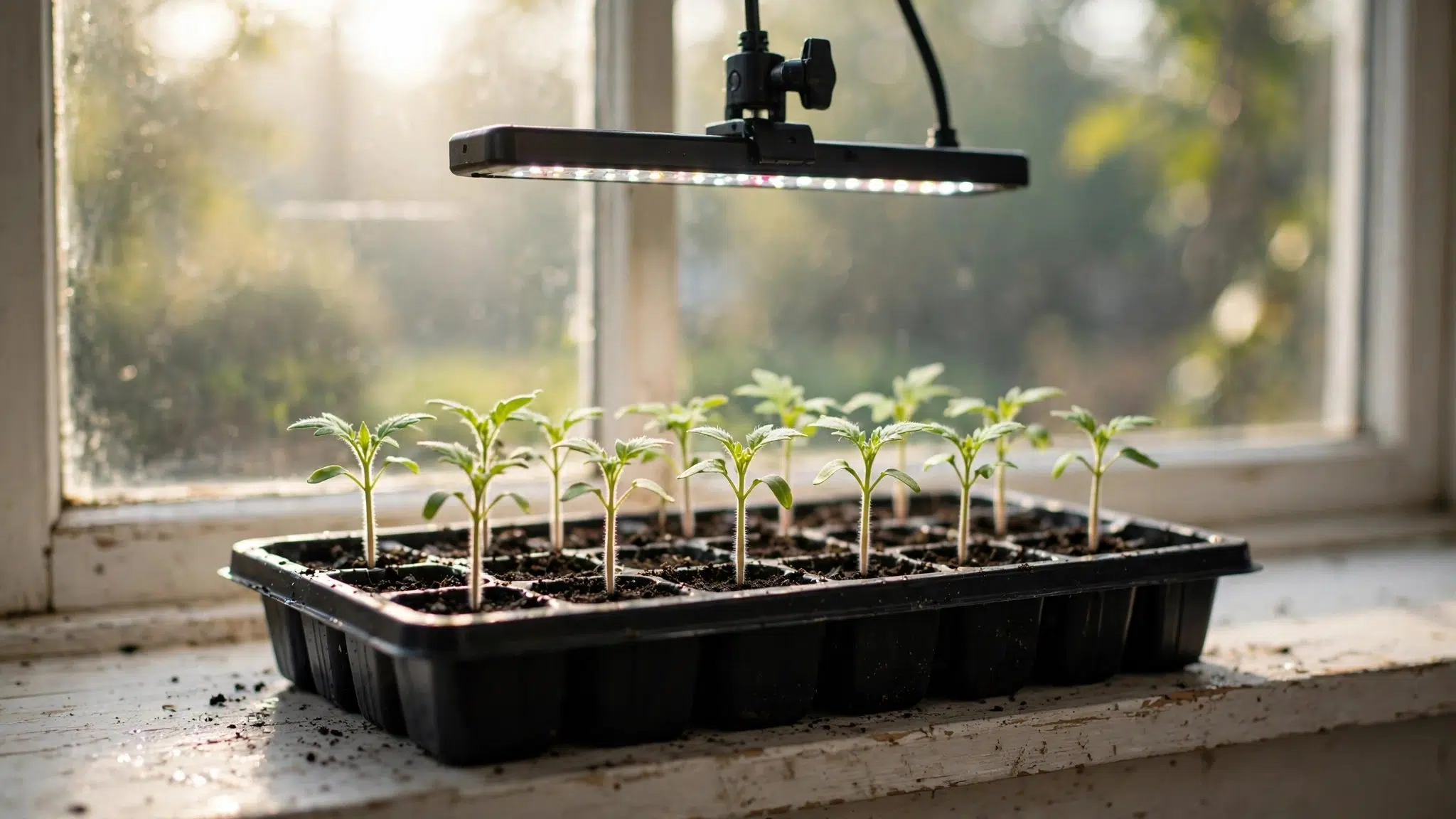
Best Seedling Snips for Thinning Seedlings
As an Amazon Associate I earn from qualifying purchases.
Last updated: November 2026
Quick Picks
- Top pick: Micro-tip precision snips — best for thinning small seedlings in cells and trays.
- Runner-up: Gonicc spring-loaded pruning snips — best for thinning rows outdoors and larger seedlings, where speed and comfort matter.
How to thin seedlings without killing them is simple: wait until they have their first true leaves, water the mix, then snip the extras at soil level with small scissors instead of pulling them. Pulling disturbs the roots of the seedling you want to keep. Thin early, keep the strongest plant in each cell, and water gently after.
When to Thin Seedlings
Thin when the seedlings have their first true leaves and are about 2 to 3 inches tall. The first leaves you see are the seed leaves, which look the same on most plants; the true leaves that follow look like the adult plant. Once true leaves appear, you can tell which seedling is the strongest, and the roots are still small enough that thinning is gentle.
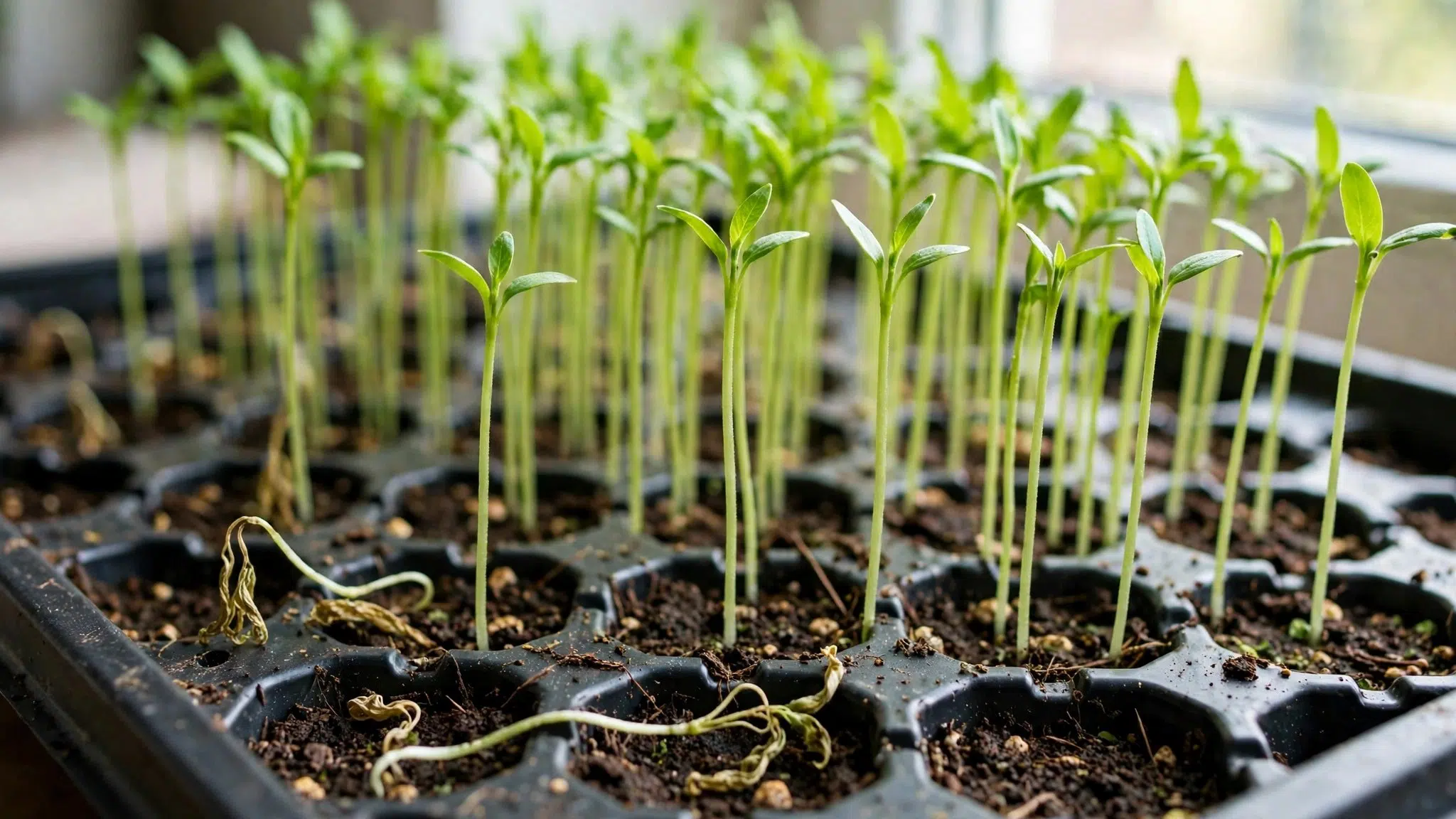
Do not wait too long. Crowded seedlings compete for light and water, grow tall and weak, and stay damp, which invites damping off. Thin as soon as you can judge the strongest plant, and thin in the evening or on a cloudy day if you can, so the seedlings you keep have the night to recover before strong light hits them.
How to Thin Seedlings Without Killing Them, Step by Step
Work cell by cell, and take your time. The whole tray takes ten minutes.
- Water the mix first. Water gently an hour before you thin, so the mix is damp. Damp mix holds together, and the roots of the seedling you keep are less likely to tear.
- Pick the strongest seedling in each cell. Look for the thickest stem, the greenest leaves, and the most upright growth. That is the one to keep.
- Snip the extras at soil level. Hold small scissors or snips close to the mix and cut the stem of each extra seedling at the surface. The University of Minnesota Extension advises thinning by cutting all but the healthiest seedling at ground level, and not pulling them.
- Do not pull. Pulling an extra seedling drags its roots out of the mix, and those roots are tangled with the roots of the one you want to keep. A pulled seedling can kill its neighbor.
- Clear away the cut seedlings. Lift the cut tops off the mix and compost them. Seedlings left lying on damp mix can mold.
- Water gently and give light. Mist or water from below, then put the tray back under the grow light, kept 2 to 4 inches above the leaves for 12 to 16 hours a day.
How to Thin for the Way You Sowed
The method is the same, but the target changes with how you sowed.
| How you sowed | How to thin |
|---|---|
| Two or three seeds per cell | Snip to one seedling per cell |
| Seeds scattered in a tray | Snip to about 2 inches apart |
| Seeds sown in a row outdoors | Snip to the final spacing on the packet |
| One seed per cell, but two sprouted | Snip the weaker one at soil level |
For the full indoor routine, including mix, light, and watering, see starting seeds indoors.
Cut, Don’t Pull: Why It Matters
The rule sounds fussy, but it is the whole secret of thinning. Seedling roots are fine and tangled, and in a small cell the roots of two seedlings share the same few cubic inches of mix. When you pull one out, the roots of the other come with it, and the seedling you wanted to keep wilts or dies. Cutting the stem at soil level leaves the roots of the keeper untouched, and the cut seedling simply rots away harmlessly below the surface.
This is the advice the University of Minnesota Extension gives for starting seeds indoors, and it works for every crop: snip, do not pull. If a seedling is so tangled that you cannot cut it without touching its neighbor, cut it as low as you can and leave the rest.
What to Do With the Thinnings
Do not throw good seedlings away if you can eat them. Lettuce, spinach, beet, and radish thinnings are tender and mild, and they make a fine salad or a garnish. Rinse them well and use them the same day. Thinnings of other crops, and any that look weak or diseased, go on the compost pile. Never leave cut seedlings lying on the mix: they mold fast in warm, damp air.
When the seedlings you kept are growing strongly, the next step is learning how to harden off seedlings before they move outside.
Thinning Mistakes to Avoid
Most thinning damage comes from rushing or from waiting too long.
| Mistake | What happens | Fix |
|---|---|---|
| Pulling instead of snipping | Roots of the keeper tear, seedling wilts | Cut at soil level with scissors |
| Waiting until seedlings are crowded | Tall, weak stems and damping off | Thin at the first true leaves |
| Thinning bone-dry mix | Roots break and the keeper dries out | Water an hour before thinning |
| Keeping the weakest seedling | Slow growth, poor transplant | Keep the thickest, greenest plant |
| Leaving cut seedlings on the mix | Mold spreads in the tray | Clear the tops away at once |
Thinning is one of the seed starting mistakes beginners make most often, so if your first tray is crowded, you are in good company. Snip, water, and give light, and the seedlings you keep will be stronger for it.
Frequently Asked Questions
When should I thin seedlings?
Thin when seedlings have their first true leaves and are about 2 to 3 inches tall. That is early enough that the roots are still small, and late enough that you can see which seedling is strongest.
Can I pull seedlings out instead of cutting them?
You can, but it is risky. Pulling drags the roots out and disturbs the seedling you want to keep, which can wilt or die. The University of Minnesota Extension advises cutting all but the healthiest seedling at ground level instead of pulling.
How far apart should thinned seedlings be?
In a cell, keep one seedling. In a tray, thin to about 2 inches apart. In a row outdoors, thin to the spacing printed on the seed packet, since it varies by crop.
Can I transplant the seedlings I thin out?
Sometimes. Lettuce, beets, and onions transplant well, but carrots and other root crops do not, and the roots are often damaged. It is safer to snip the extras and compost them than to risk a weak transplant.
What happens if I never thin my seedlings?
Crowded seedlings compete for light, water, and food, so they grow tall, pale, and weak, and damping off spreads easily in the damp, airless clump. Thin on time and the seedlings you keep will be short, stocky, and strong.
Sources
- University of Minnesota Extension, Starting seeds indoors

Researched Picks: Best Seedling Snips for Thinning Seedlings
Learning how to thin seedlings is a cutting job, not a pulling job, so the tool matters: the best seedling snips are a small, sharp pair that cuts a stem cleanly at soil level without tugging the seedling next to it. The picks below are researched types, not tested products, and each suits a different kind of thinning.
1. Micro-tip precision snips
🏆 Top Pick
Specs: micro-tip precision snips with fine, pointed blades; reach into a crowded cell and snip one stem at the surface.
Fine, pointed blades reach into a crowded cell and snip one stem at the surface without bruising its neighbours. Look for a comfortable grip and blades that stay sharp through a whole tray.
| ✓ Pros | ✗ Cons |
|---|---|
|
|
Best for: thinning small seedlings in cells and trays, where the keeper sits millimetres from the stem you are cutting.
Check Price on Amazon2. Small spring-loaded garden snips
🥈 Runner-Up
Specs: compact spring-loaded garden snips; the spring opens the blades after each cut, so your hand stays fresh over many cuts.
A compact pair of spring-loaded snips opens by itself after each cut, which keeps your hand fresh when you are working through a long row or a big tray. A narrow blade still fits between seedlings, and the spring does the opening work for you.
| ✓ Pros | ✗ Cons |
|---|---|
|
|
Best for: thinning rows outdoors and larger seedlings, where speed and comfort matter more than pinpoint precision.
Check Price on AmazonWhichever snips you choose, wipe the blades clean between trays and keep them sharp: a clean cut at soil level is what lets the seedling you keep grow on undisturbed.
How We Chose
We compared thinning snips on the qualities that decide whether the keeper survives: fine tips that reach one stem without bruising its neighbour, blades that cut cleanly at soil level, a size that fits between seedlings in a cell, and a handle that stays comfortable over a whole tray. We used seed-starting guidance from university extensions and the product details listed by the sellers; we did not test the products ourselves.
Final Verdict
For most thinning, the micro-tip snips are the ones to buy: they reach into a crowded cell and snip one stem at the surface without touching the keeper. Add the spring-loaded pair if you thin rows outdoors, where speed and comfort matter more than pinpoint accuracy.
Check Price on Amazon