Seed Starting Mistakes Beginners Make (and How to Avoid Them)
As an Amazon Associate I earn from qualifying purchases.
Last updated: November 2026
Most seed starting mistakes come down to the same few things: timing, light, water and mix. The good news is that every one of them is fixable — and a few well-chosen tools remove most of the guesswork before you sow a single seed.
Quick Picks
Top pick — Barrina T5 Grow Lights: best for fixing the most common mistake of all — weak light that leaves seedlings tall, pale and thin. Check price on Amazon
Runner-up — Hanaoyo 96-Cell Seed Starting Kit: best for even watering and consistent sowing depth in uniform cells. Check price on Amazon
Budget pick — Jiffy Seed Starting Mix: best for avoiding the wrong-mix mistake — a clean, fine mix instead of garden soil in a tray. Check price on Amazon
Seed starting mistakes beginners make most often are starting seeds too early, using weak light, overwatering, skipping hardening off, and planting seeds too deep. Each mistake is easy to avoid once you know what to watch for. Start with the right timing, strong light, moist but not soggy mix, and a slow move outdoors.
1. Starting Seeds Too Early
Starting seeds too early is the most common beginner mistake, and it comes from excitement. Seedlings started too soon grow tall and weak indoors, run out of room, and suffer when they finally go outside. A tomato started 12 weeks before the last frost will be leggy and root-bound long before it is safe to plant out. The fix is simple: count back from your last frost date using the days on the seed packet, and write the sowing date on a calendar. Most vegetables need only 4 to 8 weeks indoors. For a full timing guide, see our post on when to start seeds indoors by zone.
2. Not Enough Light
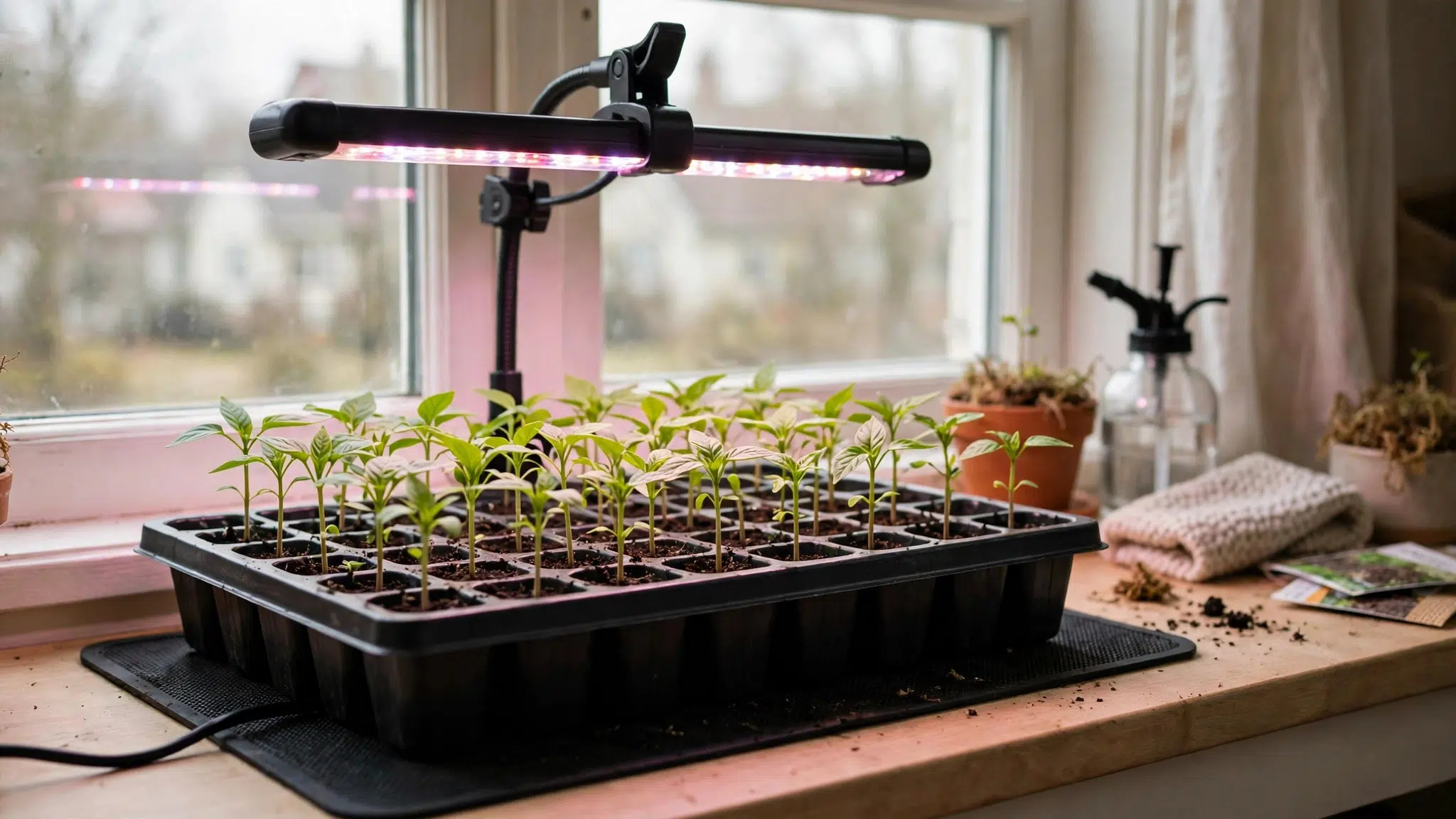
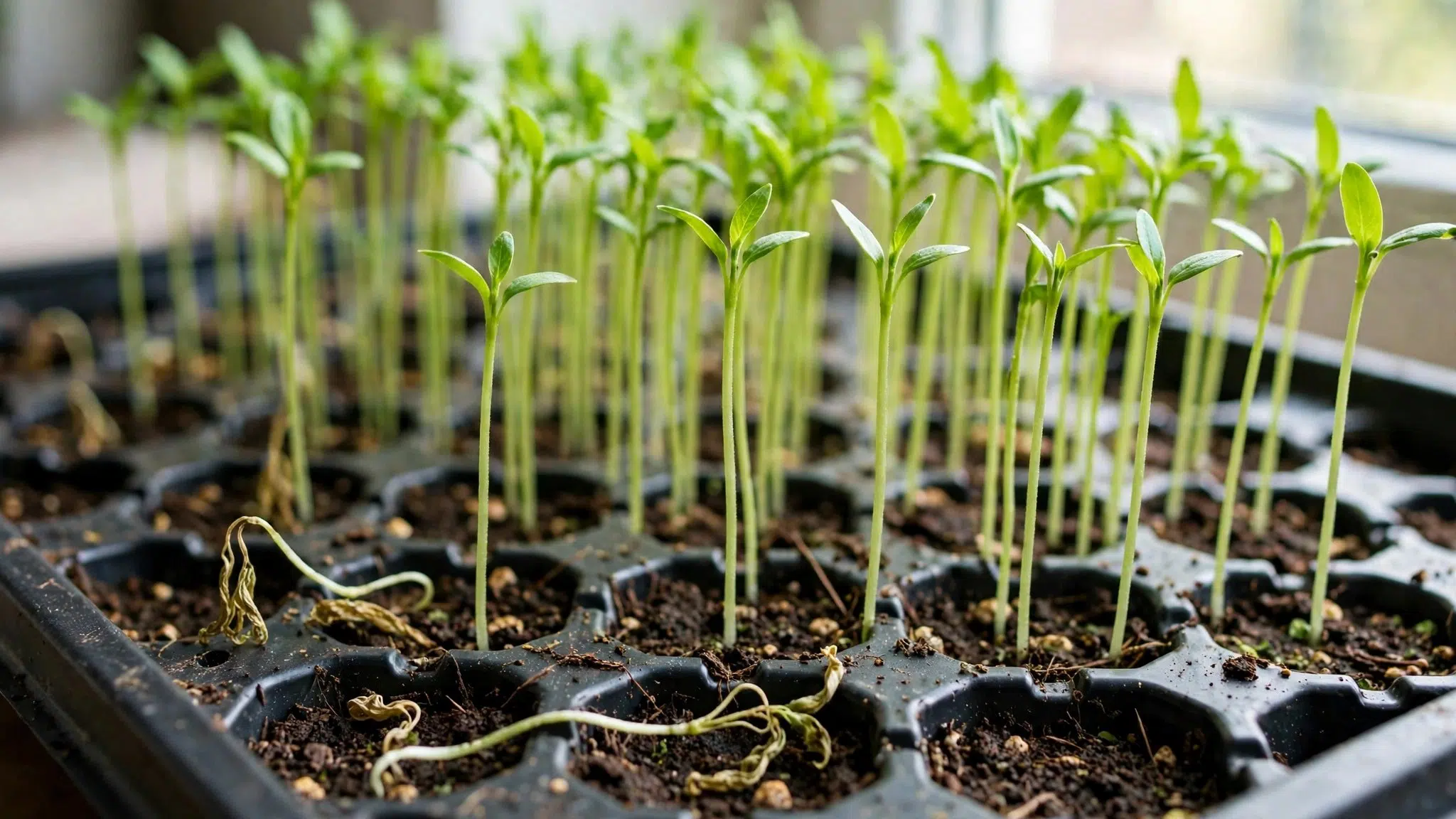
Weak light makes seedlings grow tall, pale, and thin as they stretch toward a window. A sunny windowsill is rarely enough, especially on cloudy days or in winter. The fix is a simple shop light or LED grow light hung 2 to 3 inches above the seedlings, raised as they grow, and left on for 14 to 16 hours a day. Use a timer so the light is consistent, and give seedlings a dark period at night so they can rest.
If your seedlings are already leggy, lower the light, add a small fan for air movement, and bury the stems a little deeper when you transplant, if the crop allows it, as tomatoes do.
3. Overwatering and Damping Off: Common Seed Starting Mistakes
Beginners often water too much, too often, because they worry seedlings will dry out. Wet, airless seed mix invites damping off, a fungal disease that makes stems thin and collapse at the soil line, killing seedlings overnight. The fix is to water only when the surface feels dry, water from the bottom so roots grow down, and always let trays drain fully. Use fresh seed-starting mix, clean trays, and good air circulation. A small fan blowing gently across the trays helps stems grow strong and keeps the surface dry.
If you see seedlings falling over, remove them at once so the problem does not spread.
| Mistake | What Happens | How to Avoid It |
|---|---|---|
| Starting too early | Leggy, root-bound plants | Count back from last frost date |
| Weak light | Tall, pale, thin seedlings | Grow light 2-3 inches above, 14-16 hours a day |
| Overwatering | Damping off, root rot | Water only when dry; drain trays fully |
| Seeds too deep | Seeds fail to emerge | Sow at twice the seed width; tiny seeds on surface |
| Skipping hardening off | Sunburn, wilting, shock | Harden off over 7-10 days |
| Old or bad seed | Poor or no germination | Test old seed; buy fresh seed |
4. Planting Seeds Too Deep
Seeds planted too deep may never emerge, because tiny seedlings run out of energy before they reach the surface. A good rule is to sow a seed at a depth about twice its width. Large seeds, such as beans and squash, can go about an inch deep, while tiny seeds, such as lettuce and petunias, need only a light sprinkle of mix or no cover at all, because they need light to germinate. Read the packet, which usually gives the right depth, and press the mix gently after sowing so seeds make good contact with moist soil. If seeds fail to sprout, check the packet depth first, and read our guide on why are my seeds not germinating for other causes.
5. Skipping Hardening Off
Moving seedlings straight from a warm, still room into sun and wind is a shock. Leaves can sunburn, wilt, and drop, and growth can stall for weeks. The fix is hardening off: over 7 to 10 days, set seedlings outside in shade for a few hours, then add sun and wind a little more each day, and bring them in at night if frost threatens. By the end of the week, they should stay out all day and night, if temperatures allow. Transplant on a cloudy day or in the evening, water well, and mulch. Our guide on how to harden off seedlings walks through the full schedule.
6. Using Old Seed or the Wrong Mix
Old seed germinates poorly, and garden soil in a tray stays wet, crusts over, and can carry disease. The fix is to use fresh seed, test old seed on a damp paper towel before sowing, and always use a light, sterile seed-starting mix, not garden soil. Label every tray with the variety and sowing date, because seedlings of different crops look alike when they are small. Start with a few easy crops, keep notes on what worked, and change one thing at a time next season. University extension guidance, including the University of Minnesota Extension seed-starting guides, stresses the same basics: right timing, strong light, clean mix, and a gradual move outdoors.
How to Avoid Seed Starting Mistakes Next Time You Sow
The fastest way to avoid seed starting mistakes is to measure instead of guessing: count back from your last frost date, sow each seed at a depth of twice its width, and keep a grow light 2 to 4 inches above the seedlings for 12 to 16 hours a day. Sow at that depth and thin by cutting, not pulling, as the University of Minnesota Extension advises.
Keep a short note for each sowing: the variety, the date, and what went wrong or right. When a tray fails, the note tells you whether the seed was old, the mix stayed wet, or the light was too far away. That record turns one season of seed starting mistakes into a plan you can repeat with confidence next year.
Sources
- University of Minnesota Extension — seed starting and indoor growing guides (extension.umn.edu)
- Cornell Cooperative Extension — home vegetable gardening guidance for starting seeds indoors
- USDA — home gardening and seed germination guidance for home gardeners
Frequently Asked Questions
Why are my seedlings tall and leggy?
Leggy seedlings usually need more light. Lower your grow light to 2 to 3 inches above the leaves, give 14 to 16 hours of light a day, and add gentle air movement from a fan. Weak light is one of the seed starting mistakes behind leggy seedlings.
Why did my seedlings fall over and die?
Seedlings that collapse at the soil line usually have damping off, a fungal disease caused by wet, airless mix. Use fresh mix, clean trays, water less, and improve air flow.
How do I know when to start seeds indoors?
Count back from your last spring frost date using the days on the seed packet. Most vegetables need only 4 to 8 weeks indoors, so starting earlier usually does more harm than good.
Can leggy seedlings be saved?
Sometimes. Give them stronger light at once, add a fan, and bury the stems deeper when transplanting, if the crop allows it. Tomatoes can grow roots along a buried stem.
Do I really need to harden off seedlings?
Yes. Hardening off over 7 to 10 days lets seedlings adjust to sun, wind, and cooler nights. Seedlings moved outside without hardening off can sunburn, wilt, or stop growing. Skipping it is one of the seed starting mistakes beginners make most often.
Researched Picks: Tools That Fix the Most Common Mistakes
Nearly every mistake in this guide has a tool-shaped answer: stronger light, a mix that drains, and cells that keep sowing depth and watering consistent. These three picks address the mistakes beginners actually make, in the order they matter most.
1. Barrina T5 Grow Lights — Best Overall
Barrina T5 tubes are full-spectrum LED lights that link together, so several tubes run from one outlet. Hang them 2 to 3 inches above the seedlings on a shelf or rack and leave them on 14 to 16 hours a day — the exact fix for the weak-light mistake that leaves seedlings tall, pale and thin.
Key specs: T5 LED tubes, full spectrum; linkable, several tubes from one outlet; hang above trays on a shelf or rack.
| ✓ Pros | ✗ Cons |
|---|---|
|
|
Best for: anyone raising seedlings on a shelf indoors. Who should skip: gardeners who direct sow everything outdoors.
2. Hanaoyo 96-Cell Seed Starting Kit — Best Kit for Even Watering
The Hanaoyo kit holds 96 cells in a set of base trays with clear domes on top. Uniform cells make sowing depth consistent, the base trays catch water so trays drain instead of sitting wet, and the domes hold humidity until seedlings emerge — then they lift off so air can move and damping off has less chance to start.
Key specs: 96 cells in total; clear domes to hold humidity; base trays to catch water and move trays as one unit.
| ✓ Pros | ✗ Cons |
|---|---|
|
|
Best for: gardeners starting lots of seed indoors at once. Who should skip: anyone sowing only a handful of large seeds directly outdoors.
3. Jiffy Seed Starting Mix — Best Mix for Beginners
Jiffy Mix is a fine-textured seed-starting mix based on sphagnum peat moss and vermiculite. It is the simplest way to avoid the wrong-mix mistake: it drains better than garden soil, stays loose instead of crusting over, and its fine texture suits seeds sown at shallow depths. Moisten it before you sow.
Key specs: fine-textured mix based on sphagnum peat moss and vermiculite; moisten before sowing.
| ✓ Pros | ✗ Cons |
|---|---|
|
|
Best for: beginners who want a clean, reliable mix. Who should skip: gardeners sowing large seeds directly into garden soil.
How We Chose
We compared manufacturer specifications for light type and coverage, cell size and uniformity, and mix texture, and chose tools that directly answer the mistakes in this guide: weak light, wet mix, and inconsistent sowing depth. We left out anything that depended on a price, a star rating or a claim we could not verify, and we did not test the products ourselves — these picks are based on published specifications and fit to the job.
Final Verdict
If you fix one thing this season, fix the light: Barrina T5 Grow Lights hung close above your trays will do more for your seedlings than any other single change. Add the Hanaoyo kit for consistent cells and watering, and Jiffy Mix for a clean start, and most of the mistakes in this guide stop happening on their own.