
Best Seed Starting Kits for Starting Celery Seeds Indoors
As an Amazon Associate I earn from qualifying purchases.
Last updated: November 23, 2026
When to start celery seeds indoors: sow them 10 to 12 weeks before your last spring frost, then transplant the seedlings outside after the last frost, once nights stay above 50°F. In most of the United States that means sowing in January or February and transplanting in April or May. Use the zone table below to find your exact window. The best seed starting kits for starting celery seeds indoors keep the mix damp, hold humidity in, and add strong light once the seedlings sprout.
Quick Picks
Top pick: Hanaoyo Self-Watering Seed Starter Tray. Even moisture from the reservoir keeps celery seed damp through its long germination, with no daily watering.
Runner-up: Bonviee Seed Starter Trays, 5-Pack. Vented domes hold humidity in while celery sprouts, and the cells make thinning easy.
Budget pick: Barrina T5 Grow Lights, 6-Pack. Strong, even light 2 to 4 inches above the leaves once celery sprouts, so seedlings stay stocky.
Why Celery Needs Such an Early Start
Celery is one of the slowest vegetables to grow from seed. The tiny seeds take two to three weeks just to germinate, and the seedlings grow slowly for the first month. After transplanting, the plants need another 100 days or more to produce full stalks. If you sow too late, the plants run into summer heat before they size up, and the stalks turn stringy and bitter.
Celery also has a split personality when it comes to temperature. The seed germinates best in warm soil, around 70 to 75°F, but the plants themselves grow best in cool, moist weather between 60 and 65°F. Starting seed indoors lets you give it the warmth it needs to sprout, then move it outside into the cool spring weather it loves. Unlike cauliflower, though, celery cannot take frost: a cold snap after transplanting can make the plants bolt, so they must go out after the last frost.
When to Start Celery Seeds Indoors by Zone
Your last spring frost date is the anchor for every date in this guide. Count back 10 to 12 weeks from that date to find your sowing window, and plan to transplant after the last frost, once nighttime temperatures stay above 50°F. The table below uses typical last-frost ranges for each USDA zone; your local date may fall a week or two either side, so check your local frost date before you sow.
| USDA Zone | Typical last spring frost | Start seeds indoors | Transplant outdoors |
|---|---|---|---|
| Zone 3 | May 15 – June 1 | March 1 – 15 | May 15 – June 1 |
| Zone 4 | May 1 – 15 | February 15 – March 1 | May 1 – 15 |
| Zone 5 | April 15 – May 1 | February 1 – 15 | April 15 – May 1 |
| Zone 6 | April 1 – 15 | January 15 – February 1 | April 1 – 15 |
| Zone 7 | March 15 – April 1 | January 1 – 15 | March 15 – April 1 |
| Zone 8 | February 15 – March 15 | December 1 – 15 | February 15 – March 15 |
| Zone 9 | January 15 – February 15 | November 1 – 15 | January 15 – February 15 |
| Zone 10 | Rare or none | November | January – February |
In Zones 9 and 10, celery is a winter crop: sow in fall so the plants mature in the cool months, and avoid growing it through a hot summer. In Zones 3 to 5, there is usually time for only one crop, so start on time and do not let the seedlings stall indoors. The timing approach matches our when to start eggplant seeds indoors guide, except celery is sown earlier and transplanted later, because it needs a longer head start and cannot take frost.
How to Start Celery Seeds Indoors, Step by Step
Celery seed is tiny and slow, so the details matter. Follow these steps when starting seeds indoors for celery.
1. Sow on the surface. Celery seed needs light to germinate, so press the seed gently onto the surface of damp seed-starting mix and do not cover it, or cover it with only the thinnest dusting of fine vermiculite. Mist the surface so the seed stays in contact with the mix.
2. Keep the mix warm and moist. Celery seed germinates best at 70 to 75°F (21 to 24°C). A heat mat helps, and a loose plastic cover or dome holds moisture in while the seed sprouts. Check daily and mist if the surface starts to dry; if the seed dries out, it dies.
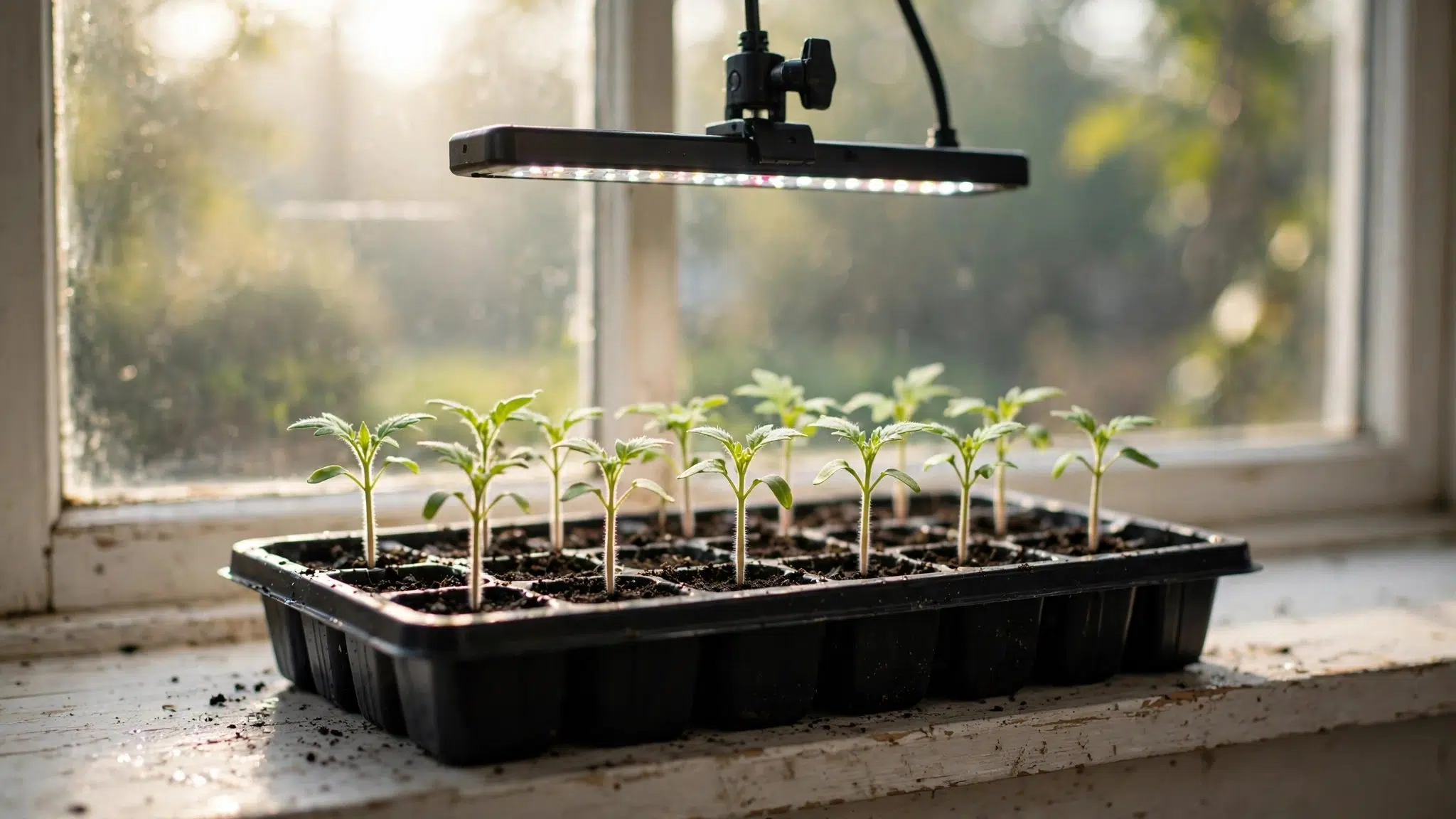
3. Give strong light as soon as they sprout. Seedlings appear in two to three weeks. The day they do, move the tray under a grow light 2 to 4 inches above the leaves, on for 14 to 16 hours a day, and remove the cover so air can move. Weak light makes tall, floppy seedlings.
4. Thin and transplant into cells. When the seedlings have two true leaves, thin to one plant per cell, or move them into individual cells. Celery seedlings are delicate, so handle them by a leaf, never by the stem.
5. Feed lightly and keep them cool. Once the first true leaves appear, feed once a week with a half-strength liquid fertilizer. A week before transplanting, move the plants to a cooler spot (50 to 60°F) if you can; cool-grown seedlings transplant better.
Germination Temperature and Growing Conditions
Temperature and moisture decide how fast celery seed germinates, and celery is far slower than most vegetables. The seed germination temperature chart on this site lists the same ranges for the most common vegetables.
| Soil temperature | Days to germinate | What to expect |
|---|---|---|
| 60°F (15°C) | 21 – 28 days | Slow and patchy; many seeds fail |
| 65°F (18°C) | 18 – 24 days | Steady but slow |
| 70 – 75°F (21 – 24°C) | 14 – 21 days | Best range for celery |
| 80°F (27°C) | 10 – 14 days | Faster, but the mix dries out quickly |
After germination, celery grows best at 60 to 65°F during the day and a little cooler at night, with the soil kept evenly moist at all times. Celery is a heavy drinker: if the soil dries out, the stalks turn stringy and bitter. Mulch after transplanting to hold moisture in.
Hardening Off and Transplanting
Begin hardening off 7 to 10 days before your transplant date, and only after the last frost has passed and nights stay above 50°F. Set the seedlings outside in a sheltered, shady spot for a few hours on the first day, then increase the time and sun a little each day. Bring them in at night if a cold snap is forecast.
Transplant into rich, moist soil with plenty of compost, spacing plants 6 to 8 inches apart in rows 24 to 36 inches apart. Water them in well and mulch around the plants. Keep watering through the season: celery that dries out, even once, can turn bitter and stringy. If a late cold snap threatens after transplanting, cover the plants with row cover, because cold nights below 50°F can make celery bolt.
Common Mistakes That Ruin Celery Starts
- Burying the seed. Celery seed needs light to germinate. Seed sown even 1/4 inch deep may never come up. Sow on the surface.
- Letting the mix dry out. Celery seed dies if it dries out during germination. Keep the surface moist until the seedlings are up.
- Transplanting too early. Cold nights below 50°F after transplanting can make celery bolt and go to seed instead of forming stalks. Wait until the nights are warm.
Sources
Timing and temperature guidance follows University of Minnesota Extension, “Growing celery in home gardens,” Cornell Cooperative Extension vegetable growing guides, and Penn State Extension guidance on starting celery indoors.
Our Researched Picks
These three kits cover the three things celery seed needs most: even moisture, steady humidity and strong light after sprouting.
1. Hanaoyo Self-Watering Seed Starter Tray
The Hanaoyo tray keeps the mix evenly damp from a bottom reservoir, so celery seed never dries out during its long 14 to 21 day germination. The mesh bottom and shallow depth suit small seed, and the clear dome holds humidity in until sprouting.
| ✓ Pros | × Cons |
|---|---|
| Self-watering reservoir keeps the mix moist for days | Trays are shallow — large seeds may outgrow them |
| Shallow trays and drainage suit small seeds | Water level is easy to overfill |
Best for: gardeners who want even moisture without daily watering.
Check Price on Amazon2. Bonviee Seed Starter Trays, 5-Pack
Five vented trays with domes and drainage holes give celery the warm, humid air it likes while it sprouts, and the cells make thinning to one plant per cell simple. The pack covers several sowings or varieties at once.
| ✓ Pros | × Cons |
|---|---|
| Five trays with domes give plenty of capacity | Trays may feel flimsy when lifted full |
| Vented domes control humidity | Domed lids can trap heat in warm rooms |
Best for: starting several celery sowings or varieties at once.
Check Price on Amazon3. Barrina T5 Grow Lights, 6-Pack
Celery seedlings need strong light the day they sprout or they go leggy fast. These linkable T5 bars hang 2 to 4 inches above the leaves and give even, cool light for 14 to 16 hours a day.
| ✓ Pros | × Cons |
|---|---|
| Bright, even light for seedlings | No built-in timer |
| Linkable design covers a shelf | Mounting hardware is basic |
Best for: giving celery seedlings strong light right after sprouting.
Check Price on AmazonHow We Chose
We compared seed starting kits on moisture control, humidity, light and ease of use for slow-germinating celery, using product specifications, seller information and gardener feedback, and picked the three that best match celery’s needs. We did not test these products ourselves.
Final Verdict
If you start celery indoors, begin with the Hanaoyo self-watering tray. It solves the biggest celery problem — the mix drying out during a long germination — and the Bonviee trays and Barrina lights cover humidity and light for the weeks after.
Check Price on AmazonFrequently Asked Questions
When should I start celery seeds indoors in Zone 6?
In Zone 6, start celery seeds indoors between January 15 and February 1, about 10 to 12 weeks before a typical last frost of April 1 to 15. Transplant the seedlings outside between April 1 and 15, once nights stay above 50°F and the plants have been hardened off.
How long do celery seeds take to germinate?
Celery seeds take 14 to 21 days to germinate in soil at 70 to 75°F, and longer in cooler soil. Keep the mix warm and moist the whole time, and do not let the surface dry out, or the seed will die before it sprouts.
Do celery seeds need light to germinate?
Yes. Celery seeds need light to germinate, so sow them on the surface of damp seed-starting mix and do not cover them with soil. A thin dusting of fine vermiculite is fine, but any real covering can stop them from sprouting.
Can I direct sow celery seeds outside?
Not reliably. Celery seed germinates slowly, needs warm soil and constant moisture, and the plants need a long season. In most of the United States, starting indoors 10 to 12 weeks before the last frost is the reliable way. Direct sowing only works in mild climates with a long, cool season.
Why is my celery bolting?
Celery bolts when it is exposed to cold after transplanting, especially nights below 50°F, or when it dries out. Wait until nights stay above 50°F before transplanting, harden the plants off first, and keep the soil evenly moist all season.