Best Seed Starting Supplies to Stop Seeds Rotting Before They Sprout
As an Amazon Associate I earn from qualifying purchases.
Last updated: November 23, 2026
Why are my seeds rotting before they sprout? Usually because the seed-starting mix stays too wet and airless, which lets damping-off fungi attack the seed before it can germinate. Cold soil, old seed, sowing too deep, and dirty trays make it worse. The fix is warm soil, fresh sterile mix, light watering, and good air flow. The best seed starting supplies to stop seeds rotting keep the mix damp but never soggy, and give the seed the air, warmth and light it needs to sprout instead of rot.
Quick Picks
Top pick: Hanaoyo Self-Watering Seed Starter Tray. A bottom reservoir keeps the mix evenly damp without waterlogging it, so seed stays moist enough to germinate but never sits in soggy mix.
Runner-up: Bonviee Seed Starter Trays, 5-Pack. Vented domes hold humidity while seed germinates, and the drainage holes and vents let air in once seedlings appear.
Budget pick: Barrina T5 Grow Lights, 6-Pack. Strong, even light 2 to 4 inches above the leaves helps seedlings grow stocky and dry out between waterings, which keeps damping-off away.
What Rotting Seed Looks Like
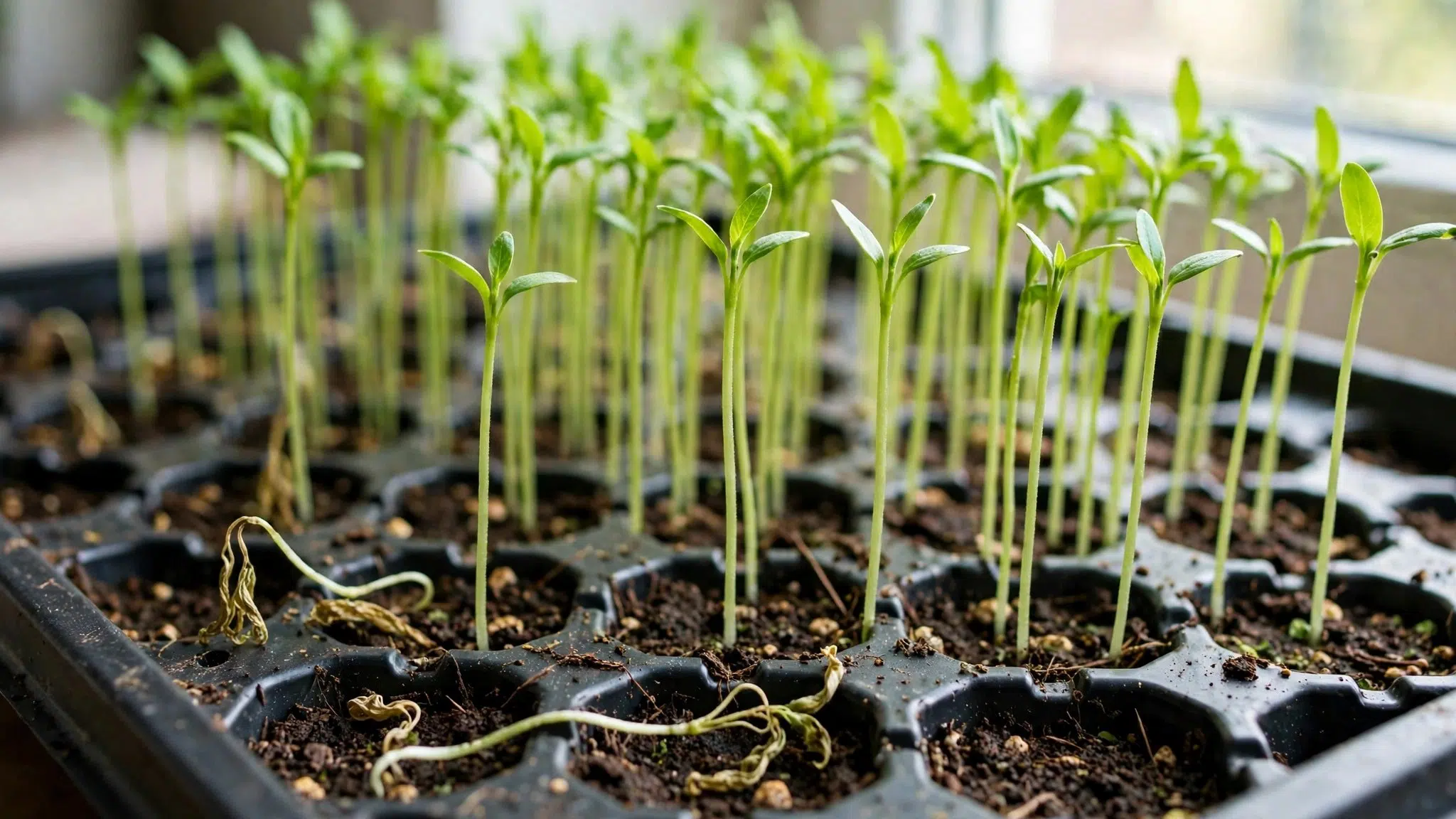
A healthy seed swells, splits, and sends out a root within a few days of sowing. A rotting seed swells and then goes soft, mushy, and grey or brown, and it often smells sour or musty when you dig it up. You may also see a thin white or grey mould on the surface of the mix, or a green algae-like film where the mix never dries out. If nothing has come up after two to three weeks and the seed feels soft when you press it, it has rotted.
Rot can strike before or after the seedling appears. When it strikes after the seedling emerges, gardeners call it damping-off: the stem pinches in at the soil line, turns brown and wiry, and the seedling falls over. Both problems come from the same soil fungi, and both are usually a sign that conditions were too wet and too cold, rather than a sign that the seed itself was bad.
The 5 Main Causes of Seeds Rotting Before They Sprout
| Cause | What you will see | Fix |
|---|---|---|
| Overwatering | Mix stays soggy; mould on the surface; sour smell | Water from below; let the surface dry between waterings |
| Cold soil | Seed sits for weeks without sprouting, then rots | Warm the mix to the crop’s germination range; use a heat mat |
| Dirty trays or old mix | Rot in batch after batch, even with fresh seed | Wash trays; use fresh sterile seed-starting mix |
| Sowing too deep | Seed uses up its energy before reaching the surface | Sow about twice as deep as the seed is wide |
| Old or damaged seed | Patchy germination; weak seedlings that rot easily | Use fresh seed; test old seed before sowing |
Overwatering is the most common cause by far. Seed-starting mix should feel like a wrung-out sponge: damp all the way through, but not dripping when you squeeze it. Trays with no drainage holes, or trays left standing in water, stay airless, and airless mix is exactly where the fungi that rot seed thrive. Cold soil makes everything worse, because the seed sits wet for longer while the fungi keep working. Check the seed germination temperature chart for your crop, and do not sow until the mix is warm enough.
How to Stop Seeds Rotting: Step by Step
Work through these steps when starting seeds indoors, and most rot problems disappear.
1. Start with fresh, sterile mix. Use new seed-starting mix from a sealed bag. Do not reuse old mix or garden soil, which carry the fungi that cause rot and damping-off.
2. Clean your trays and pots. Wash used trays and pots in hot soapy water, then rinse with a weak bleach solution (one part bleach to nine parts water) and let them dry. This one step prevents more rot than any spray or treatment.
3. Sow at the right depth. As a rule, sow seed about twice as deep as the seed is wide. Fine seed can be pressed onto the surface and barely covered. Deep-sown seed runs out of energy before it reaches the light.
4. Warm the soil before you sow. Most vegetable seed germinates best when the mix is 65 to 75°F (18 to 24°C). A heat mat under the tray, or a warm spot in the house, keeps the seed moving instead of sitting wet and cold.
5. Water lightly, from below. Water the mix before you sow, then water from below by setting the tray in a shallow dish for a few minutes. After the seedlings emerge, let the surface dry out between waterings.
6. Give them air. Do not seal trays under a tight dome once the seed has sprouted. Open the vents, or remove the cover, and run a small fan nearby for gentle air movement. Still, damp air is the fungi’s best friend.

How Much Water Do Seedlings Need?
| Stage | How to water | How wet should the mix be? |
|---|---|---|
| Before germination | Water from below; cover loosely to hold moisture | Evenly moist, like a wrung-out sponge |
| Just sprouted | Water from below when the surface starts to dry | Surface dry to the touch between waterings |
| Seedling stage | Water in the morning; let the top dry out | Dry on top, moist underneath |
Can Rotted Seeds Be Saved?
No. Once a seed has turned soft and mushy, it will not recover, and the fungi in the mix will spread to the seed next to it. Throw the rotted seed and the mix away, wash the tray, and start again with fresh seed and fresh mix. Do not reuse mix from a failed batch. Old seed is more likely to rot, so store it well: cool, dry, and dark, as described in our guide to how to store seeds, and test old seed on damp paper towel before you sow a whole tray of it.
Sources
Guidance in this article follows Iowa State University Extension, “Damping off of seedlings,” University of Minnesota Extension, “Damping off,” and Penn State Extension guidance on starting seed indoors and preventing damping-off.
Our Researched Picks
These three supplies cover the three things seed needs most to stay rot-free: even moisture, drainage and air, and strong light after sprouting.
1. Hanaoyo Self-Watering Seed Starter Tray
Overwatering is the number one cause of seed rot, and the Hanaoyo tray attacks it directly: the bottom reservoir keeps the mix evenly damp without ever waterlogging it, so seed stays moist enough to germinate but never sits in soggy mix.
| ✓ Pros | × Cons |
|---|---|
| Self-watering reservoir keeps the mix moist for days | Trays are shallow — large seeds may outgrow them |
| Shallow trays and drainage suit small seeds | Water level is easy to overfill |
Best for: gardeners who keep overwatering their seed trays.
Check Price on Amazon2. Bonviee Seed Starter Trays, 5-Pack
Vented domes and drainage holes give seed the two things rot hates: air and drainage. The domes hold humidity while seed germinates, and the vents let you open up the airflow once seedlings appear.
| ✓ Pros | × Cons |
|---|---|
| Five trays with domes give plenty of capacity | Trays may feel flimsy when lifted full |
| Vented domes control humidity | Domed lids can trap heat in warm rooms |
Best for: starting several trays at once while keeping air moving.
Check Price on Amazon3. Barrina T5 Grow Lights, 6-Pack
Weak light makes seedlings stretch and stay damp, which invites damping-off. These linkable T5 bars hang 2 to 4 inches above the leaves and give strong, even light that helps seedlings grow stocky and dry out between waterings.
| ✓ Pros | × Cons |
|---|---|
| Bright, even light for seedlings | No built-in timer |
| Linkable design covers a shelf | Mounting hardware is basic |
Best for: giving seedlings strong light so they dry out between waterings.
Check Price on AmazonHow We Chose
We compared seed starting supplies on moisture control, drainage, airflow and light, using product specifications, seller information and gardener feedback, and picked the three that best address the main causes of seed rot. We did not test these products ourselves.
Final Verdict
If your seeds keep rotting, start with the Hanaoyo self-watering tray. It removes the biggest rot risk — a waterlogged mix — and the Bonviee trays and Barrina lights cover drainage, airflow and light for the weeks after.
Check Price on AmazonFrequently Asked Questions
Why are my seeds rotting before they sprout?
Seeds usually rot before sprouting because the mix stays too wet and airless, which lets damping-off fungi attack the seed. Cold soil, old seed, sowing too deep, and dirty trays make it worse. Warm soil, fresh sterile mix, light watering, and good air flow will fix most cases.
Can I save seeds that have started to rot?
No. A seed that has gone soft and mushy will not recover. Throw it and the mix away, wash the tray, and start again with fresh seed and fresh mix. Trying to dry out rotted seed or reuse the mix will only spread the fungi to the next batch.
Does cinnamon stop seeds from rotting?
Cinnamon has mild antifungal properties, and a light dusting on the mix surface may help with surface mould, but it will not fix wet, cold, or dirty conditions. Treat it as a small extra step, not a cure: the real fix is warm soil, fresh mix, light watering, and air flow.
How wet should seed-starting mix be?
Seed-starting mix should feel like a wrung-out sponge: damp all the way through, but not dripping when you squeeze a handful. Water from below, and let the surface dry out between waterings once the seedlings have emerged.
How long should seeds take to sprout before I assume they rotted?
Most vegetable seeds sprout in 5 to 14 days at the right temperature, though some take longer. If nothing has come up after three weeks and the seed feels soft and mushy when you dig one up, it has rotted. If the seed is still firm, it may just be slow, so check the temperature and wait a few more days.