
Best Seed Starting Mixes for Starting Seeds Indoors
As an Amazon Associate I earn from qualifying purchases.
Last updated: November 22, 2026
The best seed starting mixes are fine, sterile, low-nutrient blends made for germination, while potting soil is a heavier, nutrient-rich blend made for growing plants on. Use seed starting mix to sow, then move seedlings into potting soil once they have true leaves.
Quick Picks
- Top pick: Espoma Organic Seed Starter — best all-round organic seed starting mix
- Runner-up: Miracle-Gro Seed Starting Mix — best widely available seed starting mix
- Budget pick: Jiffy Jiffy-Mix — best value seed starting mix for big batches
Seed Starting Mix vs Potting Soil at a Glance
They look similar in the bag, and both are sold as growing media — but they are made for different jobs. This table sums up the differences; the sections below explain what each one means for your seedlings.
| Feature | Seed starting mix | Potting soil |
|---|---|---|
| Texture | Fine and uniform | Coarse, with bark and lumps |
| Sterile | Usually sterile | Not sterile |
| Nutrients | Very low — seedlings need feeding after true leaves | Rich — compost and fertiliser included |
| Water | Holds moisture evenly | Dries unevenly; can stay wet or dry out |
| Drainage | Free-draining | Heavier; can compact in small cells |
| Best for | Sowing seeds and the first weeks | Growing plants on in pots |
| Cost | More per litre | Cheaper per litre |
What Is Seed Starting Mix?
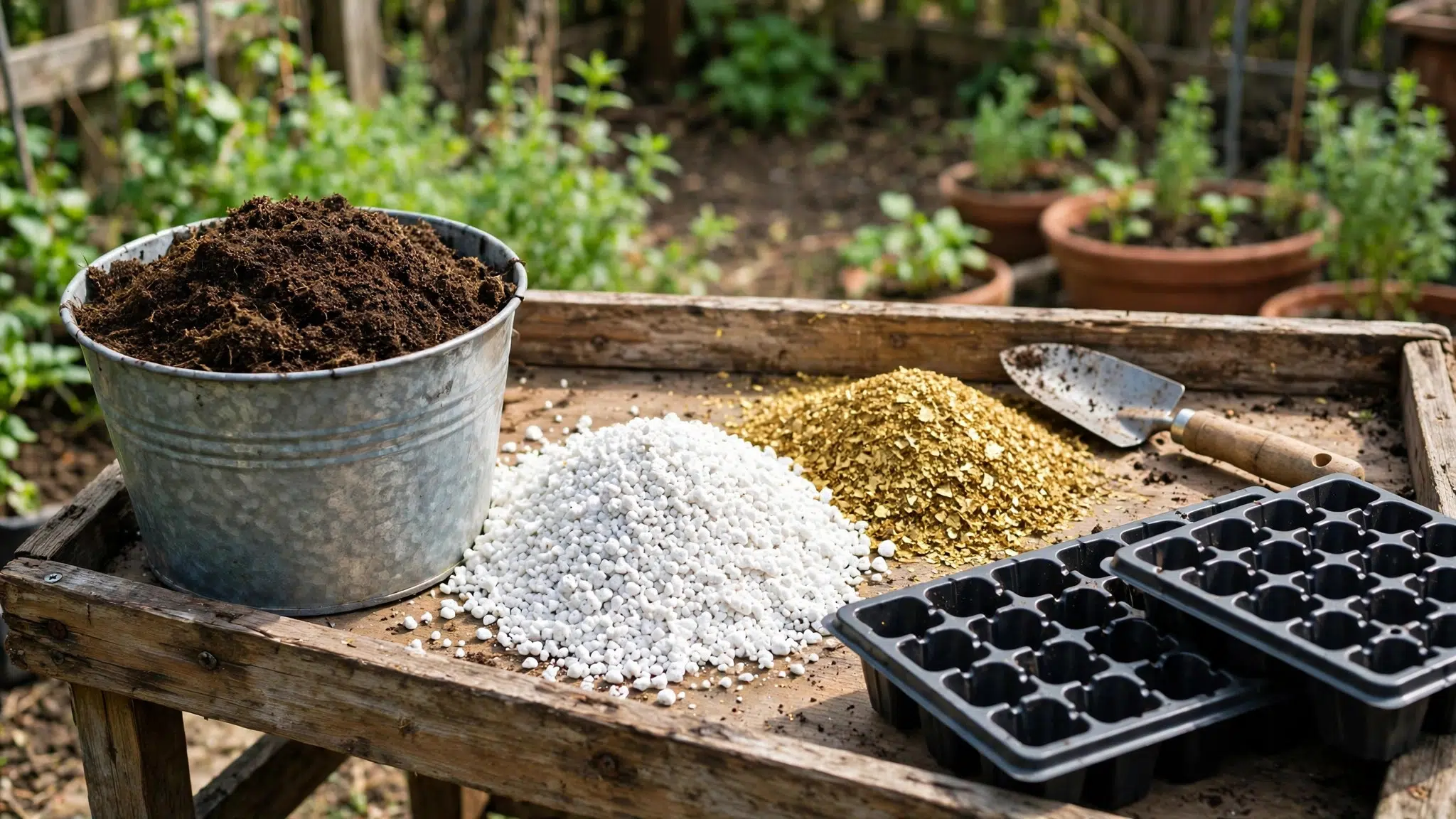
Seed starting mix is a soilless growing medium made for one job: getting seeds to germinate. It is usually a blend of fine peat moss or coir, vermiculite and perlite, milled to a uniform, fluffy texture. It is sold sterile, so it carries few of the fungi that cause damping off, and it contains almost no nutrients — a seed carries its own food for the first days of life, and fertiliser at this stage can burn tender roots.
Because the particles are fine, a seed sits in close contact with damp mix on every side — exactly what germination needs. Water spreads evenly through the mix instead of pooling, and air still moves between the particles, so roots get oxygen as well as moisture. Our guide to the best soil for starting seeds indoors looks at how these mixes compare in practice.
What Is Potting Soil?
Potting soil is a general-purpose growing medium for plants that are already growing — houseplants, containers, and seedlings that have outgrown their cells. It is heavier and coarser than seed starting mix: peat or coir plus bark, compost and perlite, often with slow-release fertiliser mixed in. That richness is its strength for established plants and its weakness for seeds.
The coarse texture leaves air pockets around tiny seeds, so they dry out before they germinate; the bark and lumps can bury a small seed too deep. The fertiliser that feeds a tomato plant can scorch a seedling’s first roots. And because potting soil is not sterile, it can carry the damping-off fungi that fell seedlings at soil level. None of this makes potting soil bad — it makes it the wrong tool for the sowing stage.
Why the Difference Matters for Germination
A seed needs three things to germinate: moisture, air and the right temperature. Seed starting mix delivers all three evenly. Its fine particles hold a film of water against the seed coat, while the perlite and vermiculite keep air in the mix — and its sterility means the seedling is less likely to be attacked by damping-off fungi in its first days. That is why germination rates are usually higher and more even in a proper seed starting mix.
Potting soil struggles on all three counts for small seeds. Its coarse particles leave air pockets where a tiny seed dries out; its bark holds water in some spots and sheds it in others; and its unsterile compost can harbour the fungi that cause seedlings to keel over at soil level. Large seeds with their own reserves cope far better — a bean or a squash seed has the energy to push through a coarse mix that would defeat a lettuce seed.
Can You Use Potting Soil to Start Seeds?
Yes — with a few adjustments. For large seeds such as beans, peas, squash and sunflowers, ordinary potting soil works well: sow them a little deeper than you would in seed starting mix, keep the surface evenly moist, and they will come up. For small seeds, sieve the potting soil first through a fine mesh to remove bark and lumps, moisten it thoroughly before sowing, and cover the tray to hold humidity until germination. Our seed germination temperature chart shows the soil temperatures each crop needs to sprout reliably, whatever mix you use.
Watch for damping off more closely in potting soil: give seedlings air movement, avoid overwatering, and water from below where you can. If you are sowing a tray of tiny, expensive seed, the small extra cost of a seed starting mix is worth it — the germination rate alone usually pays for the bag.
Can You Use Seed Starting Mix for Potted Plants?
Only for a short while. A plant grown in seed starting mix will do well for its first two or three weeks, while it lives off the seed’s own reserves and the first true leaves. After that it stalls: the mix has almost no nutrients, so growth slows, leaves pale, and the plant falls behind. The fix is simple — transplant into potting soil, or start feeding with a half-strength liquid feed once true leaves appear. Seed starting mix is a nursery, not a home.
How to Choose Between Them

For seedlings that will stay in the same mix for weeks, choose potting soil every time. On a tight budget, a bag of potting soil sieved through a fine mesh makes a workable seed starting mix, and our guide to starting seeds indoors covers the trays, lights and timing to go with it.
How to Make Your Own Seed Starting Mix
You can mix your own: one part fine peat moss or coir, one part vermiculite and one part perlite, moistened before you fill the trays. It works well and costs less per litre than a branded bag. The catch is sterility — home-mixed media is not sterile, so it carries a higher damping-off risk than a bagged mix. For most gardeners, a bought bag is the simpler, safer choice for the sowing season, and the three picks below are the ones we would start with.
Frequently Asked Questions
Is seed starting mix the same as potting soil?
No. Seed starting mix is finer, sterile and very low in nutrients, made for germination. Potting soil is coarser and richer, with compost and fertiliser, made for growing plants on. They look alike in the bag but do different jobs.
Can I start seeds in regular potting soil?
Yes, for large seeds such as beans, peas, squash and sunflowers — sow a little deeper and keep the surface evenly moist. For tiny seeds, sieve the potting soil fine first and watch for damping off, or use a seed starting mix instead.
Do I need to fertilise seedlings in seed starting mix?
Yes, once true leaves appear — the mix has almost no nutrients of its own. Use a half-strength liquid feed, once a week, until you transplant the seedlings into potting soil.
Can I reuse seed starting mix?
It is best not to reuse it for sowing — used mix can carry damping-off fungi that attack the next batch of seedlings. Spent mix is still useful in the garden or the compost heap, where those fungi are harmless.
Which is better for seedlings: seed starting mix or potting soil?
Seed starting mix is better for sowing and the first few weeks of growth, when fine texture, even moisture and sterility matter most. Potting soil is better once seedlings are established and need nutrients to grow on. Most gardeners use both, in that order.
Sources: University of Minnesota Extension — starting seeds indoors; Iowa State University Extension — seed starting media guidance; Royal Horticultural Society — sowing seed indoors.
Our Researched Picks: Three Seed Starting Mixes Compared
These are the three seed starting mixes in this comparison — all widely sold, all made for sowing. They are researched picks, chosen from the manufacturers’ listed specifications — not hands-on tests.
1. Espoma Organic Seed Starter
Espoma’s organic seed starter is a peat-based mix with perlite, made for sowing seed indoors. It is fine and uniform out of the bag, holds moisture evenly, and — being organic — suits gardeners who prefer to keep synthetic fertilisers out of their seed trays. It is sold as two 8-quart bags, which covers a full season of sowing for most gardeners.
| ✓ Pros | × Cons |
|---|---|
|
|
Best for: gardeners who want an organic seed starting mix for sowing indoors.
Check Price on Amazon2. Miracle-Gro Seed Starting Mix
Miracle-Gro’s seed starting mix is a fine, light blend made for germination, sold almost everywhere garden supplies are stocked. It is consistent from bag to bag, easy to wet evenly, and a straightforward first bag for anyone starting seeds for the first time. The 8-quart bag suits a season of trays and pots for most home growers.
| ✓ Pros | × Cons |
|---|---|
|
|
Best for: a first bag of seed starting mix when you want something you can buy easily and use straight away.
Check Price on Amazon3. Jiffy Jiffy-Mix
Jiffy-Mix is a sphagnum peat and vermiculite blend that has been sold for seed sowing for decades. It is light, fine and holds moisture well, and the 10-quart bag is good value per litre when you are sowing in volume — a full tray of cells, or several varieties at once.
| ✓ Pros | × Cons |
|---|---|
|
|
Best for: sowing large batches of seed on a budget.
Check Price on AmazonHow We Chose These Picks
We compared these mixes on the criteria that matter most for starting seeds: fine, uniform texture; even moisture holding; sterility; and honest value per litre. We checked the manufacturers’ listed specifications and chose mixes that suit the sowing stage described in this guide — rather than the cheapest bag on the shelf.
Final Verdict
Seed starting mix is for sowing; potting soil is for growing on. Use a fine, sterile seed starting mix to get seeds up, feed lightly once true leaves appear, and move seedlings into potting soil when they outgrow their cells. If you buy one bag for sowing, choose Espoma for organic growing, Miracle-Gro for easy availability, or Jiffy for sowing in volume — any of the three will give your seeds a better start than potting soil alone.