How Deep Should You Plant Seeds? Depth Chart for 25 Vegetables

How deep to plant seeds? Plant a seed about two times as deep as the seed itself is wide. A pea goes roughly 1 inch deep, a bean about 1 inch, a tomato seed 1/4 inch, and tiny lettuce seed barely 1/8 inch — just enough soil cover to keep it moist and dark.
Why Depth Matters So Much
A buried seed has a fixed fuel tank: the starch and oils packed inside it. The sprout must push up through the soil and reach light before that fuel runs out. Plant too deep and the seedling starves underground, emerging weak or not at all. Plant too shallow and the seed dries out between waterings, gets eaten by birds, or washes away in the first heavy watering.
Depth also controls moisture and temperature around the seed. Soil 1 inch down stays evenly moist for days, while the surface dries within hours on a sunny day. University extension guides, including those from the University of Maryland Extension and other land-grant universities, give sowing depth on every vegetable fact sheet for exactly this reason — it is one of the few sowing variables the gardener fully controls. If you are new to the whole process, start with our pillar guide on how to germinate seeds, then use the chart below for the exact numbers.
Seed Planting Depth Chart for 25 Vegetables
| Vegetable | Sowing depth | Seed size |
|---|---|---|
| Lettuce | 1/8 – 1/4 inch | Very small |
| Celery | 1/8 inch (surface, needs light) | Very small |
| Carrot | 1/4 inch | Small |
| Basil | 1/4 inch | Small |
| Onion (seed) | 1/4 inch | Small |
| Parsley | 1/4 inch | Small |
| Spinach | 1/2 inch | Medium |
| Radish | 1/2 inch | Medium |
| Turnip | 1/2 inch | Small |
| Kale | 1/2 inch | Medium |
| Cabbage | 1/4 – 1/2 inch | Medium |
| Broccoli | 1/4 – 1/2 inch | Medium |
| Tomato | 1/4 inch | Small |
| Pepper | 1/4 inch | Small |
| Eggplant | 1/4 inch | Small |
| Cucumber | 1/2 – 1 inch | Large |
| Squash / zucchini | 1 inch | Large |
| Pumpkin | 1 inch | Large |
| Melon / watermelon | 1/2 – 1 inch | Large |
| Beans (bush and pole) | 1 inch | Large |
| Peas | 1 – 1 1/2 inches | Large |
| Sweet corn | 1 – 1 1/2 inches | Large |
| Beet | 1/2 inch | Medium |
| Swiss chard | 1/2 – 1 inch | Medium |
| Okra | 1/2 – 1 inch | Large |
When you are unsure how deep to plant seeds, the two-times rule plus this chart agree in almost every case. Deeper is the safer error for large seeds in light, sandy soil; shallower is safer for small seeds in heavy clay.
The Exceptions to the Two-Times Rule
Seeds that need light. Celery, lettuce and many herbs germinate best with light reaching the seed. Press them onto the surface of moist mix and cover with the thinnest dusting of soil or vermiculite — or none at all. Buried celery seed is a classic reason for an empty tray.
Very small seeds. Carrot, basil and onion seed are so small that “twice their width” is a fraction of a millimetre. In practice, 1/4 inch is the workable minimum cover that still keeps them moist. Sowing them in a shallow furrow and covering with fine, sieved soil or compost prevents crusting.
Large seeds in heavy soil. Beans and peas planted at full depth in cold, wet clay can rot before they sprout. In heavy soil, sow at the shallow end of the range and wait until the soil has warmed — the ranges in our seed germination temperature chart show the temperatures each crop needs.
Adjusting Depth for Soil Type and Season
- Sandy soil dries fast and offers little resistance, so sow at the deeper end of each range.
- Clay soil holds moisture but crusts hard; sow shallower and cover the row with fine compost or vermiculite instead of clay.
- Early spring sowings go slightly shallower, because the surface warms first and seedlings need to reach it quickly.
- Mid-summer sowings go slightly deeper, into the cooler, reliably moist layer.
- Indoor sowings in trays use the same depths, but the fine, loose mix means even small seeds emerge easily — depth errors show up indoors less than outdoors.
What Happens at the Wrong Depth
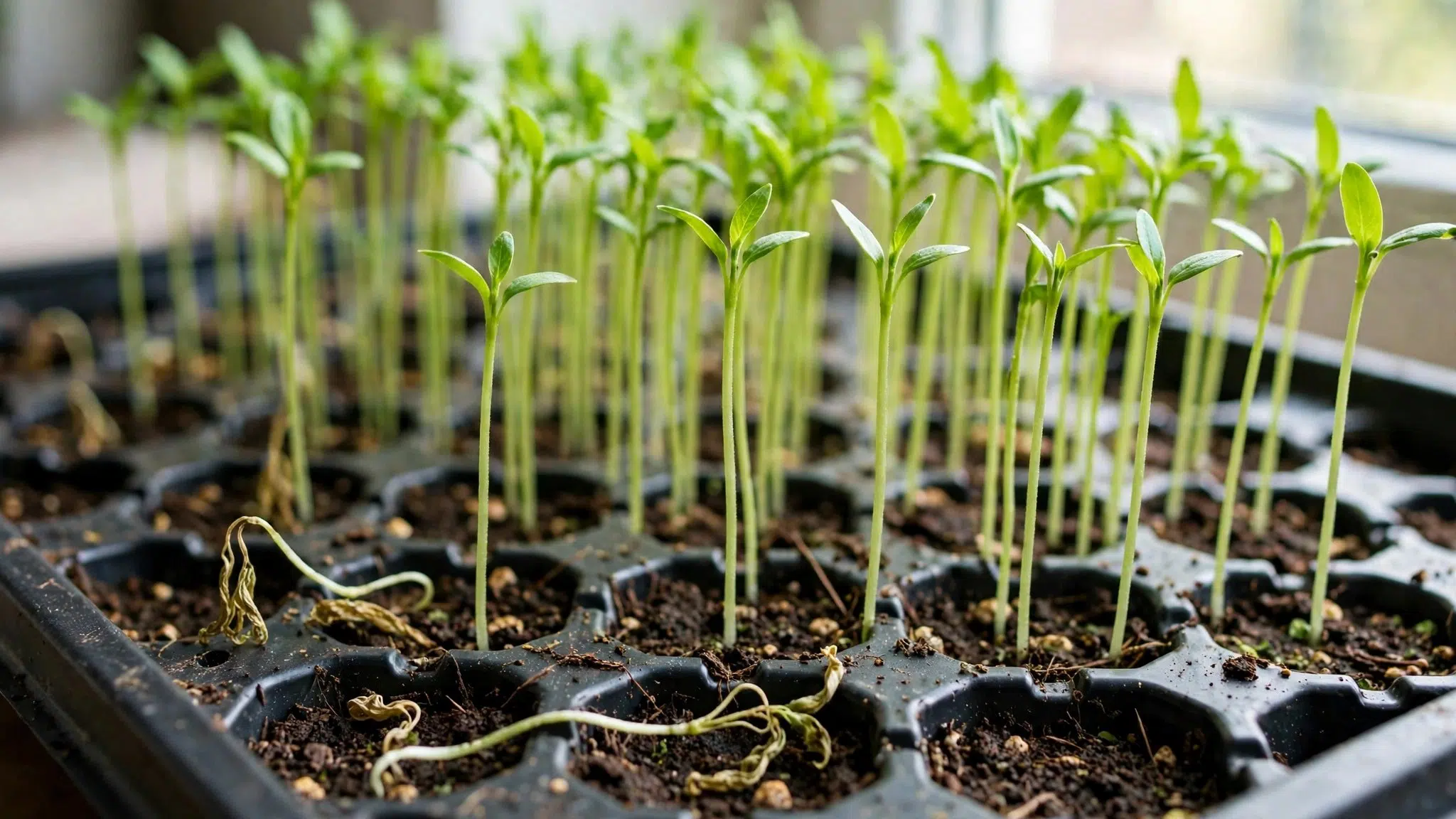
Seedlings that emerge pale, spindly and days late were often simply buried too deep — they burned most of their reserves on the climb. Seeds that never appear, but are found plump and mouldy when you dig, usually sat too deep in wet soil. Seeds found dry and unchanged near the surface were sown too shallow and never stayed moist long enough to germinate.
If you have already sown and nothing is coming up, do not guess blindly. Dig gently and inspect a few seeds, then cross-check against the other causes in our guide to why seeds fail to germinate — depth is only one of eleven common reasons.
A Simple Method That Gets Depth Right Every Time
- Make a furrow with a hoe corner or your finger to the measured depth.
- Drop seeds at the spacing on the packet.
- Cover, then firm the soil gently with the back of the hoe or your palm — good seed-to-soil contact matters as much as depth.
- Water with a fine rose or gentle setting so seeds are not washed deeper or exposed.
- For small seeds outdoors, lay a board or piece of burlap over the row until sprouting begins; it holds moisture at exactly the shallow depth small seeds need. Check daily and remove it at the first green shoot.
Frequently Asked Questions
What is the general rule for how deep to plant seeds?
Plant seeds about two times as deep as the seed is wide. Small seeds like tomato and carrot go about 1/4 inch deep, medium seeds like spinach and beet about 1/2 inch, and large seeds like beans, peas and squash about 1–1 1/2 inches.
Can you plant seeds too deep?
Yes — it is one of the most common sowing mistakes. A seed planted too deep can exhaust its stored energy before the shoot reaches light, so it emerges weak or not at all. When in doubt with small seeds, err on the shallow side and keep the surface moist.
Which seeds should be planted on the surface?
Celery and lettuce germinate better with light, so press them onto moist soil and cover with only a dusting of fine soil or vermiculite. Many tiny herb seeds are treated the same way.
Does planting depth change in pots and seed trays?
The depth itself stays the same, but fine, loose seed-starting mix offers less resistance than garden soil, so seedlings emerge more easily. Depth mistakes are less costly indoors than in heavy outdoor clay.
How do I keep shallow-sown seeds from drying out?
Water gently and often, mulch the row lightly, or cover it with a board, burlap or row cover until germination. The goal is a surface that never fully dries during the days the seed is waking up.
How Deep to Plant Seeds in Pots and Trays
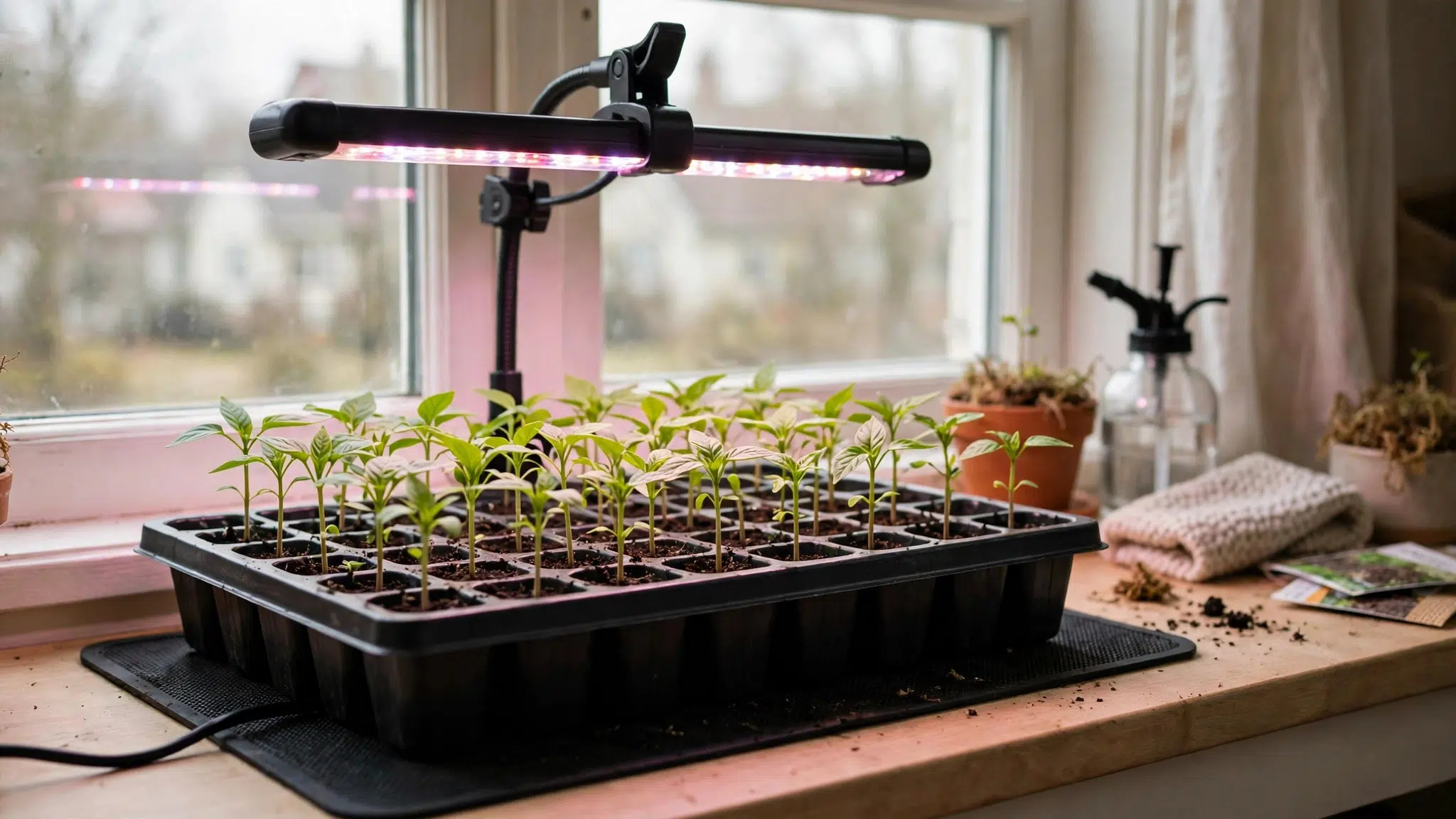
How deep to plant seeds in pots and trays is the same question as outdoors, and the answer is the same: about twice the seed’s width, because the seed carries the same fuel reserves whatever the container. Small seed like tomato or lettuce goes 1/4 inch deep in a tray, while a bean still goes about 1 inch. The loose, fine mix in trays holds moisture evenly, so cover the seed gently, press the mix down, and water from below or with a fine mist so nothing is washed deeper or left exposed.
The biggest difference indoors is the mix: seed-starting mix is far lighter and finer than garden soil, so seed sprinkled on top can sit proud of the surface and dry out before it roots. Cover the tray with a clear lid or plastic wrap until the first sprouts appear, then remove it at once so the seedlings get air and light. The University of Maryland Extension’s guide to starting vegetable seeds indoors gives the same advice, and its planting-depth rule — about twice the seed’s diameter — matches the chart above.
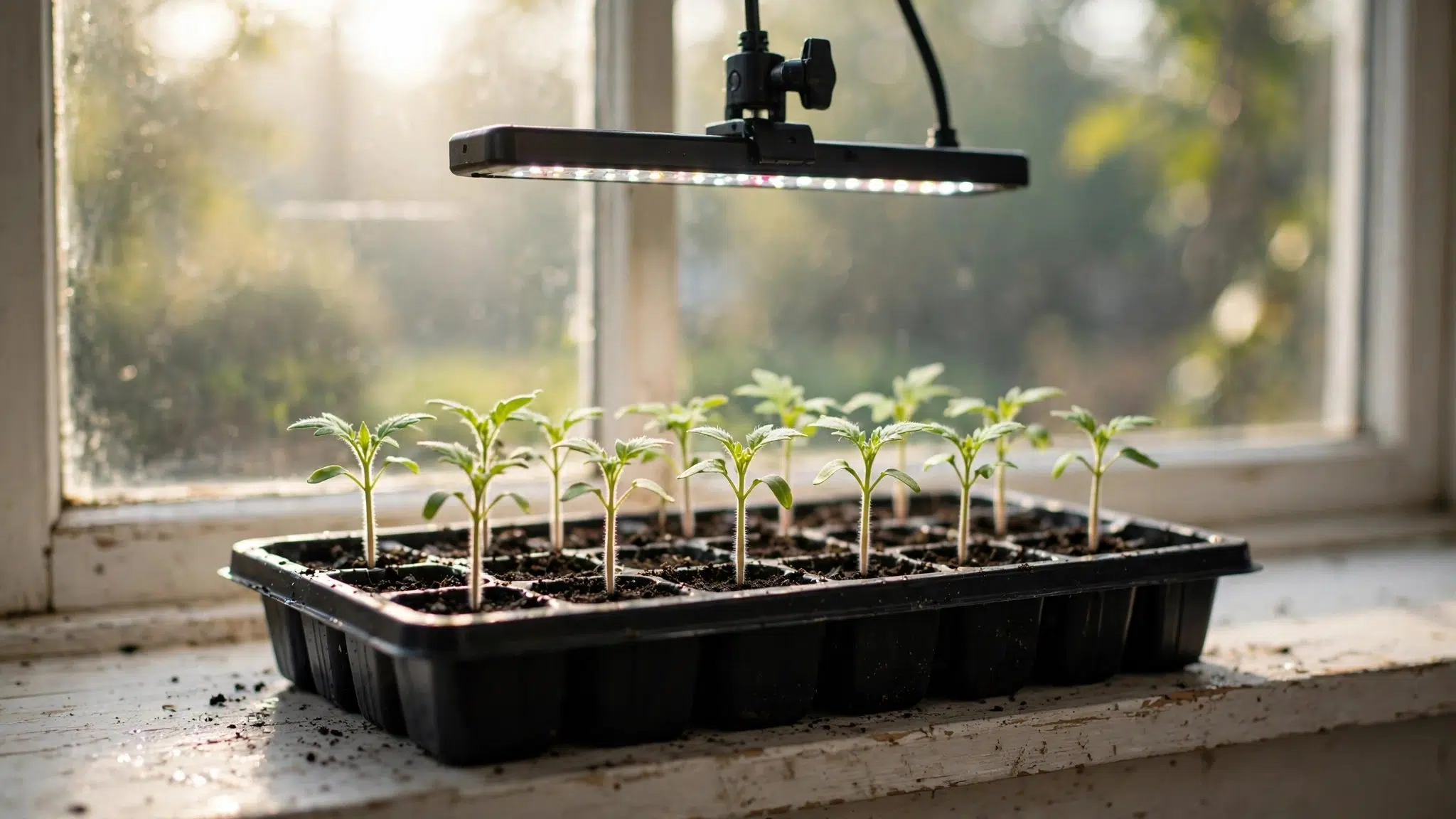
When the first true leaves appear, move the seedlings to stronger light and harden them off before planting out. A plant that was sown too deep will still be struggling, while a correctly sown one will stand up sturdy and even. If yours are pale and stretched instead, our guide to why your seedlings are leggy explains the light fix, and once you know how deep to plant seeds, check when to transplant seedlings outdoors for the timing of the move.
One last check before you sow: mark the furrow depth on your finger or a dibber, because guessing is how depth mistakes happen indoors, where the mix is so soft. Once you have measured it a few times, how deep to plant seeds stops being a puzzle — most gardeners find the two-times rule becomes second nature after a single tray of seedlings.