Why Are My Seedlings Leggy? Causes and How to Fix Them
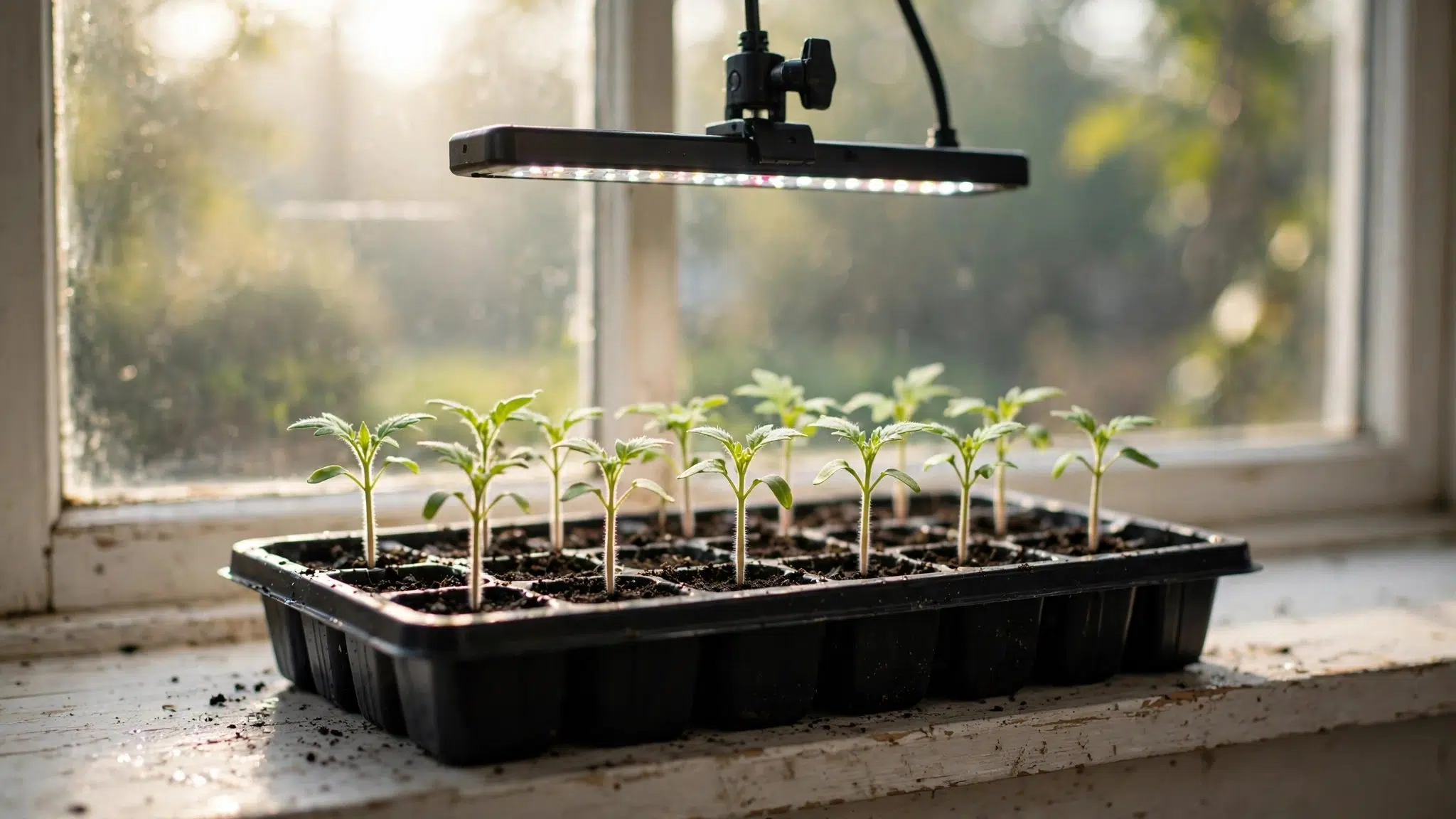
Leggy seedlings — tall, thin and floppy — appear when plants do not get enough light. The stem stretches searching for brighter conditions, growing faster than it thickens. Heat, crowding and leaving covers on too long make it worse. The real fix is strong light placed just 2–4 inches above the plants.
What “Leggy” Actually Means
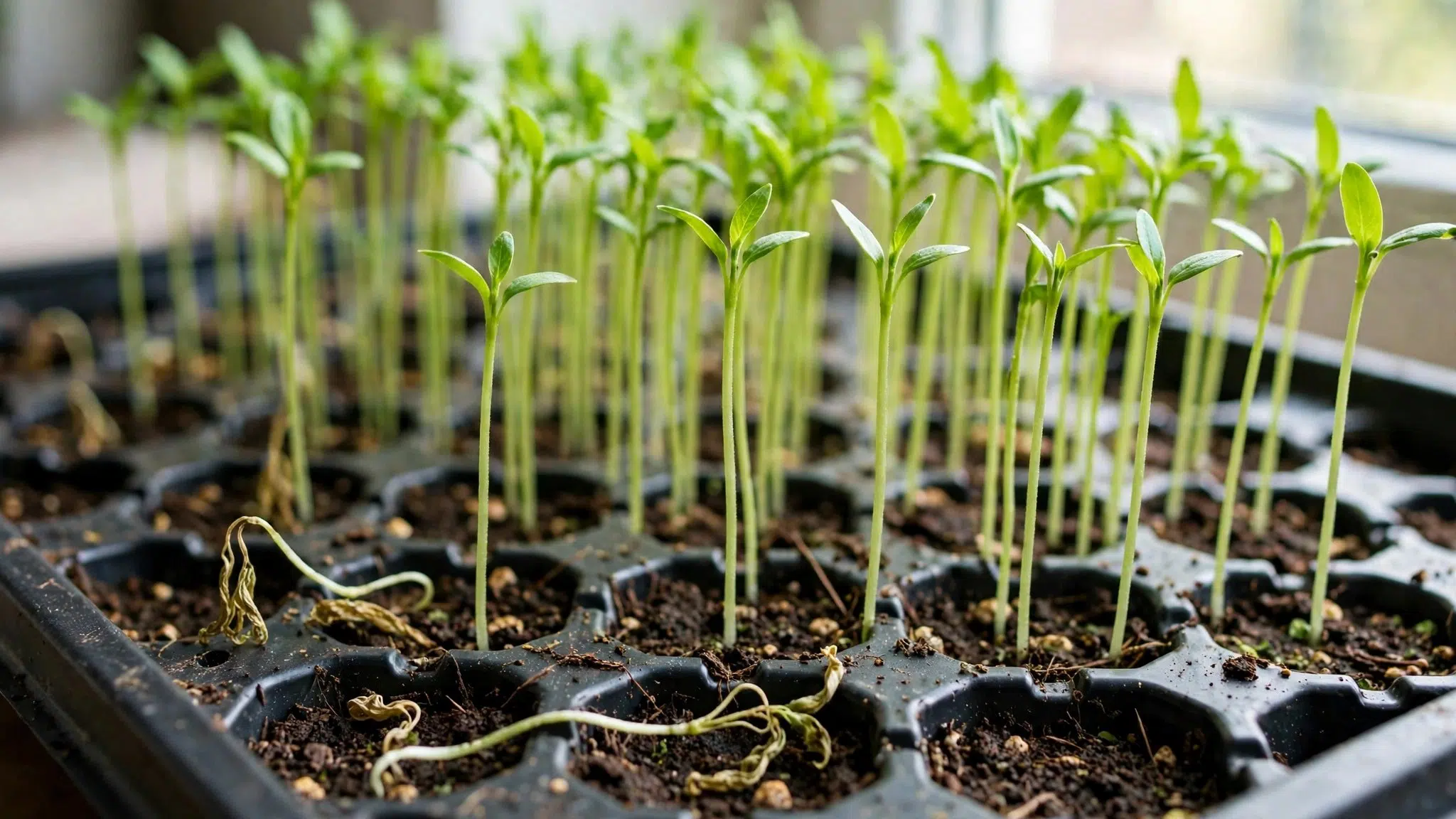
A healthy seedling is short and stocky, with a thick stem and leaves close together. A leggy seedling has a long, pale, weak stem with wide gaps between leaf sets, and it often leans hard in one direction — toward the nearest window. The plant is not growing well; it is growing desperately. In low light, plant hormones push the stem to elongate quickly, a survival strategy for escaping shade in nature. Indoors, there is no brighter spot to escape to, so the seedling just gets weaker.
Legginess is the single most common problem with indoor seed starting, and it usually begins within 48 hours of germination. That is why the guidance in our guide to starting seeds indoors stresses one moment above all others: the instant seedlings emerge, covers come off and lights go on.
The 4 Causes of Leggy Seedlings
| Cause | What happens | Fix |
|---|---|---|
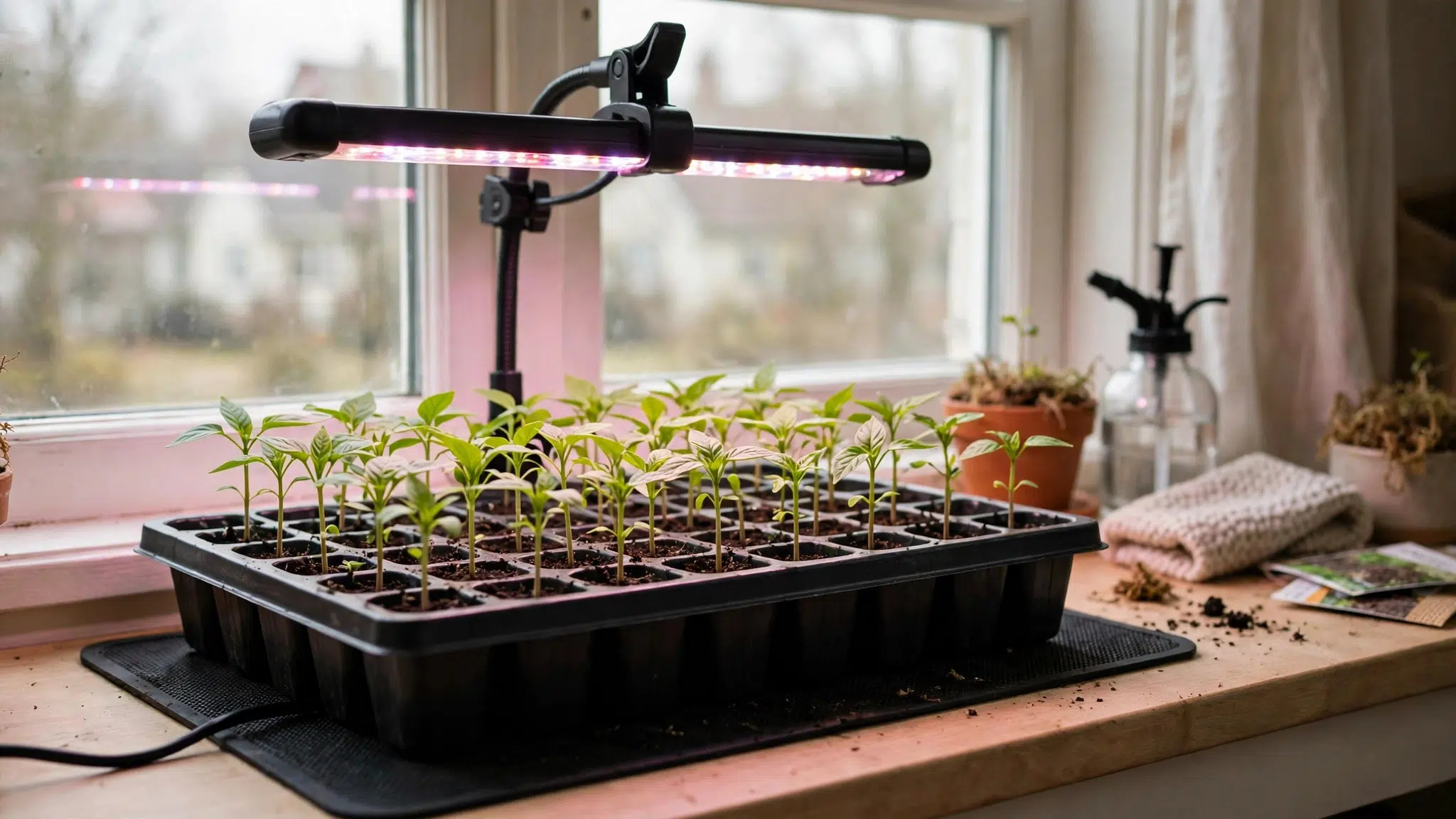
| Light too weak or too far away | Stems stretch toward the light source | Hang lights 2–4 inches above seedlings, 14–16 hours a day |
| Warm room after germination | Heat speeds stem growth while light stays low | Move seedlings to a cooler spot, 60–65°F, after sprouting |
| Crowding | Seedlings shade each other and compete upward | Thin or pot on promptly; give each plant space and airflow |
| Cover left on too long | Seedlings emerge into dim, humid air and stretch fast | Remove domes and lids at the first sign of green |
Light deserves the most attention. A bright-looking windowsill delivers a fraction of the light of a cloudy day outdoors, and far less than a basic LED shop light hung close to the plants. Distance matters as much as brightness: light intensity falls off sharply, so a lamp 2 feet above a tray may as well be in another room. University extension services, including Penn State Extension, give the same practical advice — fluorescent or LED fixtures suspended just a few inches above seedlings, raised as the plants grow.
Heat is the accomplice gardeners miss. The warmth that helps seeds germinate — heat mats, warm rooms — becomes harmful once they sprout. A seedling in a 75°F room under weak light stretches far faster than one in a 62°F room under the same light. Take heat mats away at germination and grow seedlings cool.
Can You Save Leggy Seedlings?
Often, yes — depending on the crop and how far gone they are.
Act on the cause first. Move the tray under strong, close light immediately and add a gentle fan. A small fan on low for a few hours a day makes stems flex, and flexed stems grow thicker — gardeners call it thigmomorphogenesis, but “a breeze builds strong stems” is all you need to remember. New growth from this point will be compact and normal.
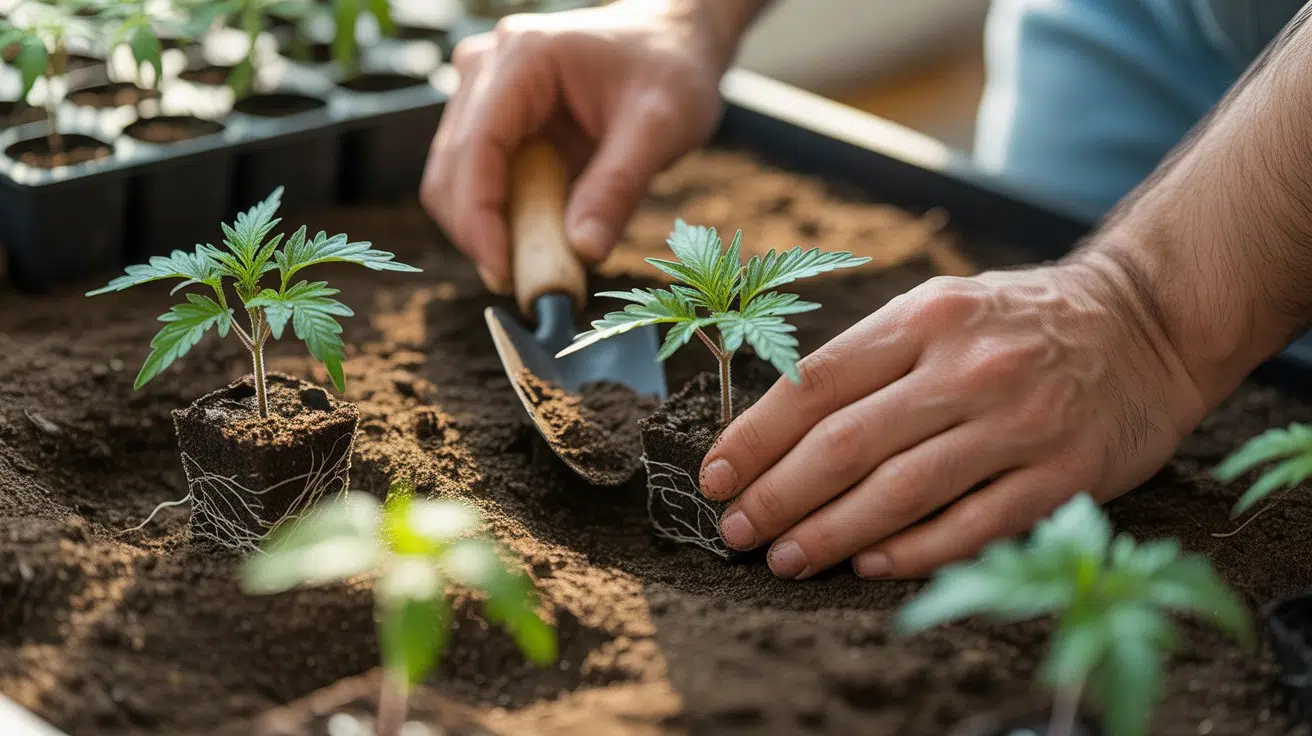
Tomatoes are the great exception. A leggy tomato can be rescued completely. When you pot it on or transplant it, bury the stem deeply — up to the first true leaves. Tomatoes root all along their buried stems, so a stretched seedling becomes a normal, well-rooted plant.
Most other crops cannot be buried. Peppers, cucumbers, lettuce and brassicas do not root reliably from their stems, and burying them invites rot. For these, support the seedlings with light and airflow, transplant them at the normal depth, and accept slightly weaker plants — or re-sow. Re-sowing is honestly the better choice for fast crops like cucumbers and lettuce: a fresh, well-lit batch overtakes a rescued leggy batch within two weeks.
The point of no return. If a seedling has collapsed, has a stem pinched thin at the base, or cannot stand even with support, it will not recover. A pinched, water-soaked stem base is usually damping off rather than simple legginess — our guide to damping off in seedlings explains how to tell the difference and stop it spreading to the rest of the tray.
Preventing Leggy Seedlings Next Time
- Sow less early. A seedling started at the right time spends fewer weeks indoors stretching for light it cannot find.
- Set lights up before you sow. The tray should go under lights the day seeds are sown, not days after they sprout.
- Keep lights 2–4 inches above the leaves and raise them as plants grow. Use chains, adjustable hangers, or stacks of books under the tray.
- Run lights 14–16 hours a day on a cheap timer.
- Remove covers at first green and switch off heat mats at germination.
- Grow cool after sprouting — 60–65°F is ideal for most vegetables.
- Brush or blow seedlings gently daily if you have no fan; even light mechanical movement thickens stems.
- Thin promptly. One strong seedling per cell beats three weak ones competing for the same light.
These steps work because they copy what happens outdoors: full-day light from directly overhead, cool spring air, and constant gentle movement. Get the basics of covering, warmth and timing right and even a first-time seed starter can produce stocky plants — our overview of how to germinate seeds walks through that first week in detail.
Frequently Asked Questions
Why are my seedlings leggy even on a sunny windowsill?
Because window light is weaker than it looks and comes from one side, so seedlings stretch toward it. Glass filters some light, days are still short in early spring, and the tray may sit a foot or more from the glass. A simple LED light hung a few inches overhead fixes what a windowsill cannot.
Can leggy seedlings recover?
The stretched stem never shortens, but with strong light the new growth becomes compact and healthy. Tomatoes can be fully rescued by burying the stem at transplanting. Badly stretched seedlings of fast crops are usually better re-sown.
How close should grow lights be to seedlings?
Keep LED or fluorescent lights 2–4 inches above the tops of the seedlings and raise them as the plants grow. Lights hung a foot or more away are the most common hidden cause of legginess.
Does a fan really help seedlings?
Yes. Gentle air movement makes stems sway, and that movement triggers the plant to grow a thicker, stronger stem. Run a small fan on low nearby for a few hours a day — not blowing directly and constantly, just moving the air.
Should I pinch back leggy seedlings?
No. Pinching removes the growing tip and usually weakens an already struggling plant. Fix the light instead, support the plant if needed, and bury the stem only for tomatoes, which root along it.
Leggy Seedlings by Crop: Tomatoes, Peppers and Lettuce
Leggy seedlings are not one problem for every crop, because each type reacts differently to stretching. Tomatoes are the forgiving exception: bury a leggy tomato stem up to its first true leaves when you pot it on, and it will grow roots all along the buried stem. Peppers, cucumbers, lettuce and brassicas cannot do that — their stems do not root, so burying them only invites rot. For these crops, prevention is the only fix, and it starts with light.
Fast-growing crops stretch hardest. Lettuce, cucumbers and squash go from compact to floppy in a day or two under weak light, while slow growers like peppers and eggplant give you a little more time to fix the setup. Penn State Extension’s guide to sowing annual seeds makes the same point from the other side — indoor seedlings can come out weak from lack of light, and artificial light on a timer is the fix when windowsills are not enough.
Whatever the crop, the recovery test is the same: give leggy seedlings strong light for a week and watch the new growth — if it comes in compact and stocky, the plant is worth keeping. If it stays pale and flops over, compost it and sow again. Our guide to how deep to plant seeds also helps, because seed sown at the wrong depth emerges weak, and when the weather turns, check when to transplant seedlings outdoors before moving anything outside.