When to Start Kale Seeds Indoors: Zone-by-Zone Timing Guide
When to start kale seeds indoors is 4 to 6 weeks before your last spring frost. That timing gives seedlings time to grow strong indoors, then move outside 2 to 4 weeks before the last frost, when kale can handle light frost. For a fall crop, start seeds indoors 10 to 12 weeks before your first fall frost.
Why Start Kale Indoors?
Kale is a cool-season leafy green, so it grows best in cool weather, not summer heat. Starting seeds indoors gives you a head start on a short spring and a stronger fall crop. Seedlings are protected from cold snaps, heavy rain, birds, and slugs while they are small. You also control light, water, and temperature, so more seeds germinate and fewer seedlings are lost. Kale germinates best at about 65 to 75 degrees Fahrenheit and grows steadily at 60 to 65 degrees once it is up.
When to Start Kale Seeds Indoors by Zone
Your last spring frost date is the anchor for all kale timing. Count back 4 to 6 weeks from that date to find your indoor sowing date, then plan to transplant 2 to 4 weeks before the last frost. Kale seedlings tolerate a light frost down to about 28 degrees Fahrenheit, so they can go out earlier than tomatoes or peppers. Use the USDA Plant Hardiness Zone Map to confirm your zone, then check your local last frost date, because frost dates vary within a zone.
| USDA Zone | Last Spring Frost (approx.) | Start Kale Seeds Indoors | Transplant Outdoors |
|---|---|---|---|
| Zones 3-4 | Mid-May to early June | Early to mid-April | Mid-April to mid-May |
| Zones 5-6 | Mid-April to mid-May | Early March to early April | Late March to mid-April |
| Zones 7-8 | Late March to mid-April | Mid-February to mid-March | Early to late March |
| Zones 9-10 | Late January to February | December to January | January to February |
For a fall crop, work backward from your first fall frost. Sow kale indoors 10 to 12 weeks before that date and transplant 6 to 8 weeks before it, so plants are well established before cold weather slows growth. In warm zones, fall is often the better kale season, because plants mature in cooling weather and taste sweeter after a light frost.
How to Start Kale Seeds Indoors Step by Step
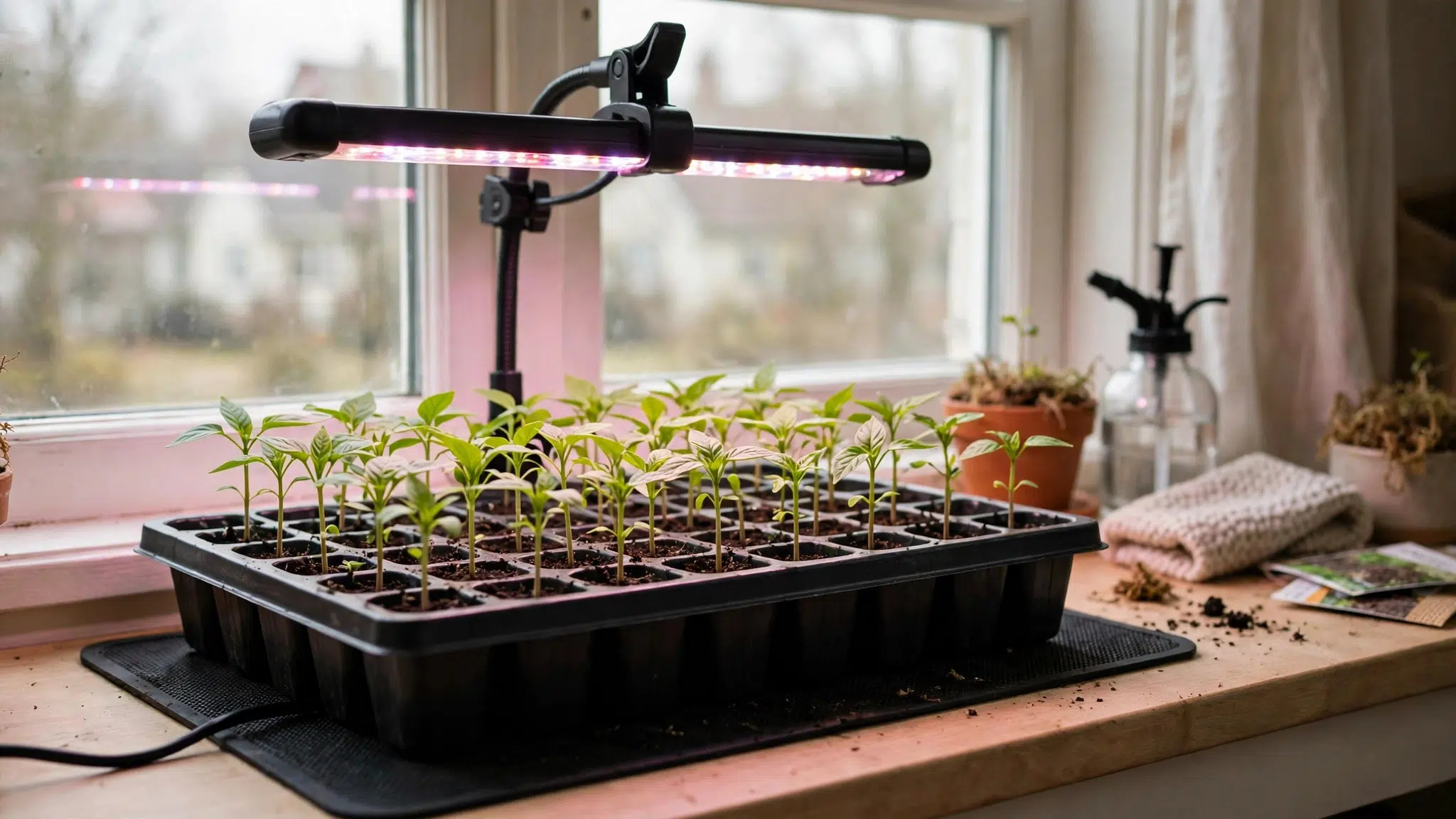
Fill 3-inch pots or cell trays with moist seed-starting mix, then sow two kale seeds per cell about one-quarter inch deep. Cover them lightly, mist the surface, and keep the mix damp but not soggy. Put the trays in a warm spot at 65 to 75 degrees Fahrenheit until seeds sprout, which usually takes 5 to 10 days. Once seedlings emerge, move them under a grow light or to a bright south-facing window, with the light 2 to 3 inches above the leaves for 14 to 16 hours a day. Thin each cell to the strongest seedling once true leaves appear, and water from the bottom when the surface feels dry. For more detail on the setup, see our guide to starting seeds indoors.
Light, Temperature, and Watering
Kale seedlings need strong light to stay short and sturdy. Weak light is the most common reason indoor kale grows tall, pale, and leggy. A simple shop light or LED grow light, kept close to the plants and raised as they grow, works better than a windowsill alone on cloudy days. Keep daytime temperatures near 60 to 65 degrees after germination, and let nights drop a few degrees cooler. Water when the top of the mix feels dry, and always let excess water drain away, because seedlings in wet, airless mix can develop damping off, a disease that makes stems collapse at the soil line. Good air circulation from a small fan also helps stems grow thick and strong. Our guide on when to start seeds indoors by zone explains how to work back from your frost dates for other crops.
Hardening Off and Transplanting Kale
Do not move kale straight from a warm room into the garden. Harden seedlings off over 7 to 10 days by setting them outside in shade for a few hours, then gradually adding sun and wind and leaving them out longer each day. Transplant on a cloudy day or in the evening, spacing plants 12 to 18 inches apart in rich, well-drained soil with full sun or light afternoon shade. Water well after planting, and mulch with straw or shredded leaves to hold moisture and keep soil cool. Kale grows best in soil with a pH near 6.0 to 7.5. For the full process, read how to harden off seedlings before your transplant day.
Common Problems When Starting Kale Indoors
Leggy seedlings usually mean too little light, so lower the light and add hours of exposure. Yellow leaves often mean overwatering, so let the mix dry between waterings and feed lightly. Seedlings that wilt and fall over at the soil line are likely suffering from damping off, which is hard to cure, so start clean trays, use fresh mix, and improve air flow. Slow germination usually means the mix was too cool, so move trays to a warmer spot or use a heat mat set near 70 degrees. University extension guidance, including the University of Minnesota Extension vegetable growing guides, recommends the same basics: start indoors a few weeks before the last frost, give seedlings strong light, and transplant while plants are young and stocky.
Sources
- University of Minnesota Extension — vegetable growing guides for cool-season greens (extension.umn.edu)
- Cornell Cooperative Extension — home vegetable gardening guidance for kale and leafy greens
- USDA Plant Hardiness Zone Map — zone and frost-date reference (planthardiness.ars.usda.gov)
Frequently Asked Questions
When to start kale seeds indoors in Zone 6?
In Zone 6, start kale seeds indoors in early March to early April, about 4 to 6 weeks before your last spring frost. Transplant seedlings outdoors 2 to 4 weeks before the last frost.
How long does kale take to germinate indoors?
Kale seeds usually germinate in 5 to 10 days at 65 to 75 degrees Fahrenheit. Cooler soil slows germination.
Can I direct sow kale instead of starting it indoors?
Yes, you can direct sow kale 2 to 4 weeks before your last spring frost, or in late summer for a fall crop.
How many kale seeds should I plant per cell?
Sow two seeds per cell or pot, then thin to the strongest seedling once true leaves appear.
What temperature is best for growing kale seedlings indoors?
Kale germinates best at 65 to 75 degrees Fahrenheit and grows best at 60 to 65 degrees after germination.
When to start kale seeds indoors for a fall crop
When to start kale seeds indoors for a fall crop is different from spring. Work back 10 to 12 weeks from your first fall frost, then sow at that date. In Zones 3 to 4 that usually means late June, in Zones 5 to 6 it is July, and in Zones 7 to 8 you can sow into August for leaves that sweeten after a light frost.
Count carefully, because fall kale needs time to grow before the cold slows it down. That is the same rule as in spring: when to start kale seeds indoors depends on your frost date, not on a calendar month, so check your local first fall frost before you sow. Sow a little earlier than you think you need, and choose a fast variety if your season is short.
If seedlings are still small when the first frost arrives, cover them with fleece for a few weeks of extra growth, rather than starting over. If you are new to fall kale, when to start kale seeds indoors is the question to get right first, because a week late can mean small plants at frost, while a week early still gives you time to thin and mulch. For the best fall leaves, keep the soil moist after transplanting and mulch well before the first hard frost.