When to Start Spinach Seeds Indoors

As an Amazon Associate I earn from qualifying purchases.
Last updated: November 2026
Spinach is a cool-season crop that does things backwards: it germinates fastest at 70°F, grows best at 50–70°F, and stops germinating when the soil gets above 75°F. Sow 4–6 weeks before your last spring frost, keep it cool, and do not give it the bottom heat that peppers and tomatoes need.
Quick Picks
Top pick — Hanaoyo 96-Cell Seed Starter Kit: best for starting a full tray of spinach seedlings at once, each in its own cell. Check price on Amazon
Runner-up — Barrina T5 Grow Lights: best for strong, stocky spinach seedlings under 14–16 hours of bright light. Check price on Amazon
Budget pick — Jiffy Seed Starting Mix: best for fine, even moisture around shallow-sown spinach seed. Check price on Amazon
When to start spinach seeds indoors? Sow 4 to 6 weeks before your last spring frost, and transplant the seedlings outside 2 to 3 weeks before that frost, once they have two or three true leaves. In most of the United States, that means sowing indoors in late February through March for spring, and again in late summer for a fall crop.
Why Spinach Timing Is Different
Spinach is a true cool-season crop. It grows best when daytime temperatures sit between 50 and 70 degrees Fahrenheit, and it bolts, or sends up a flower stalk, once sustained heat above 75 to 80 degrees arrives. That short window is why late spring sowings often bolt before forming usable leaves. Starting seeds indoors gives plants a head start while the soil outside is still too cold or too wet to work, and it protects seed from birds, heavy spring rain, and soil that crusts over after a storm. The University of Minnesota Extension notes that spinach seed germinates in soil as cool as 40 degrees, but sprouts far faster and more evenly at 60 to 70 degrees.
When to Start Spinach Seeds Indoors by Zone
Your start date depends on your last spring frost, not the calendar. Find your average last frost date, count back 4 to 6 weeks, and that is your indoor sowing window. The table below gives typical dates for each zone band, and our zone-by-zone calendar covers the same math for every crop.
| Zone | Typical last spring frost | Start spinach indoors | Transplant outside |
|---|---|---|---|
| Zones 3-4 | Late May to early June | Late March to early April | Early to mid-May |
| Zones 5-6 | Mid-April to early May | Early to mid-March | Late March to mid-April |
| Zones 7-8 | Late March to early April | Mid to late February | Early to mid-March |
| Zones 9-10 | January to February, or none | January to early February | February to early March |
For a fall crop, reverse the math: start seeds indoors 6 to 8 weeks before your first fall frost, then transplant 3 to 4 weeks before it. In warm climates, fall is often the better spinach season, because plants mature as days cool. Cornell Cooperative Extension recommends fall sowing where spring heat arrives early.
How to Start Spinach Seeds Indoors, Step by Step
Spinach is straightforward to start, and it does not need bottom heat the way peppers and tomatoes do. Fill 3-inch pots or cell trays with a fine, moist seed-starting mix and sow two seeds per cell about half an inch deep. Cover lightly and water gently, keeping the mix evenly moist but never soggy. Spinach germinates best at 60 to 70 degrees, so a cool room works fine; do not set trays on a heat mat above 75 degrees, or germination can stall.
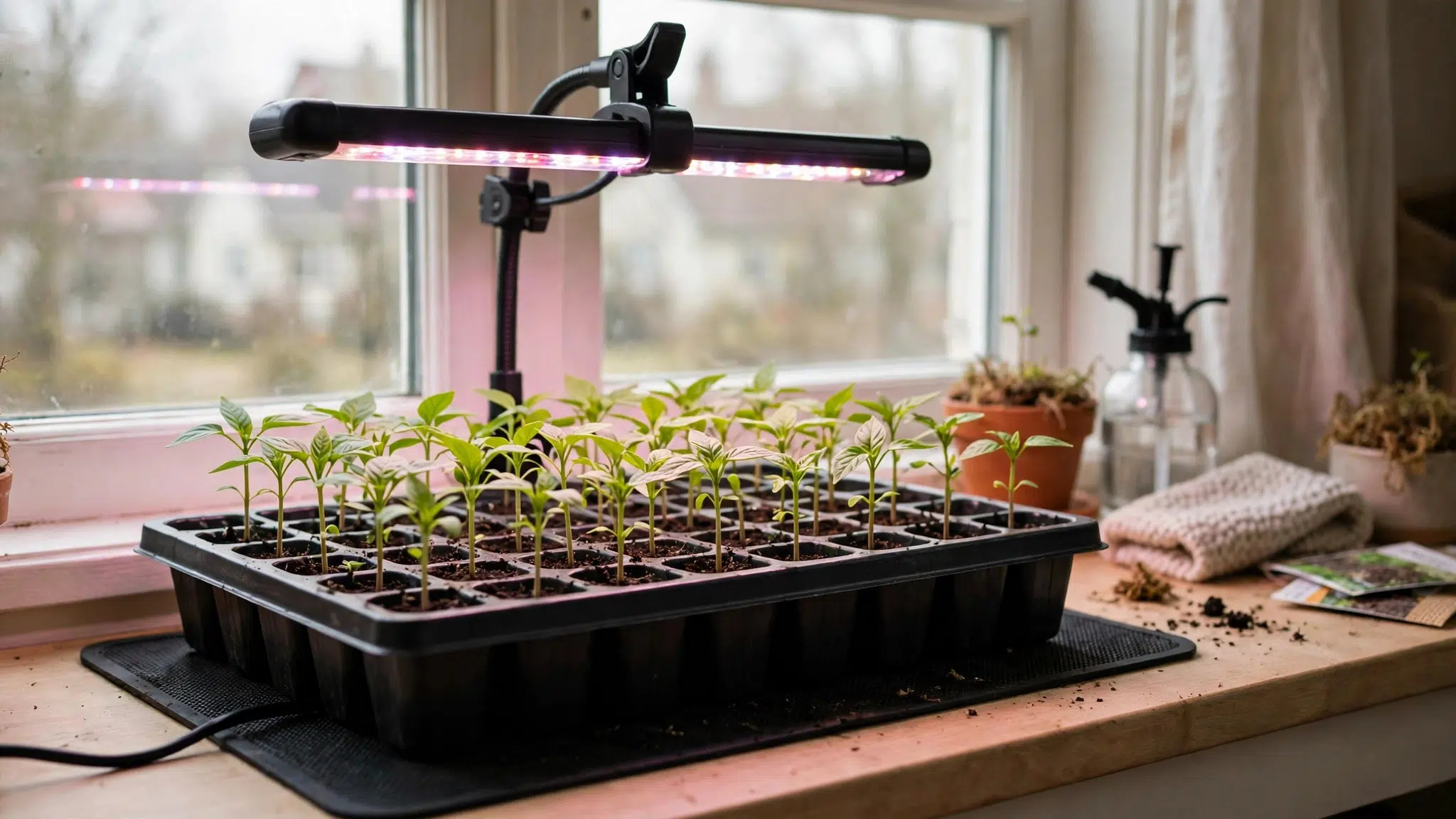
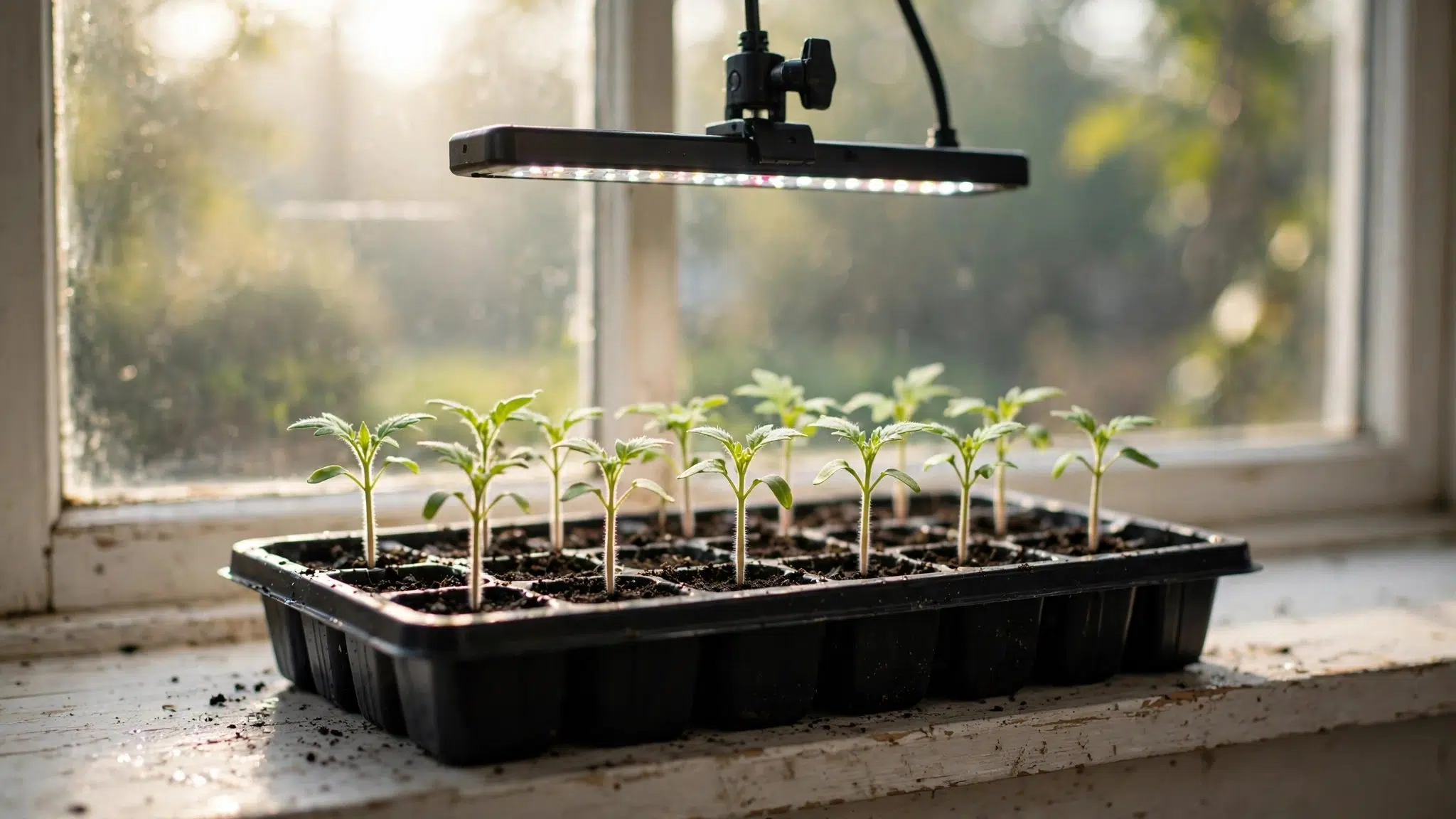
Once seedlings emerge, give them 14 to 16 hours of bright light a day from a sunny window or grow lights hung 2 to 4 inches above the leaves. Thin to one seedling per cell when the first true leaves appear and feed once, lightly, with half-strength liquid fertilizer when the second set of true leaves opens. Our guide to starting seeds indoors walks through the same setup for every vegetable.
Spinach Germination: Soil Temperature Matters
Soil temperature is the biggest factor in how fast spinach appears. At 40 degrees, seed can take three weeks to sprout; at 70 degrees, it can be up in less than a week. That gap is why a soil thermometer is worth owning, and why our seed germination temperature chart lists the ideal range for every common vegetable.
| Soil temperature | Days to sprout | What to expect |
|---|---|---|
| 40 F | About 21 days | Slow and uneven; seed may rot in wet soil |
| 50 F | About 12 days | Steady germination; fine for outdoor sowing |
| 60 F | About 7 days | Reliable indoor germination |
| 70 F | About 5 days | Fastest, most even sprouting |
| 75 F and above | Slows again | Heat can inhibit germination; keep trays cool |
Oregon State University Extension reports that spinach germination drops off sharply in warm soil.
Transplanting and Hardening Off
Move seedlings outside when they have two or three true leaves and the soil can be worked, usually 2 to 3 weeks before your last frost. Harden them off over 7 to 10 days, starting with a few hours in shade and building up to full sun and a night outdoors; our guide on how to harden off seedlings covers the day-by-day schedule. Set plants 4 to 6 inches apart in rows 12 to 18 inches apart, water them in well, and mulch lightly to keep the soil cool and moist. Spinach tolerates a light frost, so a cold snap after transplanting is rarely a disaster, but cover plants if a hard freeze below 28 degrees is forecast.
Common Mistakes to Avoid
The most common mistake is starting too late in spring, which leaves plants too small when heat arrives and pushes them to bolt before they size up. The second is sowing too deep: seed planted more than an inch down often fails to emerge. The third is keeping seedlings too warm, which produces weak, leggy plants; cool growing conditions make stocky, sturdy seedlings. Finally, do not skip hardening off, and do not crowd plants in the tray, since crowded seedlings compete for light and water.
Frequently Asked Questions
Can I direct sow spinach instead of starting indoors?
Yes. Direct sow spinach 4 to 6 weeks before your last spring frost, as soon as the soil can be worked. Indoor starting is better when spring soil stays cold and wet, when birds or slugs are a problem, or when you want an earlier harvest.
How long do spinach seeds take to germinate indoors?
Expect 5 to 14 days indoors, depending on soil temperature. At 70 degrees, sprouts usually appear in about 5 days; at 50 degrees, allow up to 12 days. Keep the mix evenly moist the whole time, since dried-out seed coats are the most common reason for slow or uneven germination.
Do spinach seedlings need grow lights?
They do best with 14 to 16 hours of strong light a day. A south-facing window can work, but seedlings stretch toward the glass and grow leggy. A simple shop light or LED grow light hung a few inches above the plants gives stockier, sturdier seedlings.
Can I grow spinach indoors all the way to harvest?
Yes, spinach is one of the best leafy greens for indoor growing. Sow in a container at least 6 inches deep, keep it in a cool spot with strong light, and harvest outer leaves as they reach 3 to 4 inches.
When to Start Spinach Seeds Indoors for a Fall Crop
When to start spinach seeds indoors for a fall crop is a different decision from spring, because you are racing the heat, not the frost. Start 6 to 8 weeks before your first fall frost, but hold the trays in the coolest spot you have — warm room temperatures slow germination, and seed sown in a 75-degree room may sit far longer than the same seed in a 60-degree one.
The other fall difference is day length. The University of Minnesota Extension notes that spinach is day-length sensitive, so spring sowings bolt as days lengthen, while a fall crop has shortening days and cool nights ahead of it — the conditions spinach likes. When to start spinach seeds indoors for fall, then, is less about the calendar and more about your first frost date: count back 6 to 8 weeks, and keep the trays watered and shaded until the first leaves appear.
Sow a second round two weeks after the first when you are growing for fall, because a hot spell can thin one batch and leave the other untouched. When to start spinach seeds indoors for that second sowing is simply two weeks after the first, and it stretches the harvest well past the first frost. Once the plants are out, the same timing in our guide to when to transplant seedlings outdoors still applies, and if your trays come up patchy, check how deep to plant seeds, because spinach buried more than half an inch deep often fails to emerge.
One last tip: mark the frost date on a calendar the moment you sow, because the gap between a full fall harvest and a frozen tray is only a week or two. Knowing when to start spinach seeds indoors is what buys that margin — so sow in time, and let the cool autumn air do the rest.
Researched Picks: What to Buy for Starting Spinach Seeds Indoors
Spinach needs a cool, bright start, not the warm bench that peppers and tomatoes need. These supplies match that job: cells for a full sowing, bright light for stocky seedlings, and a fine mix for shallow-sown seed. Note that this post says spinach does not need bottom heat — so no heat mat is picked here.
1. Hanaoyo 96-Cell Seed Starter Kit — Best Overall
A set of cell trays with clear humidity domes and drainage trays, giving each spinach seed its own cell so roots are not disturbed at potting on. It suits the sowing method in this guide — two seeds per cell, thinned to the strongest — and it keeps a whole spring and fall sowing in one manageable tray.
Key specs: 96 cells in total; clear domes to hold humidity during germination; base trays to catch water and let trays be moved as one unit.
| ✓ Pros | ✗ Cons |
|---|---|
|
|
Best for: growers sowing spinach for spring and fall at once. Who should skip: anyone who only needs a dozen plants — a smaller kit will do.
2. Barrina T5 Grow Lights — Best for Strong, Stocky Seedlings
Linkable full-spectrum LED tubes that hang 2–4 in above the tray and give seedlings 14–16 hours of bright light a day. Spinach grows best cool, at 50–70°F, and bright light close to the leaves is what keeps it stocky instead of pale and stretched.
Key specs: T5 LED tubes, full spectrum; linkable design, so several tubes can run from one outlet; made to hang above seed trays on a shelf or rack.
| ✓ Pros | ✗ Cons |
|---|---|
|
|
Best for: windowsill growers and anyone whose spinach seedlings have gone leggy before. Who should skip: growers with a bright greenhouse or a sunny, unshaded growing area.
3. Jiffy Seed Starting Mix — Best for Shallow-Sown Seed
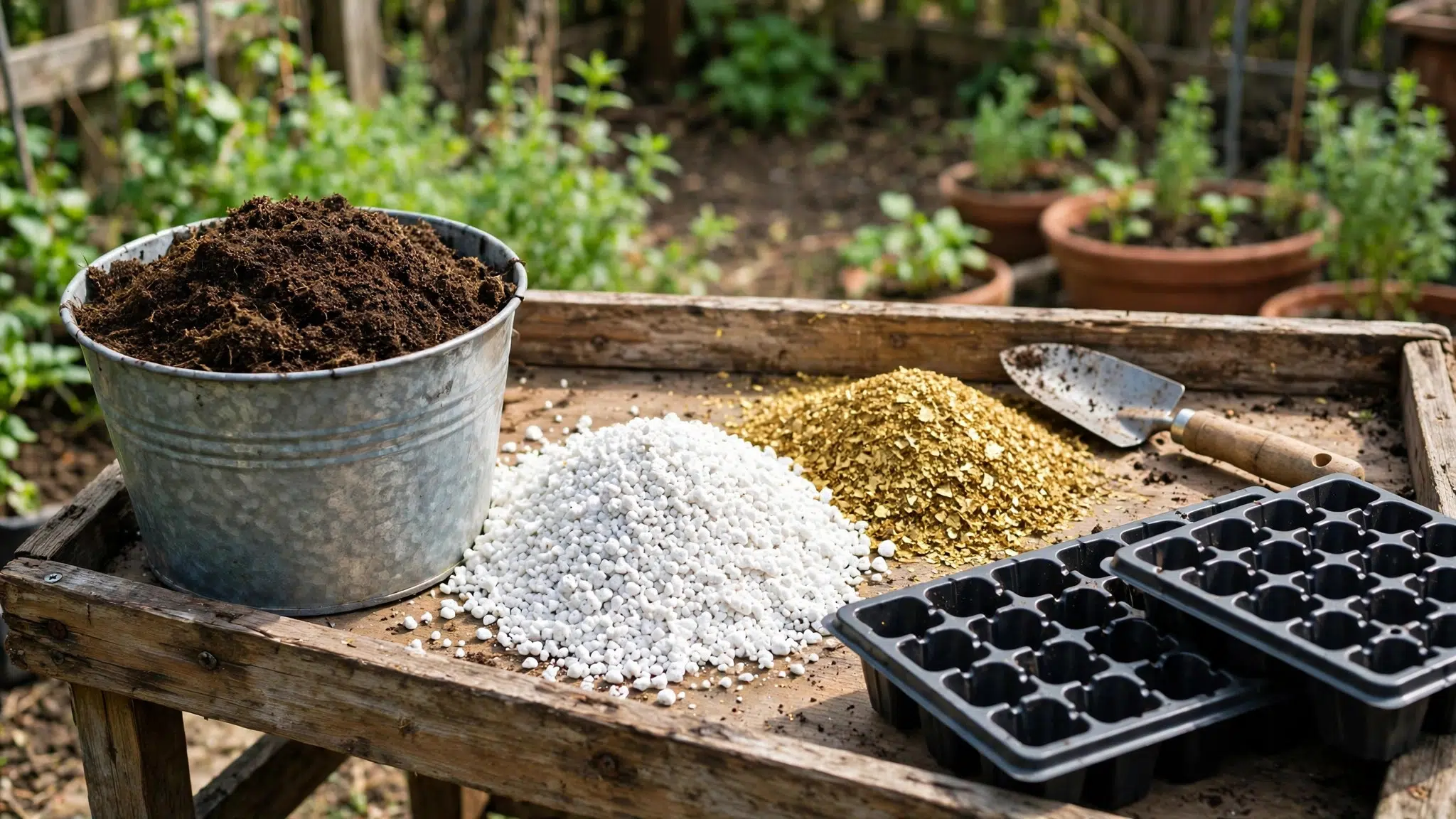
A fine-textured seed starting mix based on sphagnum peat moss and vermiculite, made for sowing seeds rather than potting on plants. Spinach seed is buried no more than ½ in deep, so a fine mix that holds moisture evenly around the seed matters more than it does for large, deep-sown seed.
Key specs: Fine-textured mix for seed starting; based on sphagnum peat moss and vermiculite; use in cells or trays, moistened before sowing.
| ✓ Pros | ✗ Cons |
|---|---|
|
|
Best for: small and shallow-sown seed, and anyone whose mix has dried out or crusted over before. Who should skip: growers potting on established seedlings — a general potting mix is better there.
How We Chose
We chose supplies that match what this guide says spinach needs: cool soil, a fine mix in individual cells, and bright light close to the leaves — and we deliberately left out a heat mat, because this post says spinach does not need bottom heat and heat above 75°F stops it germinating. We compared manufacturer specifications, tray sizes, light type and coverage, and how each product fits a normal indoor sowing setup, and we left out anything that depended on a price, a star rating, or a claim we could not check. We did not test these products ourselves; the picks are based on published specifications and on how well each one fits the job described in this post.
Final Verdict
If you buy one thing, make it the Hanaoyo 96-Cell Seed Starter Kit. Spinach needs a cool, bright start in separate cells, not a warm bench, and the kit gives you that for a full spring and fall sowing. Add the Barrina lights if your seedlings have ever gone leggy, and the Jiffy mix if your current mix dries out or leaves shallow seed sitting in air pockets.