Best Seed Starting Supplies for Potting Up Seedlings
As an Amazon Associate I earn from qualifying purchases.
Last updated: November 2026
When to move seedlings to bigger pots? Pot them up when they have two sets of true leaves, roots are circling the bottom of the cell, or the mix dries out within a day of watering. Potting up gives the roots room to grow, fresh nutrients, and a sturdier stem — without the shock of moving outside too soon. The best seed starting supplies make that move easier: roomy cells, a sturdy base tray, and a dome to hold in humidity while roots settle.
⚡ Quick Picks
- Best for big batches: Hanaoyo Self-Watering Seed Starter Tray — 96 cells and a self-watering base, so a whole tray of seedlings can be potted up in one go.
- Best budget 5-pack: Bonviee Seed Starter Trays — five trays with domes and base trays, an affordable way to pot up several batches at once.
- Best sturdy reusable set: Bootstrap Farmer Humidity Dome — five heavy-duty domes that fit standard 1020 trays and hold humidity after potting up.
Researched Picks: Best Seed Starting Trays for Potting Up
Our picks below are based on the manufacturers’ listed specifications, cell counts, and pack sizes — not hands-on testing. We compared them on how well they suit potting up: room for roots, a sturdy tray that survives being moved, and a dome or watering base that keeps the mix evenly moist after the move. Prices and availability change, so check the current listing before you buy.
1. Hanaoyo Self-Watering Seed Starter Tray — Best for Big Batches
Hanaoyo Self-Watering Seed Starter Tray — 96 cells, self-watering base tray. One tray covers a whole sowing of tomatoes, peppers, or flowers, so you can pot up a large batch without juggling several small kits.
| ✓ Pros | ✗ Cons |
|---|---|
|
|
Best for: Gardeners starting a big batch of seedlings who want to pot up a whole tray at once.
2. Bonviee Seed Starter Trays — Best Budget 5-Pack
Bonviee Seed Starter Trays — five trays with humidity domes and base trays. The 5-pack keeps the cost per tray low, which suits gardeners who pot up several batches through the season.
| ✓ Pros | ✗ Cons |
|---|---|
|
|
Best for: Gardeners on a budget who pot up several batches and want a dome on every tray.
3. Bootstrap Farmer Humidity Dome — Best Sturdy Reusable Set
Bootstrap Farmer Humidity Dome — five humidity domes, sized for standard 1020 trays. The domes are the heavy-duty part of the setup: they hold humidity after potting up and can be reused season after season.
| ✓ Pros | ✗ Cons |
|---|---|
|
|
Best for: Gardeners who already own 1020 trays and want sturdy, reusable domes for potting up.
How We Chose
We chose these trays by comparing the manufacturers’ listed specifications — cell count, pack size, tray and dome materials, and whether a dome or watering base is included — against what potting up actually needs: room for roots, a tray that can be moved without bending, and humidity control while roots settle. We did not test these products ourselves, and we did not use customer reviews or Amazon product descriptions as evidence. Check the current listing for the latest specifications before you buy.
What potting up means — and why it matters
Potting up — also called pricking out — means moving a seedling from the small cell or tray where it germinated into a larger container, well before it goes outside. If you are new to starting seeds indoors, potting up is the step between germination and the garden.
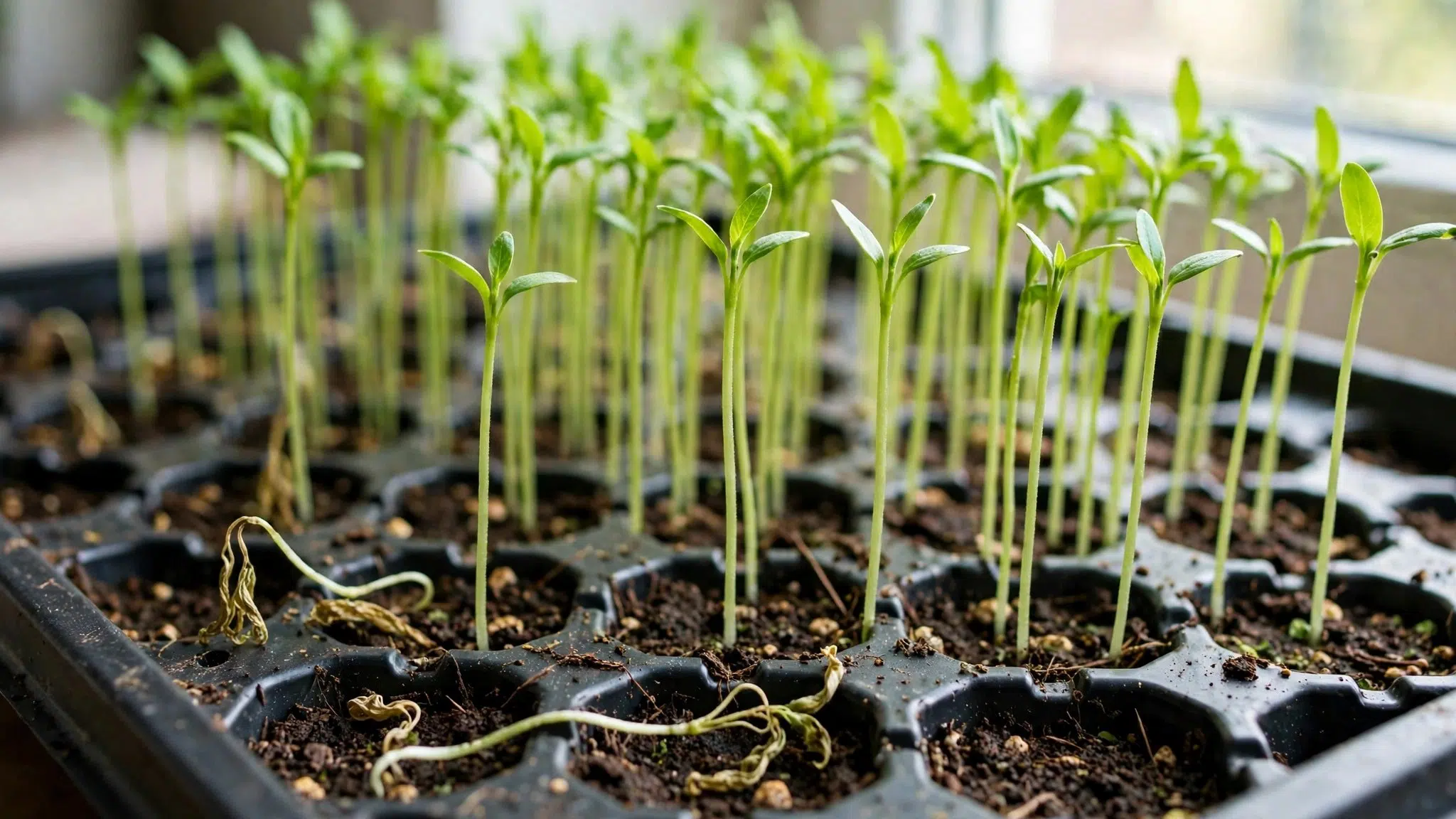
The University of Maryland Extension warns that a common mistake is leaving seedlings in the flat too long, where they become root-bound and stunted. When roots run out of room, the plant stops growing — even if you keep watering and feeding it.
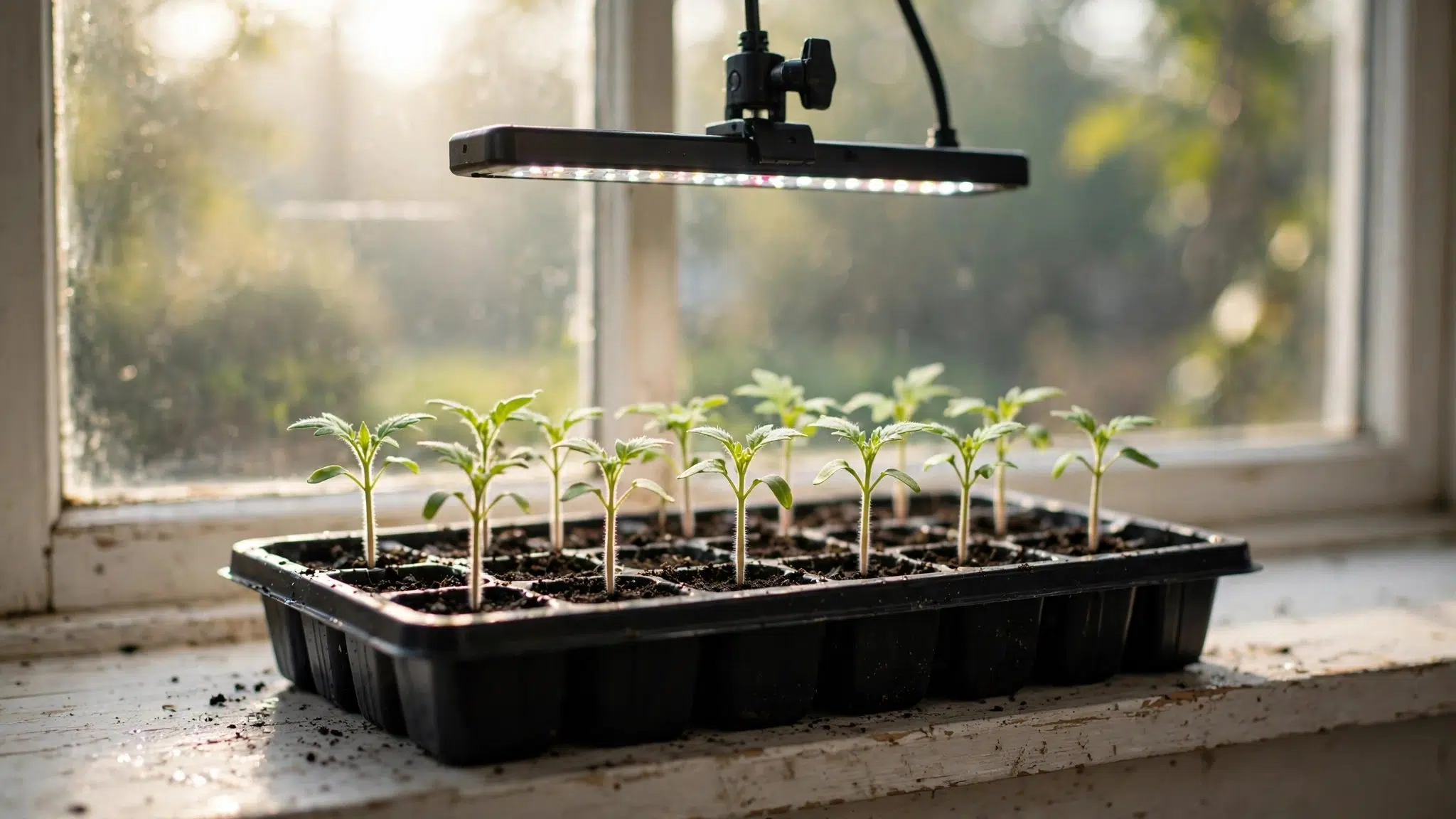
The seedling stays indoors under lights, just in a bigger pot with fresh mix, so it can keep growing until the weather is warm enough to harden off and move outside.
When to move seedlings to bigger pots: 5 signs to watch
Do not wait for a calendar date — watch the plant. Any one of these signs means it is time to pot up, even if the seed packet says to wait another week.
- Two sets of true leaves. The seed leaves (cotyledons) feed the sprout, but once the plant has two sets of true leaves it is ready for more room and more nutrients.
- Roots circle the bottom or poke out of the drainage holes. Lift the cell and look underneath — circling roots mean the plant has outgrown its home.
- The mix dries out within a day of watering. A seedling that needs water every morning has outgrown its soil volume.
- Growth stalls or lower leaves yellow. When nutrients run out, the plant slows down and the oldest leaves fade first.
- The seedling is top-heavy and flops over. A tall stem on a small root ball cannot support itself — give it a bigger base.
How to pot up seedlings step by step
- Water first. Water seedlings an hour before, so the mix holds together and the roots slide out cleanly.
- Prepare the new pot. Fill a pot 1 to 2 inches wider than the old cell with moist seed-starting mix — the University of Minnesota Extension recommends transplanting seedlings that outgrow cell packs into containers 1 to 2 inches wider in diameter.
- Lift by the leaves. Ease the seedling out with a spoon or plant tag under the root ball, holding it by a leaf — never pull by the stem.
- Set it at the same depth. Place the root ball in the hole so the soil line sits at the same level it grew at — except tomatoes, which can go deeper.
- Fill and firm gently. Spoon mix around the roots, press lightly to remove air pockets, and leave a little space at the top for watering.
- Water in and rest. Water until it drains from the bottom, then keep the plant in bright, indirect light while it settles in.
What size pot should you choose?
Match the pot to the plant’s appetite. Big, hungry crops need a bigger jump than small herbs, and a pot that is too large holds wet mix around small roots. See best containers for starting seeds indoors for more on choosing the right size.
| Crop | Starting cell | Pot up to |
|---|---|---|
| Tomatoes | 72-cell | 3 to 4 inch pot |
| Peppers | 72-cell | 3 to 4 inch pot |
| Eggplant | 72-cell | 3 to 4 inch pot |
| Cucumbers | 36-cell | 3 to 4 inch pot |
| Zucchini | 36-cell | 4 inch pot |
| Lettuce | 128-cell | 2 to 3 inch pot |
What happens if you wait too long?
Wait too long and the seedling becomes root-bound: roots circle the pot, water runs straight through, and growth stalls. Pot up as soon as you see the signs above, and most seedlings recover within a few days.
Mistakes to avoid when potting up
- Burying the stem. Set the seedling at the same depth it grew at — except tomatoes, which can be buried deeper to grow extra roots.
- Handling seedlings by the stem. Stems crush easily; always lift by a leaf or the root ball.
Frequently Asked Questions
How big should the new pot be?
Go up just 1 to 2 inches in diameter — the University of Minnesota Extension recommends transplanting seedlings that outgrow cell packs into containers 1 to 2 inches wider in diameter.
Can I pot up seedlings more than once?
Yes. Tomatoes are often potted up twice — from a cell to a 3-inch pot, then to a 4-inch pot — because they grow fast and benefit from the extra root room.
Do all seedlings need potting up?
No. Fast growers sown close to transplant time may go straight from cell to garden, and root crops such as carrots should not be potted up at all — sow them where they will grow.
Should I bury tomato seedlings deeper when potting up?
Yes — tomatoes are the exception. They grow roots all along a buried stem, so you can set a leggy tomato seedling deeper, up to its first leaves, and it will come out stronger.
How long after potting up can seedlings go outside?
Give potted-up seedlings at least a few days to settle, then harden them off for 7 to 10 days before moving them outside for good.
Final Verdict
If you pot up a lot of seedlings at once, start with the Hanaoyo 96-cell tray — it covers a whole batch in one tray. If you want the cheapest way to cover several batches, the Bonviee 5-pack is the better value. And if you already own 1020 trays, the Bootstrap Farmer domes are the sturdy, reusable choice. Whichever you choose, pot up as soon as you see two sets of true leaves or circling roots, keep the seedlings under good grow lights, and your seedlings will keep growing strong.
Sources
- University of Maryland Extension — Starting Vegetable Seeds Indoors
- University of Minnesota Extension — Starting seeds indoors