Best Seed Starting Supplies for Seeds That Need Darkness to Germinate

As an Amazon Associate I earn from qualifying purchases.
Last updated: November 2026
Do seeds need darkness to germinate? Some do, but most do not. A few seeds — including onion, calendula, and pansy — germinate best in darkness, while others, like lettuce and petunia, need light, and most germinate either way. The rule is: sow light-needing seeds on the surface, cover dark-needing seeds, and give the rest a thin covering of mix. The best seed starting supplies for dark-germinating seeds are simple: a heat mat to keep the mix warm under cover, a soil thermometer to check it, and grow lights ready for the moment seedlings appear.
⚡ Quick Picks
- Best for warmth under cover: VIVOSUN Seedling Heat Mat + Digital Thermostat Combo — a heat mat with a digital thermostat that keeps the soil warm while the tray stays dark.
- Best for checking soil: Taylor Soil Thermometer — a simple dial thermometer that tells you the mix is warm enough to sow.
- Best for light after sprouting: Barrina T5 2ft Grow Lights (8-pack) — bright light for seedlings the moment the covers come off.
Researched Picks: Best Seed Starting Supplies for Seeds That Need Darkness
Our picks below are based on the manufacturers’ listed specifications, pack sizes, and included controls — not hands-on testing. We compared them on what dark-germinating seeds actually need: steady warmth under cover, a way to check soil temperature without disturbing the seeds, and lights ready the moment seedlings appear. Prices and availability change, so check the current listing before you buy.
1. VIVOSUN Seedling Heat Mat + Digital Thermostat Combo — Best for Warmth Under Cover
VIVOSUN Seedling Heat Mat + Digital Thermostat Combo — seedling heat mat with a digital thermostat. The mat warms the mix from below while the thermostat holds the temperature steady, so a covered tray stays warm and dark at the same time.
| ✓ Pros | ✗ Cons |
|---|---|
|
|
Best for: Gardeners germinating dark-needing seeds in a covered tray who want steady warmth without guessing.
2. Taylor Soil Thermometer — Best for Checking Soil Temperature
Taylor Soil Thermometer — dial soil thermometer with a probe. It tells you the actual temperature of the mix, not the air in the room, so you can sow only when the soil is warm enough.
| ✓ Pros | ✗ Cons |
|---|---|
|
|
Best for: Gardeners who want a quick, cheap check that the mix is warm enough before sowing dark-needing seeds.
3. Barrina T5 2ft Grow Lights (8-pack) — Best for Light After Germination
Barrina T5 2ft Grow Lights (8-pack) — eight 2ft T5 grow lights. Dark-needing seeds need darkness to sprout, but the moment green shoots show they need bright light — this pack covers several trays at once.
| ✓ Pros | ✗ Cons |
|---|---|
|
|
Best for: Gardeners with several trays who want bright light ready the moment dark-needing seeds sprout.
How We Chose
We chose these supplies by comparing the manufacturers’ listed specifications — thermostat control and mat size, thermometer type and probe, and light size and pack size — against what dark-germinating seeds need: steady warmth under cover, a way to check soil temperature without disturbing the seeds, and lights ready the moment covers come off. We did not test these products ourselves, and we did not use customer reviews or Amazon product descriptions as evidence. Check the current listing for the latest specifications before you buy.
Why do seeds need darkness to germinate?
Seeds read light as information about where they are. A seed that germinates on the soil surface risks drying out before its root can reach moisture, so some species evolved to stay dormant until they are safely buried — darkness tells them they are deep enough. These are usually larger seeds with food reserves big enough to push a shoot up through the soil, such as onion, sweet pea, and delphinium. For them, light means “you are exposed,” and germination stalls or fails.
The University of Minnesota Extension puts it plainly in its guide to starting seeds indoors: some seeds need light to germinate and should be sown on the surface, while others need darkness — and for those, you should cover them with soil.
Read the packet before you sow
Seed packets tell you what each variety needs, and the wording is consistent once you know it. “Needs darkness” or “Cover seed” or a sowing depth means the seed wants darkness, so bury it to the depth given. “Needs light” or “Sow on surface” means the opposite — press the seed onto the mix and leave it uncovered. When in doubt, check how deep to plant seeds for the depth each crop prefers.
Seeds that need darkness vs. seeds that need light
Only a minority of common garden seeds need darkness — most either need light or do not care. The table below covers the common ones.
| Seed | Needs | How to sow |
|---|---|---|
| Onion | Darkness | Sow 1/4 inch deep, cover tray |
| Leek | Darkness | Sow 1/4 inch deep, cover tray |
| Calendula | Darkness | Sow 1/4 inch deep, cover tray |
| Pansy | Darkness | Sow just below surface, cover tray |
| Phlox (annual) | Darkness | Sow just below surface, cover tray |
| Delphinium | Darkness | Sow 1/8 inch deep, cover tray |
| Larkspur | Darkness | Sow 1/8 inch deep, cover tray |
| Sweet pea | Darkness | Sow 1/2 inch deep, cover tray |
| Lettuce | Light | Sow on surface, do not cover |
| Petunia | Light | Sow on surface, do not cover |
| Impatiens | Light | Sow on surface, do not cover |
| Snapdragon | Light | Sow on surface, press in lightly |
| Nicotiana | Light | Sow on surface, do not cover |
| Begonia | Light | Sow on surface, do not cover |
| Coleus | Light | Sow on surface, press in lightly |
| Poppy | Light | Sow on surface, do not cover |
The third group — the biggest one — does not care. Tomato, pepper, bean, pea, cucumber, squash, radish, and most other common vegetables germinate in light or dark. Sow them at the packet depth, cover lightly, and keep the mix moist.
How this differs from “Do seeds need light to germinate?”
This post is the mirror image of our guide to do seeds need light to germinate. That post covers the light-needing side in detail — the seeds that must be sown on the surface, and what happens when they are buried.
How to germinate dark-needing seeds step by step
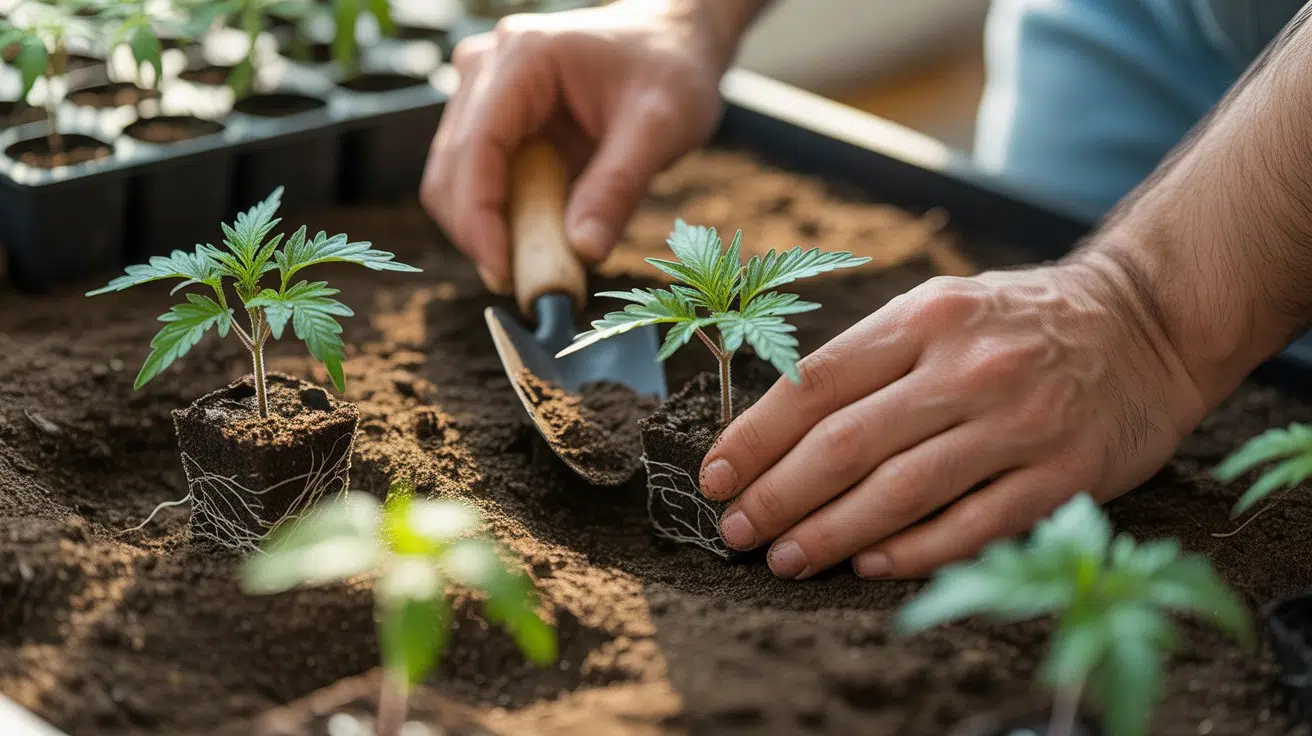
- Sow at the right depth. Cover the seed with mix to the depth on the packet — a quarter inch for onion, half an inch for sweet pea.
- Cover the tray. Lay dark plastic, cardboard, or a sheet of newspaper over the tray, or slip the whole tray into a dark bag.
- Keep it warm and moist. Most seeds germinate fastest at 65 to 75°F, so set the tray somewhere warm — a heat mat helps — and mist the mix if the surface dries. See the seed germination temperature chart for the range each crop prefers.
- Check every day. Lift the cover once a day to look for sprouts and to let in fresh air. A covered tray can stay too wet, so watch for mold.
- Uncover the moment seedlings appear. As soon as green shoots show, move the tray under bright light — 2 to 4 inches below a grow light, or into a sunny window.

Mistakes that stop dark-needing seeds from sprouting
- Sowing light-needing seeds too deep. Lettuce and petunia buried under mix never get the light signal they need, and may not sprout at all.
- Leaving dark-needing seeds on the surface. Onion or calendula left bare may sit for weeks without sprouting.
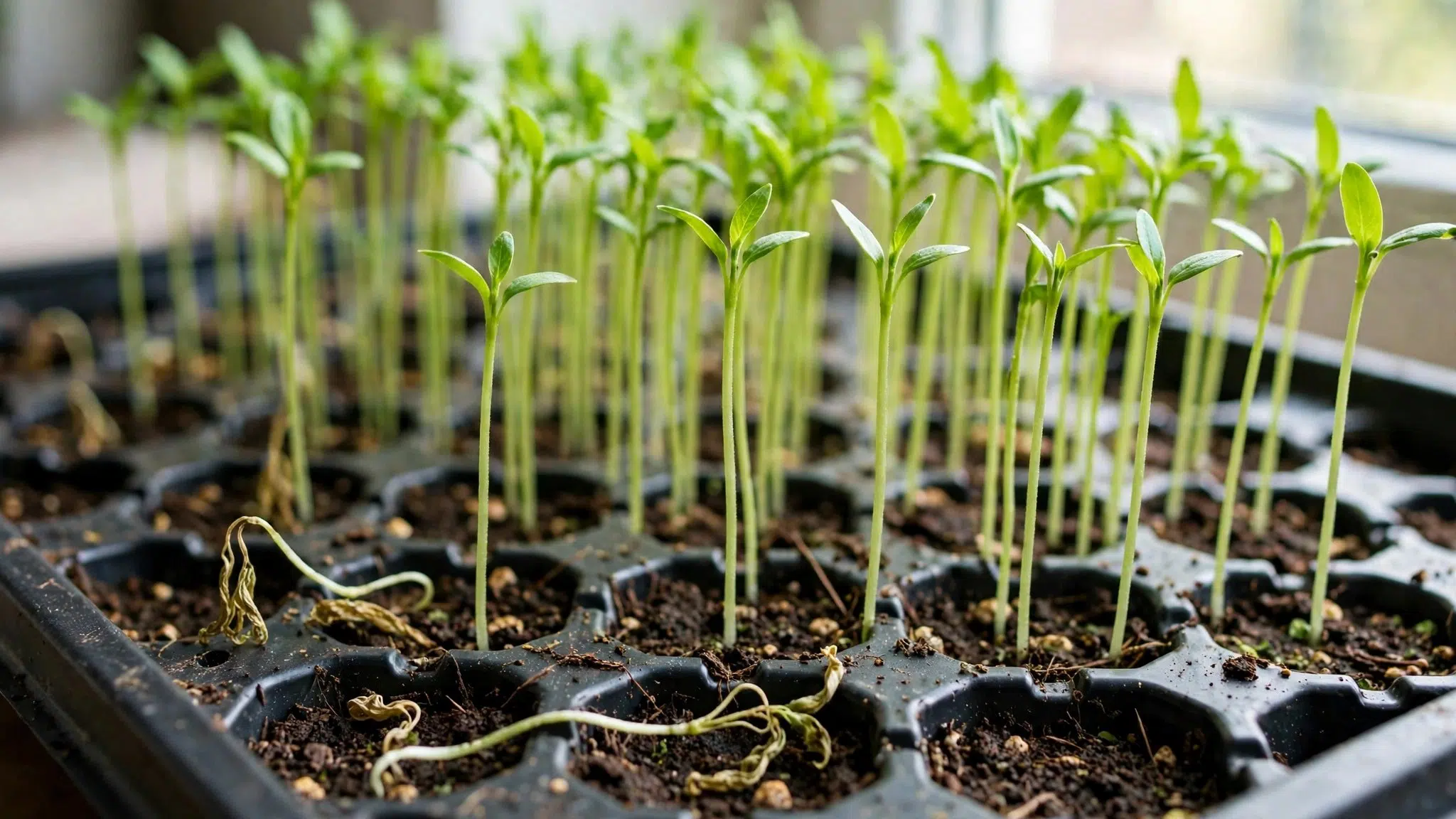
- Forgetting to uncover after sprouting. Once a seedling is up it needs light immediately; a covered seedling will stretch, pale, and flop.
- Sowing too deep overall. Even a dark-needing seed has limits — buried far deeper than the packet says, it may run out of energy before reaching the surface.
Frequently Asked Questions
Do all seeds need darkness to germinate?
No — only some seeds need darkness to germinate. Onion, calendula, pansy, and a handful of others do; most either need light or do not care.
Which seeds need darkness to germinate?
The most common are onion, leek, calendula, pansy, annual phlox, delphinium, larkspur, and sweet pea.
How do I germinate seeds that need darkness?
Sow them at the packet depth, cover the tray with dark plastic or cardboard so no light reaches the seeds, keep the tray warm and moist, check it daily, and uncover it as soon as sprouts show.
Can I use a heat mat for seeds that need darkness?
Yes — warmth and darkness are separate needs. A heat mat speeds germination while the tray stays covered, and a soil thermometer tells you the mix is warm enough.
What happens if a dark-needing seed gets light?
Germination slows, becomes patchy, or stops altogether — light is the signal that tells these seeds they are exposed, not safely buried.
Final Verdict
For seeds that need darkness, start with the VIVOSUN heat mat and thermostat combo — steady warmth under cover is the thing that matters most. Add the Taylor soil thermometer so you know the mix is actually warm enough, and have the Barrina T5 lights ready for the moment seedlings appear. Sow at the packet depth, cover the tray, check it daily, and uncover it the moment green shoots show.
Sources
- University of Minnesota Extension — Starting seeds indoors
- University of Maryland Extension — Starting Vegetable Seeds Indoors