Best Seed Starting Supplies for Sowing Seeds in Fall
As an Amazon Associate I earn from qualifying purchases.
Last updated: November 21, 2026
The Short Answer
The best seed starting supplies for sowing seeds in fall are a self-watering tray with a humidity dome for starting fall crops indoors, a soil thermometer to check the soil is cool enough to sow, and a grow light for seedlings started indoors as daylight shortens. Sow most fall vegetables 6 to 10 weeks before your first frost — radishes need only 4 to 5 weeks, while carrots need 10 to 11 — and count back from your average first frost date.
Quick Picks
Top Pick — Hanaoyo Self-Watering Seed Starter Tray (96-cell, 2-pack): start fall crops indoors and transplant them out at the right size, with a self-watering base and humidity dome. Check Price on Amazon
Temperature Pick — Taylor Soil Thermometer: confirms the soil is really cool enough for fall sowing before you sow a single seed. Check Price on Amazon
Light Pick — Barrina T5 2ft Grow Lights (8-pack): bright, linkable LED bars for fall seedlings started indoors as the days shorten. Check Price on Amazon
When to sow seeds in fall? Sow most fall vegetables 6 to 10 weeks before your area’s average first frost, so plants establish before cold weather slows growth. In most regions that means August to mid-September, with fast greens sown later and garlic planted near or just after the first frost. Count back from your own frost date.
Fall sowing is not spring sowing shifted a few months: in spring, days lengthen and soil warms, so seedlings grow faster each week, while in fall, light weakens and soil cools, so a 50-day crop may need 60. The calendar month matters far less than your first frost date. That frost date is the key to when to sow seeds in fall. General rules are in our direct-sow timing guide.
When to Sow Seeds in Fall: The Count-Back Method
When to sow seeds in fall comes down to one calculation: count backwards from your average first frost date. The University of Minnesota Extension recommends this calendar-back method: count the packet’s days to maturity back from your first frost, then add 14 days for shorter fall daylight. Utah State University Extension agrees: count back from the average first fall frost and add 10 to 14 days for slower autumn growth. If your first frost falls on 15 October and spinach needs 45 days, add 14 days to get 59, then count back — about 17 August. Radishes, at 30 days, go in around 16 September. Use your own local frost date, from your nearest weather station or county extension office. Zone sets the window: Zones 3 to 5 sow in early to mid-August, Zones 6 and 7 mid-August to September, Zones 8 and 9 into October.
Best Fall-Sown Vegetables and Their Timing
When to sow seeds in fall also depends on the crop, because only cool-season vegetables suit autumn. Utah State University Extension lists beets, kale, lettuce, spinach, and turnips for a fall harvest, with Utah windows from early July to mid-August, plus fast greens such as radishes and Swiss chard for late August and early September.
| Vegetable | Sow before frost | Days to mature | Notes |
|---|---|---|---|
| Radishes | 4–5 weeks | 25–35 | Fastest fall crop |
| Lettuce (leaf) | 5–7 weeks | 40–55 | Keep moist |
| Spinach | 6–8 weeks | 40–50 | Very cold-hardy |
| Kale | 6–8 weeks | 50–65 | Sweeter after frost |
| Beets | 8–10 weeks | 55–70 | Sow early Aug |
| Carrots | 10–11 weeks | 60–80 | Needs loose soil |
Choose early-maturing varieties — a 45-day spinach beats a 60-day one as the season shrinks.
When to Sow Seeds in Fall vs. What to Leave Until Spring
Warm-season crops need warm soil and a long frost-free stretch, and autumn gives them neither. Tomatoes, peppers, beans, squash, cucumbers, sweet corn, and basil sown in fall germinate slowly, if at all, then die at the first frost. Save them for spring.
| Sow in fall | Do NOT sow in fall |
|---|---|
| Spinach, kale, lettuce, arugula | Tomatoes, peppers, eggplant |
| Radishes, turnips, beets, carrots | Beans, squash, cucumbers, sweet corn |
| Peas (mild zones) | Basil, tender herbs |
| Garlic and shallots | Melons |
| Hardy annual flowers | Zinnias |
Garlic runs on the opposite schedule. Penn State Extension advises planting it three weeks before the ground freezes, so roots develop before winter. The University of Minnesota Extension recommends planting one to two weeks after the first killing frost, typically mid-September to mid-October in Minnesota. Penn State Extension also notes hardy annual flower seeds do best sown outdoors in fall, about six weeks before the first frost.
How to Direct-Sow Seeds in Fall, Step by Step
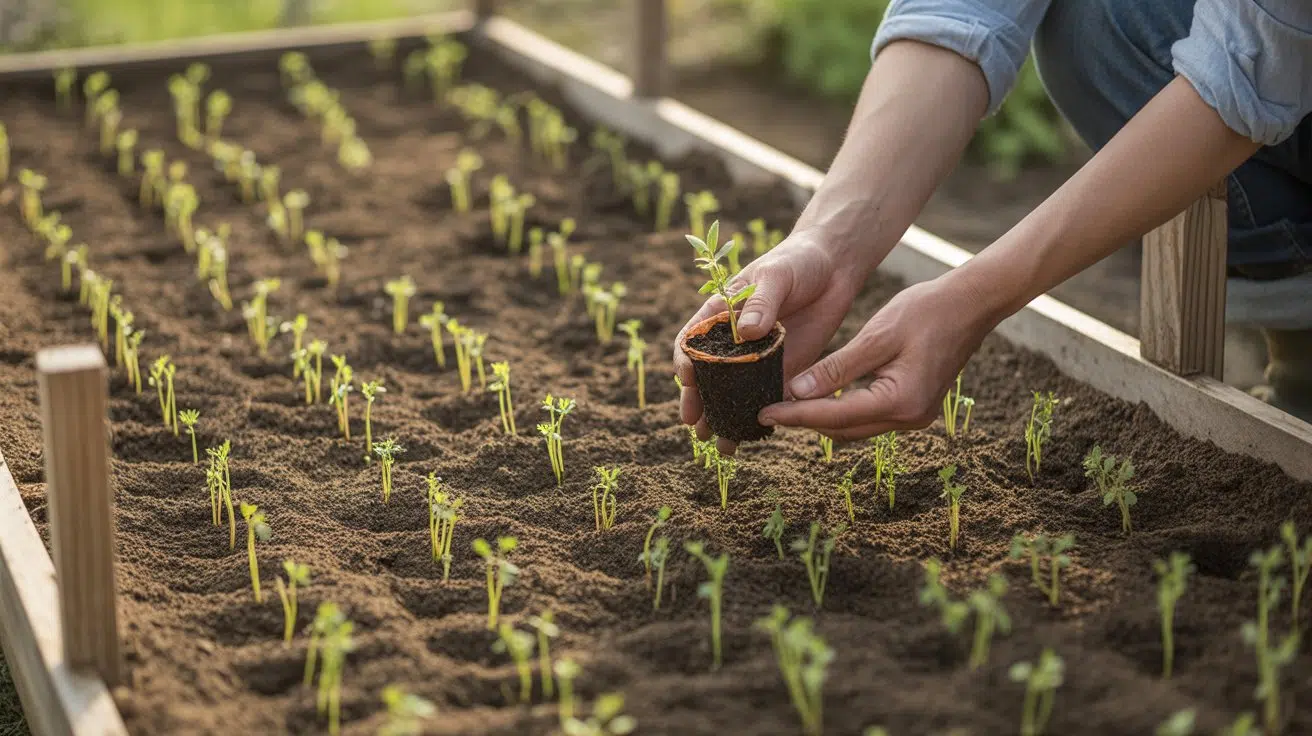
Knowing when to sow seeds in fall is only half the job — the seedbed has to be right too. Clear spent summer crops and work compost into the top few inches of soil. Fall soil is often dry, so water deeply the day before sowing — a dry crust is the most common reason autumn sowings fail. Check how deep to plant each seed first: too shallow and seeds dry out, too deep and seedlings struggle in weak autumn light. Sow slightly thicker than in spring, then thin once seedlings show true leaves. Shade new sowings in late-summer heat and keep the surface damp until germination — a seed that dries out halfway rarely recovers. Keep mulch off the seed row until plants are up, then mulch lightly and keep row cover ready for two or three extra weeks of harvest.
Overwintering: Sowing in Fall for a Spring Harvest
Overwintering is a second reason gardeners ask when to sow seeds in fall. Some fall sowing is for spring, not autumn. Penn State Extension Master Gardeners in Adams County report broad-leaved spinach and hardy kales survive winter in Zone 6b unprotected — tops freeze, but roots regrow in late February or early March. Garlic and shallots planted in early October need mulch of shredded leaves or straw to stop freeze-thaw cycles pushing bulbs out. Aim for small, sturdy plants with a few true leaves before hard cold — big, soft plants freeze badly. Sow overwintering spinach and kale about six weeks before your first hard frost.
Common Fall Sowing Mistakes
The most common mistake is sowing too late and hoping mild weather compensates — one early frost can end it. Sowing too early is just as bad: lettuce seed struggles above 75°F. The third is forgetting water — a dry September leaves seedbeds as parched as midsummer. And never guess your frost date from last year’s weather — deciding when to sow seeds in fall from your own counted-back frost date is the only method that holds up.
Researched Picks
Hanaoyo Self-Watering Seed Starter Tray (96-cell, 2-pack)
Badge: Top Pick — best for starting fall crops indoors
The Hanaoyo kit is the easiest way to start fall crops indoors and transplant them out at the right size. The self-watering base with a capillary mat keeps the mix evenly damp, and the clear dome holds humidity in while seeds sprout. Two 96-cell trays give you room for several sowings — start kale and spinach in one tray, lettuce and beets in the other — and move seedlings outside once they are sturdy.
| Spec | Detail |
|---|---|
| Cells | 96 per tray, 2 trays included |
| Watering | Self-watering base with capillary mat |
| Dome | Clear humidity dome included |
| Best for | Starting fall crops indoors for transplanting |
| ✓ Pros | × Cons |
|---|---|
|
|
Best for: gardeners starting fall crops indoors who want watering on autopilot.
Taylor Soil Thermometer
Badge: Temperature Pick — best for sowing at the right soil temperature
Fall sowing fails when the soil is still too warm — lettuce and spinach will not germinate well in hot soil — or when it has already gone cold. The Taylor thermometer reads the soil directly in seconds, so you know whether to sow today or wait a week. Push it into the bed, read the dial, and sow with confidence instead of guessing from the air temperature.
| Spec | Detail |
|---|---|
| Type | Dial soil thermometer |
| Range | Covers normal seed-starting temperatures |
| Best for | Checking soil before fall sowing |
| ✓ Pros | × Cons |
|---|---|
|
|
Best for: growers who want to confirm soil conditions before sowing fall crops.
Barrina T5 2ft Grow Lights (8-pack)
Badge: Light Pick — best for fall seedlings indoors
Fall seedlings started indoors face the year’s weakest light. The Barrina T5 bars are full-spectrum LEDs that link together, so you can hang two bars over one tray and keep seedlings short and sturdy instead of stretched and pale. Eight bars cover several trays at once, and you can raise them as the plants grow.
| Spec | Detail |
|---|---|
| Length | 2 ft per bar, 8 bars included |
| Light | Full-spectrum LED, linkable |
| Best for | Windowsills and shelves with weak autumn light |
| ✓ Pros | × Cons |
|---|---|
|
|
Best for: growers starting fall seedlings indoors as daylight shortens.
How We Chose
We researched these picks from manufacturer specifications and university extension guidance on fall sowing, focusing on the specific problems of the season: counting back 6 to 10 weeks from first frost, soil that is still too warm for cool-season seed, and daylight that shortens fast. We did not test these products ourselves, and we do not claim to have. We favoured reusable gear that works for spring sowing too. Prices and availability change, so check the current listing before buying.
Final Verdict
Fall sowing is mostly a timing job, and these supplies make the timing easier to hit: a tray for starting crops indoors, a thermometer that tells you when the soil is ready, and lights that carry seedlings through the short days. Buy the Hanaoyo tray kit first if you only buy one thing — starting indoors buys you the weeks that direct sowing cannot. Add the Taylor thermometer if you direct sow, and the Barrina lights if you start indoors.
Frequently Asked Questions
When to sow seeds in fall for a harvest before winter?
Sow most fall vegetables 6 to 10 weeks before your average first frost; radishes need only 4 to 7 weeks, carrots and beets 8 to 11.
When to sow seeds in fall in October — is it too late?
It depends on your zone. In Zones 8 and 9, October sowing of lettuce, spinach, and radishes is normal. In Zones 3 to 5, October is too late for most vegetables — but garlic is on time.
Can I sow seeds in fall and leave them to germinate in spring?
Yes — this is dormant sowing. Hardy seeds such as spinach, kale, and carrots sown in late fall, once soil is cold, germinate naturally when it warms in spring.
What vegetables grow best when sown in fall?
Cool-season crops: spinach, kale, lettuce, radishes, turnips, beets, carrots, and peas in mild zones. Garlic and shallots go in now for next summer’s harvest.
When to sow seeds in fall — indoors or directly outside?
Most fall vegetables do better direct-sown — they dislike transplanting, and the soil is already warm. Start slow brassicas such as broccoli indoors in midsummer only for short seasons.