Best Seed Starting Trays with Domes
As an Amazon Associate I earn from qualifying purchases.
Last updated: November 2026
The best seed starting trays with domes are sturdy, reusable trays with drainage holes, a clear vented dome, and cells matched to your crop — small cells for lettuce and herbs, large cells for squash and tomatoes. A dome holds humidity for germination, but it must come off as soon as seedlings emerge, or damping off follows.
⚡ Quick Picks
- Best for big batches: Hanaoyo Self-Watering Seed Starter Tray — 96 cells and a self-watering base, so a whole tray can be sown at once.
- Best budget 5-pack: Bonviee Seed Starter Trays — five trays with domes and base trays, an affordable way to cover several batches.
- Best sturdy reusable domes: Bootstrap Farmer Humidity Dome — five heavy-duty domes that fit standard 1020 trays.
Researched Picks: Best Seed Starting Trays with Domes
Our picks below are based on the manufacturers’ listed specifications, cell counts, and pack sizes — not hands-on testing. We compared them on how well they suit a tray with a dome: room for roots, a sturdy tray that survives being moved, and a dome or watering base that keeps the mix evenly moist until germination. Prices and availability change, so check the current listing before you buy.
1. Hanaoyo Self-Watering Seed Starter Tray — Best for Big Batches
Hanaoyo Self-Watering Seed Starter Tray — 96 cells, self-watering base tray. One tray covers a whole sowing of tomatoes, peppers, or flowers, so you can start a large batch without juggling several small kits.
| ✓ Pros | ✗ Cons |
|---|---|
|
|
Best for: Gardeners starting a big batch of seedlings who want one tray for the whole sowing.
2. Bonviee Seed Starter Trays — Best Budget 5-Pack
Bonviee Seed Starter Trays — five trays with humidity domes and base trays. The 5-pack keeps the cost per tray low, which suits gardeners who start several batches through the season.
| ✓ Pros | ✗ Cons |
|---|---|
|
|
Best for: Gardeners on a budget who start several batches and want a dome on every tray.
3. Bootstrap Farmer Humidity Dome — Best Sturdy Reusable Domes
Bootstrap Farmer Humidity Dome — five humidity domes, sized for standard 1020 trays. The domes are the heavy-duty part of the setup: they hold humidity for germination and can be reused season after season.
| ✓ Pros | ✗ Cons |
|---|---|
|
|
Best for: Gardeners who already own 1020 trays and want sturdy, reusable domes.
How We Chose
We chose these trays by comparing the manufacturers’ listed specifications — cell count, dome height and vents, tray and dome materials, and pack size — against what a tray with a dome actually needs: drainage holes, a clear dome you can see through, vents you can open a little at a time, and a tray that can be moved without bending. We did not test these products ourselves, and we did not use customer reviews or Amazon product descriptions as evidence. Check the current listing for the latest specifications before you buy.
What a Dome Actually Does
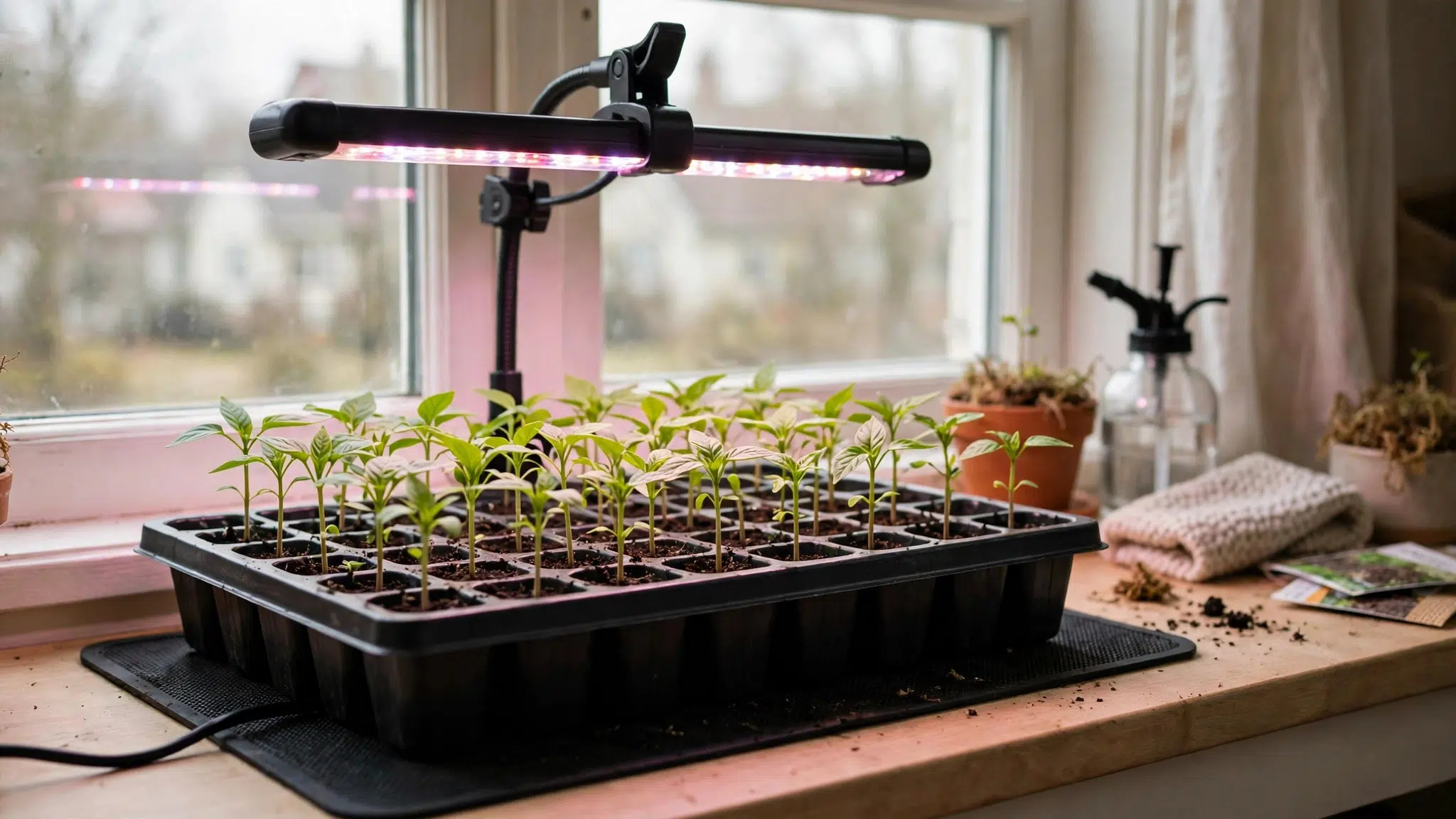
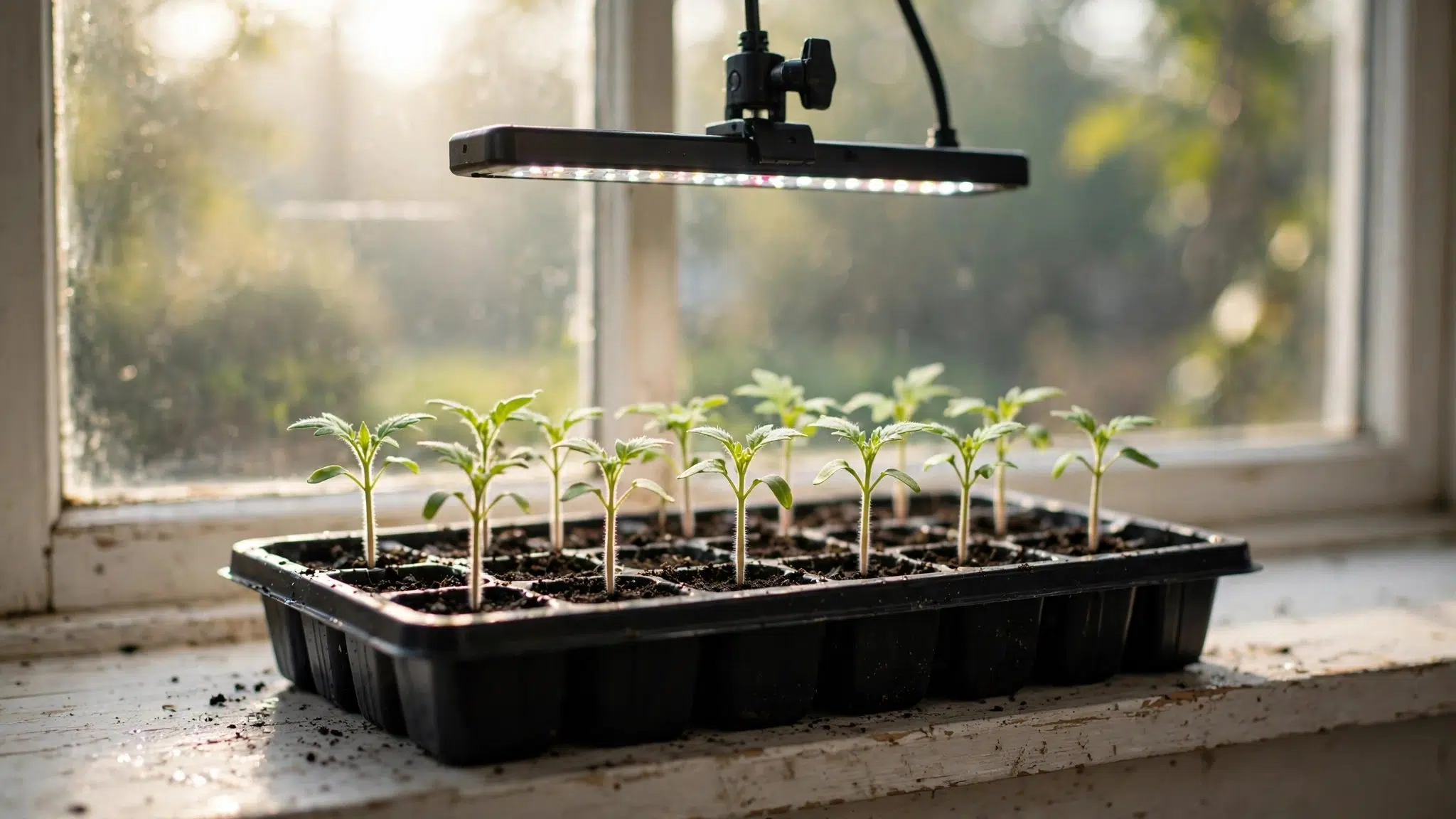
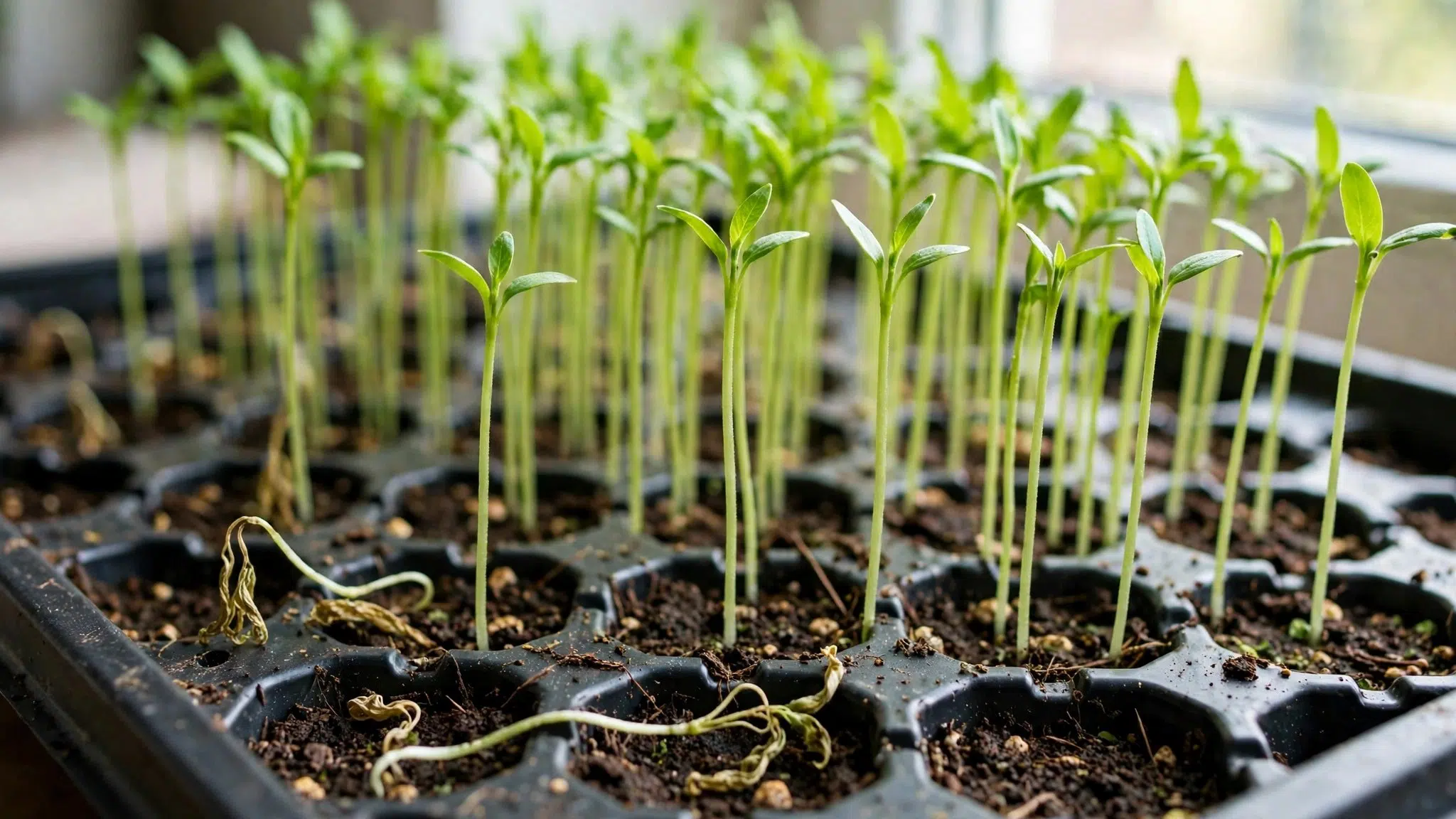
A dome is a clear lid that traps moisture and warmth around the seeds — exactly what they need before germination, since a seed that starts absorbing water and then dries out dies. After germination, the dome becomes a problem: seedlings need fresh air and light, and a closed dome holds still, humid air that invites damping off, the fungal disease that makes seedlings collapse at the base. The rule is simple: dome on until seeds sprout, dome off the moment green appears. Judge the best seed starting trays with domes by how well they serve that switch.
Best Seed Starting Trays with Domes: Types Compared
No single tray suits every seed: cell size decides how long a seedling can stay before it needs a bigger pot.
| Tray type | Best for | Crops | Pros | Cons |
|---|---|---|---|---|
| 1020 standard with insert | Best all-round starter tray | Tomatoes, peppers, flowers | Standard size, domes and inserts fit | Cells dry out fast in a warm room |
| 72-cell insert | Best for small seeds | Lettuce, herbs, flowers | Many plants in one tray | Needs potting on within 2–3 weeks |
| 50-cell insert | Best for medium crops | Tomatoes, peppers, eggplant | Good balance of size and count | Still needs potting on |
| 36-cell insert | Best for large seeds | Squash, cucumbers, melons | Room for fast roots | Few plants per tray |
| Soil blocks or peat pots under a dome | Best plastic-free option | Any crop that hates transplanting | No plastic waste, roots air-prune | Soil blocks need a maker, peat pots dry fast |
The 1020 tray (roughly 10 by 20 inches) is the standard base that most inserts and domes are made to fit. If your dome and tray are both 1020, they will fit — whatever the brand.
Cell Size: Match the Tray to the Seed
Cell size is the decision most beginners get wrong, and it matters more than the brand of tray. Tiny cells dry out fast and need potting on within 2 to 3 weeks; large cells hold more mix and give roots room, but sow fewer plants. Our guide to starting seeds indoors notes that cucumber, melon and squash should be started only 2 to 4 weeks before the last frost, because they grow fast and resent transplanting.
Dome Features That Matter
When you compare the best seed starting trays with domes, check four features. Adjustable vents let you open the dome a little at a time, so seedlings harden off instead of going from humid to dry in one step. Clarity matters because seedlings need light the moment they emerge — a clear dome lets light through even if you are a few hours late removing it. Height: a 4- to 7-inch dome gives seedlings headroom for the first days after sprouting. Fit: the dome should sit snugly on the tray, with no gaps where humidity escapes.
Drainage and Watering
Every cell must have drainage holes — true of every one of the best seed starting trays with domes, and worth checking before you buy. Water from below by setting the tray in a shallow dish, and empty the base tray so cells do not sit in water. See how to germinate seeds for the watering routine that keeps mix moist without drowning seeds.
Durability: Thin Disposable vs Rigid Reusable
Trays range from thin plastic that lasts one season to thick, rigid plastic that lasts years. Thin trays are cheap but crack when lifted full, flex and spill mix, and warp on a heat mat. Rigid trays cost more up front but survive being washed, stacked, and reused — which is why they are the better buy if you start seeds every year.
How to Use a Tray with a Dome
Fill the cells with pre-moistened seed-starting mix, not garden soil. Sow at the right depth, about twice the seed’s width, cover with the dome, and place the tray somewhere warm; a heat mat helps. Check daily, and remove the dome the moment green appears. See the best containers for starting seeds indoors for more on choosing the right tray size.
Frequently Asked Questions
Should I leave the dome on after seeds sprout?
No. Remove the dome the moment you see green and put the tray under strong light. Even the best seed starting trays with domes will grow leggy, pale seedlings if the dome stays on.
Do all seeds need a dome to germinate?
No. A dome helps seeds that need steady moisture, but it is not required — seeds germinate without one if the mix stays moist.
What size cells are best for tomatoes?
For tomatoes, the best seed starting trays with domes have 36- to 50-cell inserts, or use individual 3- to 4-inch pots under a dome.
Can I reuse seed starting trays?
Yes — rigid trays can be reused for years if washed with warm soapy water before each season. That routine also stops disease carrying over.
Is a dome better than plastic wrap?
A dome is better: reusable, a good fit, and a vented dome controls humidity. Plastic wrap works in a pinch, but it sags, tears, and cannot be vented.
Final Verdict
If you start a lot of seeds at once, the Hanaoyo 96-cell tray covers a whole batch in one tray. If you want the cheapest way to cover several batches, the Bonviee 5-pack is the better value. And if you already own 1020 trays, the Bootstrap Farmer domes are the sturdy, reusable choice. Whichever you choose, match the cell size to the crop, check for drainage holes, and take the dome off the moment green appears — then pot seedlings on when they outgrow their cells.
Sources
- University of Minnesota Extension — Starting Seeds Indoors
- Iowa State University Extension — Starting Seeds Indoors